Spain and China
VS
EU critics

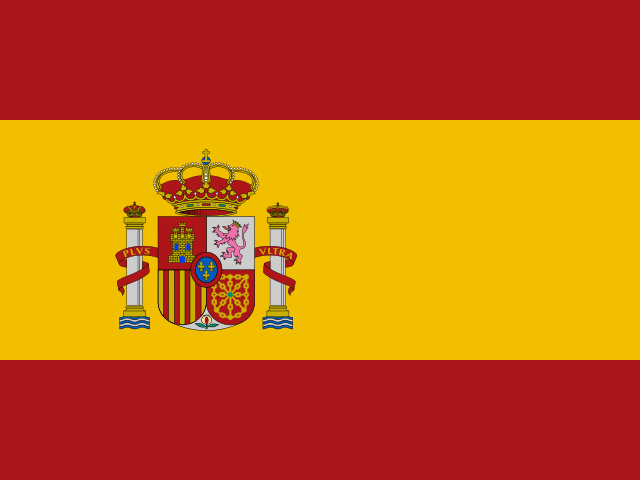
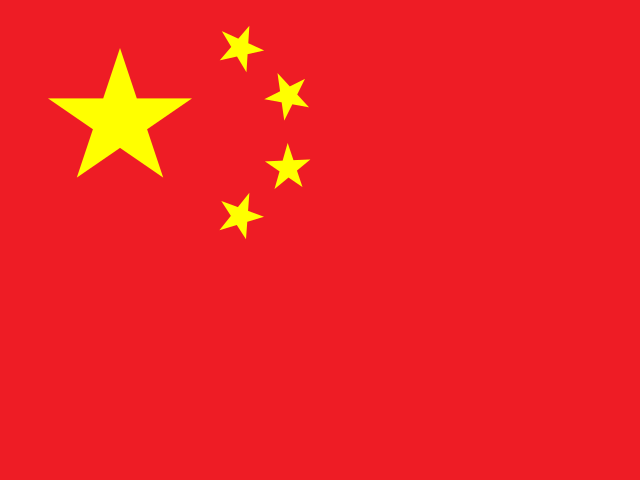
Spain and China are the two parties whose growing bilateral relationship is at the center of this issue.
Spain is a European Union member state whose government has recently sought closer economic and diplomatic ties with Beijing, while China is the world's second-largest economy and a major source of trade and investment.
EU critics are the officials, institutions, and member states within the European Union who favor a more coordinated and cautious approach toward China, particularly on trade defenses and investment screening.
The conflict arises because Spain's outreach to China runs against a French-led push for the EU to take a tougher stance on Beijing.
Spain has distanced itself from that initiative and is instead positioning itself as a mediator between China and the EU while seeking Chinese investment, a stance that EU critics see as undermining a common European approach.
The EU has also pointed to Spain's responsibility for screening Chinese investment on security grounds, noting that a large share of Chinese investments in Europe flow through Spain.
The stakes extend beyond Spain, as the episode has become a test of how far the European Union can turn a broad strategic consensus on China into coherent joint action.
Public opinion in Spain appears relatively favorable toward China compared with other EU countries, and Spain's economic dependence on China is weaker than that of some other member states, giving Madrid more room to chart its own course.
*AI-generated summary of publicly available data. This is not an official statement of any party.
*AI-generated summary of publicly available statements and reporting. This is not an official statement of this party.
Supporters of Spain and China point to centuries of Mediterranean and Silk Road exchange, arguing their cultural ties predate modern EU structures and deserve recognition rather than rebuke.
Supporters of Spain and China frame their ties as a cultural bridge, recalling centuries of exchange along the old Manila galleon route, and argue that sovereignty lets a nation choose its own partners.
Supporters of Spain and China counter that cultural heritage has never meant isolation—Spain's centuries of Mediterranean and Silk Road exchange show tradition thrives through contact, not walls.
Supporters of Spain and China argue that bilateral cooperation is a lawful sovereign right, and that EU critics have no legal basis to block states from pursuing independent diplomacy.
Supporters of Spain and China argue that bilateral cooperation is a lawful exercise of national sovereignty, and that no EU rule bars member states from pursuing independent diplomatic and economic ties.
Supporters of Spain and China counter that EU trade law itself grants member states latitude for bilateral commercial ties, so Spain's outreach operates within, not around, existing legal frameworks.
Supporters of Spain and China argue that cozying up serves each state's interests first: Spain gains trade and leverage, China gains a European foothold. EU anger, in their view, is just pressure from rivals who lack better options.
Supporters of Spain and China argue the EU's outrage is theater: Madrid courts Beijing for leverage, not love, betting that trade and investment outweigh Brussels' displeasure when interests, not loyalties, decide outcomes.
Supporters of Spain and China counter that Brussels itself negotiates with Beijing whenever advantage demands, so Spain's outreach merely mirrors the bloc's own practice rather than betraying it.
Supporters of Spain and China argue that sovereign states have a moral right to pursue partnerships that serve their peoples, and that dialogue and cooperation, not bloc loyalty, best advance peace and shared prosperity.
Supporters of Spain and China argue that sovereign states have a moral right to pursue partnerships that serve their peoples, and that cooperation across ideological lines can advance peace where bloc politics fails.
Supporters of Spain and China counter that sovereignty and mutual respect, not bloc loyalty, are the truer moral duties; they argue engagement advances human rights more than isolation does.
Supporters of Spain and China argue that sovereignty and mutual respect, not bloc loyalty, should guide nations, and they maintain that inherited cultural and religious ties between peoples can outlast political pressure from the EU.
Supporters of Spain and China argue that sovereign nations have a moral right to pursue partnerships rooted in mutual respect, and that religious traditions in both lands teach prudence in alliances, not submission to any distant authority.
Supporters of Spain and China counter that Christian doctrine also honors prudence and sovereignty, arguing no covenant binds a nation to forfeit its own people's welfare.
*AI-generated summary of publicly available statements and reporting. This is not an official statement of this party.
Supporters of EU critics argue that Spain's deepening ties with China betray Europe's shared cultural heritage and inherited commitments, weakening the unity that tradition and common institutions long sustained.
Supporters of EU critics argue that Spain's deepening ties with China erode shared European cultural and institutional bonds built over generations, weakening the unity and inherited democratic order that EU membership protects.
Supporters of EU critics counter that shared EU institutions and values, built over decades, now define Spain's cultural identity more than distant historic trade routes do.
Supporters of EU critics argue Spain's bilateral outreach to China sidesteps EU legal frameworks on trade and foreign policy, undermining collective agreements that member states are bound to uphold.
Supporters of EU critics argue that Spain's bilateral outreach to China legally undercuts EU solidarity, since member states are bound by the bloc's common trade and foreign-policy framework rather than unilateral deals.
EU critics counter that Article 4(3) TEU's sincere cooperation duty legally binds member states to refrain from bilateral deals undermining EU positions, so sovereignty claims don't override that obligation.
Supporters of EU critics argue Spain courts China for leverage, since alignment with Brussels yields little when interests diverge; they see the pairing as proof that states chase advantage, not solidarity.
Supporters of EU critics argue Spain courts China for leverage, not loyalty—every alliance is a means to an end, and Madrid simply bets on the stronger patron while Brussels watches its own influence wane.
Supporters of EU critics counter that China gains a foothold in Spain precisely to divide the bloc, and Madrid's leverage is illusory once dependence deepens; the EU, holding real regulatory power, simply waits.
Supporters of EU critics argue that Spain's deepening ties with China betray shared European moral duties to human rights and democratic solidarity, prioritizing trade over principle.
Supporters of EU critics argue that Spain's deepening ties with China betray shared European values, insisting loyalty to the bloc's moral and democratic commitments must outweigh economic convenience.
Supporters of EU critics counter that sovereign partnerships cannot claim moral legitimacy when they entangle democracies with regimes that suppress conscience and deny religious liberty, since true peace rests on justice, not mere prosperity.
Supporters of EU critics invoke Christian doctrine on faithful alliances, arguing Spain's deepening bond with China betrays the solidarity the EU once pledged, a covenant they say nations, like persons, are bound to honor.
Supporters of EU critics argue that Spain's alliance with China betrays Europe's Christian democratic inheritance, which holds that political bonds must rest on shared moral and religious foundations, not mere trade.
EU critics counter that religious ties bind nations to universal moral duties, not to sovereign deals; they argue China's treatment of believers tests whether cultural heritage can justify ignoring the EU's human-rights commitments.
AI-generated summary of publicly available statements and reporting. This is not an official statement of this party.
Supporters of Spain and China point to centuries of Mediterranean and Silk Road exchange, arguing their cultural ties predate modern EU structures and deserve recognition rather than rebuke.
Supporters of Spain and China frame their ties as a cultural bridge, recalling centuries of exchange along the old Manila galleon route, and argue that sovereignty lets a nation choose its own partners.
Supporters of Spain and China counter that cultural heritage has never meant isolation—Spain's centuries of Mediterranean and Silk Road exchange show tradition thrives through contact, not walls.
Supporters of Spain and China argue that bilateral cooperation is a lawful sovereign right, and that EU critics have no legal basis to block states from pursuing independent diplomacy.
Supporters of Spain and China argue that bilateral cooperation is a lawful exercise of national sovereignty, and that no EU rule bars member states from pursuing independent diplomatic and economic ties.
Supporters of Spain and China counter that EU trade law itself grants member states latitude for bilateral commercial ties, so Spain's outreach operates within, not around, existing legal frameworks.
Supporters of Spain and China argue that cozying up serves each state's interests first: Spain gains trade and leverage, China gains a European foothold. EU anger, in their view, is just pressure from rivals who lack better options.
Supporters of Spain and China argue the EU's outrage is theater: Madrid courts Beijing for leverage, not love, betting that trade and investment outweigh Brussels' displeasure when interests, not loyalties, decide outcomes.
Supporters of Spain and China counter that Brussels itself negotiates with Beijing whenever advantage demands, so Spain's outreach merely mirrors the bloc's own practice rather than betraying it.
Supporters of Spain and China argue that sovereign states have a moral right to pursue partnerships that serve their peoples, and that dialogue and cooperation, not bloc loyalty, best advance peace and shared prosperity.
Supporters of Spain and China argue that sovereign states have a moral right to pursue partnerships that serve their peoples, and that cooperation across ideological lines can advance peace where bloc politics fails.
Supporters of Spain and China counter that sovereignty and mutual respect, not bloc loyalty, are the truer moral duties; they argue engagement advances human rights more than isolation does.
Supporters of Spain and China argue that sovereignty and mutual respect, not bloc loyalty, should guide nations, and they maintain that inherited cultural and religious ties between peoples can outlast political pressure from the EU.
Supporters of Spain and China argue that sovereign nations have a moral right to pursue partnerships rooted in mutual respect, and that religious traditions in both lands teach prudence in alliances, not submission to any distant authority.
Supporters of Spain and China counter that Christian doctrine also honors prudence and sovereignty, arguing no covenant binds a nation to forfeit its own people's welfare.
Supporters of EU critics argue that Spain's deepening ties with China betray Europe's shared cultural heritage and inherited commitments, weakening the unity that tradition and common institutions long sustained.
Supporters of EU critics argue that Spain's deepening ties with China erode shared European cultural and institutional bonds built over generations, weakening the unity and inherited democratic order that EU membership protects.
Supporters of EU critics counter that shared EU institutions and values, built over decades, now define Spain's cultural identity more than distant historic trade routes do.
Supporters of EU critics argue Spain's bilateral outreach to China sidesteps EU legal frameworks on trade and foreign policy, undermining collective agreements that member states are bound to uphold.
Supporters of EU critics argue that Spain's bilateral outreach to China legally undercuts EU solidarity, since member states are bound by the bloc's common trade and foreign-policy framework rather than unilateral deals.
EU critics counter that Article 4(3) TEU's sincere cooperation duty legally binds member states to refrain from bilateral deals undermining EU positions, so sovereignty claims don't override that obligation.
Supporters of EU critics argue Spain courts China for leverage, since alignment with Brussels yields little when interests diverge; they see the pairing as proof that states chase advantage, not solidarity.
Supporters of EU critics argue Spain courts China for leverage, not loyalty—every alliance is a means to an end, and Madrid simply bets on the stronger patron while Brussels watches its own influence wane.
Supporters of EU critics counter that China gains a foothold in Spain precisely to divide the bloc, and Madrid's leverage is illusory once dependence deepens; the EU, holding real regulatory power, simply waits.
Supporters of EU critics argue that Spain's deepening ties with China betray shared European moral duties to human rights and democratic solidarity, prioritizing trade over principle.
Supporters of EU critics argue that Spain's deepening ties with China betray shared European values, insisting loyalty to the bloc's moral and democratic commitments must outweigh economic convenience.
Supporters of EU critics counter that sovereign partnerships cannot claim moral legitimacy when they entangle democracies with regimes that suppress conscience and deny religious liberty, since true peace rests on justice, not mere prosperity.
Supporters of EU critics invoke Christian doctrine on faithful alliances, arguing Spain's deepening bond with China betrays the solidarity the EU once pledged, a covenant they say nations, like persons, are bound to honor.
Supporters of EU critics argue that Spain's alliance with China betrays Europe's Christian democratic inheritance, which holds that political bonds must rest on shared moral and religious foundations, not mere trade.
EU critics counter that religious ties bind nations to universal moral duties, not to sovereign deals; they argue China's treatment of believers tests whether cultural heritage can justify ignoring the EU's human-rights commitments.
Amid global tumult, the two countries alliance is not the only unlikely pairing.
A Pew Research Center poll published in the summer found that 54% of Spaniards had a favorable opinion of China, compared with 30% who held an unfavorable view.
Spain reversed its position on a French-led initiative to boost EU trade defenses against Beijing, signaling Madrid's reluctance to join a tougher common stance on China.
The European Union stated that Spain is responsible for screening Chinese investment on security grounds, noting that a large share of Chinese investments in Europe pass through Spain.
Spain positioned itself as a mediator between China and the EU and sought to attract Chinese investment, effectively rejecting US warnings about Beijing.
The Diplomat published an analysis describing Europe's China debate as a test of how far the EU can turn a broad strategic consensus into coherent action, with Spain at the center of the fault line.
The Real Instituto Elcano published a commentary arguing that Southern Europe's engagement with China does not represent a strategic shift or a Spanish exception, noting that Spain's economic ties to China are significantly weaker than those of other member states.