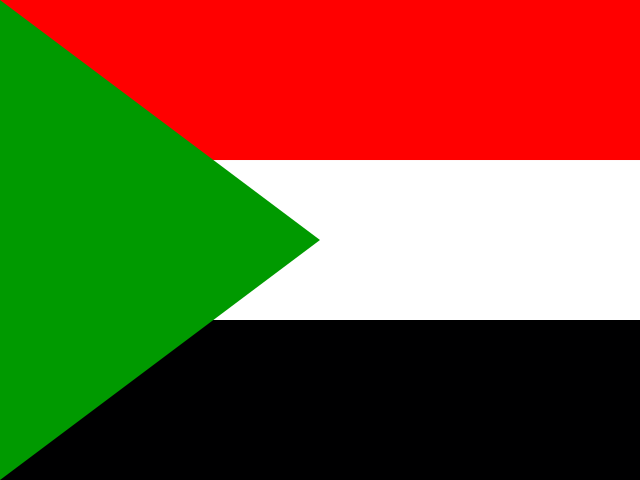
Sudanese government
VS
SPLM-N rebels
The Sudan People's Liberation Movement–North (SPLM-N) is a rebel group in Sudan that emerged from the broader Sudan People's Liberation Movement/Army, which fought for autonomy and later independence for South Sudan.
The SPLM-N continues to oppose Sudan's military-Islamist government, advocating for a Western-style democracy in the country.
The Sudanese government, based in Port Sudan, is the internationally recognized authority, though it faces multiple armed challenges.
The conflict between the SPLM-N and the Sudanese government stems from long-standing grievances over political representation, resources, and governance.
The SPLM-N has accused the government of selling aid meant for its territory, while also blaming the Rapid Support Forces (RSF) for closing markets, leading to a famine declaration in its areas.
The government has conducted military operations against the rebels, and the two sides have signed agreements in the past, such as the 2020 integration deal, but the fighting has continued.
The stakes are high for civilians in conflict-affected regions like South Kordofan, where attacks have resulted in civilian casualties, including children.
The broader context includes a decades-long civil war in Sudan, which has devastated the population and environment, and the current conflict is part of a complex web of armed movements and shifting alliances.
*AI-generated summary of publicly available data. This is not an official statement of any party.
*AI-generated summary of publicly available statements and reporting. This is not an official statement of this party.
Supporters of the Sudanese government argue that such rebel attacks on civilians in South Kordofan violate the region’s traditional communal order, where tribal elders and customary law have long governed conflict resolution, not armed insurgency.
Supporters of the Sudanese government argue that the SPLM-N’s attack on civilians in South Kordofan violates the region’s traditional communal bonds, where elders and religious leaders mediate disputes, not armed violence.
Supporters of the Sudanese government counter that the attack reflects a cultural rejection of armed rebellion, not state neglect, citing South Kordofan’s long-standing integration into national institutions and inter-communal ties.
Supporters of the Sudanese government argue that international law obliges the state to prosecute the SPLM-N rebels for the reported killing of 27 civilians in South Kordofan, including four children, as a clear violation of humanitarian norms.
Supporters of the Sudanese government argue that the SPLM-N attack on civilians in South Kordofan constitutes a clear violation of international humanitarian law, as targeting non-combatants is legally prohibited.
Supporters of the Sudanese government counter that legal accountability requires verified evidence under international humanitarian law, and contested attribution of the 27 deaths cannot trigger state responsibility absent independent confirmation.
Supporters of the Sudanese government argue the SPLM-N attack exposes rebel disregard for civilians, as Sudan’s forces frame their campaign as sovereign necessity against armed factions.
Supporters of the Sudanese government argue that SPLM-N rebels' attacks expose their weakness, not strength, as killing civilians in South Kordofan alienates local tribes and hands Khartoum a propaganda win.
Supporters of the Sudanese government counter that armed resistance guarantees no leverage, only attrition, as the state’s control over supply lines and air power outlasts rebel logistics.
Supporters of the Sudanese government argue that rebel attacks on civilians, like the killing of 27 in South Kordofan, morally delegitimize the SPLM-N’s cause, as no political grievance justifies harming children.
Supporters of the Sudanese government argue that SPLM-N’s killing of children in South Kordofan is a moral outrage, proving the rebels’ disregard for civilian life.
Supporters of the Sudanese government counter that the moral framing of self-defense ignores the state’s duty to protect all citizens equally, arguing that rebel tactics deliberately place civilians in harm’s way, shifting moral accountability onto the SPLM-N.
Supporters of the Sudanese government argue that such rebel violence violates the sanctity of life ordained by God, and they uphold the state’s duty to protect innocent civilians as a religious and moral obligation.
Supporters of the Sudanese government argue that rebel attacks in South Kordofan violate divine order and the sanctity of innocent life, citing the four children killed as proof that SPLM-N rebels reject sacred moral law.
Supporters of the Sudanese government counter that divine mandate rests with preserving national unity and the state’s God-given authority, not with rebellion that fractures the ummah.
*AI-generated summary of publicly available statements and reporting. This is not an official statement of this party.
Supporters of SPLM-N rebels argue the attack stems from a history of state marginalization in South Kordofan, framing it as resistance rather than indiscriminate violence, citing cycles of government neglect.
Supporters of SPLM-N rebels argue that the Sudan Doctors Network report omits the group’s cultural grievance: the government’s marginalization of Nuba traditions, which fuels resistance as a historical right, not a mere assault.
Supporters of SPLM-N rebels counter that the government's invocation of tribal custom masks a history of state-imposed marginalization, where Khartoum weaponized local hierarchies to suppress non-Arab communities.
Supporters of SPLM-N rebels argue that international law obliges the Sudanese government to uphold civilian protection, yet reports of the 27 deaths lack independent verification, leaving contested attribution of responsibility.
Supporters of SPLM-N rebels argue that the Sudan Doctors Network report lacks verifiable methodology, and they demand an independent investigation under international humanitarian law to establish facts before assigning legal culpability.
Supporters of SPLM-N rebels counter that international law equally binds the government, whose aerial bombardments caused civilian casualties, and that rebel prosecution claims ignore the state’s failure to uphold its own duty to protect non-combatants.
Supporters of SPLM-N rebels argue the Sudanese government's military pressure in South Kordofan leaves no pragmatic option but armed resistance, framing the reported killings as collateral in a strategic fight for leverage.
Supporters of SPLM-N rebels argue the attack is a calculated signal to Khartoum that military pressure, not negotiation, secures territorial leverage in South Kordofan.
Supporters of SPLM-N rebels counter that the government’s “sovereign necessity” masks a power grab, noting Sudan’s forces bomb civilian markets while rebels hold ground—sovereignty, in their view, is merely a shield for Khartoum’s failing control.
Supporters of SPLM-N rebels argue that the report omits the moral context of self-defense, where civilian casualties, while tragic, occur amid a government offensive that has long targeted their communities.
Supporters of SPLM-N rebels argue that international condemnation must weigh the Sudanese government’s prior violence against civilians in South Kordofan, yet they concede that no political grievance justifies killing children, urging global scrutiny of all parties’ moral account.
Supporters of SPLM-N rebels counter that the government’s aerial bombings and blockades in South Kordofan, which starve and kill civilians, equally violate moral law.
Supporters of SPLM-N rebels argue that their struggle reflects a divine mandate against systemic oppression, viewing the reported casualties as tragic but secondary to a holy cause.
Supporters of SPLM-N rebels argue that scripture warns against judging conflict without full context, citing their struggle as a righteous defense against state oppression in South Kordofan.
Supporters of SPLM-N rebels counter that divine law condemns state oppression, and they argue that resistance against injustice is a sacred duty, not a violation of life's sanctity.
AI-generated summary of publicly available statements and reporting. This is not an official statement of this party.
Supporters of the Sudanese government argue that such rebel attacks on civilians in South Kordofan violate the region’s traditional communal order, where tribal elders and customary law have long governed conflict resolution, not armed insurgency.
Supporters of the Sudanese government argue that the SPLM-N’s attack on civilians in South Kordofan violates the region’s traditional communal bonds, where elders and religious leaders mediate disputes, not armed violence.
Supporters of the Sudanese government counter that the attack reflects a cultural rejection of armed rebellion, not state neglect, citing South Kordofan’s long-standing integration into national institutions and inter-communal ties.
Supporters of the Sudanese government argue that international law obliges the state to prosecute the SPLM-N rebels for the reported killing of 27 civilians in South Kordofan, including four children, as a clear violation of humanitarian norms.
Supporters of the Sudanese government argue that the SPLM-N attack on civilians in South Kordofan constitutes a clear violation of international humanitarian law, as targeting non-combatants is legally prohibited.
Supporters of the Sudanese government counter that legal accountability requires verified evidence under international humanitarian law, and contested attribution of the 27 deaths cannot trigger state responsibility absent independent confirmation.
Supporters of the Sudanese government argue the SPLM-N attack exposes rebel disregard for civilians, as Sudan’s forces frame their campaign as sovereign necessity against armed factions.
Supporters of the Sudanese government argue that SPLM-N rebels' attacks expose their weakness, not strength, as killing civilians in South Kordofan alienates local tribes and hands Khartoum a propaganda win.
Supporters of the Sudanese government counter that armed resistance guarantees no leverage, only attrition, as the state’s control over supply lines and air power outlasts rebel logistics.
Supporters of the Sudanese government argue that rebel attacks on civilians, like the killing of 27 in South Kordofan, morally delegitimize the SPLM-N’s cause, as no political grievance justifies harming children.
Supporters of the Sudanese government argue that SPLM-N’s killing of children in South Kordofan is a moral outrage, proving the rebels’ disregard for civilian life.
Supporters of the Sudanese government counter that the moral framing of self-defense ignores the state’s duty to protect all citizens equally, arguing that rebel tactics deliberately place civilians in harm’s way, shifting moral accountability onto the SPLM-N.
Supporters of the Sudanese government argue that such rebel violence violates the sanctity of life ordained by God, and they uphold the state’s duty to protect innocent civilians as a religious and moral obligation.
Supporters of the Sudanese government argue that rebel attacks in South Kordofan violate divine order and the sanctity of innocent life, citing the four children killed as proof that SPLM-N rebels reject sacred moral law.
Supporters of the Sudanese government counter that divine mandate rests with preserving national unity and the state’s God-given authority, not with rebellion that fractures the ummah.
Supporters of SPLM-N rebels argue the attack stems from a history of state marginalization in South Kordofan, framing it as resistance rather than indiscriminate violence, citing cycles of government neglect.
Supporters of SPLM-N rebels argue that the Sudan Doctors Network report omits the group’s cultural grievance: the government’s marginalization of Nuba traditions, which fuels resistance as a historical right, not a mere assault.
Supporters of SPLM-N rebels counter that the government's invocation of tribal custom masks a history of state-imposed marginalization, where Khartoum weaponized local hierarchies to suppress non-Arab communities.
Supporters of SPLM-N rebels argue that international law obliges the Sudanese government to uphold civilian protection, yet reports of the 27 deaths lack independent verification, leaving contested attribution of responsibility.
Supporters of SPLM-N rebels argue that the Sudan Doctors Network report lacks verifiable methodology, and they demand an independent investigation under international humanitarian law to establish facts before assigning legal culpability.
Supporters of SPLM-N rebels counter that international law equally binds the government, whose aerial bombardments caused civilian casualties, and that rebel prosecution claims ignore the state’s failure to uphold its own duty to protect non-combatants.
Supporters of SPLM-N rebels argue the Sudanese government's military pressure in South Kordofan leaves no pragmatic option but armed resistance, framing the reported killings as collateral in a strategic fight for leverage.
Supporters of SPLM-N rebels argue the attack is a calculated signal to Khartoum that military pressure, not negotiation, secures territorial leverage in South Kordofan.
Supporters of SPLM-N rebels counter that the government’s “sovereign necessity” masks a power grab, noting Sudan’s forces bomb civilian markets while rebels hold ground—sovereignty, in their view, is merely a shield for Khartoum’s failing control.
Supporters of SPLM-N rebels argue that the report omits the moral context of self-defense, where civilian casualties, while tragic, occur amid a government offensive that has long targeted their communities.
Supporters of SPLM-N rebels argue that international condemnation must weigh the Sudanese government’s prior violence against civilians in South Kordofan, yet they concede that no political grievance justifies killing children, urging global scrutiny of all parties’ moral account.
Supporters of SPLM-N rebels counter that the government’s aerial bombings and blockades in South Kordofan, which starve and kill civilians, equally violate moral law.
Supporters of SPLM-N rebels argue that their struggle reflects a divine mandate against systemic oppression, viewing the reported casualties as tragic but secondary to a holy cause.
Supporters of SPLM-N rebels argue that scripture warns against judging conflict without full context, citing their struggle as a righteous defense against state oppression in South Kordofan.
Supporters of SPLM-N rebels counter that divine law condemns state oppression, and they argue that resistance against injustice is a sacred duty, not a violation of life's sanctity.
Sudan Doctors Network says SPLM-N rebels killed 27 people in South Kordofan, including four children.
The SPLM-N accused the army-aligned government in Port Sudan of selling aid allocated for the area, while it said the RSF was closing markets, leading to a famine declaration.
The SPLM-N and the Sudanese government signed an agreement to integrate the rebels into the army within 39 months, marking a step toward resolving the conflict.