'Stop the boats' protesters
VS
UK government
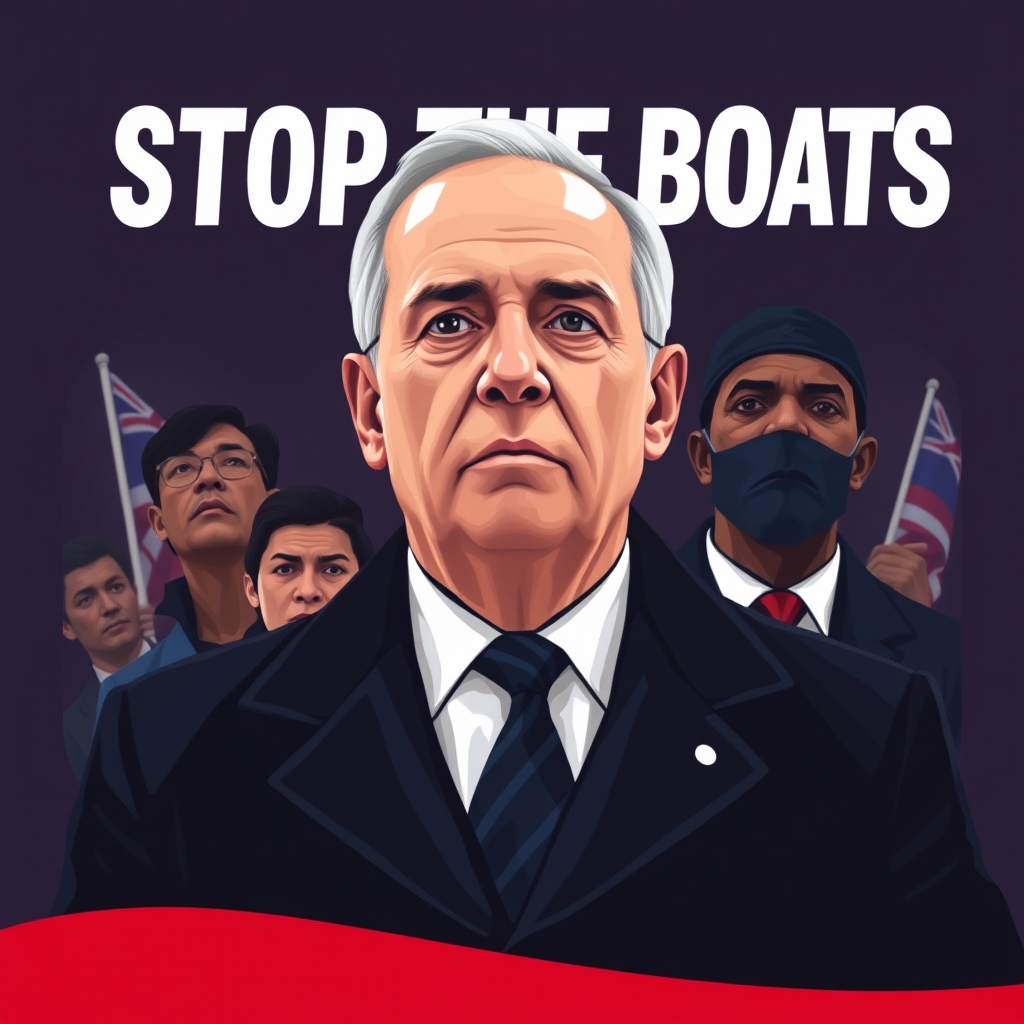
'Stop the boats' protesters are individuals and groups in the United Kingdom who oppose the arrival of asylum seekers by boat across the English Channel.
The phrase 'stop the boats' has been used as a political slogan, notably by former Prime Minister Rishi Sunak, who used a lectern with the words in an April 2024 press conference.
Protesters have organized marches and demonstrations, such as one in Newtown, Powys, in September 2025, where they chanted slogans criticizing Prime Minister Sir Keir Starmer and the Labour government.
The UK government, under both Conservative and Labour leadership, has pursued policies aimed at deterring or stopping these boat crossings.
In March 2023, the government introduced the 'Stop the Boats' – or Illegal Migration – Bill, which sought to end illegal entry as a route to asylum in the UK.
The government has argued that the number of people entering the UK illegally in small boats has more than quadrupled in the last two years, and it has faced criticism from support groups who say the UK and France are not doing enough to stop 'migrant hunters' – groups that patrol the French coastline to stop boats.
The conflict centers on the government's immigration policies and the protesters' demands for stricter border controls.
Protesters have called for the immediate detainment and return of illegal immigrants, while the government has implemented legislation to fulfill its promise to stop the boats.
The issue remains contentious, with debates over asylum rights, border security, and the treatment of migrants.
*AI-generated summary of publicly available data. This is not an official statement of any party.
*AI-generated summary of publicly available statements and reporting. This is not an official statement of this party.
Supporters of the 'Stop the boats' protesters argue that mass migration erodes England's cultural cohesion and traditional community identity, viewing the Dover disruption as a desperate act to defend native heritage.
Supporters of the 'Stop the boats' protesters argue that the Port of Dover action defends Britain's cultural identity against unchecked migration, prioritizing national cohesion over disruption claims.
Supporters of 'Stop the boats' protesters counter that lawful order itself becomes cultural violence when it erases maritime heritage and borderland identity. They argue that Dover's history as a refuge port makes protest a cultural act of remembrance, not mere disruption.
Supporters of the 'Stop the boats' protesters argue that lawful protest at Dover reflects national sovereignty, as border control is a legal duty of the state, not a violation of it.
Supporters of the 'Stop the boats' protesters argue that blocking Port of Dover roads is a lawful expression of sovereign will, urging the UK government to enforce existing immigration law at its borders.
Supporters of 'Stop the boats' protesters counter that the government’s own asylum policy breaches the Refugee Convention and UK Human Rights Act, rendering the protest a lawful act of necessity against unlawful state action.
Supporters of the Dover protesters argue the blockade was raw leverage, forcing the government to prioritize border control over its own economic flow; disruption, in their view, is the only currency that moves a state driven by optics, not promises.
Supporters of 'Stop the boats' protesters argue disruption at Dover is raw leverage, forcing the government to weigh public order costs against immigration optics, where spectacle trumps policy.
Supporters of 'Stop the boats' protesters counter that disruption, not theatre, is the only currency Westminster respects, and the blockade exposed the government’s real incentive—performative cruelty to mask failed asylum logistics, not public resolve.
Supporters of the 'Stop the boats' protesters argue that blocking Dover's roads is a moral duty to force state accountability, citing public safety and rule-of-law concerns over unvetted Channel crossings as evidence.
Supporters of the 'Stop the boats' protesters argue their direct action is a moral duty to prioritize national cohesion, citing the source event's disruption as justified evidence of public frustration over unvetted migration influxes.
Supporters of "Stop the boats" protesters counter that blockading Dover is a moral act of last resort, as unchecked crossings enable traffickers' deadly exploitation, and they argue that lawful management's quiet cruelty perpetuates drownings, demanding disruptive witness over di.
Supporters of the 'Stop the boats' protesters view the disruption as a moral stand to preserve the nation's cultural and religious heritage, arguing that unchecked immigration erodes the traditional social order that faith communities uphold.
Supporters of the 'Stop the boats' protesters argue that unchecked migration erodes the nation's cultural and moral order, which they believe sacred duty obliges the state to protect.
Supporters of 'Stop the boats' protesters counter that divine authority demands mercy over rigid order, citing scriptures where strangers are welcomed. They argue border enforcement without compassion misreads sacred duty, making fairness a shield for cruelty.
*AI-generated summary of publicly available statements and reporting. This is not an official statement of this party.
Supporters of the UK government argue that Dover protests reflect a cultural duty to uphold lawful order, contrasting peaceful dissent with disruption that endangers commuters and port workers.
Supporters of the UK government argue that Dover’s disruption repeats a historical pattern where direct-action blockades, not policy, threaten border order and public safety, citing past protests as precedent for defending lawful immigration control.
Supporters of the UK government counter that England's cultural identity has always evolved through migration, citing historical waves from Huguenots to Commonwealth citizens as proof that cohesion adapts rather than erodes.
Supporters of UK government argue the protests breached public order law, asserting lawful policy channels exist for immigration debate; they cite blocked roads as illegal coercion, not protected dissent.
Supporters of the UK government argue that blocking public roads at Dover breaches domestic law, and they maintain lawful protest must not disrupt critical border operations or violate others’ rights.
Supporters of the UK government counter that lawful protest at Dover is protected, yet the protesters’ blockade of a port used for asylum processing breaches domestic law, including the Police, Crime, Sentencing and Courts Act 2022, which criminalises interference with critical i.
Supporters of the UK government argue the Dover blockade handed ministers a political weapon, proving disruption only hardens public resolve for deterrent policies over protest theater.
Supporters of the UK government argue the Dover blockade proves deterrence works, since disruption only strengthens their resolve to enforce border control as a display of sovereign power over public order.
Supporters of the UK government counter that the protest’s raw leverage was self-defeating: by choking trade, it handed the state a pretext to harden port security and criminalize disruption, turning optics into a crackdown, not a concession on policy.
Supporters of the UK government argue that the Port of Dover blockade is morally indefensible, as it endangers lives and human dignity, and they maintain that lawful, humane immigration management serves the greater global and national good over coercive disruption.
Supporters of the UK government argue that peaceful protest must not override public safety, as blocking Dover's roads endangered lives and hindered lawful travel, violating the moral duty to protect all citizens.
Supporters of the UK government counter that disrupting emergency routes in Dover endangers lives, undermining the very public safety protesters claim to defend, and that lawful asylum processes, not roadblocks, uphold moral duty and rule of law.
Supporters of the UK government argue that lawful authority reflects divine order, and that protecting borders is a moral duty to ensure safety and fairness, not an act of hatred.
Supporters of the UK government argue its policy reflects a moral duty to enforce just laws, citing scripture’s call for order and compassion through controlled borders.
Supporters of the UK government counter that scripture commands compassion for the stranger, citing Leviticus 19:34, and that orderly asylum processes uphold human dignity, not cultural erosion.
AI-generated summary of publicly available statements and reporting. This is not an official statement of this party.
Supporters of the 'Stop the boats' protesters argue that mass migration erodes England's cultural cohesion and traditional community identity, viewing the Dover disruption as a desperate act to defend native heritage.
Supporters of the 'Stop the boats' protesters argue that the Port of Dover action defends Britain's cultural identity against unchecked migration, prioritizing national cohesion over disruption claims.
Supporters of 'Stop the boats' protesters counter that lawful order itself becomes cultural violence when it erases maritime heritage and borderland identity. They argue that Dover's history as a refuge port makes protest a cultural act of remembrance, not mere disruption.
Supporters of the 'Stop the boats' protesters argue that lawful protest at Dover reflects national sovereignty, as border control is a legal duty of the state, not a violation of it.
Supporters of the 'Stop the boats' protesters argue that blocking Port of Dover roads is a lawful expression of sovereign will, urging the UK government to enforce existing immigration law at its borders.
Supporters of 'Stop the boats' protesters counter that the government’s own asylum policy breaches the Refugee Convention and UK Human Rights Act, rendering the protest a lawful act of necessity against unlawful state action.
Supporters of the Dover protesters argue the blockade was raw leverage, forcing the government to prioritize border control over its own economic flow; disruption, in their view, is the only currency that moves a state driven by optics, not promises.
Supporters of 'Stop the boats' protesters argue disruption at Dover is raw leverage, forcing the government to weigh public order costs against immigration optics, where spectacle trumps policy.
Supporters of 'Stop the boats' protesters counter that disruption, not theatre, is the only currency Westminster respects, and the blockade exposed the government’s real incentive—performative cruelty to mask failed asylum logistics, not public resolve.
Supporters of the 'Stop the boats' protesters argue that blocking Dover's roads is a moral duty to force state accountability, citing public safety and rule-of-law concerns over unvetted Channel crossings as evidence.
Supporters of the 'Stop the boats' protesters argue their direct action is a moral duty to prioritize national cohesion, citing the source event's disruption as justified evidence of public frustration over unvetted migration influxes.
Supporters of "Stop the boats" protesters counter that blockading Dover is a moral act of last resort, as unchecked crossings enable traffickers' deadly exploitation, and they argue that lawful management's quiet cruelty perpetuates drownings, demanding disruptive witness over di.
Supporters of the 'Stop the boats' protesters view the disruption as a moral stand to preserve the nation's cultural and religious heritage, arguing that unchecked immigration erodes the traditional social order that faith communities uphold.
Supporters of the 'Stop the boats' protesters argue that unchecked migration erodes the nation's cultural and moral order, which they believe sacred duty obliges the state to protect.
Supporters of 'Stop the boats' protesters counter that divine authority demands mercy over rigid order, citing scriptures where strangers are welcomed. They argue border enforcement without compassion misreads sacred duty, making fairness a shield for cruelty.
Supporters of the UK government argue that Dover protests reflect a cultural duty to uphold lawful order, contrasting peaceful dissent with disruption that endangers commuters and port workers.
Supporters of the UK government argue that Dover’s disruption repeats a historical pattern where direct-action blockades, not policy, threaten border order and public safety, citing past protests as precedent for defending lawful immigration control.
Supporters of the UK government counter that England's cultural identity has always evolved through migration, citing historical waves from Huguenots to Commonwealth citizens as proof that cohesion adapts rather than erodes.
Supporters of UK government argue the protests breached public order law, asserting lawful policy channels exist for immigration debate; they cite blocked roads as illegal coercion, not protected dissent.
Supporters of the UK government argue that blocking public roads at Dover breaches domestic law, and they maintain lawful protest must not disrupt critical border operations or violate others’ rights.
Supporters of the UK government counter that lawful protest at Dover is protected, yet the protesters’ blockade of a port used for asylum processing breaches domestic law, including the Police, Crime, Sentencing and Courts Act 2022, which criminalises interference with critical i.
Supporters of the UK government argue the Dover blockade handed ministers a political weapon, proving disruption only hardens public resolve for deterrent policies over protest theater.
Supporters of the UK government argue the Dover blockade proves deterrence works, since disruption only strengthens their resolve to enforce border control as a display of sovereign power over public order.
Supporters of the UK government counter that the protest’s raw leverage was self-defeating: by choking trade, it handed the state a pretext to harden port security and criminalize disruption, turning optics into a crackdown, not a concession on policy.
Supporters of the UK government argue that the Port of Dover blockade is morally indefensible, as it endangers lives and human dignity, and they maintain that lawful, humane immigration management serves the greater global and national good over coercive disruption.
Supporters of the UK government argue that peaceful protest must not override public safety, as blocking Dover's roads endangered lives and hindered lawful travel, violating the moral duty to protect all citizens.
Supporters of the UK government counter that disrupting emergency routes in Dover endangers lives, undermining the very public safety protesters claim to defend, and that lawful asylum processes, not roadblocks, uphold moral duty and rule of law.
Supporters of the UK government argue that lawful authority reflects divine order, and that protecting borders is a moral duty to ensure safety and fairness, not an act of hatred.
Supporters of the UK government argue its policy reflects a moral duty to enforce just laws, citing scripture’s call for order and compassion through controlled borders.
Supporters of the UK government counter that scripture commands compassion for the stranger, citing Leviticus 19:34, and that orderly asylum processes uphold human dignity, not cultural erosion.
Support groups said the UK and France are not doing enough to stop 'migrant hunters' – groups that have left the UK to patrol the French coastline to stop boats.
A petition was presented to the UK Parliament demanding the immediate detainment and return of illegal immigrants and securing the country's borders.
Hundreds attended an anti-immigration march in Newtown, Powys, where protesters chanted slogans criticizing Prime Minister Sir Keir Starmer and the Labour government.
Hundreds of anti-migrant protesters blocked streets in Portsmouth to stop migrant arrivals from France.
British Prime Minister Rishi Sunak used a lectern reading 'stop the boats' in an April 2024 press conference, reinforcing the slogan as a central policy message.
Masked protesters blocked major roads around England's Port of Dover.
Hundreds gathered in Portsmouth after refugees arrived by boat from France.
Prime Minister Rishi Sunak announced the 'Stop the Boats' – or Illegal Migration – Bill, aiming to end illegal entry as a route to asylum in the UK, citing a quadrupling of small boat crossings in two years.