Taliban
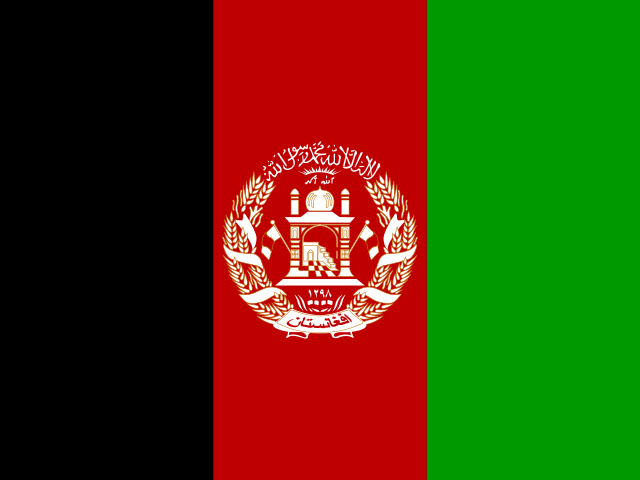
VS
Afghan citizens and rights groups

The Taliban are the Islamist political and military group that governed Afghanistan from 1996 to 2001 and returned to power in August 2021, twenty years after being ousted by U.S. troops.
Afghan citizens and rights groups include the country's civilian population, particularly women and girls, as well as domestic and international human rights organizations that monitor and advocate for fundamental freedoms in Afghanistan.
The conflict centers on the Taliban's enforcement of its interpretation of Islamic law, which has led to severe restrictions on personal freedoms, especially for women and girls.
Rights groups and many Afghan citizens oppose these policies, which they view as violations of human rights, while the Taliban maintain that their governance is based on religious principles.
The international community, including bodies like the ICC, has responded with legal actions and criticism, deepening the divide between the Taliban and those advocating for human rights.
The stakes are high: Afghanistan faces economic instability, a deepening humanitarian crisis, and the risk of gender apartheid, as described by some international observers.
Afghan women's rights activists continue to resist the Taliban's fundamentalist policies despite facing serious threats, and the international community remains divided on how to engage with the Taliban government.
*AI-generated summary of publicly available data. This is not an official statement of any party.
*AI-generated summary of publicly available statements and reporting. This is not an official statement of this party.
Supporters of the Taliban argue that their return to power restored Afghan cultural sovereignty, framing their governance as a corrective to foreign-imposed norms.
Supporters of Taliban argue that their rule restores Afghanistan's cultural and religious authenticity after decades of foreign-imposed norms, viewing their policies as a rightful return to Islamic tradition rather than a violation of rights.
Supporters of the Taliban counter that these policies restore Afghan cultural authenticity, shielding communal life from foreign-imposed individualism and preserving centuries-old traditions of honor and faith.
Supporters of the Taliban argue that their governance adheres to a strict legal interpretation of Islamic law, framing state-enforced social policies as legitimate religious jurisprudence rather than rights violations.
Supporters of Taliban argue that their legal framework, rooted in sharia, rightfully supersedes foreign human-rights norms, as Afghan sovereignty demands local legal interpretation.
Supporters of the Taliban counter that Afghanistan's constitution and treaties are subordinate to Islamic law, which the edicts uphold as the supreme legal framework.
Supporters of the Taliban argue that five years of unchallenged control proves their survival hinges on enforcing order, not accommodating critics; stability is the prize, and rights groups are a foreign luxury they can afford to ignore.
Supporters of Taliban argue that five years of rule prove stability outweighs foreign-defined rights, pointing to unchallenged control as the sole realistic alternative to chaos.
Supporters of the Taliban counter that edicts on phones and divorce are pragmatic stability tools, not mere control, as unchecked communication and marital disputes fuel factionalism and tribal chaos that threatens their consolidated rule.
Supporters of the Taliban argue that their governance restores moral order under Islamic law, viewing restrictions on divorce and social life as necessary protections for faith and community integrity.
Supporters of the Taliban argue that their enforcement of Islamic law restores moral order and divine justice, which they see as a sacred duty outweighing external human rights critiques.
Supporters of the Taliban counter that protecting social morality and family unity is a higher moral duty, viewing divorce restrictions and phone limits as safeguards against societal decay rather than erosions of dignity.
Supporters of Taliban argue that their governance restores divine order after decades of foreign-imposed chaos, seeing their policies as faithful enforcement of Islamic law rather than oppression.
Supporters of the Taliban argue that their governance restores authentic Islamic law, viewing their policies as divine mandate rather than state control.
Supporters of the Taliban counter that divine mandate, not human interpretation, defines justice, and that their rulings on divorce and technology uphold Quranic order and protect societal purity.
*AI-generated summary of publicly available statements and reporting. This is not an official statement of this party.
Supporters of Afghan citizens and rights groups argue that Taliban policies, from divorce restrictions to smartphone bans, erode Afghan cultural diversity and communal life, replacing inherited social traditions with a rigid, singular interpretation that isolates families and sti.
Supporters of Afghan citizens and rights groups argue that the Taliban’s swift legal and social edicts upend inherited Afghan customs, eroding communal trust and familial bonds that tradition once preserved.
Supporters of Afghan citizens and rights groups counter that cultural sovereignty cannot justify erasing lived traditions of music, education, and public life, arguing that true sovereignty honors the nation’s diverse heritage rather than a single imposed vision.
Supporters of Afghan citizens and rights groups argue that Taliban edicts on divorce and smartphone use violate Afghanistan's own legal obligations to due process and privacy, as enshrined in its constitution and international treaties.
Supporters of Afghan citizens and rights groups argue that the Taliban's decrees violate Afghanistan's own legal obligations under international human rights treaties, which the state remains bound to uphold.
Supporters of Afghan citizens and rights groups counter that Taliban rule selectively applies Islamic law, ignoring due process, equal protection, and international legal commitments Afghanistan ratified, thereby substituting religious edicts for enforceable civil rights.
Supporters of Afghan citizens and rights groups argue the Taliban's rule is pure power consolidation, using religious edicts on phones and divorce to enforce control, not piety.
Supporters of Afghan citizens and rights groups argue the Taliban’s rule is pure power consolidation, using religious edicts to crush dissent and secure control, not piety.
Supporters of Afghan citizens and rights groups counter that Taliban control rests on coercion, not consent, and that perceived stability masks a fragile economy and armed resistance, which foreign recognition and aid—not isolation—actually secure.
Supporters of Afghan citizens and rights groups argue that the Taliban’s policies violate a moral duty to protect human dignity, pointing to restrictions on divorce and smartphone use as evidence of systemic social control that erodes personal freedoms.
Supporters of Afghan citizens and rights groups argue that the Taliban’s policies violate the moral duty to protect human dignity, pointing to restrictions on divorce and smartphone use as evidence of systemic control that erodes personal freedoms and ecological stewardship of so.
Supporters of Afghan citizens and rights groups counter that moral order cannot be built on coercion, arguing that forced restrictions on divorce and social life violate the very dignity and conscience that true faith protects.
Supporters of Afghan citizens and rights groups argue that the Taliban’s policies distort Islamic law, citing scripture’s emphasis on justice and compassion to contend that divorce restrictions and smartphone bans exceed divine mandate.
Supporters of Afghan citizens and rights groups argue that divine justice demands compassion, not coercion, and they cite scripture's emphasis on mercy as evidence that the Taliban's harsh social controls distort, rather than fulfill, Islamic law.
Supporters of Afghan citizens and rights groups counter that divine order cannot justify cruelty, citing scripture’s call for justice and mercy, and argue that Taliban policies distort Islamic law, which protects life, dignity, and women’s rights.
AI-generated summary of publicly available statements and reporting. This is not an official statement of this party.
Supporters of the Taliban argue that their return to power restored Afghan cultural sovereignty, framing their governance as a corrective to foreign-imposed norms.
Supporters of Taliban argue that their rule restores Afghanistan's cultural and religious authenticity after decades of foreign-imposed norms, viewing their policies as a rightful return to Islamic tradition rather than a violation of rights.
Supporters of the Taliban counter that these policies restore Afghan cultural authenticity, shielding communal life from foreign-imposed individualism and preserving centuries-old traditions of honor and faith.
Supporters of the Taliban argue that their governance adheres to a strict legal interpretation of Islamic law, framing state-enforced social policies as legitimate religious jurisprudence rather than rights violations.
Supporters of Taliban argue that their legal framework, rooted in sharia, rightfully supersedes foreign human-rights norms, as Afghan sovereignty demands local legal interpretation.
Supporters of the Taliban counter that Afghanistan's constitution and treaties are subordinate to Islamic law, which the edicts uphold as the supreme legal framework.
Supporters of the Taliban argue that five years of unchallenged control proves their survival hinges on enforcing order, not accommodating critics; stability is the prize, and rights groups are a foreign luxury they can afford to ignore.
Supporters of Taliban argue that five years of rule prove stability outweighs foreign-defined rights, pointing to unchallenged control as the sole realistic alternative to chaos.
Supporters of the Taliban counter that edicts on phones and divorce are pragmatic stability tools, not mere control, as unchecked communication and marital disputes fuel factionalism and tribal chaos that threatens their consolidated rule.
Supporters of the Taliban argue that their governance restores moral order under Islamic law, viewing restrictions on divorce and social life as necessary protections for faith and community integrity.
Supporters of the Taliban argue that their enforcement of Islamic law restores moral order and divine justice, which they see as a sacred duty outweighing external human rights critiques.
Supporters of the Taliban counter that protecting social morality and family unity is a higher moral duty, viewing divorce restrictions and phone limits as safeguards against societal decay rather than erosions of dignity.
Supporters of Taliban argue that their governance restores divine order after decades of foreign-imposed chaos, seeing their policies as faithful enforcement of Islamic law rather than oppression.
Supporters of the Taliban argue that their governance restores authentic Islamic law, viewing their policies as divine mandate rather than state control.
Supporters of the Taliban counter that divine mandate, not human interpretation, defines justice, and that their rulings on divorce and technology uphold Quranic order and protect societal purity.
Supporters of Afghan citizens and rights groups argue that Taliban policies, from divorce restrictions to smartphone bans, erode Afghan cultural diversity and communal life, replacing inherited social traditions with a rigid, singular interpretation that isolates families and sti.
Supporters of Afghan citizens and rights groups argue that the Taliban’s swift legal and social edicts upend inherited Afghan customs, eroding communal trust and familial bonds that tradition once preserved.
Supporters of Afghan citizens and rights groups counter that cultural sovereignty cannot justify erasing lived traditions of music, education, and public life, arguing that true sovereignty honors the nation’s diverse heritage rather than a single imposed vision.
Supporters of Afghan citizens and rights groups argue that Taliban edicts on divorce and smartphone use violate Afghanistan's own legal obligations to due process and privacy, as enshrined in its constitution and international treaties.
Supporters of Afghan citizens and rights groups argue that the Taliban's decrees violate Afghanistan's own legal obligations under international human rights treaties, which the state remains bound to uphold.
Supporters of Afghan citizens and rights groups counter that Taliban rule selectively applies Islamic law, ignoring due process, equal protection, and international legal commitments Afghanistan ratified, thereby substituting religious edicts for enforceable civil rights.
Supporters of Afghan citizens and rights groups argue the Taliban's rule is pure power consolidation, using religious edicts on phones and divorce to enforce control, not piety.
Supporters of Afghan citizens and rights groups argue the Taliban’s rule is pure power consolidation, using religious edicts to crush dissent and secure control, not piety.
Supporters of Afghan citizens and rights groups counter that Taliban control rests on coercion, not consent, and that perceived stability masks a fragile economy and armed resistance, which foreign recognition and aid—not isolation—actually secure.
Supporters of Afghan citizens and rights groups argue that the Taliban’s policies violate a moral duty to protect human dignity, pointing to restrictions on divorce and smartphone use as evidence of systemic social control that erodes personal freedoms.
Supporters of Afghan citizens and rights groups argue that the Taliban’s policies violate the moral duty to protect human dignity, pointing to restrictions on divorce and smartphone use as evidence of systemic control that erodes personal freedoms and ecological stewardship of so.
Supporters of Afghan citizens and rights groups counter that moral order cannot be built on coercion, arguing that forced restrictions on divorce and social life violate the very dignity and conscience that true faith protects.
Supporters of Afghan citizens and rights groups argue that the Taliban’s policies distort Islamic law, citing scripture’s emphasis on justice and compassion to contend that divorce restrictions and smartphone bans exceed divine mandate.
Supporters of Afghan citizens and rights groups argue that divine justice demands compassion, not coercion, and they cite scripture's emphasis on mercy as evidence that the Taliban's harsh social controls distort, rather than fulfill, Islamic law.
Supporters of Afghan citizens and rights groups counter that divine order cannot justify cruelty, citing scripture’s call for justice and mercy, and argue that Taliban policies distort Islamic law, which protects life, dignity, and women’s rights.
The Global Centre for the Responsibility to Protect reported that women and girls in Afghanistan face gender apartheid perpetrated by the Taliban de facto authorities, highlighting the severity of rights restrictions.
The Council on Foreign Relations published a backgrounder detailing the Taliban's return to power in 2021 and their harsh rule, providing context on their governance and policies.
The UK government published a country policy and information note stating that the Taliban announced a general amnesty for former government employees and security-force personnel, a key element of their post-2021 governance.
A peer-reviewed article by S. Qazi Zada analyzed the future of Afghan women's and girls' human rights under Taliban rule, contributing to scholarly understanding of the conflict.
The Taliban regained control of Afghanistan after the withdrawal of international forces.