Taliban
VS
Afghan women's football team
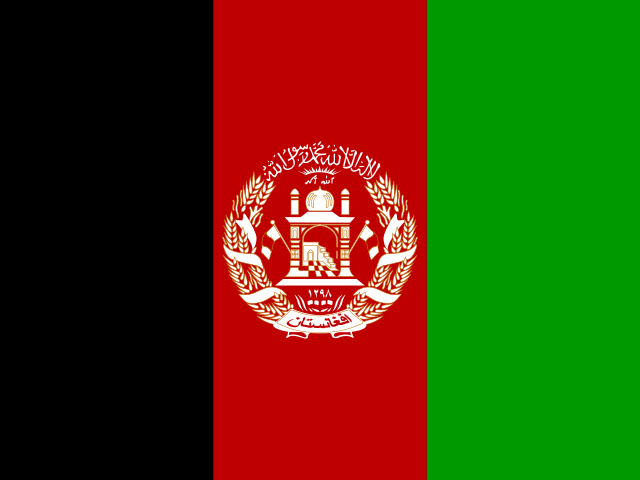
The Taliban is the hardline Islamist group that governed Afghanistan and returned to power in August 2021, subsequently banning women's sports in the country.
The Afghan women's national football team is a group of female players who were forced into exile following the Taliban's takeover, and they have continued to play internationally despite not being recognized by the Afghanistan Football Federation, which is under Taliban control.
The conflict arises because the Taliban's ban on women's football prevents the team from playing in their home country, and FIFA regulations require the team to receive recognition from the Taliban-controlled Afghanistan Football Federation to be officially sanctioned.
This has led to the team being unrecognized and unable to play official matches, despite their efforts to continue the sport in exile.
The team was officially recognized by FIFA in April 2026, but the Afghanistan Football Federation still does not recognize them, and the team played its last official competitive match in 2018.
*AI-generated summary of publicly available data. This is not an official statement of any party.
*AI-generated summary of publicly available statements and reporting. This is not an official statement of this party.
Supporters of the Taliban argue that Afghan cultural traditions reserve public sports for men, viewing the women’s team’s exile as a return to societal norms rather than a loss.
Supporters of the Taliban argue that the ban upholds Afghan cultural and religious norms, which prioritize women's modesty and family honor over foreign sporting ideals.
Supporters of Taliban counter that the sport embodies foreign cultural import, not Afghan tradition, and that true resilience lies in preserving faith and family over Western ideals of independence.
Supporters of the Taliban argue that the ban aligns with their legal interpretation of Sharia, which they maintain governs public conduct and women's sports. They contend that FIFA's recognition does not override domestic law, as sovereignty permits nations to enforce their own.
Supporters of Taliban argue that FIFA’s recognition cannot override Afghan law, which bars women’s public sport; they maintain that legal authority over national conduct rests with the ruling government, not international sporting bodies.
Supporters of the Taliban counter that FIFA recognition does not override national sovereignty, as international sports law defers to domestic legal frameworks, and the team's exiled status nullifies any enforceable claim under Afghan jurisdiction.
Supporters of Taliban argue the ban is a pragmatic consolidation of control, not a sporting decision, as football's promise of female independence threatens the power structures that keep the group's authority intact.
Supporters of the Taliban argue the ban is a pragmatic assertion of domestic authority, prioritizing cultural cohesion over FIFA's external recognition.
Supporters of the Taliban counter that FIFA’s recognition is symbolic, not sovereign—leverage shifts only where power enforces it, and Kabul holds the field. The 8,000-mile reunion is a diaspora echo, irrelevant to Afghan soil where the ban stands as a signal to internal.
Supporters of Taliban argue that divine law mandates the separation of women from public sports, viewing the ban as a moral duty to preserve modesty and religious order.
Supporters of Taliban argue that their ruling is rooted in divine law, which prescribes modesty and separate spheres for women, making public football a violation of faith. They maintain that the ban upholds moral order and protects women's honor, not their freedom.
Supporters of the Taliban counter that the pursuit of individual freedom through sport cannot supersede divine moral order, arguing that true dignity for Afghan women lies in faithful adherence to Islamic law, not in public competition.
Supporters of the Taliban maintain that Islamic law, not FIFA recognition, defines proper conduct for Afghan women, viewing the ban as upholding religious modesty and societal order.
Supporters of the Taliban argue that the ban on women's football upholds Islamic principles of modesty and protects social order, viewing the sport's emphasis on female independence as a Western intrusion into Afghan cultural and religious traditions.
Supporters of the Taliban counter that divine dignity is fulfilled through modesty and obedience, not public sport, citing scripture’s priority of communal honor over individual expression.
*AI-generated summary of publicly available statements and reporting. This is not an official statement of this party.
Supporters of the Afghan women's football team argue that the sport has become a living symbol of cultural resilience, offering players freedom and independence that the Taliban's ban cannot erase, even 8,000 miles from home.
Supporters of the Afghan women's football team argue that the sport is a cultural lifeline, not a luxury, as it has historically granted players freedom and independence. They maintain that the team's reunion abroad preserves a tradition of female athleticism that the Taliban's.
Supporters of Afghan women’s football team counter that history shows Afghan women’s sports flourished in the 20th century, from the 1920s reforms to the 2000s, making the Taliban’s claim of “tradition” a recent political invention, not a timeless cultural norm.
Supporters of the Afghan women's football team argue that FIFA recognition confers a legal right to play, which the Taliban's ban violates under international sports law and human rights treaties. They maintain that the team's exile does not extinguish that entitlement, as.
Supporters of the Afghan women's football team argue that FIFA's recognition establishes a binding legal right to play, which the Taliban's ban violates under international sports law and human rights conventions.
Supporters of Afghan women's football team counter that FIFA’s global statutes, which mandate non-discrimination, are binding on member federations, and the Taliban’s domestic law cannot supersede international sports law. They argue sovereignty does not extend to violating.
Supporters of the Afghan women's football team argue the Taliban's ban is a blunt power play to erase visible female agency, and the team's 8,000-mile reunion is their counter-leverage. They maintain that FIFA's recognition gives the players a global stage the Taliban cannot.
Supporters of the Afghan women's football team argue the Taliban's ban is a blunt power play, but the team's 8,000-mile reunion proves real leverage lies in FIFA recognition and global visibility, not home turf.
Supporters of Afghan women’s football team counter that the ban is a short-term power grab that forfeits long-term legitimacy, as global sports boycotts and aid freezes erode Taliban authority far more than any pitch protest ever could.
Supporters of the Afghan women's football team argue that denying these players the right to compete violates their fundamental human dignity, pointing to football as a source of personal freedom that the Taliban's ban unjustly strips away.
Supporters of the Afghan women's football team argue that denying these players their sport violates their universal human rights, as football provides them freedom and independence. They maintain that every woman deserves equal opportunity to play, regardless of political.
Supporters of Afghan women's football team counter that divine law also upholds human dignity and justice, which the ban violates by denying women their God-given right to participate in society. They argue that morality cannot be reduced to exclusion, as faith and sport.
Supporters of the Afghan women's football team argue that their pursuit of sport reflects God-given dignity and stewardship of one's talents, which no earthly authority should suppress under scripture's call to justice.
Supporters of the Afghan women's football team argue that their pursuit of sport reflects a God-given dignity and equality, pointing to Islamic values of justice and the right to self-determination.
Supporters of Afghan women’s football team respond that Islamic law itself affirms dignity and justice for women, and scripture nowhere forbids their participation in sport when conducted modestly. They argue the Taliban’s ban misreads faith, prioritizing control over the.
AI-generated summary of publicly available statements and reporting. This is not an official statement of this party.
Supporters of the Taliban argue that Afghan cultural traditions reserve public sports for men, viewing the women’s team’s exile as a return to societal norms rather than a loss.
Supporters of the Taliban argue that the ban upholds Afghan cultural and religious norms, which prioritize women's modesty and family honor over foreign sporting ideals.
Supporters of Taliban counter that the sport embodies foreign cultural import, not Afghan tradition, and that true resilience lies in preserving faith and family over Western ideals of independence.
Supporters of the Taliban argue that the ban aligns with their legal interpretation of Sharia, which they maintain governs public conduct and women's sports. They contend that FIFA's recognition does not override domestic law, as sovereignty permits nations to enforce their own.
Supporters of Taliban argue that FIFA’s recognition cannot override Afghan law, which bars women’s public sport; they maintain that legal authority over national conduct rests with the ruling government, not international sporting bodies.
Supporters of the Taliban counter that FIFA recognition does not override national sovereignty, as international sports law defers to domestic legal frameworks, and the team's exiled status nullifies any enforceable claim under Afghan jurisdiction.
Supporters of Taliban argue the ban is a pragmatic consolidation of control, not a sporting decision, as football's promise of female independence threatens the power structures that keep the group's authority intact.
Supporters of the Taliban argue the ban is a pragmatic assertion of domestic authority, prioritizing cultural cohesion over FIFA's external recognition.
Supporters of the Taliban counter that FIFA’s recognition is symbolic, not sovereign—leverage shifts only where power enforces it, and Kabul holds the field. The 8,000-mile reunion is a diaspora echo, irrelevant to Afghan soil where the ban stands as a signal to internal.
Supporters of Taliban argue that divine law mandates the separation of women from public sports, viewing the ban as a moral duty to preserve modesty and religious order.
Supporters of Taliban argue that their ruling is rooted in divine law, which prescribes modesty and separate spheres for women, making public football a violation of faith. They maintain that the ban upholds moral order and protects women's honor, not their freedom.
Supporters of the Taliban counter that the pursuit of individual freedom through sport cannot supersede divine moral order, arguing that true dignity for Afghan women lies in faithful adherence to Islamic law, not in public competition.
Supporters of the Taliban maintain that Islamic law, not FIFA recognition, defines proper conduct for Afghan women, viewing the ban as upholding religious modesty and societal order.
Supporters of the Taliban argue that the ban on women's football upholds Islamic principles of modesty and protects social order, viewing the sport's emphasis on female independence as a Western intrusion into Afghan cultural and religious traditions.
Supporters of the Taliban counter that divine dignity is fulfilled through modesty and obedience, not public sport, citing scripture’s priority of communal honor over individual expression.
Supporters of the Afghan women's football team argue that the sport has become a living symbol of cultural resilience, offering players freedom and independence that the Taliban's ban cannot erase, even 8,000 miles from home.
Supporters of the Afghan women's football team argue that the sport is a cultural lifeline, not a luxury, as it has historically granted players freedom and independence. They maintain that the team's reunion abroad preserves a tradition of female athleticism that the Taliban's.
Supporters of Afghan women’s football team counter that history shows Afghan women’s sports flourished in the 20th century, from the 1920s reforms to the 2000s, making the Taliban’s claim of “tradition” a recent political invention, not a timeless cultural norm.
Supporters of the Afghan women's football team argue that FIFA recognition confers a legal right to play, which the Taliban's ban violates under international sports law and human rights treaties. They maintain that the team's exile does not extinguish that entitlement, as.
Supporters of the Afghan women's football team argue that FIFA's recognition establishes a binding legal right to play, which the Taliban's ban violates under international sports law and human rights conventions.
Supporters of Afghan women's football team counter that FIFA’s global statutes, which mandate non-discrimination, are binding on member federations, and the Taliban’s domestic law cannot supersede international sports law. They argue sovereignty does not extend to violating.
Supporters of the Afghan women's football team argue the Taliban's ban is a blunt power play to erase visible female agency, and the team's 8,000-mile reunion is their counter-leverage. They maintain that FIFA's recognition gives the players a global stage the Taliban cannot.
Supporters of the Afghan women's football team argue the Taliban's ban is a blunt power play, but the team's 8,000-mile reunion proves real leverage lies in FIFA recognition and global visibility, not home turf.
Supporters of Afghan women’s football team counter that the ban is a short-term power grab that forfeits long-term legitimacy, as global sports boycotts and aid freezes erode Taliban authority far more than any pitch protest ever could.
Supporters of the Afghan women's football team argue that denying these players the right to compete violates their fundamental human dignity, pointing to football as a source of personal freedom that the Taliban's ban unjustly strips away.
Supporters of the Afghan women's football team argue that denying these players their sport violates their universal human rights, as football provides them freedom and independence. They maintain that every woman deserves equal opportunity to play, regardless of political.
Supporters of Afghan women's football team counter that divine law also upholds human dignity and justice, which the ban violates by denying women their God-given right to participate in society. They argue that morality cannot be reduced to exclusion, as faith and sport.
Supporters of the Afghan women's football team argue that their pursuit of sport reflects God-given dignity and stewardship of one's talents, which no earthly authority should suppress under scripture's call to justice.
Supporters of the Afghan women's football team argue that their pursuit of sport reflects a God-given dignity and equality, pointing to Islamic values of justice and the right to self-determination.
Supporters of Afghan women’s football team respond that Islamic law itself affirms dignity and justice for women, and scripture nowhere forbids their participation in sport when conducted modestly. They argue the Taliban’s ban misreads faith, prioritizing control over the.
Women in the team, which is recognised by Fifa, say football has given them freedom and independence.
Following FIFA's approval, the Afghan women's football team returned to the international stage, having been forced into exile after the Taliban's 2021 takeover and subsequent ban on women's sports.
After years in exile, the Afghan women's soccer team rose again, with players who had gone into hiding after the Taliban shut down women's sports in 2021.
The Afghan women's national football team was officially recognized by FIFA in April 2026, despite the ban in Afghanistan.
Human rights researchers highlighted the team's return as a boost for human rights, noting the team was disbanded in August 2021 when the Taliban filled the power vacuum.
Amnesty International urged FIFA to recognize and support the Afghan women's team in exile, noting that FIFA regulations require recognition from the Taliban-controlled federation, which will not happen.
The Taliban returned to power in Afghanistan in August 2021, disbanding the women's football team and banning women's sports, forcing players into hiding and exile.