Taliban
VS
Armed factions

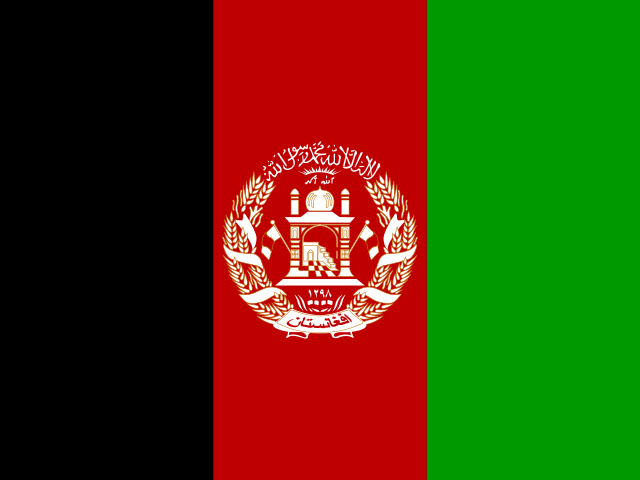
The Taliban are an Islamist political and military group that emerged in 1994 during the Second Afghan Civil War, largely composed of warlords from Pashtun areas.
They captured Kabul in 1996 and established the Islamic Emirate of Afghanistan, consolidating control over nearly 90 percent of the country by 2001.
After being ousted by a US-led coalition, they regained power in August 2021.
Armed factions opposing the Taliban include various insurgent groups, notably the Islamic State Khorasan Province (IS-KP), which poses a significant threat.
By September 2022, the UN reported claims of at least 22 armed groups opposing the Taliban across 26 provinces.
These groups challenge the Taliban's rule and undermine their central claim of providing security, leading to ongoing conflict between the Taliban government and these insurgent forces.
*AI-generated summary of publicly available data. This is not an official statement of any party.
*AI-generated summary of publicly available statements and reporting. This is not an official statement of this party.
Supporters of Taliban argue that their rule restores Afghanistan's authentic cultural identity, framing armed factions as foreign-influenced disruptors of national unity.
Supporters of Taliban argue that their return to power in August 2021 restored Afghan cultural sovereignty, framing armed factions as foreign-influenced disruptors of national identity and unity.
Supporters of the Taliban counter that customary tribal governance has always operated within the unifying frame of Islamic law, which the movement restores rather than erases.
Supporters of the Taliban argue that, as the legitimate governing authority since August 15, 2021, their rule rests on domestic legal consolidation and international recognition, making armed factions unlawful challengers to state sovereignty under Afghan law.
Supporters of Taliban argue that their government holds legal authority as Afghanistan's recognized sovereign, and armed factions violate domestic law by challenging the state's monopoly on force.
Supporters of Taliban counter that legal sovereignty derives from effective control and recognition, citing UN engagement and diplomatic ties as evidence of international acceptance.
Supporters of Taliban argue that ruling Afghanistan requires crushing rivals, and five years of armed resistance only proves the state's survival instinct.
Supporters of the Taliban argue that five years of rule prove their monopoly on force is the only realistic path to stability, and any armed faction challenging that monopoly is simply a rival for power, not a legitimate alternative.
Supporters of Taliban counter that Kabul’s bargain is not fragile but enforced by their monopoly on coercion, which armed factions underestimate at their peril, as any concession extracted by force simply invites a larger military response.
Supporters of Taliban argue that their return to power restored order after decades of chaos, and that any armed resistance now threatens Afghanistan’s fragile stability, making their rule a moral duty to protect civilians from renewed civil war.
Supporters of Taliban argue their rule restores moral order after years of foreign-imposed chaos, viewing armed factions as disruptors of a legitimate Islamic governance that promises security and stability for Afghans.
Supporters of the Taliban counter that stability and order under their rule outweigh abstract consent, arguing that security for the majority is a moral good that armed factions’ chaos undermines.
Supporters of Taliban argue that their rule is divine mandate, citing the Quran's call for unity under righteous authority as evidence that armed factions defy God's will.
Supporters of Taliban argue that their retaking of Kabul on August 15, 2021, fulfilled a divine mandate to restore Islamic governance, viewing armed factions as heretical challengers to God's ordained order.
Supporters of Taliban counter that the factions' claim misreads divine will, as the Taliban's governance enforces sharia through established authority, whereas fragmented armed resistance undermines Islamic unity and invites fitna.
*AI-generated summary of publicly available statements and reporting. This is not an official statement of this party.
Supporters of Armed factions argue that Afghanistan's tribal and religious pluralism predates any single ruler, and the Taliban's centralized authority erases centuries of local customary governance.
Supporters of armed factions argue that overthrowing the Taliban's centralized rule preserves Afghanistan's diverse tribal and religious traditions, which they view as threatened by a singular governing authority.
Supporters of Armed factions counter that Afghanistan’s cultural identity is plural, and the Taliban’s narrow Pashtun-centric code erases the traditions of Hazaras, Tajiks, and Uzbeks, making the factions defenders of that diversity.
Supporters of Armed factions argue that the Taliban's claim to legal sovereignty is invalid, as it rests on violent seizure in August 2021, not legitimate consent, leaving factions with a moral right to resist under international law.
Supporters of Armed factions argue that no legal authority flows from a power seizure, and the Taliban's rule lacks constitutional legitimacy.
Supporters of Armed factions counter that the Taliban's claim to legal legitimacy ignores Afghanistan's 2004 constitution, which the Taliban never ratified, and that no international body has formally recognized their government, leaving their sovereignty legally contested.
Supporters of Armed factions argue the Taliban’s victory proves only force secures power, so rivals rightly mirror that tactic to extract concessions from Kabul’s fragile bargain.
Supporters of Armed factions argue that the Taliban's security claim is a fiction, proven by their reliance on force, not consent, to hold power.
Supporters of Armed factions counter that crushing rivals is not survival but a declaration of weakness, as five years of resistance exposes the Taliban’s unsustainable reliance on brute force over negotiated legitimacy.
Supporters of Armed factions argue that their resistance carries moral weight, as the Taliban’s rule is built on force, not consent, and security for some means oppression for many.
Supporters of Armed factions argue that resistance to the Taliban is morally justified, as the group's monopoly on power suppresses legitimate dissent and denies Afghans a voice in their own governance.
Supporters of armed factions counter that Taliban rule is not order but occupation, and that resistance is a moral duty when a regime denies women education and free speech.
Supporters of Armed factions argue that their resistance is a religious duty against a Taliban rule that has abandoned true Islamic governance, pointing to the group’s compromises as proof of spiritual betrayal.
Supporters of Armed factions argue that the Taliban’s rule violates Islamic tradition by monopolizing religious authority, as true faith demands decentralized resistance to unjust governance.
Supporters of Armed factions counter that the Quran also commands resistance against tyranny, and that the Taliban’s authority, imposed through violence, lacks the legitimacy of a true righteous covenant.
AI-generated summary of publicly available statements and reporting. This is not an official statement of this party.
Supporters of Taliban argue that their rule restores Afghanistan's authentic cultural identity, framing armed factions as foreign-influenced disruptors of national unity.
Supporters of Taliban argue that their return to power in August 2021 restored Afghan cultural sovereignty, framing armed factions as foreign-influenced disruptors of national identity and unity.
Supporters of the Taliban counter that customary tribal governance has always operated within the unifying frame of Islamic law, which the movement restores rather than erases.
Supporters of the Taliban argue that, as the legitimate governing authority since August 15, 2021, their rule rests on domestic legal consolidation and international recognition, making armed factions unlawful challengers to state sovereignty under Afghan law.
Supporters of Taliban argue that their government holds legal authority as Afghanistan's recognized sovereign, and armed factions violate domestic law by challenging the state's monopoly on force.
Supporters of Taliban counter that legal sovereignty derives from effective control and recognition, citing UN engagement and diplomatic ties as evidence of international acceptance.
Supporters of Taliban argue that ruling Afghanistan requires crushing rivals, and five years of armed resistance only proves the state's survival instinct.
Supporters of the Taliban argue that five years of rule prove their monopoly on force is the only realistic path to stability, and any armed faction challenging that monopoly is simply a rival for power, not a legitimate alternative.
Supporters of Taliban counter that Kabul’s bargain is not fragile but enforced by their monopoly on coercion, which armed factions underestimate at their peril, as any concession extracted by force simply invites a larger military response.
Supporters of Taliban argue that their return to power restored order after decades of chaos, and that any armed resistance now threatens Afghanistan’s fragile stability, making their rule a moral duty to protect civilians from renewed civil war.
Supporters of Taliban argue their rule restores moral order after years of foreign-imposed chaos, viewing armed factions as disruptors of a legitimate Islamic governance that promises security and stability for Afghans.
Supporters of the Taliban counter that stability and order under their rule outweigh abstract consent, arguing that security for the majority is a moral good that armed factions’ chaos undermines.
Supporters of Taliban argue that their rule is divine mandate, citing the Quran's call for unity under righteous authority as evidence that armed factions defy God's will.
Supporters of Taliban argue that their retaking of Kabul on August 15, 2021, fulfilled a divine mandate to restore Islamic governance, viewing armed factions as heretical challengers to God's ordained order.
Supporters of Taliban counter that the factions' claim misreads divine will, as the Taliban's governance enforces sharia through established authority, whereas fragmented armed resistance undermines Islamic unity and invites fitna.
Supporters of Armed factions argue that Afghanistan's tribal and religious pluralism predates any single ruler, and the Taliban's centralized authority erases centuries of local customary governance.
Supporters of armed factions argue that overthrowing the Taliban's centralized rule preserves Afghanistan's diverse tribal and religious traditions, which they view as threatened by a singular governing authority.
Supporters of Armed factions counter that Afghanistan’s cultural identity is plural, and the Taliban’s narrow Pashtun-centric code erases the traditions of Hazaras, Tajiks, and Uzbeks, making the factions defenders of that diversity.
Supporters of Armed factions argue that the Taliban's claim to legal sovereignty is invalid, as it rests on violent seizure in August 2021, not legitimate consent, leaving factions with a moral right to resist under international law.
Supporters of Armed factions argue that no legal authority flows from a power seizure, and the Taliban's rule lacks constitutional legitimacy.
Supporters of Armed factions counter that the Taliban's claim to legal legitimacy ignores Afghanistan's 2004 constitution, which the Taliban never ratified, and that no international body has formally recognized their government, leaving their sovereignty legally contested.
Supporters of Armed factions argue the Taliban’s victory proves only force secures power, so rivals rightly mirror that tactic to extract concessions from Kabul’s fragile bargain.
Supporters of Armed factions argue that the Taliban's security claim is a fiction, proven by their reliance on force, not consent, to hold power.
Supporters of Armed factions counter that crushing rivals is not survival but a declaration of weakness, as five years of resistance exposes the Taliban’s unsustainable reliance on brute force over negotiated legitimacy.
Supporters of Armed factions argue that their resistance carries moral weight, as the Taliban’s rule is built on force, not consent, and security for some means oppression for many.
Supporters of Armed factions argue that resistance to the Taliban is morally justified, as the group's monopoly on power suppresses legitimate dissent and denies Afghans a voice in their own governance.
Supporters of armed factions counter that Taliban rule is not order but occupation, and that resistance is a moral duty when a regime denies women education and free speech.
Supporters of Armed factions argue that their resistance is a religious duty against a Taliban rule that has abandoned true Islamic governance, pointing to the group’s compromises as proof of spiritual betrayal.
Supporters of Armed factions argue that the Taliban’s rule violates Islamic tradition by monopolizing religious authority, as true faith demands decentralized resistance to unjust governance.
Supporters of Armed factions counter that the Quran also commands resistance against tyranny, and that the Taliban’s authority, imposed through violence, lacks the legitimacy of a true righteous covenant.
According to the UN, there were claims of at least 22 armed groups opposing the Taliban in 26 provinces by September 2022.
An analysis noted that the only group posing a real threat to the Taliban is IS-KP, with both being enemies.
The Taliban managed to retake power in Afghanistan on August 15, 2021.
By 2001, the Taliban had consolidated control over nearly 90 percent of the country.
The Taliban captured Kabul in 1996 and established the Islamic Emirate of Afghanistan.
The Taliban emerged in 1994 as a prominent faction in the Second Afghan Civil War, largely consisting of warlords from Pashtun areas.