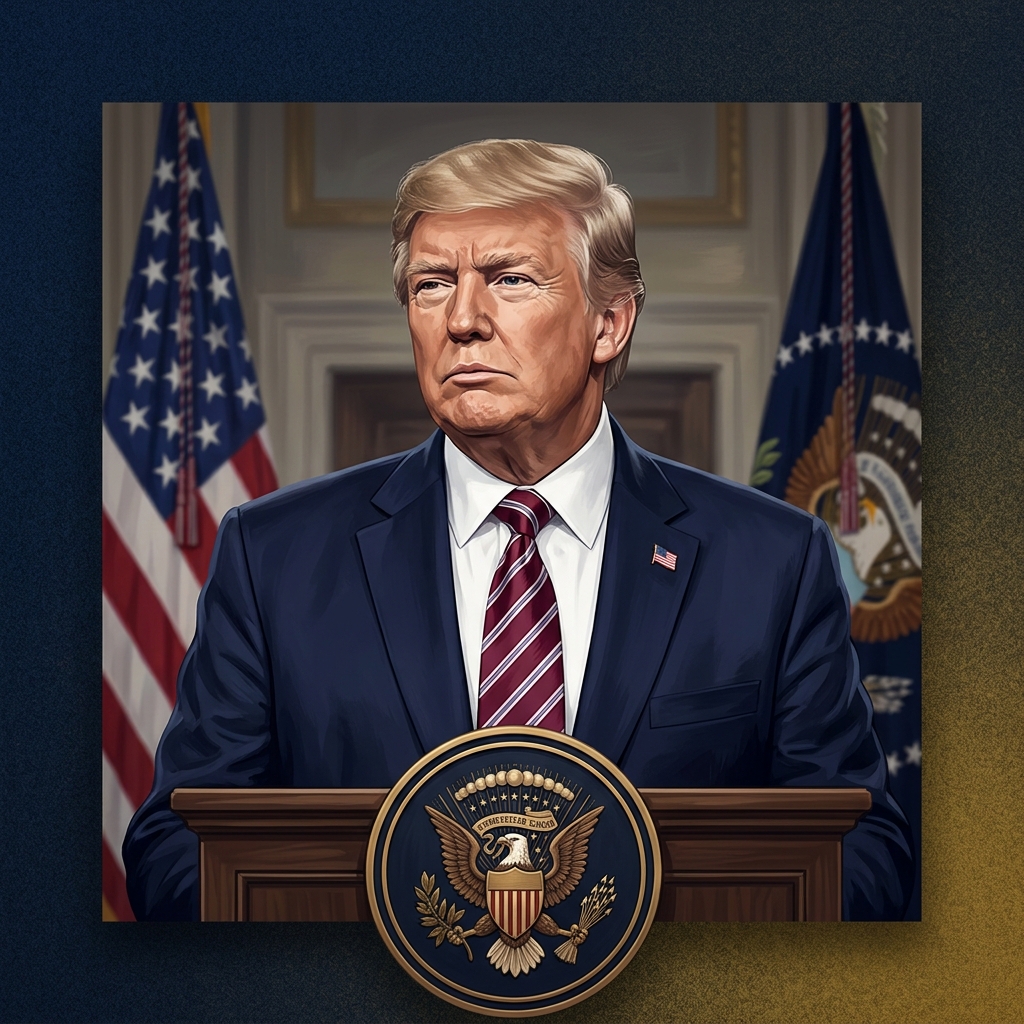
Trump administration
VS
Critics of the bomb sale

The Trump administration is the executive branch of the United States federal government under President Donald Trump, who began his second term in January 2025.
It is responsible for conducting U.S. foreign policy and approving major arms transfers to allied nations.
Critics of the bomb sale include lawmakers, human rights organizations, and other observers who oppose the proposed transfer of 2,000-pound bombs to Israel.
They argue that such weapons have been used in strikes in densely populated areas and could cause mass civilian harm.
The two sides are at odds over a proposed $2.8 billion sale of 2,000-pound bombs to Israel.
The administration has advanced the sale as support for a key ally, while critics warn that providing these weapons enables mass civilian harm and have called for the transfer to be blocked.
*AI-generated summary of publicly available data. This is not an official statement of any party.
*AI-generated summary of publicly available statements and reporting. This is not an official statement of this party.
Supporters of the Trump administration argue the bomb sale upholds a long-standing cultural commitment to standing by allies, maintaining that reliable defense ties with Israel preserve regional stability and inherited security partnerships.
Supporters of the Trump administration argue the bomb sale upholds America's long tradition of standing by allied nations, maintaining that abandoning Israel would weaken the stability and trust that inherited alliances depend on.
Supporters of the Trump administration counter that continuity itself is the point: established alliances and arms agreements are inherited commitments, not improvised regrets, and honoring them preserves the stability that cultural memory rightly prizes.
Supporters of the Trump administration argue the $2.8bn bomb sale to Israel is lawful under existing US arms export statutes and treaties, maintaining that Congress approved such transfers and that Israel, as a sovereign ally, bears legal responsibility for lawful targeting decis.
Supporters of the Trump administration argue the sale is lawful under existing U.S. arms export statutes and treaty commitments to Israel, maintaining that legal review obligations rest with the recipient's compliance, not the approval process.
Supporters of the Trump administration counter that the decision to supply these munitions falls within lawful arms-transfer authority, and that international humanitarian law governs the conduct of hostilities by the recipient, not the supplier's approval process.
Supporters of the Trump administration argue the $2.8bn bomb sale keeps a key ally armed and deterred, treating leverage and alliance strength as the real currency of influence.
Supporters of Trump administration argue that arms sales to Israel secure leverage over a key ally and advance US interests, contending that withholding bombs would cede influence without saving civilians.
Supporters of the Trump administration counter that withholding shipments forfeits leverage entirely: arms flow makes Washington's restraint credible, while conditions just push Israel toward other suppliers and cost the US its say.
Supporters of the Trump administration argue that fulfilling the $2.8bn bomb sale to Israel honors a moral duty to a key ally facing active threats, and they maintain that arms transfers strengthen deterrence rather than cause civilian harm.
Supporters of the Trump administration argue that honoring a $2.8bn bomb sale to Israel reflects a moral duty to a key ally facing security threats, maintaining that critics have not proven intent to target civilians.
Supporters of the Trump administration counter that arming Israel is the moral duty of an ally, arguing that withholding bombs abandons a democracy facing annihilation and that U.S. arms sustain deterrence, not civilian harm.
Supporters of the Trump administration argue that backing Israel, the Holy Land's custodian, honors a biblical covenant, and that arming a key ally preserves religious freedom and order.
Supporters of the Trump administration argue that backing Israel, a key ally, upholds a moral duty to defend a nation facing existential threats, consistent with religious convictions about standing with the vulnerable.
Supporters of the Trump administration counter that scripture also charges rulers to defend the innocent from aggressors, and that arming an ally against a sworn enemy is the moral duty, not the sin.
*AI-generated summary of publicly available statements and reporting. This is not an official statement of this party.
Supporters of Critics of the bomb sale invoke the cultural memory of past arms transfers that later drew regret, arguing precedent shows such deals outlast the administrations that approve them.
Supporters of Critics of the bomb sale invoke the cultural memory of past arms transfers that fueled civilian harm, arguing that history teaches such sales deepen cycles of violence rather than secure lasting peace.
Supporters of Critics of the bomb sale counter that prior US arms transfers to the region, such as the 1973 airlift to Israel, entrenched a cycle of militarization rather than securing peace.
Supporters of Critics of the bomb sale argue that transferring 2,000-pound bombs to Israel risks violating international humanitarian law, which requires protecting civilians in populated areas.
Supporters of Critics of the bomb sale argue that international humanitarian law obliges states to avoid transferring weapons where civilian harm is foreseeable, making the deal legally questionable.
Supporters of Critics of the bomb sale counter that US law, including the Arms Export Control Act and Leahy Law, conditions transfers on compliance with international humanitarian law, so Congress's approval does not shield the deal from legal review.
Supporters of Critics of the bomb sale argue the $2.8bn transfer buys Israel leverage while Washington absorbs the reputational cost, so they demand conditions and withheld shipments to keep real power over an ally's conduct.
Supporters of Critics of the bomb sale argue the $2.8bn transfer buys Washington nothing but complicity, since Israel acts regardless and the U.S. absorbs the blame.
Critics of the bomb sale counter that arming an ally mid-campaign forfeits leverage, not gains it; once the bombs ship, the administration's threat to withhold them rings hollow, and the ally's dependence on Washington only deepens.
Critics of the bomb sale argue that supplying 2,000-pound bombs to Israel is morally indefensible, since such weapons have caused mass civilian harm, and they insist the U.S. must not profit from or enable that suffering.
Supporters of Critics of the bomb sale argue that enabling 2,000-pound bombs in populated areas makes the United States morally complicit in mass civilian harm, and that fairness demands prioritizing innocent lives over arms profits.
Critics of the bomb sale counter that a moral duty to an ally cannot justify supplying weapons used in Gaza, where thousands of civilians have died, and they argue complicity in that harm outweighs any deterrence claim.
Supporters of Critics of the bomb sale argue that faith and scripture call for protecting innocent life, so sending 2,000-pound bombs risks enabling mass civilian harm and violates the moral duty to shield the vulnerable.
Supporters of Critics of the bomb sale invoke scripture's call to protect innocent life, arguing that faith demands refusing weapons that risk mass civilian harm, even to a key ally.
Supporters of Critics of the bomb sale counter that scripture commands peacemaking and that stockpiling weapons in the Holy Land betrays the covenant's call to justice, not its fulfillment.
AI-generated summary of publicly available statements and reporting. This is not an official statement of this party.
Supporters of the Trump administration argue the bomb sale upholds a long-standing cultural commitment to standing by allies, maintaining that reliable defense ties with Israel preserve regional stability and inherited security partnerships.
Supporters of the Trump administration argue the bomb sale upholds America's long tradition of standing by allied nations, maintaining that abandoning Israel would weaken the stability and trust that inherited alliances depend on.
Supporters of the Trump administration counter that continuity itself is the point: established alliances and arms agreements are inherited commitments, not improvised regrets, and honoring them preserves the stability that cultural memory rightly prizes.
Supporters of the Trump administration argue the $2.8bn bomb sale to Israel is lawful under existing US arms export statutes and treaties, maintaining that Congress approved such transfers and that Israel, as a sovereign ally, bears legal responsibility for lawful targeting decis.
Supporters of the Trump administration argue the sale is lawful under existing U.S. arms export statutes and treaty commitments to Israel, maintaining that legal review obligations rest with the recipient's compliance, not the approval process.
Supporters of the Trump administration counter that the decision to supply these munitions falls within lawful arms-transfer authority, and that international humanitarian law governs the conduct of hostilities by the recipient, not the supplier's approval process.
Supporters of the Trump administration argue the $2.8bn bomb sale keeps a key ally armed and deterred, treating leverage and alliance strength as the real currency of influence.
Supporters of Trump administration argue that arms sales to Israel secure leverage over a key ally and advance US interests, contending that withholding bombs would cede influence without saving civilians.
Supporters of the Trump administration counter that withholding shipments forfeits leverage entirely: arms flow makes Washington's restraint credible, while conditions just push Israel toward other suppliers and cost the US its say.
Supporters of the Trump administration argue that fulfilling the $2.8bn bomb sale to Israel honors a moral duty to a key ally facing active threats, and they maintain that arms transfers strengthen deterrence rather than cause civilian harm.
Supporters of the Trump administration argue that honoring a $2.8bn bomb sale to Israel reflects a moral duty to a key ally facing security threats, maintaining that critics have not proven intent to target civilians.
Supporters of the Trump administration counter that arming Israel is the moral duty of an ally, arguing that withholding bombs abandons a democracy facing annihilation and that U.S. arms sustain deterrence, not civilian harm.
Supporters of the Trump administration argue that backing Israel, the Holy Land's custodian, honors a biblical covenant, and that arming a key ally preserves religious freedom and order.
Supporters of the Trump administration argue that backing Israel, a key ally, upholds a moral duty to defend a nation facing existential threats, consistent with religious convictions about standing with the vulnerable.
Supporters of the Trump administration counter that scripture also charges rulers to defend the innocent from aggressors, and that arming an ally against a sworn enemy is the moral duty, not the sin.
Supporters of Critics of the bomb sale invoke the cultural memory of past arms transfers that later drew regret, arguing precedent shows such deals outlast the administrations that approve them.
Supporters of Critics of the bomb sale invoke the cultural memory of past arms transfers that fueled civilian harm, arguing that history teaches such sales deepen cycles of violence rather than secure lasting peace.
Supporters of Critics of the bomb sale counter that prior US arms transfers to the region, such as the 1973 airlift to Israel, entrenched a cycle of militarization rather than securing peace.
Supporters of Critics of the bomb sale argue that transferring 2,000-pound bombs to Israel risks violating international humanitarian law, which requires protecting civilians in populated areas.
Supporters of Critics of the bomb sale argue that international humanitarian law obliges states to avoid transferring weapons where civilian harm is foreseeable, making the deal legally questionable.
Supporters of Critics of the bomb sale counter that US law, including the Arms Export Control Act and Leahy Law, conditions transfers on compliance with international humanitarian law, so Congress's approval does not shield the deal from legal review.
Supporters of Critics of the bomb sale argue the $2.8bn transfer buys Israel leverage while Washington absorbs the reputational cost, so they demand conditions and withheld shipments to keep real power over an ally's conduct.
Supporters of Critics of the bomb sale argue the $2.8bn transfer buys Washington nothing but complicity, since Israel acts regardless and the U.S. absorbs the blame.
Critics of the bomb sale counter that arming an ally mid-campaign forfeits leverage, not gains it; once the bombs ship, the administration's threat to withhold them rings hollow, and the ally's dependence on Washington only deepens.
Critics of the bomb sale argue that supplying 2,000-pound bombs to Israel is morally indefensible, since such weapons have caused mass civilian harm, and they insist the U.S. must not profit from or enable that suffering.
Supporters of Critics of the bomb sale argue that enabling 2,000-pound bombs in populated areas makes the United States morally complicit in mass civilian harm, and that fairness demands prioritizing innocent lives over arms profits.
Critics of the bomb sale counter that a moral duty to an ally cannot justify supplying weapons used in Gaza, where thousands of civilians have died, and they argue complicity in that harm outweighs any deterrence claim.
Supporters of Critics of the bomb sale argue that faith and scripture call for protecting innocent life, so sending 2,000-pound bombs risks enabling mass civilian harm and violates the moral duty to shield the vulnerable.
Supporters of Critics of the bomb sale invoke scripture's call to protect innocent life, arguing that faith demands refusing weapons that risk mass civilian harm, even to a key ally.
Supporters of Critics of the bomb sale counter that scripture commands peacemaking and that stockpiling weapons in the Holy Land betrays the covenant's call to justice, not its fulfillment.
Trump administration pushes $2.8bn bomb sale to Israel amid criticism over mass targeting of civilians in the region.