Trump administration
VS
Iran
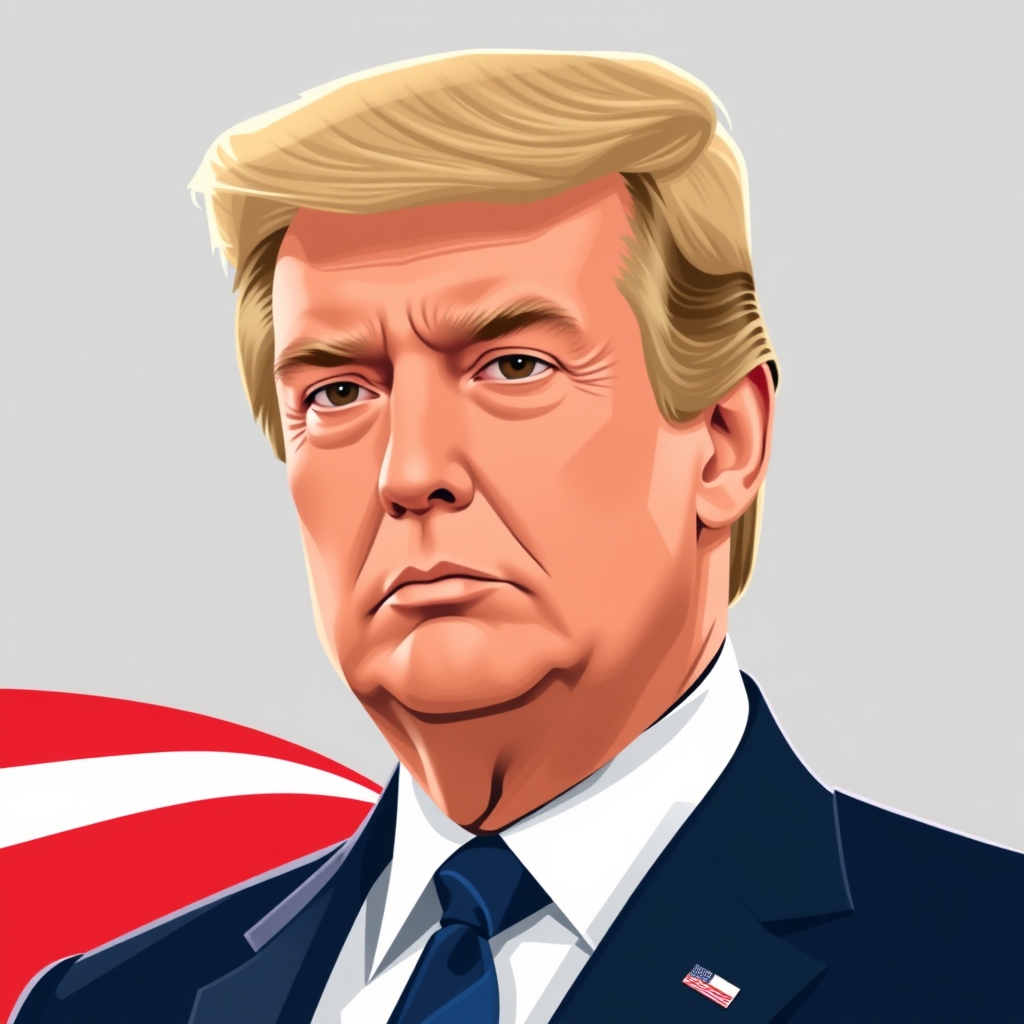
The Trump administration, led by President Donald Trump, has pursued a confrontational policy toward Iran, including military strikes and economic sanctions.
Iran, an Islamic republic, has responded with missile attacks and has continued its nuclear program, which the U.S. seeks to end through 'maximum pressure' measures.
The conflict stems from the U.S. goal to halt Iran's nuclear activities and curb its regional influence, while Iran asserts its sovereignty and resists external pressure.
The administration's shift from military action to economic sanctions raises questions about whether such measures can achieve U.S. objectives, especially as the war has failed to meet strategic goals and has faced criticism from military officials and experts.
*AI-generated summary of publicly available data. This is not an official statement of any party.
*AI-generated summary of publicly available statements and reporting. This is not an official statement of this party.
Supporters of the Trump administration argue that economic sanctions are a time-honored instrument of statecraft, preserving order and avoiding the cultural upheaval of prolonged conflict.
Supporters of the Trump administration argue that economic sanctions honor America’s enduring tradition of measured statecraft, preserving order over the chaos of endless war and upholding the cultural value of patience over impulse.
Supporters of the Trump administration counter that sanctions target the regime’s behavior, not Iran’s culture, and that Persian heritage endures independently of political leadership.
Supporters of the Trump administration argue that economic sanctions are a lawful, targeted alternative to sustained military force, grounding their strategy in legal frameworks that authorize pressure over prolonged conflict.
Supporters of Trump administration argue that economic sanctions are legally defensible under existing authorities, targeting Iran's illicit activities while avoiding unlawful escalation. They maintain this pressure compels compliance within international legal frameworks.
Supporters of the Trump administration counter that U.S.
Supporters of the Trump administration argue the sanctions pivot is a calculated power play, not a retreat. They maintain that squeezing Iran’s economy forces Tehran to weigh survival against its proxies, making military force a cheaper leverage tool for later.
Supporters of Trump administration argue that sanctions are a calculated lever, not retreat: economic strangulation forces Tehran’s elite to weigh survival against ideology, making military escalation a costlier, less controllable option.
Supporters of the Trump administration counter that sanctions are not an admission of military failure but a deliberate escalation of leverage, targeting Iran’s economy to force concessions without risking U.S. casualties.
Supporters of the Trump administration argue that economic sanctions are the moral alternative, imposing costs on Iran's leadership while sparing civilian lives from further military escalation.
Supporters of the Trump administration argue that economic sanctions are the moral high ground, preferring to cripple Iran's war machine through financial pressure rather than prolong a deadly military offensive that risks further civilian casualties.
Supporters of the Trump administration counter that sanctions target the regime's nuclear ambitions, not the Iranian people, and argue that moral responsibility lies in preventing a destabilizing arms race rather than preserving a failed status quo.
Supporters of the Trump administration argue that economic sanctions serve as a divine test of patience, reflecting a moral conviction that peaceful pressure aligns with scripture over prolonged bloodshed in Iran.
Supporters of the Trump administration argue that economic sanctions are a moral instrument of restraint, reflecting a sacred duty to preserve life while still opposing Iran's actions as a matter of divine justice.
Supporters of the Trump administration counter that divine law itself condemns tyranny and honors justice, and sanctions uphold the sacred duty to oppose oppression, not the regime’s defiance.
*AI-generated summary of publicly available statements and reporting. This is not an official statement of this party.
Supporters of Iran argue that American economic sanctions, however severe, cannot erode the nation’s cultural identity or its right to self-determination, viewing the Trump administration’s pressure as a foreign assault on Iranian sovereignty that only strengthens domestic resolv.
Supporters of Iran argue that the pivot to sanctions by the Trump administration reflects a failure to break Iranian national resolve, which is rooted in a deep cultural identity of resistance and self-determination.
Supporters of Iran counter that sanctions are cultural warfare, eroding daily life and national identity far beyond statecraft’s bounds. They argue that economic pressure forces a society to abandon its heritage, not preserve order.
Supporters of Iran argue that unilateral U.S. sanctions violate international law, which requires multilateral authorization for coercive economic measures, and they point to the UN Charter’s principles of sovereign equality as evidence that such pressure is legally illegitimate.
Supporters of Iran argue that the Trump administration’s sanctions violate the 2015 JCPOA framework and UN Security Council Resolution 2231, which they say legally obligates the U.S. to lift nuclear-related measures.
Supporters of Iran counter that unilateral U.S. sanctions violate the plain text of the Joint Comprehensive Plan of Action and UN Security Council Resolution 2231, which require lifting nuclear-related measures—not expanding them—as a legal precondition for compliance.
Supporters of Iran argue Trump’s sanctions pivot is a tacit admission that military force failed, and they note Tehran has weathered decades of such pressure, betting that economic pain will crack Washington’s resolve before Iranian resolve.
Supporters of Iran argue that Trump's shift to sanctions is a tacit admission that military pressure failed, and that Tehran's patience is a strategic weapon.
Supporters of Iran counter that sanctions pressure has historically hardened, not broken, Tehran’s resolve, and the regime’s survival calculus already accounts for economic pain as a fixed cost of its proxy network.
Supporters of Iran argue that economic sanctions repeat a failed historical pattern of collective punishment, recalling past embargoes that hardened, not softened, Iranian resolve.
Supporters of Iran argue that sanctions are a moral failure, echoing past sieges that punished civilians while leaders stayed insulated.
Supporters of Iran counter that sanctions are not moral but collective punishment, citing past embargoes that choked medicine and food imports while enriching the regime's critics.
Supporters of Iran argue that economic sanctions, like past pressures, will not shake the nation’s commitment to its religious principles and cultural continuity, viewing resilience under hardship as a sacred duty.
Supporters of Iran argue that economic sanctions, however severe, cannot sever a nation's sacred covenant with its faith, as religious continuity outlasts any pressure campaign.
Supporters of Iran counter that sanctions are not divine tests but collective punishment, citing scripture that condemns starving the innocent to bend a nation's will.
AI-generated summary of publicly available statements and reporting. This is not an official statement of this party.
Supporters of the Trump administration argue that economic sanctions are a time-honored instrument of statecraft, preserving order and avoiding the cultural upheaval of prolonged conflict.
Supporters of the Trump administration argue that economic sanctions honor America’s enduring tradition of measured statecraft, preserving order over the chaos of endless war and upholding the cultural value of patience over impulse.
Supporters of the Trump administration counter that sanctions target the regime’s behavior, not Iran’s culture, and that Persian heritage endures independently of political leadership.
Supporters of the Trump administration argue that economic sanctions are a lawful, targeted alternative to sustained military force, grounding their strategy in legal frameworks that authorize pressure over prolonged conflict.
Supporters of Trump administration argue that economic sanctions are legally defensible under existing authorities, targeting Iran's illicit activities while avoiding unlawful escalation. They maintain this pressure compels compliance within international legal frameworks.
Supporters of the Trump administration counter that U.S.
Supporters of the Trump administration argue the sanctions pivot is a calculated power play, not a retreat. They maintain that squeezing Iran’s economy forces Tehran to weigh survival against its proxies, making military force a cheaper leverage tool for later.
Supporters of Trump administration argue that sanctions are a calculated lever, not retreat: economic strangulation forces Tehran’s elite to weigh survival against ideology, making military escalation a costlier, less controllable option.
Supporters of the Trump administration counter that sanctions are not an admission of military failure but a deliberate escalation of leverage, targeting Iran’s economy to force concessions without risking U.S. casualties.
Supporters of the Trump administration argue that economic sanctions are the moral alternative, imposing costs on Iran's leadership while sparing civilian lives from further military escalation.
Supporters of the Trump administration argue that economic sanctions are the moral high ground, preferring to cripple Iran's war machine through financial pressure rather than prolong a deadly military offensive that risks further civilian casualties.
Supporters of the Trump administration counter that sanctions target the regime's nuclear ambitions, not the Iranian people, and argue that moral responsibility lies in preventing a destabilizing arms race rather than preserving a failed status quo.
Supporters of the Trump administration argue that economic sanctions serve as a divine test of patience, reflecting a moral conviction that peaceful pressure aligns with scripture over prolonged bloodshed in Iran.
Supporters of the Trump administration argue that economic sanctions are a moral instrument of restraint, reflecting a sacred duty to preserve life while still opposing Iran's actions as a matter of divine justice.
Supporters of the Trump administration counter that divine law itself condemns tyranny and honors justice, and sanctions uphold the sacred duty to oppose oppression, not the regime’s defiance.
Supporters of Iran argue that American economic sanctions, however severe, cannot erode the nation’s cultural identity or its right to self-determination, viewing the Trump administration’s pressure as a foreign assault on Iranian sovereignty that only strengthens domestic resolv.
Supporters of Iran argue that the pivot to sanctions by the Trump administration reflects a failure to break Iranian national resolve, which is rooted in a deep cultural identity of resistance and self-determination.
Supporters of Iran counter that sanctions are cultural warfare, eroding daily life and national identity far beyond statecraft’s bounds. They argue that economic pressure forces a society to abandon its heritage, not preserve order.
Supporters of Iran argue that unilateral U.S. sanctions violate international law, which requires multilateral authorization for coercive economic measures, and they point to the UN Charter’s principles of sovereign equality as evidence that such pressure is legally illegitimate.
Supporters of Iran argue that the Trump administration’s sanctions violate the 2015 JCPOA framework and UN Security Council Resolution 2231, which they say legally obligates the U.S. to lift nuclear-related measures.
Supporters of Iran counter that unilateral U.S. sanctions violate the plain text of the Joint Comprehensive Plan of Action and UN Security Council Resolution 2231, which require lifting nuclear-related measures—not expanding them—as a legal precondition for compliance.
Supporters of Iran argue Trump’s sanctions pivot is a tacit admission that military force failed, and they note Tehran has weathered decades of such pressure, betting that economic pain will crack Washington’s resolve before Iranian resolve.
Supporters of Iran argue that Trump's shift to sanctions is a tacit admission that military pressure failed, and that Tehran's patience is a strategic weapon.
Supporters of Iran counter that sanctions pressure has historically hardened, not broken, Tehran’s resolve, and the regime’s survival calculus already accounts for economic pain as a fixed cost of its proxy network.
Supporters of Iran argue that economic sanctions repeat a failed historical pattern of collective punishment, recalling past embargoes that hardened, not softened, Iranian resolve.
Supporters of Iran argue that sanctions are a moral failure, echoing past sieges that punished civilians while leaders stayed insulated.
Supporters of Iran counter that sanctions are not moral but collective punishment, citing past embargoes that choked medicine and food imports while enriching the regime's critics.
Supporters of Iran argue that economic sanctions, like past pressures, will not shake the nation’s commitment to its religious principles and cultural continuity, viewing resilience under hardship as a sacred duty.
Supporters of Iran argue that economic sanctions, however severe, cannot sever a nation's sacred covenant with its faith, as religious continuity outlasts any pressure campaign.
Supporters of Iran counter that sanctions are not divine tests but collective punishment, citing scripture that condemns starving the innocent to bend a nation's will.
November US midterms referenced in the article as a potential deadline for conflict resolution.
The US war with Iran has cost $43.6 billion so far, with most of the bill tied to replacing expended munitions Read Full Article at RT.com
President Trump says the US is nearing the end of the conflict with Iran and claims direct talks with Tehran.
IRGC says it attacked a US unmanned vessel in the Strait of Hormuz.
UKMTO reports projectiles hit two ships off Oman.
Trump has tied the end of his war on Iran to the midterms. But with Iran holding firm, the political cost is mounting.
President Donald Trump has claimed that the US has already taken out “about nine” Iranian oil tankers and threatened to attack “a lot more” Read Full Article at RT.com
Trump administration has sought to isolate Tehran through a raft of measures meant to squeeze the country's economy.
US military strikes targeting Iranian oil tankers, prompting Iranian retaliation threats.
Iran plans to announce a new shipping route through the Strait of Hormuz in the coming days.
IRGC claims attacks on three oil tankers and three US-linked ships, following missile strikes on US warships.
Amid rising public discontent, Iranian authorities say adversaries are focused on encouraging domestic unrest.
Trump repeated a warning that the US may attack Iran's Pickaxe Mountain 'very soon'.
A recent military exchange between the US and Iran, as referenced by Trump.
The Trump official expressed scepticism at White House briefing about the conflict being a war despite recent flare-up.
Fresh US military attacks on targets in Iran aimed at preventing Tehran from rebuilding its capabilities.
US bombing killed five and wounded at least 63 in Kuhestak, Sirik, according to Iranian officials.
Long lines at fuel stations are spreading across Iran as war damage, import constraints and new US sanctions squeeze supplies.
Long lines at fuel stations are spreading across Iran as war damage, import constraints and new US sanctions squeeze supplies.
Trump signals harsher response as US-Iran hostilities escalate, raising fears of prolonged conflict in the Gulf region.
Speaking on the sidelines of the SCO summit in Kyrgyzstan, Iran's president Pezeshkian called on the US to return to the terms of an interim ceasefire deal.
US military superiority has failed to deliver victory in the Iran war, exposing limits in manpower, alliances, strategy and political will Read Full Article at RT.com
Many Iranians inside the country feel they are being unjustly erased from the international community.
Video depicting Kharg Island being attacked is later followed by more warnings from President Trump.
US president promises to hit Iran and calls for the country's leaders to be prosecuted for killing protesters.
The latest package of US sanctions on Iran is unlikely to achieve Washington’s objectives.
US President Donald Trump has published AI-generated clips showing a missile strike on Iran’s Kharg Island amid a new escalation with Tehran Read Full Article at RT.com
Iran’s energy hub of Kharg Island is being blown to smithereens, Trump said with no evidence.
Iran's IRGC claims decisive control over the Strait of Hormuz as the US maintains its naval blockade.
Trump apparently suffers from delusions as he speaks of the Strait of Hormuz as being a US territory, a senior Iranian diplomat has charged Read Full Article at RT.com
The US has not won the war, but sustained pressure is weakening Tehran and giving Washington a stronger hand.
White House press secretary Karoline Leavitt said on Thursday that the United States and Iran are not currently in talks to end the war, as the US is focused on its economic pressure against Iran, with all options "on the table."
After an inconclusive military campaign, Washington is leaning on the dollar because coercion now costs less than another failed air war Read Full Article at RT.com
There are signs both sides could be ready to de-escalate, at least militarily, analysts say.
Trump talks to Al Jazeera amid diplomatic efforts.
Qatar's Prime Minister visits Tehran as part of diplomatic efforts.
A temporary route is agreed in the Strait of Hormuz.
Trump says Iran war will continue for as long as necessary
Iranian authorities believe they can withstand US sanctions, but warn of a tough year ahead.
'I have no time schedule,' Trump says when asked when he expects Iran to return to the negotiating table.
The impact of the new round of US sanctions on Iran has long extended beyond the bilateral relationship between the United States and Iran. The sanctions will not only deepen Iran's economic and livelihood difficulties, but will also transmit their effects across the region and the wider world through energy, trade, finance and supply chains.
Economic escalation is unlikely to force the Iranian government to capitulate to US demands, according to experts.
Iran described the new measures as “gross lawlessness,” expressing confidence many countries won’t join the pressure campaign.
The US is expanding sanctions on Iran's financial networks, targeting crypto, gold, aviation and shipping. Analysts say the measures may fuel inflation and strengthen informal markets without changing Tehran's behavior.
The US is expanding sanctions on Iran's financial networks, targeting crypto, gold, aviation and shipping. DW spoke with analysts about what could change.
The US announced a new economic pressure campaign against Iran.
New sanctions hit Iran's aviation, tech, and shipping sectors, amplifying pressure on global markets and energy prices.
US Treasury Secretary Scott Bessent has outlined what he called "unprecedented" moves to isolate Iran economically. He said it will focus on third countries, warning those who don't comply will "share" in the isolation.
The US president says he will impose 'crushing measures' on Tehran.
Iran warns that countries backing US economic sanctions will be considered an enemy of Tehran.
The remarks came as the Trump administration is touting a crushing financial campaign against Iran, promising an “economic D-Day” against the country.
Donald Trump repeated claims that Iran is weakened economically and militarily and ‘would love’ to make a deal.
Iranian media cite Masoud Pezeshkian as saying it would be a good time to end the war with the US, "as we are in a position of strength and dignity." He also said Tehran would never "bow to intimidation."
The US Treasury Secretary, has indicated a change in US strategy towards Iran, focusing on economic isolation.
US Treasury Secretary Bessent says new economic measures will 'collapse' Iranian government.
Iran has so far proved adept at finding ways around years of already punishing sanctions on its economy.
US Treasury Secretary Scott Bessent says allies will need to decide whether they "are with us or against us".
Scott Bessent has not said if countries such as China could be targeted in an effort to economically isolate Tehran.
Iran's foreign minister has dismissed Trump’s latest threats, calling them a “diversion" from America’s own crisis."
US President Donald Trump has announced a new campaign to isolate Iran and punish its trading partners.
Trump says Washington may resume talks with Tehran 'at some point'.
Trump threatens 'economic D-Day' on countries helping or doing business with Iran.
The US has halted negotiations with Iran and is reportedly seeking to “strangle” the country over time Read Full Article at RT.com
States bordering the Strait of Hormuz, including Iran and Oman, are continuing talks on managing the strategic waterway.
Trump says no talks with Tehran scheduled; Iranian Foreign Minister Abbas Araghchi claims US 'begging' for negotiations.
Trump also claimed that the Strait of Hormuz was "open and operating," contrary to Iranian reports. Meanwhile, Syria, the US and Turkey condemned Israeli strikes on a Syrian airbase. Follow DW for more.
A memorandum of understanding expires, prompting Iran's more offensive posture.
US president has yet another outlandish threat for Iran, with no end to war in sight.
“The Strait of Hormuz cannot be seized by a tweet or an aircraft carrier, by issuing an order or by delivering an election speech,” said Iran’s Deputy Foreign Minister Kazem Gharibabadi.
Trump said he will 'soon' declare the Strait of Hormuz a US territory.
Trump says he will declare the Strait of Hormuz a US territory 'pretty soon' after Iran is defeated.
US President Donald Trump announced intention to claim the Strait of Hormuz as US territory.
The USS Washington is expected to relieve the USS Lincoln in the Middle East.
Donald Trump said the strait would become part of the US after Iran is defeated. He also told Americans to accept higher gas prices, which have soared since Iran closed Hormuz in response to US and Israeli attacks.
US Defense Secretary Pete Hegseth claims the US Navy can sustain a blockade against Iran despite reports of poor conditions.
The US military has lost a quarter of its pre-war stock of MQ-9 Reaper drones while fighting Iran, the Washington Post has reported Read Full Article at RT.com
Iran could continue fighting the US until Donald Trump’s presidency ends, senior IRGC commander Mohammad Reza Naqdi has said Read Full Article at RT.com
Iran denies US control over the Strait of Hormuz and insists it remains closed until US demands are met.
Donald Trump has demanded compensation from Iran after Tehran called for reparations as part of negotiations over the Strait of Hormuz Read Full Article at RT.com
US President Donald Trump said he will seek compensation from Iran for casualties in the war.
President Donald Trump says he’ll demand compensation from Iran for people killed or wounded in the US war on Iran.
Donald Trump says the US is only ‘semi-negotiating’ with Iran.
Iran's Foreign Ministry reiterated that the US must meet Tehran's demands before the Strait of Hormuz is reopened and that ships transiting through will be expected to pay a fee. Follow DW for more.
Months into the war, Trump is returning to squeezing Iran's economy rather than military offensive for now.
The Center for American Progress published an article stating that the Trump administration's war in Iran has failed to achieve any strategic objectives while harming the American people.
The Lowy Institute published an analysis titled 'How Trump got Iran wrong', criticizing the administration's approach to Iran.
A top general warned that dwindling munitions and the risk of wider retaliation are limiting U.S. military options in the Iran conflict.
A US strike reportedly hit a wedding in Kuhestak, Iran, causing civilian casualties.
A 60-day ceasefire expired with no diplomatic or military off-ramp to the conflict.
Iran's new Supreme National Security Council secretary threatens seismic retaliation against U.S. actions.
The conflict has been ongoing for six months, with U.S. objectives shifting to prioritize the Strait of Hormuz.
Only eight vessels crossed the strait, down from 130-140 prior to the war.
Iran's Foreign Ministry spokesman Esmaeil Baghaei slams new US sanctions and Trump's threats as a violation of sovereignty and a return to colonialism.
Qatar's PM to meet Iranian officials to discuss de-escalation of regional tensions.
US and Houthis reported separate attacks on shipping; Iran said Strait of Hormuz would remain closed unless Washington accepts its conditions.
Trump said Washington is not seeking to extend the interim agreement with Iran and threatened to bomb Oman.
Trump demands Iranian reparations for deaths in wars, attacks, and protests, escalating rhetoric and complicating Hormuz deal efforts.
The New York Times reported that the Trump administration plans to return diplomats to Middle East embassies, with some personnel potentially returning as early as this week.
President Trump struck Iran's nuclear facilities in June 2025, declaring them 'obliterated' and moving to impose a ceasefire on Israel.
Iran has survived decapitation strikes, sanctions, and economic pressure.
A dramatic plane swap between the US and Iran, involving the exchange of prisoners, highlighting the personal stakes in their relationship.
US Treasury Secretary Scott Bessent announced the toughest sanctions in history on Iran, leading to a surge in oil prices.
The US announced new sanctions on dozens of Iranian and foreign entities over ties to oil, weapons, and cyber operations.
Trump vowed to hit Iran hard economically, following Bessent's announcement of unprecedented measures.
US President Donald Trump warned of economic consequences against any country supporting Iran or providing any type of lifeline to Tehran.
US President Trump announces a new economic operation against Iran, vowing measures against nations trading with Tehran.
The US administration announced new economic sanctions against Iran as part of an 'economic war' strategy.
US Treasury Secretary Scott Bessent announced the new sanctions campaign against Iran.
Bessent warns of Iran's potential economic collapse at the G20 meeting.
The Memorandum of Understanding was signed, but details are not provided in the article.
Within a month of signing, Trump deemed the MoU 'over' as both sides traded attacks.
An Israeli strike in Gaza killed an aid worker, leading Australia to summon Israel's envoy.
US drone strike that killed Iranian General Qasem Soleimani, escalating tensions.
President Trump stated all mines in international waters of the Strait of Hormuz have been removed or detonated, warning against new mines.
The United States reimposed sanctions on Iran as part of its 'maximum pressure' campaign.