Trump-aligned
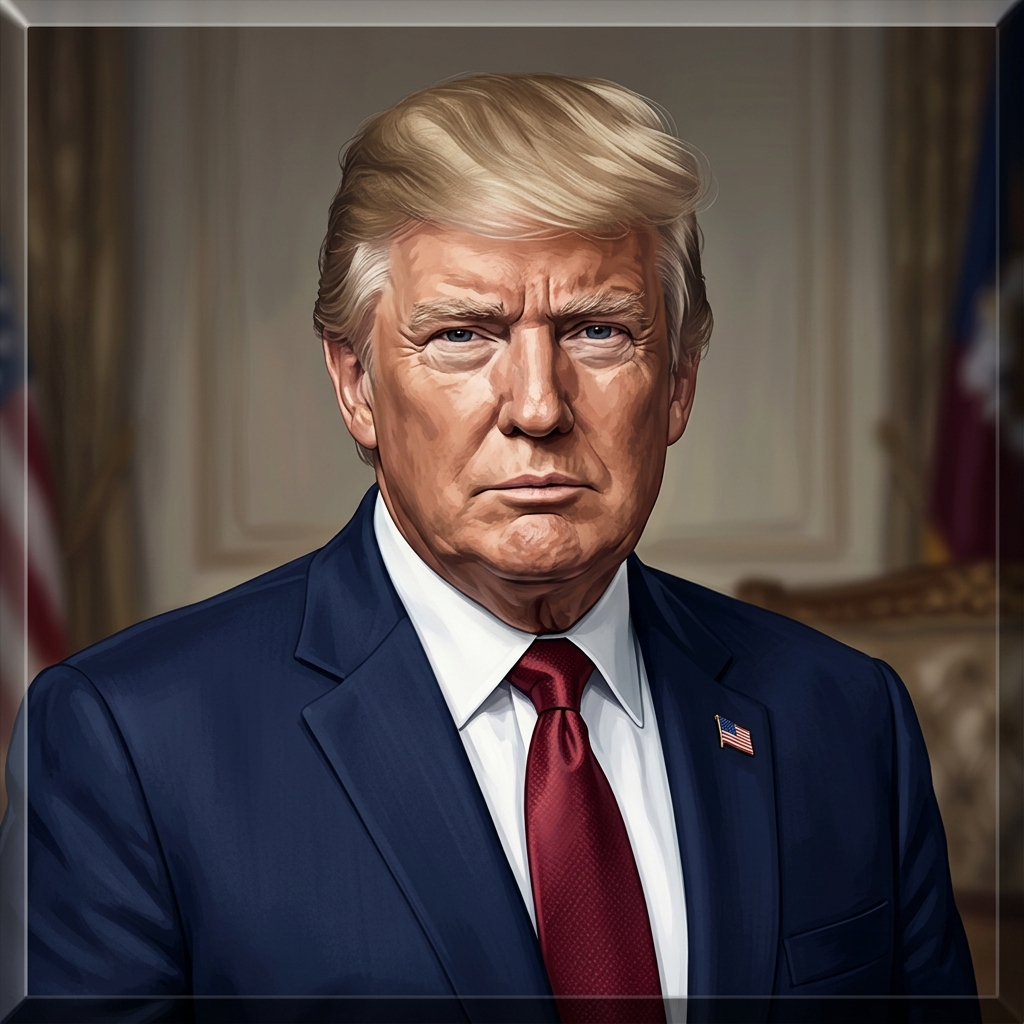
VS
Anti-Trump
?
No players in this team.
No players in this team.
The 2024 US primaries in Kansas, Missouri, Virginia, and Washington featured several contested races, including House battlegrounds and intraparty fights, serving as a test of Donald Trump's influence over Republican voters.
The outcomes were seen as shaping the general election landscape and signaling the direction of the Republican Party.
This match examines the broader ideological divide between Trump-aligned and anti-Trump factions within the party, a dynamic that has been central to recent political contests.
*AI-generated summary of publicly available data. This is not an official statement of any party.
*AI-generated summary of publicly available statements and reporting. This is not an official statement of this party.
Supporters of Trump-aligned Republicans argue that the movement reflects a cultural realignment, not a factional split, pointing to the 81% GOP favorability as proof that their vision, rooted in traditional values and defiance of elite norms, now defines the party's historical.
Supporters of Trump-aligned factions view the primaries as a cultural vindication, arguing that establishment Republicans’ 2019 resistance echoed an elite disdain for grassroots values, while PRRI’s 81% approval signals enduring loyalty to Trump’s agenda over party tradition.
Supporters of Trump-aligned Republicans view the primary results as cultural validation, arguing that voters reaffirm the movement’s break from establishment norms that once shunned the president and his agenda.
Supporters of Trump-aligned counter that institutional norms have long served the elite, not the people; they point to 2016’s primary revolt as a cultural rebuke of a party that ignored its base, making his style a corrective, not a corruption.
Supporters of Trump-aligned counter that the 2019 hearings marked a rupture with a status quo that had long prioritized elite politeness over voter will, framing his movement as a corrective restoration of founding-era directness.
Supporters of Trump-aligned candidates argue that primary voters, not courts or party elites, legitimately decide nominees, citing the 81% Republican favorability as legal electoral validation over the 2019 establishment resistance.
Supporters of Trump-aligned candidates argue that primary voters legally affirmed Trump’s leadership, citing the 2026 PRRI finding that 81% of Republicans view him favorably, making anti-Trump challenges a minority position within party rules.
Supporters of Trump-aligned Republicans argue that primary voters, not courts or party elites, legally decide the party’s direction, citing the 81% GOP favorability as democratic validation of his influence.
Supporters of Trump-aligned counter that the 2019 hearings reflected a defense of constitutional process, not a rejection of governance standards, and argue that institutional integrity was upheld by scrutinizing executive overreach through legal channels.
Supporters of Trump-aligned counter that legal accountability, as pursued, weaponizes courts to overturn electoral outcomes, citing baseless claims of fraud and institutional bias as a threat to voter sovereignty, not integrity.
Supporters of Trump-aligned argue the primaries prove his faction owns the party’s base, with 81% GOP favorability making anti-Trump resistance a losing bet; they see establishment pushback as elite vanity that ignores the incentives of voters, who reward loyalty over decorum.
Supporters of Trump-aligned argue that the 2024 primaries proved his iron grip on the party, with 81% Republican favorability rendering anti-Trump factions a powerless, self-defeating elite. They maintain that establishment resistance since 2019 reflects fear of losing.
Trump-aligned supporters counter that the 81% figure reflects strategic alignment, not fear, as Republican leaders calculate political survival by backing a winner who delivers policy victories.
Supporters of Trump-aligned argue that primary voters affirm a moral covenant with his agenda, viewing opposition as a betrayal of the party’s divine-ordained mission to protect faith and family.
Supporters of Trump-aligned argue that the 81% Republican favorability rating reflects a moral vindication of Trump’s leadership, framing anti-Trump factions as elitist defectors who prioritize personal disdain over party loyalty. They maintain that establishment resistance, as.
Supporters of Trump-aligned Republicans argue that their loyalty reflects moral consistency, viewing Trump’s agenda as a defense of faith, family, and national identity against establishment drift.
Supporters of Trump-aligned counter that moral integrity flows from fidelity to the people’s will, not abstract truth tests; they argue the 2017 finding merely reflects healthy partisan loyalty, which scripture itself honors as communal faithfulness.
Supporters of Trump-aligned counter that moral integrity rests not in party establishment, but in fidelity to the people’s will, which Trump’s movement embodies over insider tradition.
Supporters of Trump-aligned Republicans argue that his leadership upholds America's Judeo-Christian heritage, preserving faith-based values and religious liberty against establishment drift, which they view as a moral anchor for national order and cultural continuity.
Supporters of Trump-aligned argue that his leadership reflects divine providence, citing scripture to affirm that believers are called to support righteous governance, even amid party division.
Supporters of Trump-aligned Republicans argue that his steadfast defense of religious liberty and traditional faith anchors the party’s moral continuity amid cultural upheaval, viewing his leadership as a providential bulwark for believers.
Supporters of Trump-aligned factions view his leadership as a providential defender of religious tradition, arguing that his agenda upholds the moral order that established institutions once guarded.
Supporters of Trump-aligned counter that his leadership upholds Christian order by defending religious liberty and traditional values, viewing unity as rooted in shared truth, not compromise.
Supporters of Trump-aligned counter that his leadership defends the very institutions faith depends on, preserving religious liberty and traditional order against secular encroachment.
*AI-generated summary of publicly available statements and reporting. This is not an official statement of this party.
Supporters of Anti-Trump argue that preserving the Republican Party’s traditional civic culture requires rejecting a leader whose divisive style erodes institutional norms, pointing to establishment members’ 2019 refusal to align with his behavior as evidence that national.
Supporters of Anti-Trump argue that his movement erodes cultural norms of civic decorum and institutional trust, citing 2019 hearings where establishment Republicans rejected his behavior and agenda.
Supporters of Anti-Trump argue that his dominance reflects a cultural shift away from traditional conservative values, citing the PRRI finding that 81% of Republicans favor him as evidence of a loyalty test overriding principled identity.
Supporters of Anti-Trump argue that their resistance is a cultural defense of traditional Republican norms, viewing Trump's influence as eroding the party's identity and civic standards.
Supporters of the Anti-Trump side counter that the 81% favorability reflects partisan loyalty, not cultural consensus, and they challenge the claim that defiance of elite norms equates to traditional values, noting that such defiance often erodes democratic institutions and.
Supporters of Anti-Trump argue that legal norms require placing institutional integrity above party loyalty, citing 2019 hearings where establishment Republicans rejected Trump's agenda as a breach of governance standards.
Supporters of Anti-Trump argue that legal accountability for Trump’s conduct, including documented misinformation and contested primary outcomes, is essential to preserve electoral integrity, citing institutional resistance as evidence that rule-of-law checks must constrain.
Supporters of Anti-Trump argue that the Republican Party’s internal divide reveals a legal crisis: 81% of Republicans endorsing Trump, per PRRI, undermines the rule of law by normalizing disregard for constitutional norms. They maintain that courts and oversight must reject this.
Supporters of the Anti-Trump side counter that primary votes do not override constitutional and statutory rules, citing legal challenges to the 2019 resistance as due-process safeguards, not elite interference. They argue that favorability polls are not binding law, whereas.
Supporters of the Anti-Trump side counter that legality of primaries does not settle constitutional fitness, citing the Fourteenth Amendment’s disqualification clause and judicial rulings on insurrection—party favorability polls, they argue, cannot override legal standards for.
Anti-Trump supporters argue that Trump's 81% favorability among Republicans is a hostage dynamic, not genuine loyalty, where fear of his base's retaliation silences internal dissent and forces submission to his agenda.
Supporters of Anti-Trump argue the 2024 primaries exposed a power play, not a mandate, noting 18% of Republicans still reject Trump, a bloc establishment figures leverage to resist his agenda.
Anti-Trump supporters counter that 81% favorability measures an echo chamber, not electoral viability, noting primaries reward extremes while general elections punish them, so Trump’s base is a liability, not an asset, to GOP power.
Supporters of Anti-Trump argue that rejecting his influence is a moral stand for truth and civic integrity, pointing to 2017 evidence that his name alone skews belief along partisan lines, which they see as corrosive to honest discourse.
Supporters of Anti-Trump argue that resisting his influence is a moral imperative, pointing to establishment Republicans who rejected his behavior and agenda as a defense of party integrity over partisan loyalty.
Anti-Trump advocates argue that opposing Trump is a moral duty, citing how establishment Republicans rejected him for his behavior and agenda, viewing loyalty to principles over party as essential.
Supporters of Anti-Trump counter that no divine mandate sanctifies political loyalty, and conflating faith with one man’s agenda corrupts both religion and moral judgment.
Supporters of Anti-Trump counter that a favorability rating measures tribal loyalty, not moral character, and that Trump’s leadership—marked by norm-breaking and divisive rhetoric—fails any ethical test beyond partisan applause.
Supporters of Anti-Trump argue that his divisive politics contradict the Christian call to humility and unity, citing scripture to claim his agenda fosters discord rather than moral leadership.
Supporters of Anti-Trump argue that his leadership erodes the moral and spiritual foundations of the Republic, urging a return to principled conservatism rooted in faith and civic virtue.
Supporters of Anti-Trump argue that his divisive politics violate the scriptural call for humility and truth, citing his behavior as a test of moral integrity over partisan loyalty.
Supporters of Anti-Trump counter that his leadership fractures the Judeo-Christian witness, citing scripture’s call to humility and justice, which his divisive rhetoric and policies betray, not preserve.
Supporters of Anti-Trump counter that divine providence is not a blank check for any leader, citing scripture where prophets challenge unrighteous rulers, and they argue that faith demands discernment over blind allegiance to any political figure.
AI-generated summary of publicly available statements and reporting. This is not an official statement of this party.
Supporters of Trump-aligned Republicans argue that the movement reflects a cultural realignment, not a factional split, pointing to the 81% GOP favorability as proof that their vision, rooted in traditional values and defiance of elite norms, now defines the party's historical.
Supporters of Trump-aligned factions view the primaries as a cultural vindication, arguing that establishment Republicans’ 2019 resistance echoed an elite disdain for grassroots values, while PRRI’s 81% approval signals enduring loyalty to Trump’s agenda over party tradition.
Supporters of Trump-aligned Republicans view the primary results as cultural validation, arguing that voters reaffirm the movement’s break from establishment norms that once shunned the president and his agenda.
Supporters of Trump-aligned counter that institutional norms have long served the elite, not the people; they point to 2016’s primary revolt as a cultural rebuke of a party that ignored its base, making his style a corrective, not a corruption.
Supporters of Trump-aligned counter that the 2019 hearings marked a rupture with a status quo that had long prioritized elite politeness over voter will, framing his movement as a corrective restoration of founding-era directness.
Supporters of Trump-aligned candidates argue that primary voters, not courts or party elites, legitimately decide nominees, citing the 81% Republican favorability as legal electoral validation over the 2019 establishment resistance.
Supporters of Trump-aligned candidates argue that primary voters legally affirmed Trump’s leadership, citing the 2026 PRRI finding that 81% of Republicans view him favorably, making anti-Trump challenges a minority position within party rules.
Supporters of Trump-aligned Republicans argue that primary voters, not courts or party elites, legally decide the party’s direction, citing the 81% GOP favorability as democratic validation of his influence.
Supporters of Trump-aligned counter that the 2019 hearings reflected a defense of constitutional process, not a rejection of governance standards, and argue that institutional integrity was upheld by scrutinizing executive overreach through legal channels.
Supporters of Trump-aligned counter that legal accountability, as pursued, weaponizes courts to overturn electoral outcomes, citing baseless claims of fraud and institutional bias as a threat to voter sovereignty, not integrity.
Supporters of Trump-aligned argue the primaries prove his faction owns the party’s base, with 81% GOP favorability making anti-Trump resistance a losing bet; they see establishment pushback as elite vanity that ignores the incentives of voters, who reward loyalty over decorum.
Supporters of Trump-aligned argue that the 2024 primaries proved his iron grip on the party, with 81% Republican favorability rendering anti-Trump factions a powerless, self-defeating elite. They maintain that establishment resistance since 2019 reflects fear of losing.
Trump-aligned supporters counter that the 81% figure reflects strategic alignment, not fear, as Republican leaders calculate political survival by backing a winner who delivers policy victories.
Supporters of Trump-aligned argue that primary voters affirm a moral covenant with his agenda, viewing opposition as a betrayal of the party’s divine-ordained mission to protect faith and family.
Supporters of Trump-aligned argue that the 81% Republican favorability rating reflects a moral vindication of Trump’s leadership, framing anti-Trump factions as elitist defectors who prioritize personal disdain over party loyalty. They maintain that establishment resistance, as.
Supporters of Trump-aligned Republicans argue that their loyalty reflects moral consistency, viewing Trump’s agenda as a defense of faith, family, and national identity against establishment drift.
Supporters of Trump-aligned counter that moral integrity flows from fidelity to the people’s will, not abstract truth tests; they argue the 2017 finding merely reflects healthy partisan loyalty, which scripture itself honors as communal faithfulness.
Supporters of Trump-aligned counter that moral integrity rests not in party establishment, but in fidelity to the people’s will, which Trump’s movement embodies over insider tradition.
Supporters of Trump-aligned Republicans argue that his leadership upholds America's Judeo-Christian heritage, preserving faith-based values and religious liberty against establishment drift, which they view as a moral anchor for national order and cultural continuity.
Supporters of Trump-aligned argue that his leadership reflects divine providence, citing scripture to affirm that believers are called to support righteous governance, even amid party division.
Supporters of Trump-aligned Republicans argue that his steadfast defense of religious liberty and traditional faith anchors the party’s moral continuity amid cultural upheaval, viewing his leadership as a providential bulwark for believers.
Supporters of Trump-aligned factions view his leadership as a providential defender of religious tradition, arguing that his agenda upholds the moral order that established institutions once guarded.
Supporters of Trump-aligned counter that his leadership upholds Christian order by defending religious liberty and traditional values, viewing unity as rooted in shared truth, not compromise.
Supporters of Trump-aligned counter that his leadership defends the very institutions faith depends on, preserving religious liberty and traditional order against secular encroachment.
Supporters of Anti-Trump argue that preserving the Republican Party’s traditional civic culture requires rejecting a leader whose divisive style erodes institutional norms, pointing to establishment members’ 2019 refusal to align with his behavior as evidence that national.
Supporters of Anti-Trump argue that his movement erodes cultural norms of civic decorum and institutional trust, citing 2019 hearings where establishment Republicans rejected his behavior and agenda.
Supporters of Anti-Trump argue that his dominance reflects a cultural shift away from traditional conservative values, citing the PRRI finding that 81% of Republicans favor him as evidence of a loyalty test overriding principled identity.
Supporters of Anti-Trump argue that their resistance is a cultural defense of traditional Republican norms, viewing Trump's influence as eroding the party's identity and civic standards.
Supporters of the Anti-Trump side counter that the 81% favorability reflects partisan loyalty, not cultural consensus, and they challenge the claim that defiance of elite norms equates to traditional values, noting that such defiance often erodes democratic institutions and.
Supporters of Anti-Trump argue that legal norms require placing institutional integrity above party loyalty, citing 2019 hearings where establishment Republicans rejected Trump's agenda as a breach of governance standards.
Supporters of Anti-Trump argue that legal accountability for Trump’s conduct, including documented misinformation and contested primary outcomes, is essential to preserve electoral integrity, citing institutional resistance as evidence that rule-of-law checks must constrain.
Supporters of Anti-Trump argue that the Republican Party’s internal divide reveals a legal crisis: 81% of Republicans endorsing Trump, per PRRI, undermines the rule of law by normalizing disregard for constitutional norms. They maintain that courts and oversight must reject this.
Supporters of the Anti-Trump side counter that primary votes do not override constitutional and statutory rules, citing legal challenges to the 2019 resistance as due-process safeguards, not elite interference. They argue that favorability polls are not binding law, whereas.
Supporters of the Anti-Trump side counter that legality of primaries does not settle constitutional fitness, citing the Fourteenth Amendment’s disqualification clause and judicial rulings on insurrection—party favorability polls, they argue, cannot override legal standards for.
Anti-Trump supporters argue that Trump's 81% favorability among Republicans is a hostage dynamic, not genuine loyalty, where fear of his base's retaliation silences internal dissent and forces submission to his agenda.
Supporters of Anti-Trump argue the 2024 primaries exposed a power play, not a mandate, noting 18% of Republicans still reject Trump, a bloc establishment figures leverage to resist his agenda.
Anti-Trump supporters counter that 81% favorability measures an echo chamber, not electoral viability, noting primaries reward extremes while general elections punish them, so Trump’s base is a liability, not an asset, to GOP power.
Supporters of Anti-Trump argue that rejecting his influence is a moral stand for truth and civic integrity, pointing to 2017 evidence that his name alone skews belief along partisan lines, which they see as corrosive to honest discourse.
Supporters of Anti-Trump argue that resisting his influence is a moral imperative, pointing to establishment Republicans who rejected his behavior and agenda as a defense of party integrity over partisan loyalty.
Anti-Trump advocates argue that opposing Trump is a moral duty, citing how establishment Republicans rejected him for his behavior and agenda, viewing loyalty to principles over party as essential.
Supporters of Anti-Trump counter that no divine mandate sanctifies political loyalty, and conflating faith with one man’s agenda corrupts both religion and moral judgment.
Supporters of Anti-Trump counter that a favorability rating measures tribal loyalty, not moral character, and that Trump’s leadership—marked by norm-breaking and divisive rhetoric—fails any ethical test beyond partisan applause.
Supporters of Anti-Trump argue that his divisive politics contradict the Christian call to humility and unity, citing scripture to claim his agenda fosters discord rather than moral leadership.
Supporters of Anti-Trump argue that his leadership erodes the moral and spiritual foundations of the Republic, urging a return to principled conservatism rooted in faith and civic virtue.
Supporters of Anti-Trump argue that his divisive politics violate the scriptural call for humility and truth, citing his behavior as a test of moral integrity over partisan loyalty.
Supporters of Anti-Trump counter that his leadership fractures the Judeo-Christian witness, citing scripture’s call to humility and justice, which his divisive rhetoric and policies betray, not preserve.
Supporters of Anti-Trump counter that divine providence is not a blank check for any leader, citing scripture where prophets challenge unrighteous rulers, and they argue that faith demands discernment over blind allegiance to any political figure.
PRRI data collected in February 2026 found that 81% of Republicans viewed President Donald Trump favorably, while 18% viewed him unfavorably, illustrating the ongoing divide within the party.
Primary elections held in multiple states, including House battlegrounds and intraparty contests.
A House hearing document described how establishment Republicans rejected Trump and his campaign because they did not want to be aligned with him, his behavior, or his agenda.
A 2017 study found that Trump attribution was associated with lower belief in statements among Democrats and greater belief among Republican supporters of Trump, highlighting partisan divides in information processing.