Trump
VS
Chevron

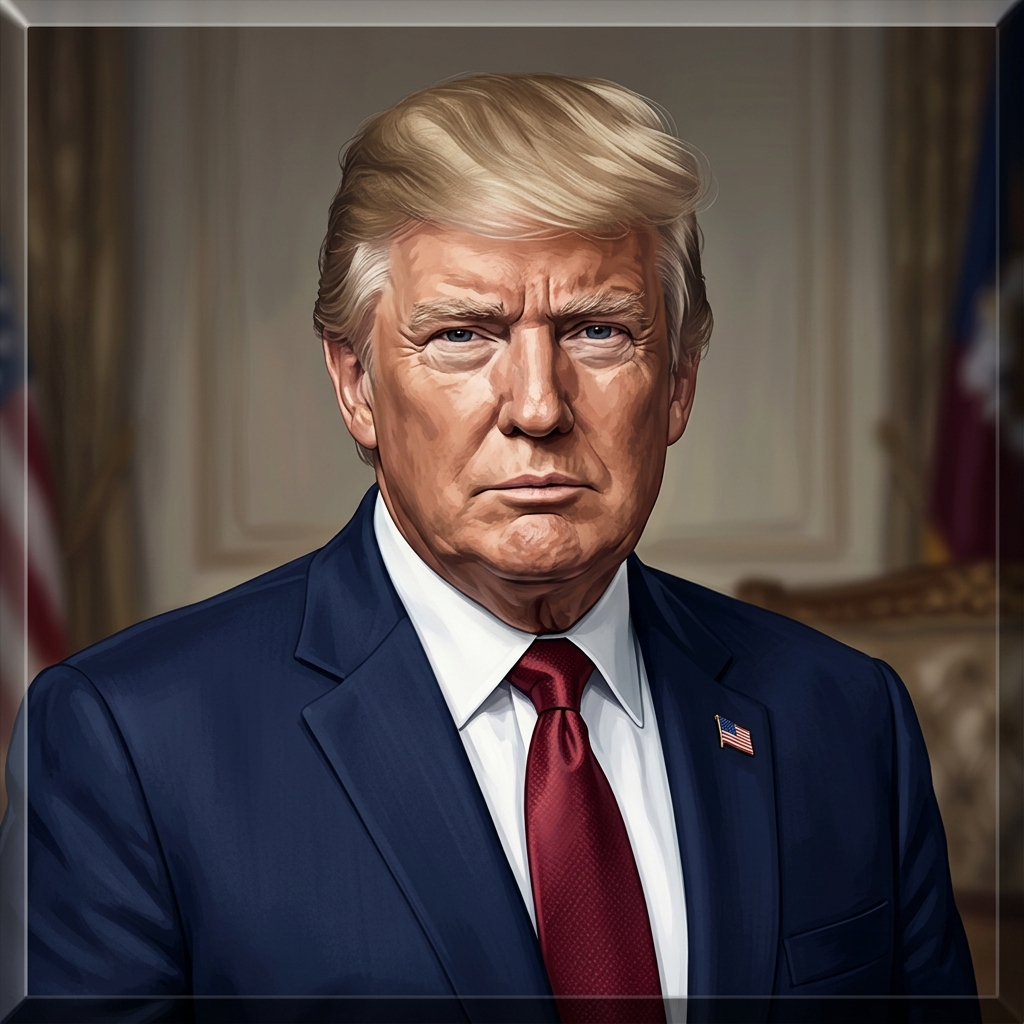
The match centers on a public confrontation between President Donald Trump and Chevron over U.S. fuel prices.
Trump has accused Chevron and other major oil companies of price gouging, announced federal probes into their pricing practices, and demanded immediate reductions at the pump.
Chevron has responded by stating that there is no quick fix for gas prices, highlighting the complexity of energy markets.
The dispute also touches on broader energy policy, including Trump's initiatives and his engagement with oil executives on issues like Venezuela.
*AI-generated summary of publicly available data. This is not an official statement of any party.
*AI-generated summary of publicly available statements and reporting. This is not an official statement of this party.
Supporters of Trump argue that America's energy independence is a cultural birthright, and Chevron's pricing defiance insults the working families who fuel the nation.
Supporters of Trump argue that his demand for lower pump prices reflects a cultural expectation of presidential accountability, pointing to his probes as evidence that corporate giants like Chevron must answer to the American consumer, not just shareholders.
Supporters of Trump argue that his push against Chevron reflects a cultural commitment to American consumers over corporate elites, framing energy independence as a national identity where domestic abundance must serve the people.
Supporters of Trump counter that Chevron's global-market framing overlooks the cultural betrayal felt by American energy workers, whose livelihoods are tied to national pride and self-reliance, not abstract supply chains.
Supporters of Trump argue that Chevron's caution reflects a coastal elite culture out of touch with heartland energy workers, whose livelihoods hinge on decisive presidential action, not institutional hand-wringing over market complexity.
Supporters of Trump argue that federal antitrust probes into Chevron's pricing are lawful executive oversight, and that the company's refusal to lower pump prices violates consumer-protection statutes.
Supporters of Trump argue that federal probes into Chevron's pricing are legally justified under antitrust and consumer protection statutes, viewing price gouging claims as a lawful check on corporate power. They maintain that Chevron's refusal to lower prices defies the.
Supporters of Trump counter that the Chevron deference standard itself skews antitrust enforcement, granting agencies unchecked latitude to treat pricing as suspicious without statutory collusion evidence. They argue this legal framework invites regulatory overreach, not market.
Supporters of Trump counter that antitrust law’s consumer-welfare standard does not bar executive inquiry into collusive pricing, and that price-gouging probes fall within statutory authority to investigate unfair trade practices.
Supporters of Trump argue his probes and demands are pure leverage: Chevron’s profits ride on his drilling policies, so the CEO’s “no quick fix” line is a negotiating dodge, not a market truth. They see the price war as a power play to force compliance and score consumer loyalty.
Supporters of Trump argue the probes are leverage, not economics: Chevron profits from Trump-era policies, so public pressure forces compliance and shifts blame for prices onto corporations.
Supporters of Trump counter that Chevron’s “no quick fix” is a confession of political weakness, not strength—the company needs federal permits, leases, and goodwill, all of which the executive branch controls. They argue the probe’s real leverage is regulatory uncertainty,.
Supporters of Trump argue that Chevron’s refusal to lower prices reflects corporate greed over consumer fairness, and they view federal probes as a moral duty to protect working families from price gouging.
Supporters of Trump argue that his pressure on Chevron reflects a moral duty to shield American consumers from corporate profiteering at the pump, viewing probes as a justified check on market power.
Supporters of Trump argue that his demand for lower fuel prices is a moral obligation to protect working families from corporate profiteering, framing Chevron's dismissal of quick fixes as a refusal to share the burden of fairness.
Supporters of Trump argue that moral duty requires holding Chevron accountable for environmental harm, not prioritizing short-term fuel prices over community health and long-term stewardship.
Supporters of Trump counter that Chevron’s moral duty extends beyond truth-telling to actively protecting American livelihoods, arguing that corporate honesty without a commitment to lowering energy costs ignores the real human harm of unaffordable fuel for working families.
Supporters of Trump argue that his demand for lower fuel prices reflects a biblical duty to protect consumers from corporate greed, viewing Chevron's profit motives as contrary to the moral stewardship of resources. They point to his probes as righteous accountability, upholding.
Supporters of Trump argue that his push against Chevron reflects a moral duty to protect consumers from unjust pricing, citing scripture’s call to fair dealing and care for the vulnerable. They maintain that the president’s demand for lower fuel costs is a righteous act of.
Supporters of Trump argue that his pressure on Chevron reflects a stewardship duty, treating fair fuel prices as a moral obligation to American families. They maintain that corporate profit-seeking must yield to the common good, viewing his probes as righteous correction of.
Supporters of Trump counter that stewardship demands protecting communities from corporate overreach, and they argue scripture calls for defending the vulnerable against unjust market forces, not passive acceptance of their consequences.
Supporters of Trump counter that presidential authority is a God-given trust to shield the working man from corporate greed, and that Chevron's defense of market order ignores the moral duty to protect the nation's livelihood.
*AI-generated summary of publicly available statements and reporting. This is not an official statement of this party.
Supporters of Chevron argue that Trump's price-gouging accusations ignore the historical cycles of energy markets, where oil prices are shaped by global supply chains, not presidential commands. They point to precedents like past federal probes that found no corporate collusion,.
Supporters of Chevron argue that stable energy markets require respect for institutional expertise, not political pressure; they point to the company's insistence that no quick fix exists as evidence that durable fuel policy rests on market complexity, not presidential demands.
Supporters of Chevron argue that the company’s stance reflects a historical pattern where presidential pressure rarely bends market forces, pointing to past fuel crises as evidence that quick fixes ignore cyclical supply-chain realities.
Supporters of Chevron counter that America's energy identity is built on innovation, not entitlement, and that pricing reflects global markets, not disrespect to workers.
Supporters of Chevron counter that the cultural expectation of presidential accountability overlooks the market's own historical discipline, noting past price swings were never resolved by political pressure but by supply and demand.
Supporters of Chevron argue that federal antitrust probes into pricing must clear a legal bar of collusion or market manipulation, which market-driven price signals do not meet.
Supporters of Chevron argue that price-gouging probes lack legal basis, as fuel prices are set by market forces, not corporate fiat; they maintain that Trump's demands ignore antitrust law's consumer-welfare standard.
Supporters of Chevron argue the probes lack legal basis, as market pricing falls outside presidential authority, and they cite antitrust law requiring evidence of collusion, not political pressure, to mandate price cuts.
Supporters of Chevron counter that antitrust oversight requires evidence of collusion, not political pressure on pricing, and that consumer-protection statutes do not mandate price cuts absent market manipulation.
Supporters of Chevron argue the company holds the real leverage: Trump's probes are political theater, while energy markets answer to physics and profit, not presidential tweets. They point to Chevron's "no quick fix" reply as a pragmatic truth—regulators cannot compel cheaper.
Supporters of Chevron argue that Trump's price-gouging probes are political theater, not policy; they say market complexity, not corporate greed, sets pump prices. They maintain no executive demand can override global supply chains, and Trump's bluster only masks his own.
Supporters of Chevron counter that Trump’s leverage presumes a dependency that does not exist, as the company’s global portfolio and long-term contracts insulate it from any single president’s drilling whims. They argue the price war is a defensive calculation, not submission,.
Chevron's advocates believe that stable energy markets, not political pressure, best serve the public moral duty of keeping fuel affordable and reliable.
Supporters of Chevron argue that its executives are morally bound to truth over political convenience, refusing to promise consumers a quick fix for fuel prices that market realities cannot deliver.
Supporters of Chevron argue that blaming one company for market-driven prices avoids the moral duty of honest stewardship, since energy costs reflect global complexity rather than corporate greed. They maintain that President Trump’s probes risk punishing truthful explanation,.
Supporters of Chevron counter that moral duty runs both ways, and that federal probes risk punishing lawful pricing while ignoring the company’s obligation to shareholders and energy security. They argue fairness is served by market stability, not political pressure, which can.
Supporters of Chevron counter that moral duty runs both ways: punishing a company for market pricing ignores its legal obligation to shareholders and employees, making political theater a substitute for fair regulation, not justice.
Supporters of Chevron argue that stewardship of creation requires honest acknowledgment of market complexity, not scapegoating, as scripture warns against false accusation and demands truthfulness in economic dealings.
Supporters of Chevron argue that market forces, not presidential decree, govern fuel prices, and they view Trump's probes as a rejection of the orderly economic principles that sustain national stability.
Supporters of Chevron argue that market forces, not executive decree, set prices, and they cite scripture’s warning against false witness in judging others’ motives as reason to resist political pressure.
Supporters of Chevron counter that stewardship requires sustainable provision, not price dictates, citing Proverbs for prudent management over populist pressure, and argue Trump's probes conflate market fairness with political retribution.
Supporters of Chevron counter that divine law also honors lawful authority and the sanctity of contracts, arguing that Trump’s pressure disregards the company’s right to fair return and the established regulatory order.
AI-generated summary of publicly available statements and reporting. This is not an official statement of this party.
Supporters of Trump argue that America's energy independence is a cultural birthright, and Chevron's pricing defiance insults the working families who fuel the nation.
Supporters of Trump argue that his demand for lower pump prices reflects a cultural expectation of presidential accountability, pointing to his probes as evidence that corporate giants like Chevron must answer to the American consumer, not just shareholders.
Supporters of Trump argue that his push against Chevron reflects a cultural commitment to American consumers over corporate elites, framing energy independence as a national identity where domestic abundance must serve the people.
Supporters of Trump counter that Chevron's global-market framing overlooks the cultural betrayal felt by American energy workers, whose livelihoods are tied to national pride and self-reliance, not abstract supply chains.
Supporters of Trump argue that Chevron's caution reflects a coastal elite culture out of touch with heartland energy workers, whose livelihoods hinge on decisive presidential action, not institutional hand-wringing over market complexity.
Supporters of Trump argue that federal antitrust probes into Chevron's pricing are lawful executive oversight, and that the company's refusal to lower pump prices violates consumer-protection statutes.
Supporters of Trump argue that federal probes into Chevron's pricing are legally justified under antitrust and consumer protection statutes, viewing price gouging claims as a lawful check on corporate power. They maintain that Chevron's refusal to lower prices defies the.
Supporters of Trump counter that the Chevron deference standard itself skews antitrust enforcement, granting agencies unchecked latitude to treat pricing as suspicious without statutory collusion evidence. They argue this legal framework invites regulatory overreach, not market.
Supporters of Trump counter that antitrust law’s consumer-welfare standard does not bar executive inquiry into collusive pricing, and that price-gouging probes fall within statutory authority to investigate unfair trade practices.
Supporters of Trump argue his probes and demands are pure leverage: Chevron’s profits ride on his drilling policies, so the CEO’s “no quick fix” line is a negotiating dodge, not a market truth. They see the price war as a power play to force compliance and score consumer loyalty.
Supporters of Trump argue the probes are leverage, not economics: Chevron profits from Trump-era policies, so public pressure forces compliance and shifts blame for prices onto corporations.
Supporters of Trump counter that Chevron’s “no quick fix” is a confession of political weakness, not strength—the company needs federal permits, leases, and goodwill, all of which the executive branch controls. They argue the probe’s real leverage is regulatory uncertainty,.
Supporters of Trump argue that Chevron’s refusal to lower prices reflects corporate greed over consumer fairness, and they view federal probes as a moral duty to protect working families from price gouging.
Supporters of Trump argue that his pressure on Chevron reflects a moral duty to shield American consumers from corporate profiteering at the pump, viewing probes as a justified check on market power.
Supporters of Trump argue that his demand for lower fuel prices is a moral obligation to protect working families from corporate profiteering, framing Chevron's dismissal of quick fixes as a refusal to share the burden of fairness.
Supporters of Trump argue that moral duty requires holding Chevron accountable for environmental harm, not prioritizing short-term fuel prices over community health and long-term stewardship.
Supporters of Trump counter that Chevron’s moral duty extends beyond truth-telling to actively protecting American livelihoods, arguing that corporate honesty without a commitment to lowering energy costs ignores the real human harm of unaffordable fuel for working families.
Supporters of Trump argue that his demand for lower fuel prices reflects a biblical duty to protect consumers from corporate greed, viewing Chevron's profit motives as contrary to the moral stewardship of resources. They point to his probes as righteous accountability, upholding.
Supporters of Trump argue that his push against Chevron reflects a moral duty to protect consumers from unjust pricing, citing scripture’s call to fair dealing and care for the vulnerable. They maintain that the president’s demand for lower fuel costs is a righteous act of.
Supporters of Trump argue that his pressure on Chevron reflects a stewardship duty, treating fair fuel prices as a moral obligation to American families. They maintain that corporate profit-seeking must yield to the common good, viewing his probes as righteous correction of.
Supporters of Trump counter that stewardship demands protecting communities from corporate overreach, and they argue scripture calls for defending the vulnerable against unjust market forces, not passive acceptance of their consequences.
Supporters of Trump counter that presidential authority is a God-given trust to shield the working man from corporate greed, and that Chevron's defense of market order ignores the moral duty to protect the nation's livelihood.
Supporters of Chevron argue that Trump's price-gouging accusations ignore the historical cycles of energy markets, where oil prices are shaped by global supply chains, not presidential commands. They point to precedents like past federal probes that found no corporate collusion,.
Supporters of Chevron argue that stable energy markets require respect for institutional expertise, not political pressure; they point to the company's insistence that no quick fix exists as evidence that durable fuel policy rests on market complexity, not presidential demands.
Supporters of Chevron argue that the company’s stance reflects a historical pattern where presidential pressure rarely bends market forces, pointing to past fuel crises as evidence that quick fixes ignore cyclical supply-chain realities.
Supporters of Chevron counter that America's energy identity is built on innovation, not entitlement, and that pricing reflects global markets, not disrespect to workers.
Supporters of Chevron counter that the cultural expectation of presidential accountability overlooks the market's own historical discipline, noting past price swings were never resolved by political pressure but by supply and demand.
Supporters of Chevron argue that federal antitrust probes into pricing must clear a legal bar of collusion or market manipulation, which market-driven price signals do not meet.
Supporters of Chevron argue that price-gouging probes lack legal basis, as fuel prices are set by market forces, not corporate fiat; they maintain that Trump's demands ignore antitrust law's consumer-welfare standard.
Supporters of Chevron argue the probes lack legal basis, as market pricing falls outside presidential authority, and they cite antitrust law requiring evidence of collusion, not political pressure, to mandate price cuts.
Supporters of Chevron counter that antitrust oversight requires evidence of collusion, not political pressure on pricing, and that consumer-protection statutes do not mandate price cuts absent market manipulation.
Supporters of Chevron argue the company holds the real leverage: Trump's probes are political theater, while energy markets answer to physics and profit, not presidential tweets. They point to Chevron's "no quick fix" reply as a pragmatic truth—regulators cannot compel cheaper.
Supporters of Chevron argue that Trump's price-gouging probes are political theater, not policy; they say market complexity, not corporate greed, sets pump prices. They maintain no executive demand can override global supply chains, and Trump's bluster only masks his own.
Supporters of Chevron counter that Trump’s leverage presumes a dependency that does not exist, as the company’s global portfolio and long-term contracts insulate it from any single president’s drilling whims. They argue the price war is a defensive calculation, not submission,.
Chevron's advocates believe that stable energy markets, not political pressure, best serve the public moral duty of keeping fuel affordable and reliable.
Supporters of Chevron argue that its executives are morally bound to truth over political convenience, refusing to promise consumers a quick fix for fuel prices that market realities cannot deliver.
Supporters of Chevron argue that blaming one company for market-driven prices avoids the moral duty of honest stewardship, since energy costs reflect global complexity rather than corporate greed. They maintain that President Trump’s probes risk punishing truthful explanation,.
Supporters of Chevron counter that moral duty runs both ways, and that federal probes risk punishing lawful pricing while ignoring the company’s obligation to shareholders and energy security. They argue fairness is served by market stability, not political pressure, which can.
Supporters of Chevron counter that moral duty runs both ways: punishing a company for market pricing ignores its legal obligation to shareholders and employees, making political theater a substitute for fair regulation, not justice.
Supporters of Chevron argue that stewardship of creation requires honest acknowledgment of market complexity, not scapegoating, as scripture warns against false accusation and demands truthfulness in economic dealings.
Supporters of Chevron argue that market forces, not presidential decree, govern fuel prices, and they view Trump's probes as a rejection of the orderly economic principles that sustain national stability.
Supporters of Chevron argue that market forces, not executive decree, set prices, and they cite scripture’s warning against false witness in judging others’ motives as reason to resist political pressure.
Supporters of Chevron counter that stewardship requires sustainable provision, not price dictates, citing Proverbs for prudent management over populist pressure, and argue Trump's probes conflate market fairness with political retribution.
Supporters of Chevron counter that divine law also honors lawful authority and the sanctity of contracts, arguing that Trump’s pressure disregards the company’s right to fair return and the established regulatory order.
Trump claims Chevron's success stems from his policies, calling for urgent reductions in US fuel prices for consumers.
Chevron responded to Trump's criticism by stating there is no quick fix for gas prices, as reported by CNBC.
President Trump said Exxon Mobil and Chevron were among companies being probed as part of a surge in gas prices, according to Reuters.
Chevron Chairman and CEO Mike Wirth issued a statement on President Trump's nomination of Kevin Warsh for Federal Reserve chair.