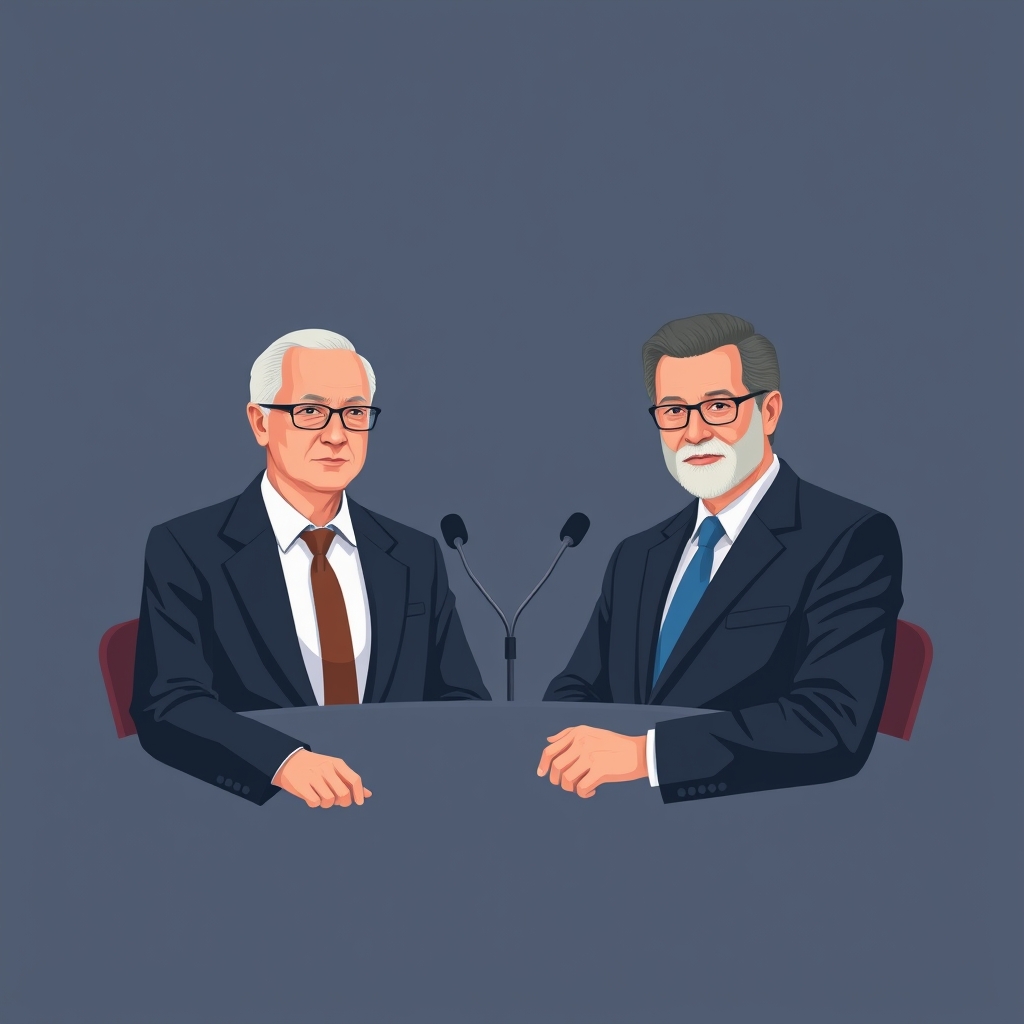
Leading tech CEOs
VS
Trump
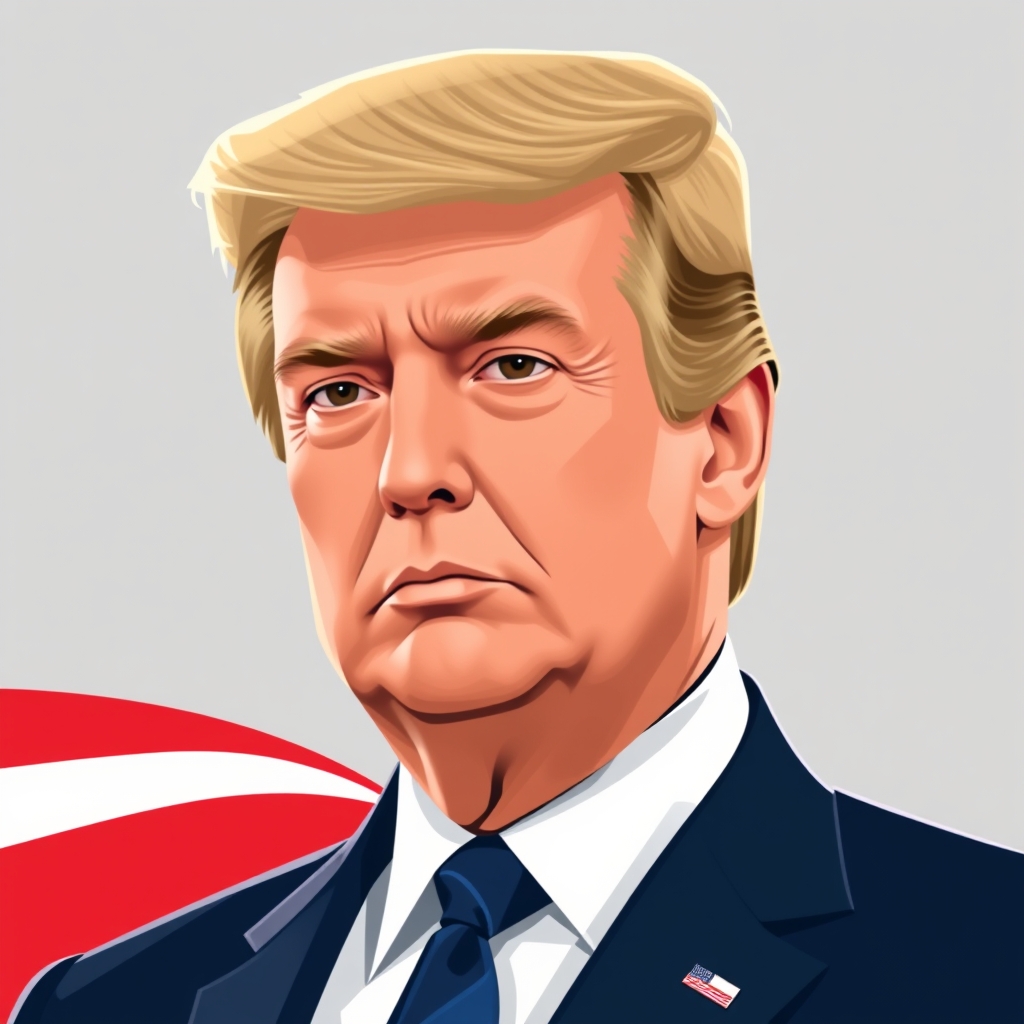
The sides in this debate are President Donald Trump and a group of leading technology CEOs, including figures such as Bill Gates, Mark Zuckerberg, Sam Altman, Tim Cook, and Satya Nadella.
Trump is the President of the United States, who has prioritized American AI dominance and hosted tech leaders at the White House to promote partnership.
The tech CEOs lead major companies at the forefront of artificial intelligence development and have been engaging with the administration on AI policy.
The conflict centers on the pace of AI development: Trump has dismissed calls from these CEOs to slow down AI development, emphasizing the need to maintain US competitiveness with China.
The CEOs have expressed concerns about AI safety risks, while Trump focuses on geopolitical and economic advantages.
This disagreement highlights the tension between rapid innovation and precautionary measures.
In September 2025, Trump hosted a dinner with top tech CEOs at the White House, where executives displayed support for the administration's agenda.
The event underscored the administration's focus on AI leadership and its broad engagement with the private sector on technology policy.
*AI-generated summary of publicly available data. This is not an official statement of any party.
*AI-generated summary of publicly available statements and reporting. This is not an official statement of this party.
Supporters of leading tech CEOs argue that safety-first stewardship reflects a culturally rooted faith in expert-led restraint, echoing past eras when societies trusted scientists to temper new powers before unleashing them.
Supporters of Leading tech CEOs argue that America's cultural legacy of pioneering breakthroughs carries a duty of foresight, so pausing to weigh AI's risks honors that heritage rather than abandoning it.
Supporters of Leading tech CEOs counter that America's cultural edge has always come from open exchange, not top-down control, and that ceding global trust—not speed—is what would truly erode the nation's influence.
Supporters of leading tech CEOs argue that safety-focused legal frameworks, not unilateral slowdowns, best protect US AI leadership against China while managing risk.
Supporters of leading tech CEOs argue that legal precedent and voluntary safety commitments give developers the standing to urge caution, and that Trump's dismissals ignore those frameworks.
Supporters of Leading tech CEOs counter that US law already governs AI exports and chips, so unilateral action preserves legal leverage rather than ceding it to China.
Supporters of leading tech CEOs argue that safety rhetoric is leverage: urging a slowdown preserves their market dominance and locks in incumbents' advantage, while framing restraint as responsibility.
Supporters of leading tech CEOs argue that slowing AI hands China the advantage, and safety talk is leverage: whoever sets the pace sets the rules.
Supporters of Leading tech CEOs counter that slowing AI hands the advantage to whoever writes the rules first; safety appeals are leverage, not caution, so CEOs win by setting the standard themselves, not yielding it.
Supporters of leading tech CEOs argue that slowing AI development is a moral duty, since unregulated systems capable of catastrophic harm threaten everyone, and safety must not be traded for geopolitical advantage.
Supporters of Leading tech CEOs argue that slowing AI serves a moral duty to protect humanity from risks that no single nation can contain, since safety is a global good, not a bargaining chip.
Supporters of Leading tech CEOs counter that unilateral American acceleration is morally hollow if it forfeits the global safety standards on which all humanity depends.
Supporters of Leading tech CEOs invoke stewardship of creation, arguing scripture calls humanity to weigh the moral cost of unchecked power before pursuing competitive advantage.
Supporters of Leading tech CEOs warn that unchecked AI pursuit risks the sin of hubris, citing Scripture's call for wisdom and stewardship over creation, and urge prioritizing humanity's God-given dignity over geopolitical rivalry.
Supporters of Leading tech CEOs counter that stewardship also means humility before God's design, and that no nation's AI dominance is worth abandoning the moral limits scripture places on human power.
*AI-generated summary of publicly available statements and reporting. This is not an official statement of this party.
Supporters of Trump argue that slowing AI to satisfy tech CEOs would cede America's cultural and technological leadership to China, and they see national preeminence, not caution, as the truest safeguard of the country's identity.
Supporters of Trump argue that America's cultural identity is tied to being first and free, so slowing AI to satisfy tech CEOs would cede leadership and values to China.
Supporters of Trump counter that this "expert-led restraint" is itself a cultural imposition, favoring a globalist elite's caution over the nation's own traditions of sovereignty, enterprise, and self-rule.
Supporters of Trump argue that no binding international AI treaty binds the US, so unilateral slowdowns would cede legal and strategic advantage to China.
Supporters of Trump argue that no binding international AI treaty constrains the US, so unilateral slowdowns would cede legal and strategic ground to China.
Supporters of Trump counter that unilateral deregulation, not safety frameworks, protects US AI leadership, since legal mandates would slow domestic firms while China scales without such constraints.
Supporters of Trump argue that slowing AI hands China the lead, and whoever sets the standard writes the rules; they see safety appeals as rivals' leverage, not caution.
Supporters of Trump argue that slowing AI hands China the lead, and in their view safety talk is leverage—tech CEOs lobby for delay to entrench their own power.
Supporters of Trump counter that safety rhetoric is itself a bid for power: by branding themselves responsible stewards, tech CEOs seek regulatory capture that entrenches incumbents and shuts out rivals.
Supporters of Trump argue that slowing AI to satisfy safety concerns is morally wrong when China would keep racing ahead, and they maintain that American sovereignty and strength must come before voluntary restraint.
Supporters of Trump argue that slowing AI for safety's sake cedes innovation to China, and that America's moral duty is to lead through free enterprise, not restraint.
Supporters of Trump counter that blocking AI progress to appease global rivals is itself immoral, since ceding leadership to authoritarian governments endangers far more people than advancing under American liberty.
Supporters of Trump argue that stewardship of creation includes using humanity's God-given talents, and that ceding AI leadership to an atheist-authoritarian China would betray that duty.
Supporters of Trump argue that stewardship of creation includes defending a nation's God-given order, so they back accelerating AI to keep America ahead of China rather than ceding ground to a rival power.
Supporters of Trump counter that scripture also charges rulers to preserve order and defend the nation, so moral stewardship means backing decisive leadership, not ceding power to unelected tech executives.
AI-generated summary of publicly available statements and reporting. This is not an official statement of this party.
Supporters of leading tech CEOs argue that safety-first stewardship reflects a culturally rooted faith in expert-led restraint, echoing past eras when societies trusted scientists to temper new powers before unleashing them.
Supporters of Leading tech CEOs argue that America's cultural legacy of pioneering breakthroughs carries a duty of foresight, so pausing to weigh AI's risks honors that heritage rather than abandoning it.
Supporters of Leading tech CEOs counter that America's cultural edge has always come from open exchange, not top-down control, and that ceding global trust—not speed—is what would truly erode the nation's influence.
Supporters of leading tech CEOs argue that safety-focused legal frameworks, not unilateral slowdowns, best protect US AI leadership against China while managing risk.
Supporters of leading tech CEOs argue that legal precedent and voluntary safety commitments give developers the standing to urge caution, and that Trump's dismissals ignore those frameworks.
Supporters of Leading tech CEOs counter that US law already governs AI exports and chips, so unilateral action preserves legal leverage rather than ceding it to China.
Supporters of leading tech CEOs argue that safety rhetoric is leverage: urging a slowdown preserves their market dominance and locks in incumbents' advantage, while framing restraint as responsibility.
Supporters of leading tech CEOs argue that slowing AI hands China the advantage, and safety talk is leverage: whoever sets the pace sets the rules.
Supporters of Leading tech CEOs counter that slowing AI hands the advantage to whoever writes the rules first; safety appeals are leverage, not caution, so CEOs win by setting the standard themselves, not yielding it.
Supporters of leading tech CEOs argue that slowing AI development is a moral duty, since unregulated systems capable of catastrophic harm threaten everyone, and safety must not be traded for geopolitical advantage.
Supporters of Leading tech CEOs argue that slowing AI serves a moral duty to protect humanity from risks that no single nation can contain, since safety is a global good, not a bargaining chip.
Supporters of Leading tech CEOs counter that unilateral American acceleration is morally hollow if it forfeits the global safety standards on which all humanity depends.
Supporters of Leading tech CEOs invoke stewardship of creation, arguing scripture calls humanity to weigh the moral cost of unchecked power before pursuing competitive advantage.
Supporters of Leading tech CEOs warn that unchecked AI pursuit risks the sin of hubris, citing Scripture's call for wisdom and stewardship over creation, and urge prioritizing humanity's God-given dignity over geopolitical rivalry.
Supporters of Leading tech CEOs counter that stewardship also means humility before God's design, and that no nation's AI dominance is worth abandoning the moral limits scripture places on human power.
Supporters of Trump argue that slowing AI to satisfy tech CEOs would cede America's cultural and technological leadership to China, and they see national preeminence, not caution, as the truest safeguard of the country's identity.
Supporters of Trump argue that America's cultural identity is tied to being first and free, so slowing AI to satisfy tech CEOs would cede leadership and values to China.
Supporters of Trump counter that this "expert-led restraint" is itself a cultural imposition, favoring a globalist elite's caution over the nation's own traditions of sovereignty, enterprise, and self-rule.
Supporters of Trump argue that no binding international AI treaty binds the US, so unilateral slowdowns would cede legal and strategic advantage to China.
Supporters of Trump argue that no binding international AI treaty constrains the US, so unilateral slowdowns would cede legal and strategic ground to China.
Supporters of Trump counter that unilateral deregulation, not safety frameworks, protects US AI leadership, since legal mandates would slow domestic firms while China scales without such constraints.
Supporters of Trump argue that slowing AI hands China the lead, and whoever sets the standard writes the rules; they see safety appeals as rivals' leverage, not caution.
Supporters of Trump argue that slowing AI hands China the lead, and in their view safety talk is leverage—tech CEOs lobby for delay to entrench their own power.
Supporters of Trump counter that safety rhetoric is itself a bid for power: by branding themselves responsible stewards, tech CEOs seek regulatory capture that entrenches incumbents and shuts out rivals.
Supporters of Trump argue that slowing AI to satisfy safety concerns is morally wrong when China would keep racing ahead, and they maintain that American sovereignty and strength must come before voluntary restraint.
Supporters of Trump argue that slowing AI for safety's sake cedes innovation to China, and that America's moral duty is to lead through free enterprise, not restraint.
Supporters of Trump counter that blocking AI progress to appease global rivals is itself immoral, since ceding leadership to authoritarian governments endangers far more people than advancing under American liberty.
Supporters of Trump argue that stewardship of creation includes using humanity's God-given talents, and that ceding AI leadership to an atheist-authoritarian China would betray that duty.
Supporters of Trump argue that stewardship of creation includes defending a nation's God-given order, so they back accelerating AI to keep America ahead of China rather than ceding ground to a rival power.
Supporters of Trump counter that scripture also charges rulers to preserve order and defend the nation, so moral stewardship means backing decisive leadership, not ceding power to unelected tech executives.
Trump downplays AI risks, saying he wants to maintain the US's lead over China in the emerging technology.
Politico reported that the Trump administration's increasing involvement in private businesses caused confusion and anxiety among Silicon Valley CEOs, highlighting tensions in the tech industry's relationship with the government.
The White House published a release titled 'President Trump, Tech Leaders Unite to Power American AI Dominance,' summarizing the previous night's gathering with technology industry leaders.
President Trump hosted a dinner with leading technology CEOs, including Bill Gates, Mark Zuckerberg, Sam Altman, and Tim Cook, to discuss AI and economic issues. Elon Musk was notably not invited.