Trump
VS
Mexico
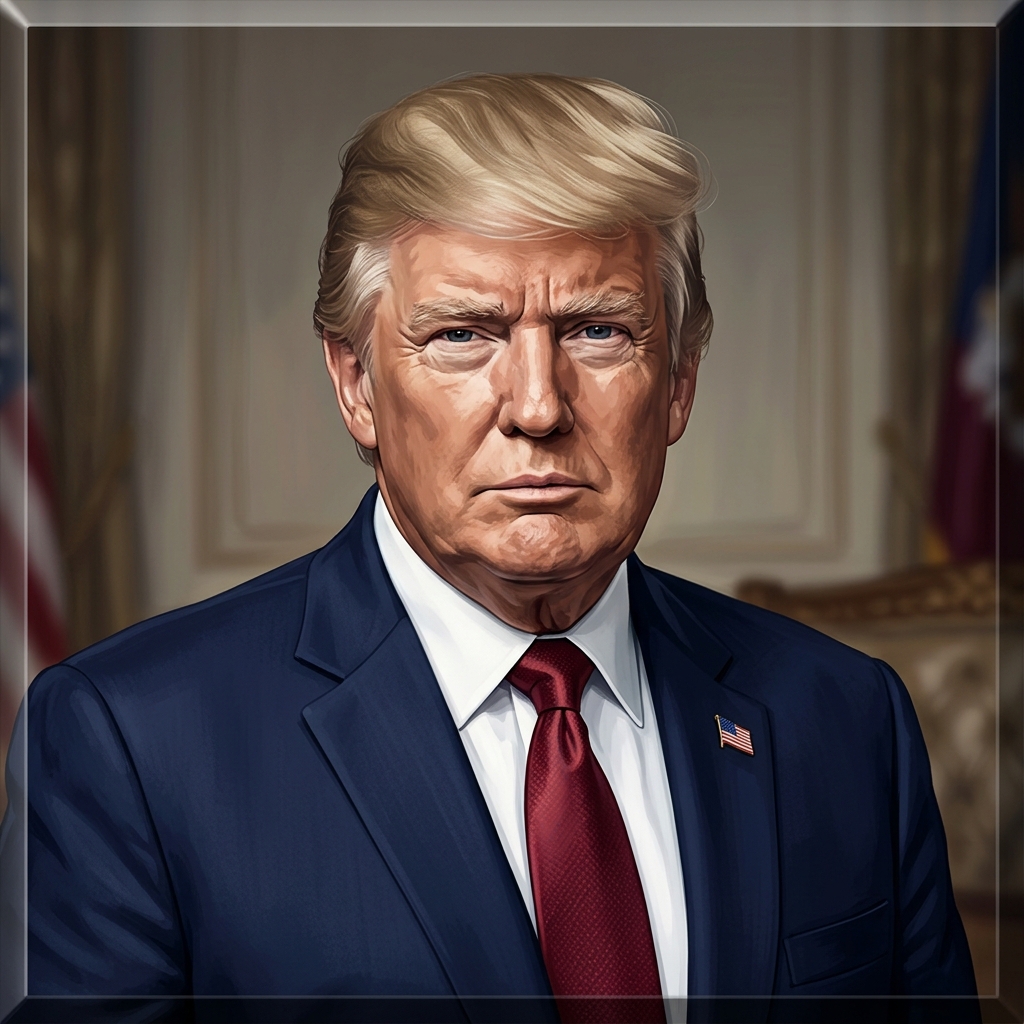
President Trump has threatened to double tariffs on Mexican imports, escalating trade tensions between the two countries.
The move is part of ongoing disputes over trade and immigration, with Mexico opposing the tariff increases.
*AI-generated summary of publicly available data. This is not an official statement of any party.
*AI-generated summary of publicly available statements and reporting. This is not an official statement of this party.
Supporters of Trump argue that tariffs defend national sovereignty and cultural continuity, maintaining that a nation's right to secure its borders and prioritize its own workers reflects inherited civic traditions worth preserving.
Supporters of Trump argue that tariffs defend national sovereignty and cultural continuity, maintaining that a nation's right to control its borders and economy reflects inherited civic traditions worth preserving.
Supporters of Trump counter that national sovereignty and cultural identity outweigh shared supply chains, arguing that preserving American jobs and borders protects the distinct heritage and self-governance of both nations.
Supporters of Trump argue that U.S. trade law grants the president authority to raise tariffs as leverage, and they maintain that doubling tariffs on Mexico is a lawful exercise of that power to enforce border and trade priorities.
Supporters of Trump argue that raising tariffs on Mexico is a lawful exercise of presidential trade authority, and that tariff pressure is a legitimate legal lever to compel a trading partner to address shared concerns.
Supporters of Trump counter that existing U.S. trade statutes already grant the executive legal authority to adjust tariffs, so the measure rests on domestic law rather than requiring a new WTO justification.
Supporters of Trump argue that the tariff threat is leverage, not policy—a credible cost imposed on Mexico to force concessions on immigration and trade, since goodwill alone has failed.
Supporters of Trump argue the tariff threat is leverage, not policy: Mexico concedes on immigration and trade once the cost of defiance exceeds the cost of compliance, making credible escalation the cheapest way to win.
Supporters of Trump counter that leverage only matters if the other side believes the threat will be used, and Trump's record shows he follows through—so Mexico's "room to negotiate" exists only on his terms.
Supporters of Trump argue that doubling tariffs on Mexico is a fair, reciprocal response to a partner that has benefited from open trade while failing to curb illegal immigration, framing the threat as leverage for accountability.
Supporters of Trump argue that doubling tariffs on Mexico is a justified, morally defensible lever to protect American workers and press Mexico on immigration, framing fair trade and border security as duties owed to citizens.
Supporters of Trump counter that Mexico's own tolerance of cartels and unchecked migration imposes moral costs on American families, so tariffs are a fair response to a government failing its basic duties.
Supporters of Trump argue that tariffs defend families and national sovereignty, maintaining that principled economic pressure on Mexico upholds order rather than undermining it.
Supporters of Trump argue that defending national borders and enforcing immigration law is a moral duty rooted in religious conviction, and they see tariff pressure on Mexico as a legitimate means of upholding that order.
Supporters of Trump counter that a nation's first duty under religious teaching is to protect its own citizens, and they argue that secure borders and fair trade uphold the order and neighbor-love that disordered migration undermines.
*AI-generated summary of publicly available statements and reporting. This is not an official statement of this party.
Supporters of Mexico argue that tariffs threaten a cross-border cultural economy built over generations, pointing to shared manufacturing supply chains as evidence that the two nations' fortunes are intertwined.
Supporters of Mexico invoke a long cultural memory of U.S. economic pressure—from the Bracero era to NAFTA disputes—arguing that tariff threats treat a neighbor and trading partner as a subordinate rather than an equal.
Supporters of Mexico counter that tariffs fracture the deep cultural continuity binding border communities, where families, language, and trade have crossed freely for generations. They argue safeguarding that shared heritage outweighs the sovereignty claim.
Supporters of Mexico argue that doubling tariffs without a fresh legal basis or WTO-consistent justification violates the trade commitments both parties accepted, and they maintain that such measures must follow agreed dispute procedures rather than unilateral threats.
Supporters of Mexico argue that doubling tariffs without legal justification or WTO consultation violates trade-law obligations, and they maintain that tariff policy must follow agreed dispute procedures, not unilateral threats.
Supporters of Mexico counter that U.S. law and WTO commitments bind tariff action to specific statutory findings and dispute procedures, so they argue unilateral doubling exceeds the delegated authority and invites legal challenge.
Supporters of Mexico argue that Trump’s tariff threat is leverage politics, not policy, and that Mexico’s leverage—border enforcement cooperation and supply-chain disruption—gives it room to negotiate rather than capitulate.
Supporters of Mexico argue that Trump's tariff threat is leverage politics, not economics—a bid to extract concessions on immigration—and that Mexico must project resolve to avoid appearing coercible.
Supporters of Mexico counter that leverage cuts both ways: tariff threats that bypass USMCA's dispute rules invite retaliation and push Mexico toward other partners, so what Trump calls credible pressure Mexico's advocates read as self-harming coercion.
Supporters of Mexico argue that doubling tariffs violates the moral principle of fair dealing, since the costs fall on ordinary Mexican workers and consumers rather than on those who set the policy.
Supporters of Mexico argue that doubling tariffs violates the moral principle of fair dealing, since the measures target Mexican exports without evidence of wrongdoing by Mexican workers or industries.
Supporters of Mexico counter that framing tariffs as accountability is morally incoherent, since the costs fall on consumers and workers rather than on the migrants or officials the measure claims to target.
Supporters of Mexico invoke the moral duty to protect the vulnerable, arguing that punitive tariffs threaten the livelihoods of the poor and violate the call to justice and care for one's neighbor.
Supporters of Mexico invoke the moral duty to protect the vulnerable, arguing that punitive tariffs threaten the livelihoods of the poor and contradict the Scriptural call to justice and care for the stranger.
Supporters of Mexico counter that faith calls for mercy over coercion, citing the biblical command to welcome the stranger and the parable of the Good Samaritan, and argue that tariffs burden the poor and vulnerable rather than uphold justice.
AI-generated summary of publicly available statements and reporting. This is not an official statement of this party.
Supporters of Trump argue that tariffs defend national sovereignty and cultural continuity, maintaining that a nation's right to secure its borders and prioritize its own workers reflects inherited civic traditions worth preserving.
Supporters of Trump argue that tariffs defend national sovereignty and cultural continuity, maintaining that a nation's right to control its borders and economy reflects inherited civic traditions worth preserving.
Supporters of Trump counter that national sovereignty and cultural identity outweigh shared supply chains, arguing that preserving American jobs and borders protects the distinct heritage and self-governance of both nations.
Supporters of Trump argue that U.S. trade law grants the president authority to raise tariffs as leverage, and they maintain that doubling tariffs on Mexico is a lawful exercise of that power to enforce border and trade priorities.
Supporters of Trump argue that raising tariffs on Mexico is a lawful exercise of presidential trade authority, and that tariff pressure is a legitimate legal lever to compel a trading partner to address shared concerns.
Supporters of Trump counter that existing U.S. trade statutes already grant the executive legal authority to adjust tariffs, so the measure rests on domestic law rather than requiring a new WTO justification.
Supporters of Trump argue that the tariff threat is leverage, not policy—a credible cost imposed on Mexico to force concessions on immigration and trade, since goodwill alone has failed.
Supporters of Trump argue the tariff threat is leverage, not policy: Mexico concedes on immigration and trade once the cost of defiance exceeds the cost of compliance, making credible escalation the cheapest way to win.
Supporters of Trump counter that leverage only matters if the other side believes the threat will be used, and Trump's record shows he follows through—so Mexico's "room to negotiate" exists only on his terms.
Supporters of Trump argue that doubling tariffs on Mexico is a fair, reciprocal response to a partner that has benefited from open trade while failing to curb illegal immigration, framing the threat as leverage for accountability.
Supporters of Trump argue that doubling tariffs on Mexico is a justified, morally defensible lever to protect American workers and press Mexico on immigration, framing fair trade and border security as duties owed to citizens.
Supporters of Trump counter that Mexico's own tolerance of cartels and unchecked migration imposes moral costs on American families, so tariffs are a fair response to a government failing its basic duties.
Supporters of Trump argue that tariffs defend families and national sovereignty, maintaining that principled economic pressure on Mexico upholds order rather than undermining it.
Supporters of Trump argue that defending national borders and enforcing immigration law is a moral duty rooted in religious conviction, and they see tariff pressure on Mexico as a legitimate means of upholding that order.
Supporters of Trump counter that a nation's first duty under religious teaching is to protect its own citizens, and they argue that secure borders and fair trade uphold the order and neighbor-love that disordered migration undermines.
Supporters of Mexico argue that tariffs threaten a cross-border cultural economy built over generations, pointing to shared manufacturing supply chains as evidence that the two nations' fortunes are intertwined.
Supporters of Mexico invoke a long cultural memory of U.S. economic pressure—from the Bracero era to NAFTA disputes—arguing that tariff threats treat a neighbor and trading partner as a subordinate rather than an equal.
Supporters of Mexico counter that tariffs fracture the deep cultural continuity binding border communities, where families, language, and trade have crossed freely for generations. They argue safeguarding that shared heritage outweighs the sovereignty claim.
Supporters of Mexico argue that doubling tariffs without a fresh legal basis or WTO-consistent justification violates the trade commitments both parties accepted, and they maintain that such measures must follow agreed dispute procedures rather than unilateral threats.
Supporters of Mexico argue that doubling tariffs without legal justification or WTO consultation violates trade-law obligations, and they maintain that tariff policy must follow agreed dispute procedures, not unilateral threats.
Supporters of Mexico counter that U.S. law and WTO commitments bind tariff action to specific statutory findings and dispute procedures, so they argue unilateral doubling exceeds the delegated authority and invites legal challenge.
Supporters of Mexico argue that Trump’s tariff threat is leverage politics, not policy, and that Mexico’s leverage—border enforcement cooperation and supply-chain disruption—gives it room to negotiate rather than capitulate.
Supporters of Mexico argue that Trump's tariff threat is leverage politics, not economics—a bid to extract concessions on immigration—and that Mexico must project resolve to avoid appearing coercible.
Supporters of Mexico counter that leverage cuts both ways: tariff threats that bypass USMCA's dispute rules invite retaliation and push Mexico toward other partners, so what Trump calls credible pressure Mexico's advocates read as self-harming coercion.
Supporters of Mexico argue that doubling tariffs violates the moral principle of fair dealing, since the costs fall on ordinary Mexican workers and consumers rather than on those who set the policy.
Supporters of Mexico argue that doubling tariffs violates the moral principle of fair dealing, since the measures target Mexican exports without evidence of wrongdoing by Mexican workers or industries.
Supporters of Mexico counter that framing tariffs as accountability is morally incoherent, since the costs fall on consumers and workers rather than on the migrants or officials the measure claims to target.
Supporters of Mexico invoke the moral duty to protect the vulnerable, arguing that punitive tariffs threaten the livelihoods of the poor and violate the call to justice and care for one's neighbor.
Supporters of Mexico invoke the moral duty to protect the vulnerable, arguing that punitive tariffs threaten the livelihoods of the poor and contradict the Scriptural call to justice and care for the stranger.
Supporters of Mexico counter that faith calls for mercy over coercion, citing the biblical command to welcome the stranger and the parable of the Good Samaritan, and argue that tariffs burden the poor and vulnerable rather than uphold justice.
Trump threatens to double tariffs on Mexico