Trump

VS
US judge
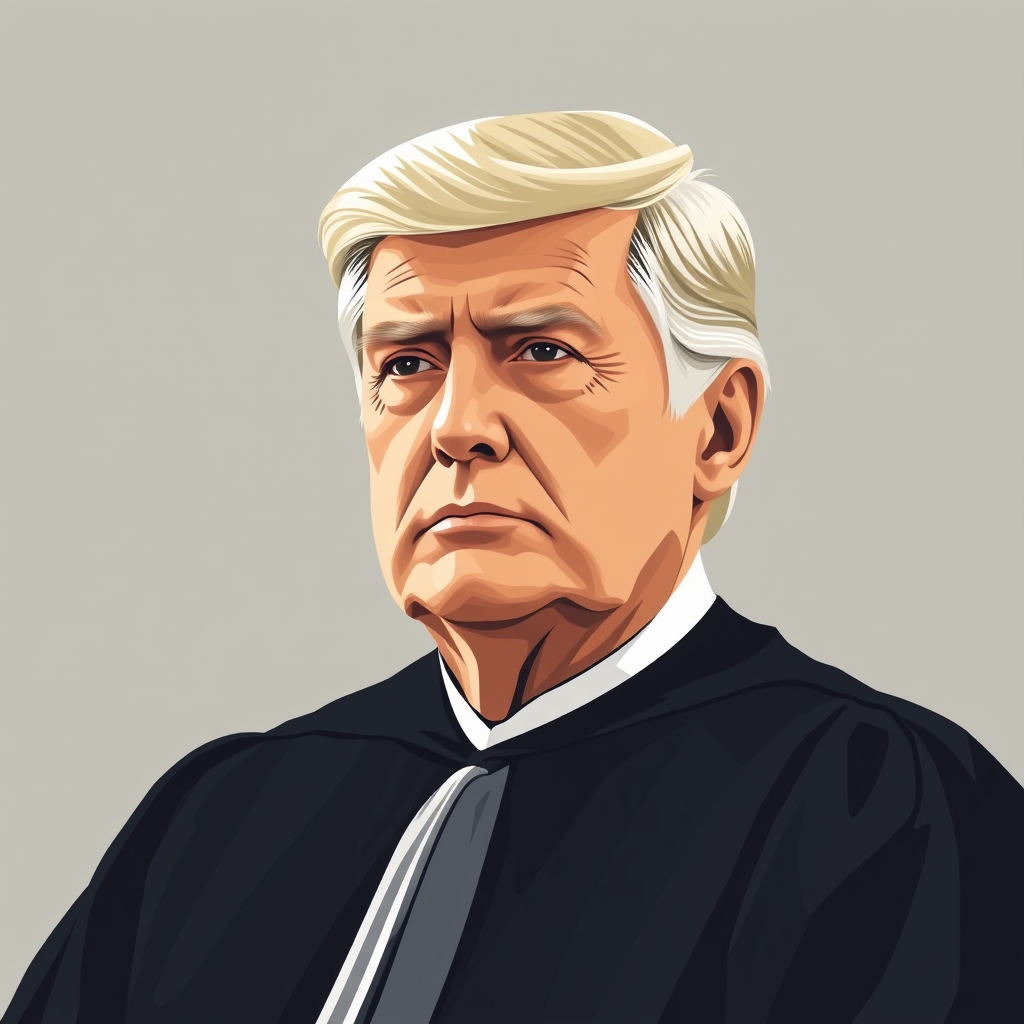
Donald Trump is the former President of the United States and the Republican candidate in the 2024 presidential election.
The US judge refers to the federal judiciary, including judges who have presided over cases involving Trump, such as the hush-money case in New York and the federal election interference case in Washington, D.C.
Trump sought to move his hush-money criminal case from state to federal court, arguing presidential immunity.
A federal judge rejected this bid, keeping the case in state court where Trump was convicted.
Separately, in the federal election interference case, U.S.
District Judge Tanya Chutkan initially set a trial date but later vacated it pending resolution of Trump's immunity claims, which reached the Supreme Court.
The Supreme Court's ruling in Trump v.
United States addressed whether former presidents have criminal immunity for official acts, a key issue in the election interference case.
The Trump administration has also shown conflict with the courts, with officials refusing to rule out defying court orders.
*AI-generated summary of publicly available data. This is not an official statement of any party.
*AI-generated summary of publicly available statements and reporting. This is not an official statement of this party.
Supporters of Trump argue the judge's ruling rejects the presidency's established legal protections, signaling that cultural respect for the office's enduring authority is eroding.
Supporters of Trump argue that moving the case to federal court honors the constitutional precedent of federal supremacy over state prosecutions of a president, preserving the dignity and stability of the executive office.
Supporters of Trump counter that federal courts serve as a vital check against local judicial overreach, preserving a unified national standard of justice that no single state’s culture should override.
Supporters of Trump argue the judge’s ruling misreads federal removal law, which they say lets state cases against federal officials proceed in federal court when conduct relates to official duties.
Supporters of Trump argue that presidential immunity legally shields acts tied to official duties, making federal court the proper venue under the Supremacy Clause, and they view the judge's rejection as a jurisdictional error that undermines the presidency's constitutional prote.
Supporters of Trump counter that state prosecutions of a former president’s conduct while in office unconstitutionally intrude on federal executive authority, arguing the Supremacy Clause and federal removal jurisdiction protect against politically motivated state charges.
Supporters of Trump argue the judge's ruling exposes a political trap: moving to federal court was the only lever to test immunity, and denial ensures a hostile state forum convicts him.
Supporters of Trump argue the judge's ruling was a power play, not law, keeping the case in a friendly state venue to deny presidential immunity.
Supporters of Trump counter that the judge’s ruling is pure political theater, not leverage—state courts lack authority over federal immunity, and this move only delays an inevitable dismissal while exposing judicial overreach.
Supporters of Trump argue that a president must be shielded from state-level prosecutions to preserve executive independence, viewing the judge's rejection as a moral breach of that constitutional safeguard.
Supporters of Trump argue that a sitting president's immunity is a moral safeguard against partisan prosecutions, and the judge's rejection of federal removal left the office vulnerable to state-level political attacks.
Supporters of Trump counter that the judge’s stance ignores the moral duty of a president to act decisively for the nation’s good, and that without broad immunity, every decision becomes a legal trap, chilling courageous leadership.
Supporters of Trump argue that divine providence placed him in office, and his immunity claim reflects a sacred duty to govern unburdened by partisan prosecution.
Supporters of Trump argue that divine providence shields a president from earthly prosecutions, citing scripture that rulers are God's ministers for good, so a state judge's ruling defies the higher law that grants presidential immunity.
Supporters of Trump counter that divine authority vests in the people’s chosen leader, not in fallible judges, and that executive power, as Scripture shows, is anointed to protect the nation.
*AI-generated summary of publicly available statements and reporting. This is not an official statement of this party.
Supporters of the US judge argue that federal courts must not become a shield for local criminal accountability, and that state sovereignty over its own laws reflects America’s cultural commitment to equal justice under the law.
Supporters of the US judge argue that no citizen, including a former president, stands above the nation’s legal culture, where equal justice under law is a core identity.
Supporters of the US judge counter that cultural respect for the presidency is preserved precisely by holding every occupant to the same legal standard, not by shielding the office from scrutiny.
Supporters of the US judge argue that federal removal jurisdiction cannot shield a former president from state criminal law, since presidential immunity applies only to official acts, not private hush-money payments.
Supporters of the US judge argue that the court’s ruling correctly limits presidential immunity to official acts, not private conduct like hush-money payments, keeping the case in state court under established legal precedent.
Supporters of the US judge counter that the ruling strictly applies statutory text, which does not grant blanket removal for every official act, only those clearly within federal authority.
Supporters of the US judge argue the ruling reflects raw institutional leverage, not law: keeping jurisdiction in state court preserves the judiciary's power over a former president, immune claims be damned.
Supporters of the US judge argue the ruling is pure realpolitik: letting Trump move the case would hand any president a get-out-of-jail card, so the judge locked the trial to state court to preserve the system’s leverage over a powerful defendant.
Supporters of the US judge counter that federal removal is a procedural shield, not a substantive test; the ruling simply keeps the case in the forum where state law and facts were already framed, and immunity claims can still be raised on appeal—denial is a docket decision, not.
Supporters of the US judge argue that presidential immunity must never become a shield for ordinary misconduct, and that no citizen, including a former president, stands above the law's equal application.
Supporters of the US judge argue that no person, including a former president, stands above the law, and that rejecting the immunity claim upholds the moral principle of equal justice.
Supporters of the US judge counter that no one, not even a president, stands above the law, and that shielding Trump from state prosecution undermines the moral principle of equal justice.
Supporters of the US judge argue that no person, including a former president, stands above the law’s sacred order, and that judicial restraint preserves the divine principle of equal justice.
Supporters of the US judge argue that courts uphold a sacred duty to apply law equally, viewing presidential immunity as no shield for personal acts, preserving order through judicial precedent.
Supporters of the US judge counter that divine providence also ordains the rule of law, and no sacred duty exempts any leader from accountability. They argue that faith upholds justice over immunity, citing scripture that subjects rulers to judgment, not protection from it.
AI-generated summary of publicly available statements and reporting. This is not an official statement of this party.
Supporters of Trump argue the judge's ruling rejects the presidency's established legal protections, signaling that cultural respect for the office's enduring authority is eroding.
Supporters of Trump argue that moving the case to federal court honors the constitutional precedent of federal supremacy over state prosecutions of a president, preserving the dignity and stability of the executive office.
Supporters of Trump counter that federal courts serve as a vital check against local judicial overreach, preserving a unified national standard of justice that no single state’s culture should override.
Supporters of Trump argue the judge’s ruling misreads federal removal law, which they say lets state cases against federal officials proceed in federal court when conduct relates to official duties.
Supporters of Trump argue that presidential immunity legally shields acts tied to official duties, making federal court the proper venue under the Supremacy Clause, and they view the judge's rejection as a jurisdictional error that undermines the presidency's constitutional prote.
Supporters of Trump counter that state prosecutions of a former president’s conduct while in office unconstitutionally intrude on federal executive authority, arguing the Supremacy Clause and federal removal jurisdiction protect against politically motivated state charges.
Supporters of Trump argue the judge's ruling exposes a political trap: moving to federal court was the only lever to test immunity, and denial ensures a hostile state forum convicts him.
Supporters of Trump argue the judge's ruling was a power play, not law, keeping the case in a friendly state venue to deny presidential immunity.
Supporters of Trump counter that the judge’s ruling is pure political theater, not leverage—state courts lack authority over federal immunity, and this move only delays an inevitable dismissal while exposing judicial overreach.
Supporters of Trump argue that a president must be shielded from state-level prosecutions to preserve executive independence, viewing the judge's rejection as a moral breach of that constitutional safeguard.
Supporters of Trump argue that a sitting president's immunity is a moral safeguard against partisan prosecutions, and the judge's rejection of federal removal left the office vulnerable to state-level political attacks.
Supporters of Trump counter that the judge’s stance ignores the moral duty of a president to act decisively for the nation’s good, and that without broad immunity, every decision becomes a legal trap, chilling courageous leadership.
Supporters of Trump argue that divine providence placed him in office, and his immunity claim reflects a sacred duty to govern unburdened by partisan prosecution.
Supporters of Trump argue that divine providence shields a president from earthly prosecutions, citing scripture that rulers are God's ministers for good, so a state judge's ruling defies the higher law that grants presidential immunity.
Supporters of Trump counter that divine authority vests in the people’s chosen leader, not in fallible judges, and that executive power, as Scripture shows, is anointed to protect the nation.
Supporters of the US judge argue that federal courts must not become a shield for local criminal accountability, and that state sovereignty over its own laws reflects America’s cultural commitment to equal justice under the law.
Supporters of the US judge argue that no citizen, including a former president, stands above the nation’s legal culture, where equal justice under law is a core identity.
Supporters of the US judge counter that cultural respect for the presidency is preserved precisely by holding every occupant to the same legal standard, not by shielding the office from scrutiny.
Supporters of the US judge argue that federal removal jurisdiction cannot shield a former president from state criminal law, since presidential immunity applies only to official acts, not private hush-money payments.
Supporters of the US judge argue that the court’s ruling correctly limits presidential immunity to official acts, not private conduct like hush-money payments, keeping the case in state court under established legal precedent.
Supporters of the US judge counter that the ruling strictly applies statutory text, which does not grant blanket removal for every official act, only those clearly within federal authority.
Supporters of the US judge argue the ruling reflects raw institutional leverage, not law: keeping jurisdiction in state court preserves the judiciary's power over a former president, immune claims be damned.
Supporters of the US judge argue the ruling is pure realpolitik: letting Trump move the case would hand any president a get-out-of-jail card, so the judge locked the trial to state court to preserve the system’s leverage over a powerful defendant.
Supporters of the US judge counter that federal removal is a procedural shield, not a substantive test; the ruling simply keeps the case in the forum where state law and facts were already framed, and immunity claims can still be raised on appeal—denial is a docket decision, not.
Supporters of the US judge argue that presidential immunity must never become a shield for ordinary misconduct, and that no citizen, including a former president, stands above the law's equal application.
Supporters of the US judge argue that no person, including a former president, stands above the law, and that rejecting the immunity claim upholds the moral principle of equal justice.
Supporters of the US judge counter that no one, not even a president, stands above the law, and that shielding Trump from state prosecution undermines the moral principle of equal justice.
Supporters of the US judge argue that no person, including a former president, stands above the law’s sacred order, and that judicial restraint preserves the divine principle of equal justice.
Supporters of the US judge argue that courts uphold a sacred duty to apply law equally, viewing presidential immunity as no shield for personal acts, preserving order through judicial precedent.
Supporters of the US judge counter that divine providence also ordains the rule of law, and no sacred duty exempts any leader from accountability. They argue that faith upholds justice over immunity, citing scripture that subjects rulers to judgment, not protection from it.
The Supreme Court issued its opinion in Trump v. United States, addressing whether former presidents have criminal immunity for official acts related to the 2020 election interference case.
U.S. District Judge Tanya Chutkan initially set Trump's federal election interference trial for March 4, 2024, but later vacated this date pending resolution of Trump's immunity claims.
A US judge rejected Trump's attempt to transfer his hush-money criminal case to federal court, citing immunity.
The District Court denied Trump's motion to dismiss the federal election interference case, holding that former presidents do not possess federal criminal immunity for any acts.