Turkey
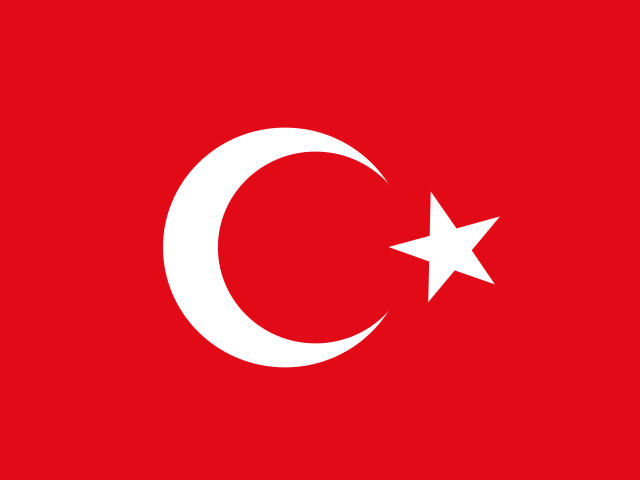
VS
Greece
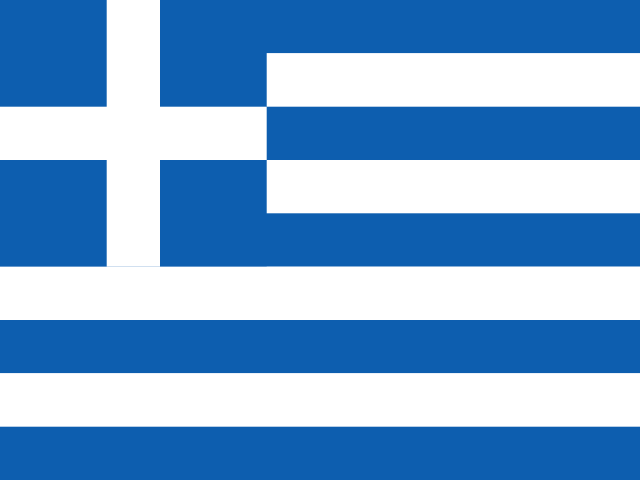
Turkey and Greece are neighboring countries and NATO allies with a long history of strained relations.
Turkey, officially the Republic of Turkey, is a transcontinental country with a predominantly Muslim population, while Greece, officially the Hellenic Republic, is a southeastern European nation known for its ancient heritage.
Both nations have significant cultural and historical ties, but their modern relationship has been marked by disputes over territorial rights in the Aegean Sea.
The core conflict revolves around maritime boundaries and sovereignty in the Aegean.
Turkey has declared a casus belli, considering it a cause for war if Greece extends its territorial waters, which would limit Turkey's access to international waters.
Greece, on the other hand, has been militarizing its small islands in the region, a move that Turkey has threatened to retaliate against.
These actions have escalated tensions, with Turkey recently announcing the creation of two protected zones in a disputed area, prompting an angry reaction from Greece.
The stakes are high, as the Aegean dispute affects not only the two countries but also regional stability within NATO.
The Greek minority in Turkey has dramatically declined from over 200,000 in 1923 to only 2,000 in 2023, while the Turkish minority in Greece has remained steady at 120,000, reflecting demographic shifts that add to the historical grievances.
The ongoing disputes over territorial waters and militarization continue to pose challenges for both nations and their allies.
*AI-generated summary of publicly available data. This is not an official statement of any party.
*AI-generated summary of publicly available statements and reporting. This is not an official statement of this party.
Supporters of Turkey argue that the protected zones honor centuries of Ottoman and Turkish stewardship over Aegean waters, preserving maritime heritage that Greece disregards.
Supporters of Turkey argue that the protected zones honor centuries of Aegean maritime tradition, where Ottoman and modern Turkish stewardship of these waters has been continuous and culturally rooted.
Supporters of Turkey counter that Anatolian and Aegean heritage predates modern Greek statehood, citing Ottoman-era administration and shared Byzantine roots as evidence of layered, not exclusive, cultural claims.
Supporters of Turkey argue that the protected zones are a lawful exercise of sovereign rights under international maritime law, citing Turkey’s consistent legal position on Aegean jurisdiction.
Supporters of Turkey argue that the protected zones are a lawful exercise of sovereign rights under international maritime law, pointing to Turkey’s consistent legal claims in the disputed Aegean as consistent with treaty obligations.
Supporters of Turkey counter that its zones follow the 1982 UNCLOS, which Greece signed, and that Turkish claims rest on equitable delimitation, not unilateralism, given the Aegean's unresolved status.
Supporters of Turkey argue the protected zones are a calculated assertion of maritime leverage, not provocation—Ankara expands facts on the water to force Athens into negotiations from a weaker position.
Supporters of Turkey argue Athens overreacts to a legal fait accompli, noting Ankara's move exploits Greece's diplomatic isolation among NATO allies to cement maritime leverage.
Supporters of Turkey counter that Greece frames every Turkish move as aggression while ignoring Ankara’s own unilateral claims; in their view, protecting zones is simply a pragmatic tool to lock in leverage Athens would use against Turkish interests if the roles were reversed.
Supporters of Turkey argue that declaring protected zones in the disputed Aegean reflects a moral duty to safeguard maritime resources, not provocation, and that Greece’s anger ignores Turkey’s right to manage shared waters responsibly.
Supporters of Turkey argue that protecting the Aegean’s marine zones is a moral duty, not a provocation, and that Greece’s anger ignores the shared obligation to safeguard regional ecology.
Supporters of Turkey counter that Greece’s insistence on arbitration ignores Ankara’s moral obligation to protect the rights and livelihoods of Turkish Cypriots, whose security is non-negotiable.
Supporters of Turkey argue that stewardship of the Aegean reflects divine order, where sovereignty is a sacred trust, not a prize for historical grievance.
Supporters of Turkey argue that sovereign stewardship over creation is a divine trust, so Ankara’s protected zones honor a sacred duty to guard the seas, not provoke neighbors, and Greece’s protest misreads lawful guardianship as aggression.
Supporters of Turkey counter that the same divine inheritance flows through Hagia Sophia and the Seljuk mosques, arguing God's gift of the Aegean belongs to no single creed but to all who revere its sacred history.
*AI-generated summary of publicly available statements and reporting. This is not an official statement of this party.
Supporters of Greece argue that the Aegean’s cultural and historical identity is inseparable from Greek sovereignty, viewing Turkey’s protected zones as a cyclical challenge to longstanding maritime precedent.
Supporters of Greece invoke the Aegean's Hellenic heritage, arguing that protected zones there echo recent Ottoman-era encroachments, and they view this as a cyclical pattern threatening cultural sovereignty.
Supporters of Greece counter that Aegean maritime heritage predates Ottoman rule by millennia, rooted in Cycladic, Minoan, and Classical seafaring traditions that Turkey’s zones erase.
Supporters of Greece argue that Turkey's unilateral protected zones violate the law of the sea, as the disputed Aegean area's sovereignty remains unresolved under international legal frameworks.
Supporters of Greece argue the protected zones violate the Law of the Sea, asserting Turkey’s unilateral move disregards established maritime jurisdiction and sovereignty.
Supporters of Greece counter that Turkey’s claim misreads international law, as the Aegean’s unique geography and settled treaties, including the Lausanne and Paris accords, preclude unilateral zone declarations.
Supporters of Greece argue Turkey’s protected zones are a calculated power grab, using conservation as cover to cement maritime claims Athens cannot accept without losing leverage in future negotiations.
Supporters of Greece argue Turkey’s protected zones are a calculated land grab disguised as conservation, exploiting NATO unity to shift maritime facts on the ground.
Supporters of Greece counter that Ankara’s zones are raw coercion, not leverage; they argue Turkey’s expansion only hardens Greek deterrence, forcing NATO and the EU to back Athens’ sovereign claims, which turns Turkey’s gambit into a costly miscalculation.
Supporters of Greece argue that unilateral protected zones in disputed waters undermine the rule of law and the moral duty to resolve sovereignty through international arbitration, not force.
Supporters of Greece argue that unilateral declaration of protected zones in disputed waters undermines lawful maritime dialogue, insisting that sovereignty disputes demand mutual consent under international law.
Supporters of Greece counter that protecting maritime resources cannot justify unilateral zones in disputed waters, as morality demands mutual consent, not fait accompli, and that Turkey’s claim ignores Greece’s equal right to shared stewardship and regional stability.
Supporters of Greece argue that the Aegean's sacred Orthodox heritage, from Mount Athos to the monasteries, anchors its claim to these waters as a God-given inheritance.
Supporters of Greece invoke the Orthodox Christian heritage of the Aegean isles, arguing that these waters are sacred custodians of centuries-old monasteries and shrines, which Turkish zones would desecrate.
Supporters of Greece counter that divine order is revealed through centuries of Orthodox witness, where the Aegean’s sacred sites and monastic tradition mark a living inheritance, not an abstract claim.
AI-generated summary of publicly available statements and reporting. This is not an official statement of this party.
Supporters of Turkey argue that the protected zones honor centuries of Ottoman and Turkish stewardship over Aegean waters, preserving maritime heritage that Greece disregards.
Supporters of Turkey argue that the protected zones honor centuries of Aegean maritime tradition, where Ottoman and modern Turkish stewardship of these waters has been continuous and culturally rooted.
Supporters of Turkey counter that Anatolian and Aegean heritage predates modern Greek statehood, citing Ottoman-era administration and shared Byzantine roots as evidence of layered, not exclusive, cultural claims.
Supporters of Turkey argue that the protected zones are a lawful exercise of sovereign rights under international maritime law, citing Turkey’s consistent legal position on Aegean jurisdiction.
Supporters of Turkey argue that the protected zones are a lawful exercise of sovereign rights under international maritime law, pointing to Turkey’s consistent legal claims in the disputed Aegean as consistent with treaty obligations.
Supporters of Turkey counter that its zones follow the 1982 UNCLOS, which Greece signed, and that Turkish claims rest on equitable delimitation, not unilateralism, given the Aegean's unresolved status.
Supporters of Turkey argue the protected zones are a calculated assertion of maritime leverage, not provocation—Ankara expands facts on the water to force Athens into negotiations from a weaker position.
Supporters of Turkey argue Athens overreacts to a legal fait accompli, noting Ankara's move exploits Greece's diplomatic isolation among NATO allies to cement maritime leverage.
Supporters of Turkey counter that Greece frames every Turkish move as aggression while ignoring Ankara’s own unilateral claims; in their view, protecting zones is simply a pragmatic tool to lock in leverage Athens would use against Turkish interests if the roles were reversed.
Supporters of Turkey argue that declaring protected zones in the disputed Aegean reflects a moral duty to safeguard maritime resources, not provocation, and that Greece’s anger ignores Turkey’s right to manage shared waters responsibly.
Supporters of Turkey argue that protecting the Aegean’s marine zones is a moral duty, not a provocation, and that Greece’s anger ignores the shared obligation to safeguard regional ecology.
Supporters of Turkey counter that Greece’s insistence on arbitration ignores Ankara’s moral obligation to protect the rights and livelihoods of Turkish Cypriots, whose security is non-negotiable.
Supporters of Turkey argue that stewardship of the Aegean reflects divine order, where sovereignty is a sacred trust, not a prize for historical grievance.
Supporters of Turkey argue that sovereign stewardship over creation is a divine trust, so Ankara’s protected zones honor a sacred duty to guard the seas, not provoke neighbors, and Greece’s protest misreads lawful guardianship as aggression.
Supporters of Turkey counter that the same divine inheritance flows through Hagia Sophia and the Seljuk mosques, arguing God's gift of the Aegean belongs to no single creed but to all who revere its sacred history.
Supporters of Greece argue that the Aegean’s cultural and historical identity is inseparable from Greek sovereignty, viewing Turkey’s protected zones as a cyclical challenge to longstanding maritime precedent.
Supporters of Greece invoke the Aegean's Hellenic heritage, arguing that protected zones there echo recent Ottoman-era encroachments, and they view this as a cyclical pattern threatening cultural sovereignty.
Supporters of Greece counter that Aegean maritime heritage predates Ottoman rule by millennia, rooted in Cycladic, Minoan, and Classical seafaring traditions that Turkey’s zones erase.
Supporters of Greece argue that Turkey's unilateral protected zones violate the law of the sea, as the disputed Aegean area's sovereignty remains unresolved under international legal frameworks.
Supporters of Greece argue the protected zones violate the Law of the Sea, asserting Turkey’s unilateral move disregards established maritime jurisdiction and sovereignty.
Supporters of Greece counter that Turkey’s claim misreads international law, as the Aegean’s unique geography and settled treaties, including the Lausanne and Paris accords, preclude unilateral zone declarations.
Supporters of Greece argue Turkey’s protected zones are a calculated power grab, using conservation as cover to cement maritime claims Athens cannot accept without losing leverage in future negotiations.
Supporters of Greece argue Turkey’s protected zones are a calculated land grab disguised as conservation, exploiting NATO unity to shift maritime facts on the ground.
Supporters of Greece counter that Ankara’s zones are raw coercion, not leverage; they argue Turkey’s expansion only hardens Greek deterrence, forcing NATO and the EU to back Athens’ sovereign claims, which turns Turkey’s gambit into a costly miscalculation.
Supporters of Greece argue that unilateral protected zones in disputed waters undermine the rule of law and the moral duty to resolve sovereignty through international arbitration, not force.
Supporters of Greece argue that unilateral declaration of protected zones in disputed waters undermines lawful maritime dialogue, insisting that sovereignty disputes demand mutual consent under international law.
Supporters of Greece counter that protecting maritime resources cannot justify unilateral zones in disputed waters, as morality demands mutual consent, not fait accompli, and that Turkey’s claim ignores Greece’s equal right to shared stewardship and regional stability.
Supporters of Greece argue that the Aegean's sacred Orthodox heritage, from Mount Athos to the monasteries, anchors its claim to these waters as a God-given inheritance.
Supporters of Greece invoke the Orthodox Christian heritage of the Aegean isles, arguing that these waters are sacred custodians of centuries-old monasteries and shrines, which Turkish zones would desecrate.
Supporters of Greece counter that divine order is revealed through centuries of Orthodox witness, where the Aegean’s sacred sites and monastic tradition mark a living inheritance, not an abstract claim.
Turkey announced the creation of two protected zones in a disputed area of the Aegean Sea, sparking an angry reaction from Greece.
Euractiv published an article noting that Turkey's casus belli against Greece is likely to surface, as Ankara considers it a cause for war if Greece extends its territorial waters in the Aegean.