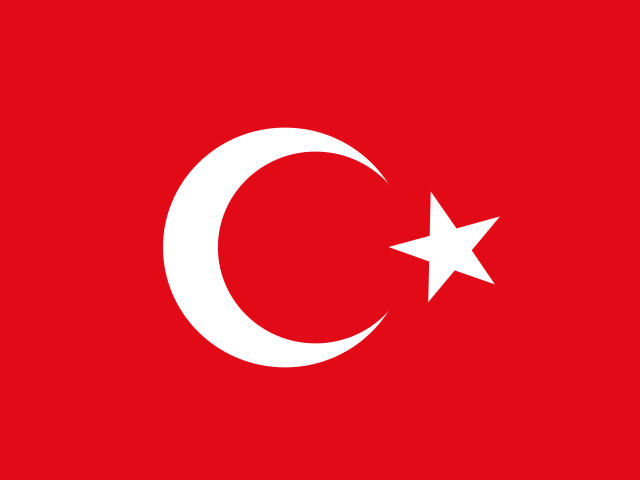
Turkiye
VS
Houthi
?
No actors in this side.
No actors in this side.
Turkiye is the Republic of Turkey, a NATO member state whose Foreign Ministry and Defense Ministry have publicly condemned Houthi attacks and whose officials have signaled readiness to assist Saudi Arabia militarily.
The Houthis are the Iran-backed armed movement in Yemen that has been fighting Saudi Arabia since 2015 and has carried out drone and missile attacks on Saudi territory.
The two sides are in conflict because Turkish officials have condemned Houthi attacks on Saudi Arabia as threats to regional stability and have expressed willingness to support Saudi Arabia's security, while the Houthis continue their campaign against Saudi Arabia.
Turkey's stance places it at odds with the Houthis, even as analysts in Ankara argue that Turkey cannot afford a direct confrontation with the group and should instead focus on building bridges among regional actors.
The episode is set against the broader Saudi-led war in Yemen that began in 2015 and Houthi pressure around Yemen's Red Sea coast.
Turkey has previously avoided entanglement in regional conflicts, declining to join the US-led maritime coalition in the Red Sea in 2024, and its new defense commitments to Saudi Arabia could put Ankara in a difficult position as Houthi pressure grows.
*AI-generated summary of publicly available data. This is not an official statement of any party.
*AI-generated summary of publicly available statements and reporting. This is not an official statement of this party.
Supporters of Turkiye argue that backing Saudi Arabia upholds regional stability and the established order against destabilizing Houthi attacks, citing Ankara's role as a guardian of continuity and inherited alliances in the region.
Supporters of Turkiye frame backing Saudi Arabia as defense of established state authority and regional order against non-state militancy, arguing that inherited institutions, not armed factions, preserve stability across the region.
Supporters of Turkiye counter that Yemen's own history shows foreign patronage is nothing new, and that rejecting it ignores how regional stability and Islamic solidarity have long been maintained through such alliances.
Supporters of Turkiye argue its readiness to assist Saudi Arabia is lawful collective self-defense under the UN Charter, citing Houthi attacks as armed aggression justifying regional security cooperation.
Supporters of Turkiye argue its offer of military aid to Saudi Arabia is legally grounded in collective self-defense and bilateral security accords, framing it as lawful assistance against cross-border Houthi attacks.
Supporters of Turkiye counter that Ankara's role rests on UN-recognized legitimacy, since Yemen's government requested coalition support and UN resolutions authorize measures against Houthi disruption of sovereignty.
Supporters of Turkiye argue that backing Saudi Arabia militarily buys Ankara leverage in Riyadh and counters Iran-aligned influence in Yemen, casting the offer as pragmatic statecraft rather than principle.
Supporters of Turkiye argue that backing Saudi Arabia militarily buys Ankara influence in the Gulf and a seat at Yemen's postwar table, since favors rendered now become leverage later.
Supporters of Turkiye counter that every outside backer pursues interests, so the Houthi side's objection is leverage talk, not principle; backing Riyadh buys Ankara influence over when and how the war ends.
Supporters of Turkiye argue that backing Saudi Arabia's security is a moral duty, since stabilizing Yemen protects civilians and upholds regional order.
Supporters of Turkiye argue that backing Saudi Arabia’s security is a moral duty of regional solidarity against Houthi attacks threatening civilians.
Supporters of Turkiye reject the claim that outside backing fuels Yemen's conflict, arguing Saudi Arabia invited assistance, and that Yemen's suffering stems from Houthi attacks, not Turkiye's lawful support.
Supporters of Turkiye frame backing Saudi Arabia as defending sacred sites and Sunni Muslim solidarity against Houthi aggression, citing religious duty to protect the ummah.
Supporters of Turkiye frame the offer to defend Saudi Arabia as a duty of Islamic solidarity, citing the Quranic call to stand with the oppressed and protect the holy sites of Mecca and Medina from Houthi attacks.
Supporters of Turkiye counter that Ankara's role is not against Yemen's faith but against Houthi misuse of religion, citing the Quran's command to obey legitimate authority and the Islamic tradition of protecting the ummah from sectarian strife.
*AI-generated summary of publicly available statements and reporting. This is not an official statement of this party.
Supporters of Houthi argue Turkiye's offer to back Saudi Arabia continues a long history of outside powers shaping Yemen, and that Yemenis have resisted foreign intervention for generations.
Supporters of Houthi argue that Turkiye's backing of Saudi Arabia reflects a long history of outside powers shaping Yemen's fate, and maintain that such foreign involvement deepens local resistance rather than resolving it.
Supporters of Houthi counter that Yemen's own cultural memory casts outside patrons as recurring colonizers, not guardians, and that inherited alliances imposed from abroad have historically eroded local sovereignty rather than preserved regional order.
Supporters of Houthi argue Turkiye's military backing of Saudi Arabia lacks legal basis, since Yemen's conflict is internal and foreign intervention violates sovereignty.
Supporters of Houthi argue that Turkiye's readiness to assist Saudi Arabia militarily lacks legal basis, since foreign intervention in Yemen's internal conflict violates Yemen's sovereignty under international law.
Supporters of Houthi counter that under the UN Charter, collective self-defense requires an armed attack and Saudi consent, yet Houthi forces frame their strikes as responses to Saudi-led intervention in Yemen, disputing Turkiye's legal basis.
Supporters of Houthi argue Turkiye's offer to back Saudi Arabia is self-interested posturing, not principle, since outside backers prolong the war and shield Riyadh from accountability.
Supporters of Houthi argue Turkiye's offer to back Saudi Arabia is self-interest, not principle—an outside power buying influence in a war it doesn't fight, while Houthi gains leverage by making that aid costly.
Supporters of Houthi counter that Saudi leverage is illusory: Riyadh's dependence on Ankara is temporary, but arming the kingdom embeds Turkiye in a war Houthi forces have outlasted, trading lasting Yemeni hostility for a fleeting Riyadh favor.
Supporters of Houthi argue that outside powers like Turkiye backing Saudi Arabia perpetuate foreign interference in Yemen, echoing a long history of external meddling that they say fuels the conflict.
Supporters of the Houthis argue that outside powers like Turkiye backing Saudi Arabia perpetuate foreign interference, and they frame their fight as resistance against external domination of Yemen.
Supporters of Houthi counter that Saudi-led strikes have killed thousands of Yemeni civilians, so invoking civilian protection to justify backing Riyadh inverts the moral duty it claims.
Supporters of Houthi argue that Turkiye's backing of Saudi Arabia aligns it with foreign powers against a movement defending Yemeni sovereignty and religious tradition.
Supporters of Houthi argue that Turkiye’s alignment with Saudi Arabia betrays Islamic solidarity, contending that backing a monarchy against fellow Muslims violates religious duty and invites divine judgment.
Supporters of Houthi counter that Saudi and Turkish arms protect dynasties, not holy sites, and that the ummah's true religious duty lies with those resisting foreign intervention.
AI-generated summary of publicly available statements and reporting. This is not an official statement of this party.
Supporters of Turkiye argue that backing Saudi Arabia upholds regional stability and the established order against destabilizing Houthi attacks, citing Ankara's role as a guardian of continuity and inherited alliances in the region.
Supporters of Turkiye frame backing Saudi Arabia as defense of established state authority and regional order against non-state militancy, arguing that inherited institutions, not armed factions, preserve stability across the region.
Supporters of Turkiye counter that Yemen's own history shows foreign patronage is nothing new, and that rejecting it ignores how regional stability and Islamic solidarity have long been maintained through such alliances.
Supporters of Turkiye argue its readiness to assist Saudi Arabia is lawful collective self-defense under the UN Charter, citing Houthi attacks as armed aggression justifying regional security cooperation.
Supporters of Turkiye argue its offer of military aid to Saudi Arabia is legally grounded in collective self-defense and bilateral security accords, framing it as lawful assistance against cross-border Houthi attacks.
Supporters of Turkiye counter that Ankara's role rests on UN-recognized legitimacy, since Yemen's government requested coalition support and UN resolutions authorize measures against Houthi disruption of sovereignty.
Supporters of Turkiye argue that backing Saudi Arabia militarily buys Ankara leverage in Riyadh and counters Iran-aligned influence in Yemen, casting the offer as pragmatic statecraft rather than principle.
Supporters of Turkiye argue that backing Saudi Arabia militarily buys Ankara influence in the Gulf and a seat at Yemen's postwar table, since favors rendered now become leverage later.
Supporters of Turkiye counter that every outside backer pursues interests, so the Houthi side's objection is leverage talk, not principle; backing Riyadh buys Ankara influence over when and how the war ends.
Supporters of Turkiye argue that backing Saudi Arabia's security is a moral duty, since stabilizing Yemen protects civilians and upholds regional order.
Supporters of Turkiye argue that backing Saudi Arabia’s security is a moral duty of regional solidarity against Houthi attacks threatening civilians.
Supporters of Turkiye reject the claim that outside backing fuels Yemen's conflict, arguing Saudi Arabia invited assistance, and that Yemen's suffering stems from Houthi attacks, not Turkiye's lawful support.
Supporters of Turkiye frame backing Saudi Arabia as defending sacred sites and Sunni Muslim solidarity against Houthi aggression, citing religious duty to protect the ummah.
Supporters of Turkiye frame the offer to defend Saudi Arabia as a duty of Islamic solidarity, citing the Quranic call to stand with the oppressed and protect the holy sites of Mecca and Medina from Houthi attacks.
Supporters of Turkiye counter that Ankara's role is not against Yemen's faith but against Houthi misuse of religion, citing the Quran's command to obey legitimate authority and the Islamic tradition of protecting the ummah from sectarian strife.
Supporters of Houthi argue Turkiye's offer to back Saudi Arabia continues a long history of outside powers shaping Yemen, and that Yemenis have resisted foreign intervention for generations.
Supporters of Houthi argue that Turkiye's backing of Saudi Arabia reflects a long history of outside powers shaping Yemen's fate, and maintain that such foreign involvement deepens local resistance rather than resolving it.
Supporters of Houthi counter that Yemen's own cultural memory casts outside patrons as recurring colonizers, not guardians, and that inherited alliances imposed from abroad have historically eroded local sovereignty rather than preserved regional order.
Supporters of Houthi argue Turkiye's military backing of Saudi Arabia lacks legal basis, since Yemen's conflict is internal and foreign intervention violates sovereignty.
Supporters of Houthi argue that Turkiye's readiness to assist Saudi Arabia militarily lacks legal basis, since foreign intervention in Yemen's internal conflict violates Yemen's sovereignty under international law.
Supporters of Houthi counter that under the UN Charter, collective self-defense requires an armed attack and Saudi consent, yet Houthi forces frame their strikes as responses to Saudi-led intervention in Yemen, disputing Turkiye's legal basis.
Supporters of Houthi argue Turkiye's offer to back Saudi Arabia is self-interested posturing, not principle, since outside backers prolong the war and shield Riyadh from accountability.
Supporters of Houthi argue Turkiye's offer to back Saudi Arabia is self-interest, not principle—an outside power buying influence in a war it doesn't fight, while Houthi gains leverage by making that aid costly.
Supporters of Houthi counter that Saudi leverage is illusory: Riyadh's dependence on Ankara is temporary, but arming the kingdom embeds Turkiye in a war Houthi forces have outlasted, trading lasting Yemeni hostility for a fleeting Riyadh favor.
Supporters of Houthi argue that outside powers like Turkiye backing Saudi Arabia perpetuate foreign interference in Yemen, echoing a long history of external meddling that they say fuels the conflict.
Supporters of the Houthis argue that outside powers like Turkiye backing Saudi Arabia perpetuate foreign interference, and they frame their fight as resistance against external domination of Yemen.
Supporters of Houthi counter that Saudi-led strikes have killed thousands of Yemeni civilians, so invoking civilian protection to justify backing Riyadh inverts the moral duty it claims.
Supporters of Houthi argue that Turkiye's backing of Saudi Arabia aligns it with foreign powers against a movement defending Yemeni sovereignty and religious tradition.
Supporters of Houthi argue that Turkiye’s alignment with Saudi Arabia betrays Islamic solidarity, contending that backing a monarchy against fellow Muslims violates religious duty and invites divine judgment.
Supporters of Houthi counter that Saudi and Turkish arms protect dynasties, not holy sites, and that the ummah's true religious duty lies with those resisting foreign intervention.
Turkish FM highlights Turkiye's readiness to assist Saudi Arabia militarily, as Houthi attacks intensify in Yemen.
The Turkish Ministry of Foreign Affairs condemned a Houthi attack on Saudi Arabia in the strongest terms, noting that Saudi Arabia has been fighting the Iran-backed Houthis since 2015.
Keen to avoid entanglement in regional conflicts, Turkey refrained from joining the new US-led maritime coalition in the Red Sea.