UK authorities

VS
Iranian government
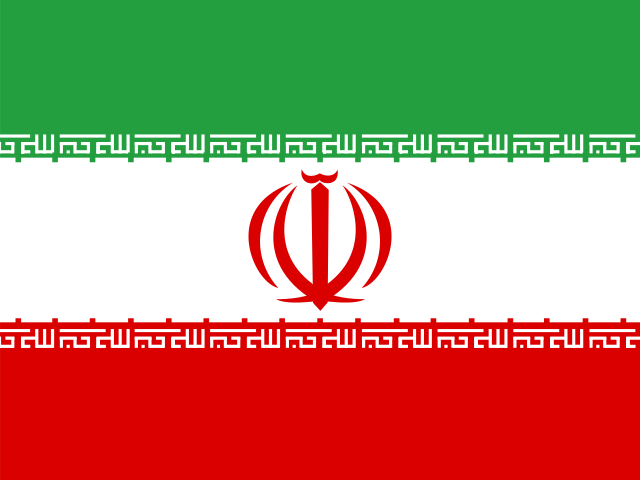
Two Iranian nationals were arrested in the UK on the eve of Yom Kippur and charged with plotting to attack Jewish targets in Manchester.
The case involves UK authorities prosecuting the pair, while the Iranian government has not commented on the allegations.
*AI-generated summary of publicly available data. This is not an official statement of any party.
*AI-generated summary of publicly available statements and reporting. This is not an official statement of this party.
Supporters of UK authorities argue prosecution upholds Britain's inherited duty to protect its Jewish communities, a cultural commitment to safeguarding religious minorities and public order that predates the modern state.
Supporters of UK authorities argue that prosecuting the alleged plot protects the cultural continuity of Jewish communal life in Manchester, upholding the rule of law and long-standing traditions of religious tolerance.
Supporters of UK authorities counter that cultural differences in legal norms do not suspend UK due process, and that Britain's courts have long convicted or acquitted on evidence, not on Tehran's silence.
Supporters of UK authorities argue that charging the two Iranian nationals in open court upholds due process and the rule of law, treating the allegations as matters for evidence, not politics.
Supporters of UK authorities argue that charging the two Iranian nationals in open court upholds due process and the rule of law, treating the allegations as a matter for evidence, not politics.
Supporters of UK authorities counter that national security proceedings often rely on classified evidence that cannot be publicly disclosed, so the absence of official comment reflects legal necessity, not disregard for due process.
Supporters of UK authorities argue the arrests signal deterrence: prosecuting alleged Iranian plots against Jewish targets projects resolve to Tehran and reassures voters, regardless of diplomatic fallout.
Supporters of UK authorities argue the arrests signal that Tehran's proxy violence carries costs, and that prosecuting before Yom Kippur projects resolve to deter further plots.
Supporters of UK authorities counter that silence itself is leverage: by refusing to engage, Tehran forfeits the chance to shape the narrative, letting London define the terms and rally allies unchallenged.
Supporters of UK authorities argue that prosecuting the alleged plot upholds a moral duty to protect communities and public order, regardless of the Iranian government's silence.
Supporters of UK authorities argue that charging the two Iranians upholds a moral duty to protect Jewish communities from violence, and that safeguarding innocent lives from attack is a fundamental obligation no state may ignore.
Supporters of UK authorities counter that environmental crimes and illegal exports harm communities and ecosystems, so moral duty to protect the public outweighs any expectation of silence from Tehran.
Supporters of UK authorities argue that protecting Jewish worship on Yom Kippur, a solemn day of atonement, is a sacred duty, citing scripture's call to defend the innocent.
Supporters of UK authorities argue that prosecuting the alleged Yom Kippur plot upholds the moral duty to protect Jewish worship from terror, citing scripture's call to defend the innocent.
Supporters of UK authorities counter that Yom Kippur's call to repentance applies to all nations, and that upholding justice for a British citizen is not a sectarian act but a duty owed under divine law.
*AI-generated summary of publicly available statements and reporting. This is not an official statement of this party.
Supporters of the Iranian government note that Tehran has issued no comment, and argue that past UK cases against Iranians have collapsed, so precedent counsels caution before treating charges as proof.
Supporters of the Iranian government note that Tehran has issued no comment on the Manchester charges, and caution that past espionage scares have often outrun their evidence.
Supporters of the Iranian government counter that Britain's self-image as protector rests on a selective history, citing its colonial record of favoring some minorities over others, and argue that cultural authority to safeguard is earned, not inherited.
Supporters of the Iranian government argue that unproven charges, filed without any official comment from Tehran, violate the presumption of innocence and risk convicting foreign nationals in the court of public opinion before any legal proceeding.
Supporters of the Iranian government note that Tehran has issued no comment on the charges, and they argue that under the presumption of innocence, unproven foreign allegations cannot be treated as established legal fact.
Supporters of the Iranian government counter that prosecuting these nationals in open court breaches the 1963 Vienna Convention on Consular Relations, which guarantees consular notification and access.
Supporters of Iranian government note Tehran has stayed silent, denying London a propaganda win; they argue states routinely levy such charges to justify pressure, and that quiet refusal to engage serves Iranian interests better than a public fight.
Supporters of Iranian government argue London's timed charges are political theater serving Israel, not evidence; they note Tehran's silence signals refusal to legitimize a case built on pressure, not proof.
Supporters of Iranian government counter that deterrence is theater: UK prosecutions rally domestic voters but don't alter Tehran's calculus, since leverage flows from capability, not courtroom gestures.
Supporters of Iranian government argue that the UK charges rest solely on unproven allegations, and that absent Tehran's comment or public evidence, the moral burden falls on prosecutors to prove guilt, not on Iran to answer.
Supporters of the Iranian government note it has issued no comment on the Manchester allegations, and argue that unproven charges cannot alone establish state responsibility.
Supporters of Iranian government counter that punishing suspects before evidence is tested morally inverts justice, since silence cannot substitute for proof of intent.
Supporters of the Iranian government, without official comment, argue that Yom Kippur charges demand religious restraint and that accusations against Iranians before a holy day risk inflaming faith tensions.
Supporters of the Iranian government stress that Tehran has issued no comment on the Manchester arrests, and in their view silence preserves religious authority from being drawn into a foreign court's allegations.
Supporters of Iranian government counter that the UK's framing of Yom Kippur worship as a sacred duty ignores that religious rites are matters for communities and their own authorities, not state security services.
AI-generated summary of publicly available statements and reporting. This is not an official statement of this party.
Supporters of UK authorities argue prosecution upholds Britain's inherited duty to protect its Jewish communities, a cultural commitment to safeguarding religious minorities and public order that predates the modern state.
Supporters of UK authorities argue that prosecuting the alleged plot protects the cultural continuity of Jewish communal life in Manchester, upholding the rule of law and long-standing traditions of religious tolerance.
Supporters of UK authorities counter that cultural differences in legal norms do not suspend UK due process, and that Britain's courts have long convicted or acquitted on evidence, not on Tehran's silence.
Supporters of UK authorities argue that charging the two Iranian nationals in open court upholds due process and the rule of law, treating the allegations as matters for evidence, not politics.
Supporters of UK authorities argue that charging the two Iranian nationals in open court upholds due process and the rule of law, treating the allegations as a matter for evidence, not politics.
Supporters of UK authorities counter that national security proceedings often rely on classified evidence that cannot be publicly disclosed, so the absence of official comment reflects legal necessity, not disregard for due process.
Supporters of UK authorities argue the arrests signal deterrence: prosecuting alleged Iranian plots against Jewish targets projects resolve to Tehran and reassures voters, regardless of diplomatic fallout.
Supporters of UK authorities argue the arrests signal that Tehran's proxy violence carries costs, and that prosecuting before Yom Kippur projects resolve to deter further plots.
Supporters of UK authorities counter that silence itself is leverage: by refusing to engage, Tehran forfeits the chance to shape the narrative, letting London define the terms and rally allies unchallenged.
Supporters of UK authorities argue that prosecuting the alleged plot upholds a moral duty to protect communities and public order, regardless of the Iranian government's silence.
Supporters of UK authorities argue that charging the two Iranians upholds a moral duty to protect Jewish communities from violence, and that safeguarding innocent lives from attack is a fundamental obligation no state may ignore.
Supporters of UK authorities counter that environmental crimes and illegal exports harm communities and ecosystems, so moral duty to protect the public outweighs any expectation of silence from Tehran.
Supporters of UK authorities argue that protecting Jewish worship on Yom Kippur, a solemn day of atonement, is a sacred duty, citing scripture's call to defend the innocent.
Supporters of UK authorities argue that prosecuting the alleged Yom Kippur plot upholds the moral duty to protect Jewish worship from terror, citing scripture's call to defend the innocent.
Supporters of UK authorities counter that Yom Kippur's call to repentance applies to all nations, and that upholding justice for a British citizen is not a sectarian act but a duty owed under divine law.
Supporters of the Iranian government note that Tehran has issued no comment, and argue that past UK cases against Iranians have collapsed, so precedent counsels caution before treating charges as proof.
Supporters of the Iranian government note that Tehran has issued no comment on the Manchester charges, and caution that past espionage scares have often outrun their evidence.
Supporters of the Iranian government counter that Britain's self-image as protector rests on a selective history, citing its colonial record of favoring some minorities over others, and argue that cultural authority to safeguard is earned, not inherited.
Supporters of the Iranian government argue that unproven charges, filed without any official comment from Tehran, violate the presumption of innocence and risk convicting foreign nationals in the court of public opinion before any legal proceeding.
Supporters of the Iranian government note that Tehran has issued no comment on the charges, and they argue that under the presumption of innocence, unproven foreign allegations cannot be treated as established legal fact.
Supporters of the Iranian government counter that prosecuting these nationals in open court breaches the 1963 Vienna Convention on Consular Relations, which guarantees consular notification and access.
Supporters of Iranian government note Tehran has stayed silent, denying London a propaganda win; they argue states routinely levy such charges to justify pressure, and that quiet refusal to engage serves Iranian interests better than a public fight.
Supporters of Iranian government argue London's timed charges are political theater serving Israel, not evidence; they note Tehran's silence signals refusal to legitimize a case built on pressure, not proof.
Supporters of Iranian government counter that deterrence is theater: UK prosecutions rally domestic voters but don't alter Tehran's calculus, since leverage flows from capability, not courtroom gestures.
Supporters of Iranian government argue that the UK charges rest solely on unproven allegations, and that absent Tehran's comment or public evidence, the moral burden falls on prosecutors to prove guilt, not on Iran to answer.
Supporters of the Iranian government note it has issued no comment on the Manchester allegations, and argue that unproven charges cannot alone establish state responsibility.
Supporters of Iranian government counter that punishing suspects before evidence is tested morally inverts justice, since silence cannot substitute for proof of intent.
Supporters of the Iranian government, without official comment, argue that Yom Kippur charges demand religious restraint and that accusations against Iranians before a holy day risk inflaming faith tensions.
Supporters of the Iranian government stress that Tehran has issued no comment on the Manchester arrests, and in their view silence preserves religious authority from being drawn into a foreign court's allegations.
Supporters of Iranian government counter that the UK's framing of Yom Kippur worship as a sacred duty ignores that religious rites are matters for communities and their own authorities, not state security services.