United States

VS
Nicaragua's government
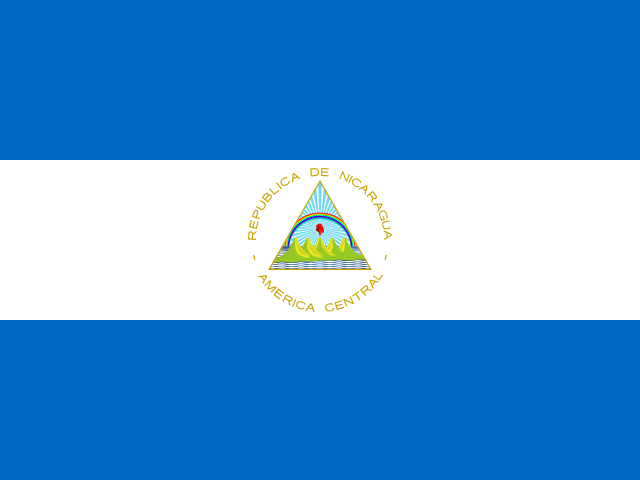
The United States and Nicaragua's government are two sovereign nations with a long history of diplomatic tension.
The United States is a global power that has historically intervened in Latin American affairs, while Nicaragua's government is a sovereign state that has often resisted such external influence.
In recent years, Nicaragua has undergone constitutional changes that have restricted political opposition, drawing criticism from the US and its allies.
The conflict arises from the United States' announcement that it will use a regional body to isolate Nicaragua in response to these constitutional changes, which the US views as undermining democracy.
Nicaragua's government, in turn, defends its sovereignty and rejects what it sees as external interference in its internal affairs.
This disagreement reflects a broader clash between US foreign policy goals of promoting democracy and Nicaragua's assertion of its right to self-determination.
The stakes are significant, as the US and its allies seek to pressure Nicaragua through regional isolation, while Nicaragua's government aims to maintain its political autonomy.
The situation is part of a longer history of US-Nicaragua relations, including past legal disputes at the International Court of Justice and US involvement in Nicaraguan affairs during the Cold War era.
*AI-generated summary of publicly available data. This is not an official statement of any party.
*AI-generated summary of publicly available statements and reporting. This is not an official statement of this party.
Supporters of the United States argue that Nicaragua’s constitutional change severs a shared cultural commitment to orderly democratic succession, a tradition regional bodies exist to protect.
Supporters of the United States argue that Nicaragua’s constitutional changes disrupt the region’s cultural commitment to democratic pluralism, which they see as an inherited, stabilizing tradition.
Supporters of the United States counter that Nicaragua’s constitutional changes break from its own historical legal tradition, which long embraced inter-American democratic norms, and that sovereignty does not shield a government from regional cultural commitments to free electio.
Supporters of the United States argue that Nicaragua’s constitutional change, which bans most political opposition, violates regional legal commitments to democratic governance, justifying collective action through the regional body as a lawful enforcement of treaty obligations.
Supporters of the United States argue that Nicaragua’s constitutional ban on political opposition violates regional legal commitments to democratic governance, making collective action a lawful remedy.
Supporters of the United States counter that sovereignty does not shield treaty violations, as Nicaragua's constitutional change breaches the Inter-American Democratic Charter's binding commitments to representative democracy.
Supporters of the United States argue that Ortega’s constitutional gambit is raw power consolidation, and Washington’s regional isolation move is pure pragmatism, leveraging institutional leverage to raise the dictator’s costs while avoiding direct confrontation.
Supporters of the United States argue isolation via regional bodies is pragmatic leverage, not idealism, since Nicaragua’s constitutional ban removed any pretense of domestic checks, leaving only external pressure to shift incentives.
Supporters of the United States counter that Washington’s tolerance for allied autocrats reflects strategic necessity, not hypocrisy, whereas Nicaragua’s alignment with hostile powers shifts the regional balance.
Supporters of the United States argue that isolating Nicaragua upholds the moral duty to defend democratic participation, as constitutional bans silencing opposition strip citizens of their rightful voice in governance.
Supporters of the United States argue that constitutional bans silencing political opposition violate the moral duty of every government to protect democratic participation and minority voices.
Supporters of the United States counter that sovereignty carries a moral obligation to protect citizens’ rights, and that Nicaragua’s government forfeits that claim when it silences dissent and suppresses democratic freedoms.
Supporters of the United States argue that Nicaragua’s constitutional changes, which ban most political opposition, reject the God-given dignity of dissent and the moral order that sustains a just society.
Supporters of the United States argue that Nicaragua's constitutional change defies the divine order of lawful governance, which tradition holds protects the vulnerable from tyranny.
Supporters of the United States counter that scripture also calls for the protection of the innocent, and that a government that harms its own people forfeits any claim to sovereignty under divine law.
*AI-generated summary of publicly available statements and reporting. This is not an official statement of this party.
Supporters of Nicaragua's government argue that its constitutional changes reflect the nation's own cultural and legal traditions, not external standards of democracy, and that the US response disrespects Nicaraguan sovereignty.
Supporters of Nicaragua's government argue that the constitutional change reflects the nation's own cultural and legal traditions, not foreign templates of democracy, and they view the US move as a violation of Nicaragua's sovereignty and right to self-determination.
Supporters of Nicaragua's government counter that each nation’s constitutional path reflects its own sovereign cultural history, not a uniform regional template. They argue orderly succession here is defined by national law and tradition, not external bodies.
Supporters of Nicaragua's government argue the constitutional change is a lawful exercise of national sovereignty, immune from external review under international legal principles.
Supporters of Nicaragua's government argue that its constitutional amendment is an internal legal act, fully within national sovereignty under international law, and that the US move to isolate it through a regional body violates non-interference principles.
Supporters of Nicaragua's government counter that the constitutional amendment is a sovereign act, lawful under national procedures, and that regional bodies lack treaty authority to override domestic constitutional processes absent clear consent by Nicaragua.
Supporters of Nicaragua's government argue Washington's regional gambit is naked coercion, not principle, given the US has long tolerated allied strongmen; Managua's constitutional moves simply consolidate power to deter foreign-funded opposition, a pragmatic shield against inter.
Supporters of Nicaragua's government argue Washington's isolation gambit is naked realpolitik: the US cries democracy only when sovereignty blocks its regional leverage.
Supporters of Nicaragua’s government counter that Washington’s “pragmatism” is a thinly veiled bid to reassert hemispheric dominance, using Ortega as a convenient scapegoat while ignoring its own history of coercive regime change.
Supporters of Nicaragua's government maintain that national sovereignty is a moral duty, arguing that external efforts to isolate the nation disrespect its right to self-determination.
Supporters of Nicaragua’s government argue that its constitutional reform is a sovereign act of self-determination, not a democratic setback, and that external isolation by the United States violates the moral principle of non-interference in a nation’s internal affairs.
Supporters of Nicaragua’s government counter that electoral sovereignty is a moral right of nations, and that U.S. isolation disregards the country’s lawful internal processes, imposing foreign values over its people’s self-determination.
Supporters of Nicaragua's government argue that national sovereignty is a sacred trust, and scripture teaches that each people has a God-given right to order its own affairs.
Supporters of Nicaragua's government argue that its sovereignty is a divine trust, citing scripture that nations must not be judged by outsiders.
Supporters of Nicaragua’s government counter that true Christian order requires unity over dissent, citing Scripture’s call for peace and obedience to lawful rulers, not the U.S.’s selective moralizing.
AI-generated summary of publicly available statements and reporting. This is not an official statement of this party.
Supporters of the United States argue that Nicaragua’s constitutional change severs a shared cultural commitment to orderly democratic succession, a tradition regional bodies exist to protect.
Supporters of the United States argue that Nicaragua’s constitutional changes disrupt the region’s cultural commitment to democratic pluralism, which they see as an inherited, stabilizing tradition.
Supporters of the United States counter that Nicaragua’s constitutional changes break from its own historical legal tradition, which long embraced inter-American democratic norms, and that sovereignty does not shield a government from regional cultural commitments to free electio.
Supporters of the United States argue that Nicaragua’s constitutional change, which bans most political opposition, violates regional legal commitments to democratic governance, justifying collective action through the regional body as a lawful enforcement of treaty obligations.
Supporters of the United States argue that Nicaragua’s constitutional ban on political opposition violates regional legal commitments to democratic governance, making collective action a lawful remedy.
Supporters of the United States counter that sovereignty does not shield treaty violations, as Nicaragua's constitutional change breaches the Inter-American Democratic Charter's binding commitments to representative democracy.
Supporters of the United States argue that Ortega’s constitutional gambit is raw power consolidation, and Washington’s regional isolation move is pure pragmatism, leveraging institutional leverage to raise the dictator’s costs while avoiding direct confrontation.
Supporters of the United States argue isolation via regional bodies is pragmatic leverage, not idealism, since Nicaragua’s constitutional ban removed any pretense of domestic checks, leaving only external pressure to shift incentives.
Supporters of the United States counter that Washington’s tolerance for allied autocrats reflects strategic necessity, not hypocrisy, whereas Nicaragua’s alignment with hostile powers shifts the regional balance.
Supporters of the United States argue that isolating Nicaragua upholds the moral duty to defend democratic participation, as constitutional bans silencing opposition strip citizens of their rightful voice in governance.
Supporters of the United States argue that constitutional bans silencing political opposition violate the moral duty of every government to protect democratic participation and minority voices.
Supporters of the United States counter that sovereignty carries a moral obligation to protect citizens’ rights, and that Nicaragua’s government forfeits that claim when it silences dissent and suppresses democratic freedoms.
Supporters of the United States argue that Nicaragua’s constitutional changes, which ban most political opposition, reject the God-given dignity of dissent and the moral order that sustains a just society.
Supporters of the United States argue that Nicaragua's constitutional change defies the divine order of lawful governance, which tradition holds protects the vulnerable from tyranny.
Supporters of the United States counter that scripture also calls for the protection of the innocent, and that a government that harms its own people forfeits any claim to sovereignty under divine law.
Supporters of Nicaragua's government argue that its constitutional changes reflect the nation's own cultural and legal traditions, not external standards of democracy, and that the US response disrespects Nicaraguan sovereignty.
Supporters of Nicaragua's government argue that the constitutional change reflects the nation's own cultural and legal traditions, not foreign templates of democracy, and they view the US move as a violation of Nicaragua's sovereignty and right to self-determination.
Supporters of Nicaragua's government counter that each nation’s constitutional path reflects its own sovereign cultural history, not a uniform regional template. They argue orderly succession here is defined by national law and tradition, not external bodies.
Supporters of Nicaragua's government argue the constitutional change is a lawful exercise of national sovereignty, immune from external review under international legal principles.
Supporters of Nicaragua's government argue that its constitutional amendment is an internal legal act, fully within national sovereignty under international law, and that the US move to isolate it through a regional body violates non-interference principles.
Supporters of Nicaragua's government counter that the constitutional amendment is a sovereign act, lawful under national procedures, and that regional bodies lack treaty authority to override domestic constitutional processes absent clear consent by Nicaragua.
Supporters of Nicaragua's government argue Washington's regional gambit is naked coercion, not principle, given the US has long tolerated allied strongmen; Managua's constitutional moves simply consolidate power to deter foreign-funded opposition, a pragmatic shield against inter.
Supporters of Nicaragua's government argue Washington's isolation gambit is naked realpolitik: the US cries democracy only when sovereignty blocks its regional leverage.
Supporters of Nicaragua’s government counter that Washington’s “pragmatism” is a thinly veiled bid to reassert hemispheric dominance, using Ortega as a convenient scapegoat while ignoring its own history of coercive regime change.
Supporters of Nicaragua's government maintain that national sovereignty is a moral duty, arguing that external efforts to isolate the nation disrespect its right to self-determination.
Supporters of Nicaragua’s government argue that its constitutional reform is a sovereign act of self-determination, not a democratic setback, and that external isolation by the United States violates the moral principle of non-interference in a nation’s internal affairs.
Supporters of Nicaragua’s government counter that electoral sovereignty is a moral right of nations, and that U.S. isolation disregards the country’s lawful internal processes, imposing foreign values over its people’s self-determination.
Supporters of Nicaragua's government argue that national sovereignty is a sacred trust, and scripture teaches that each people has a God-given right to order its own affairs.
Supporters of Nicaragua's government argue that its sovereignty is a divine trust, citing scripture that nations must not be judged by outsiders.
Supporters of Nicaragua’s government counter that true Christian order requires unity over dissent, citing Scripture’s call for peace and obedience to lawful rulers, not the U.S.’s selective moralizing.
The US says it will use a regional body to isolate Nicaragua after constitutional changes banning most political opposition.
Nicaragua's lawmakers change the constitution to ban most political opposition.
Nicaragua filed an application with the International Court of Justice against the United States, alleging military and paramilitary activities in and against Nicaragua.
From 1981 until September 30, 1984, the US government provided funds for military and paramilitary activities in Nicaragua, as found by the ICJ.
The fall of the Somoza family dynasty marked the military triumph of the revolution in Nicaragua, leading to a change in government.