United States
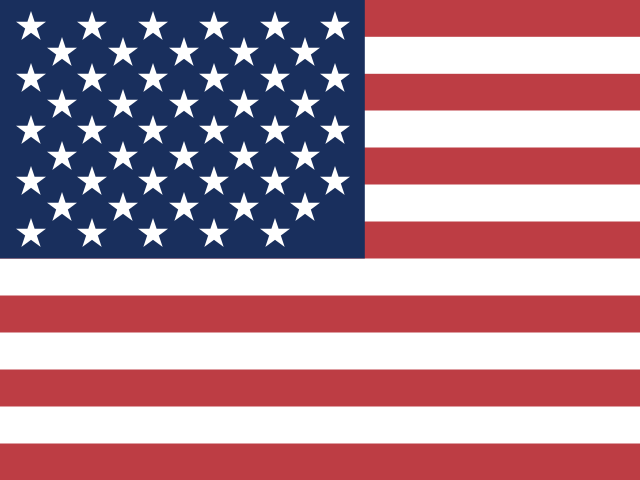
VS
Sanctioned entities
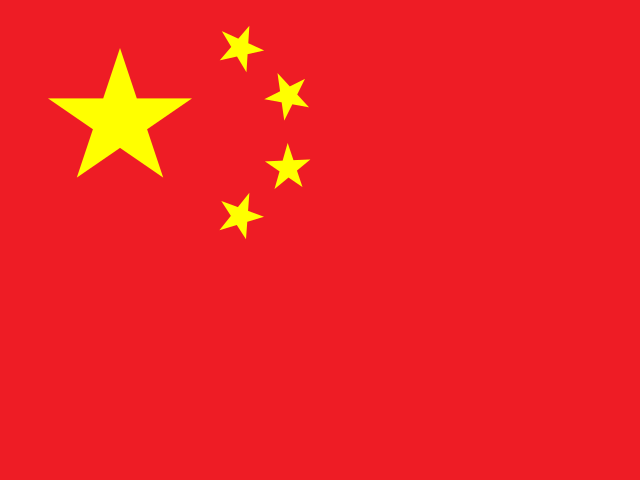

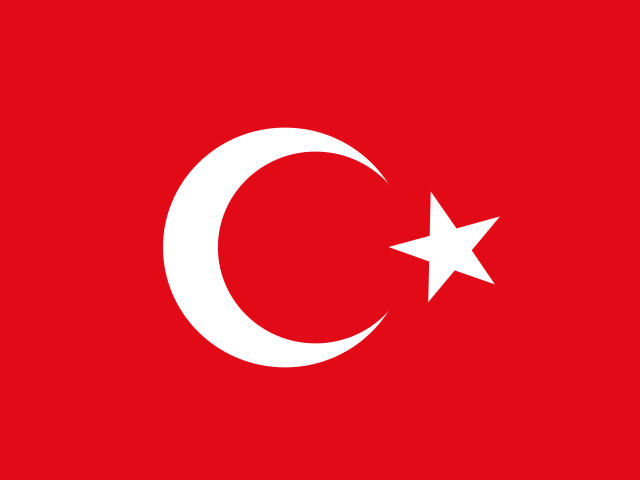
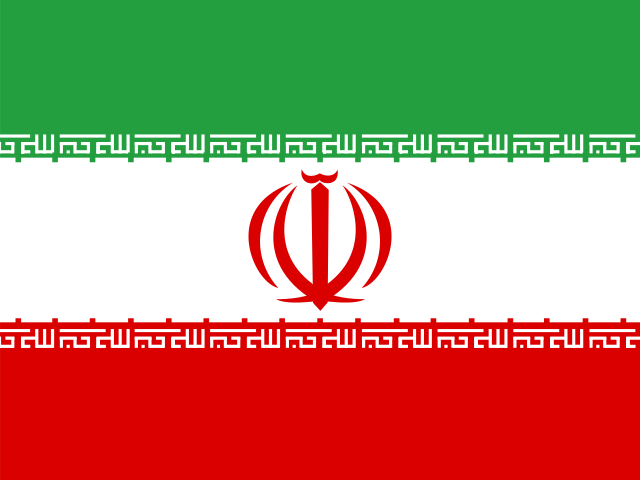
The United States is the country imposing sanctions through its Treasury Department's Office of Foreign Assets Control (OFAC), which maintains sanctions against certain countries, industries, entities, and individuals.
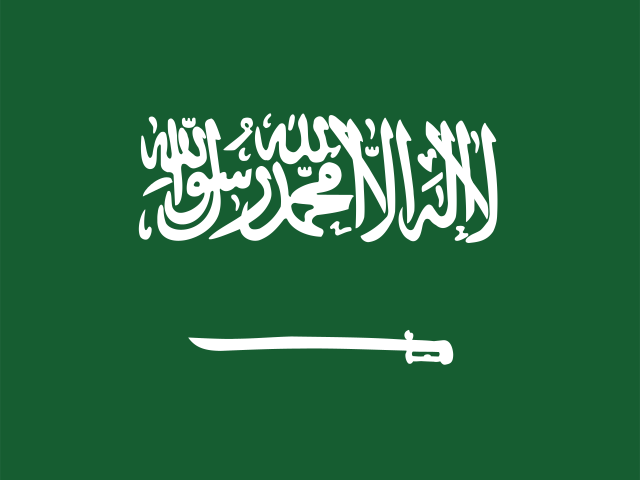
The sanctioned entities are ten groups or companies located in China, Pakistan, Turkiye, Iran, and Saudi Arabia that have been designated by the United States.
The United States and the sanctioned entities have conflicting interests because the sanctions designate these entities for allegedly supporting Iran's military, which the United States opposes as part of its broader pressure campaign against Iran.
The entities, by contrast, are penalized for their alleged association with Iran's military activities, creating a direct clash over the legitimacy and impact of those designations.
OFAC's sanctions can be either comprehensive or selective, using asset blocking and trade restrictions to accomplish foreign policy and national security goals.
The Specially Designated Nationals list includes individuals, groups, and entities such as terrorists and narcotics traffickers designated under programs that are not country-specific, and the sanctions list search tool helps identify possible matches to those designations.
*AI-generated summary of publicly available data. This is not an official statement of any party.
*AI-generated summary of publicly available statements and reporting. This is not an official statement of this party.
Supporters of the United States argue that sanctions uphold a rules-based order and steady deterrence, preserving stability against threats to allied security.
Supporters of United States argue the sanctions defend longstanding alliances and regional stability, maintaining that upholding established order against Iran’s military support preserves the inherited security framework.
Supporters of United States counter that the sanctions target regimes whose cultural and economic ties sustain aggression and repression, not lawful exchange, and that sovereign nations remain free to choose partnership with the existing international order.
Supporters of the United States argue that sanctioning entities in China, Pakistan, Turkiye, Iran, and Saudi Arabia is a lawful exercise of national sovereignty to enforce compliance with its sanctions regime against Iran.
Supporters of United States argue the sanctions are a lawful exercise of sovereign authority to enforce national-security statutes against entities they accuse of aiding Iran's military.
Supporters of the United States counter that Congress granted standing through laws like IEEPA and CISADA, which authorize penalties on foreign firms regardless of UN action.
Supporters of US sanctions argue that targeting firms across China, Pakistan, Turkiye, Iran, and Saudi Arabia raises the cost of enabling Iran's military, forcing intermediaries to weigh profit against access to US markets.
Supporters of the United States argue that sanctions pressure third countries to weigh trade ties with Washington against ties with Tehran, making compliance costlier than continued support for Iran's military.
Supporters of United States counter that sanctions are leverage working as intended: targeted states draw closer out of shared weakness, not strength, and that dependency on each other offers Washington fresh points of pressure.
Supporters of United States argue that sanctioning entities in China, Pakistan, Turkiye, Iran, and Saudi Arabia is a moral duty to curb Iran's military support, citing the Sep 29, 2026 designations as evidence of accountability.
Supporters of the United States argue that sanctioning entities which allegedly enable Iran's military is a moral duty to prevent weapons proliferation, and they cite the Sep 29, 2026 designations as evidence of that commitment.
Supporters of United States counter that denying a livelihood is not the moral issue; enabling proliferation that threatens civilians is, and they argue sanctions target conduct, not persons.
Supporters of the United States argue that sanctioning entities accused of aiding Iran's military upholds a moral duty to restrain aggression, invoking the scriptural call to pursue justice and protect the innocent.
Supporters of the United States argue that restraining Iran's military aligns with a moral duty to protect the innocent, invoking just-war tradition.
Supporters of United States counter that religious freedom itself is a universal right, and that no inherited custom can shield a regime from accountability when it threatens its neighbors and oppresses its own faithful.
*AI-generated summary of publicly available statements and reporting. This is not an official statement of this party.
Supporters of the sanctioned entities argue the US campaign punishes sovereign nations for lawful cultural and economic ties, treating independent trade as a threat to one power's global order.
Supporters of the sanctioned entities argue the US campaign imposes foreign cultural and legal norms on sovereign nations, treating their independent trade ties as illegitimate.
Supporters of Sanctioned entities counter that the rules-based order merely masks one nation's cultural dominance, and that sanctions erase sovereign heritage, not threats.
Supporters of the sanctioned entities argue that the US lacks legal standing to penalize foreign firms, since no UN mandate authorizes these unilateral measures against Iran's military.
Supporters of the sanctioned entities argue that the US sanctions lack due process and extraterritorial reach, since no neutral tribunal has verified the alleged support for Iran's military.
Supporters of the sanctioned entities counter that under international law, sovereignty belongs to each state, not to the United States, so its unilateral sanctions lack jurisdiction over third parties.
Supporters of Sanctioned entities argue the US wields sanctions as leverage, not justice, punishing rivals to preserve its own power; they contend such pressure only pushes targeted states closer together.
Supporters of the sanctioned entities argue the US wields sanctions as leverage, not justice, so the pragmatic response is to deepen rival trade ties and harden against coercion.
Supporters of sanctioned entities counter that intermediaries can simply reroute trade through non-US jurisdictions, so the sanctions mainly push commerce underground while US market access becomes a cost only for firms already exposed to it.
Supporters of the sanctioned entities argue that punishing private firms and individuals for alleged trade is a moral overreach, since no proven act justifies denying people their livelihood through unilateral coercion.
Supporters of the sanctioned entities argue that punishing private firms and individuals for voluntary trade is morally wrong, since no one harmed should be held liable for another's foreign policy.
Supporters of Sanctioned entities counter that coercion is not moral duty; they argue that unilateral penalties punish sovereign commerce, and that accountability imposed by force violates the consent of the governed.
Supporters of the sanctioned entities argue that outside powers imposing sanctions in the name of security disregard the religious and cultural traditions binding these communities, and that enduring faith and inherited custom, not foreign pressure, should order their societies.
Supporters of the sanctioned entities argue that sanctions rooted in one nation's political aims ignore religious sovereignty, since faith communities answer to divine law, not foreign decrees.
Supporters of the sanctioned entities counter that the scriptural call to justice belongs to God alone, and that unilateral sanctions usurp divine authority while punishing the innocent.
AI-generated summary of publicly available statements and reporting. This is not an official statement of this party.
Supporters of the United States argue that sanctions uphold a rules-based order and steady deterrence, preserving stability against threats to allied security.
Supporters of United States argue the sanctions defend longstanding alliances and regional stability, maintaining that upholding established order against Iran’s military support preserves the inherited security framework.
Supporters of United States counter that the sanctions target regimes whose cultural and economic ties sustain aggression and repression, not lawful exchange, and that sovereign nations remain free to choose partnership with the existing international order.
Supporters of the United States argue that sanctioning entities in China, Pakistan, Turkiye, Iran, and Saudi Arabia is a lawful exercise of national sovereignty to enforce compliance with its sanctions regime against Iran.
Supporters of United States argue the sanctions are a lawful exercise of sovereign authority to enforce national-security statutes against entities they accuse of aiding Iran's military.
Supporters of the United States counter that Congress granted standing through laws like IEEPA and CISADA, which authorize penalties on foreign firms regardless of UN action.
Supporters of US sanctions argue that targeting firms across China, Pakistan, Turkiye, Iran, and Saudi Arabia raises the cost of enabling Iran's military, forcing intermediaries to weigh profit against access to US markets.
Supporters of the United States argue that sanctions pressure third countries to weigh trade ties with Washington against ties with Tehran, making compliance costlier than continued support for Iran's military.
Supporters of United States counter that sanctions are leverage working as intended: targeted states draw closer out of shared weakness, not strength, and that dependency on each other offers Washington fresh points of pressure.
Supporters of United States argue that sanctioning entities in China, Pakistan, Turkiye, Iran, and Saudi Arabia is a moral duty to curb Iran's military support, citing the Sep 29, 2026 designations as evidence of accountability.
Supporters of the United States argue that sanctioning entities which allegedly enable Iran's military is a moral duty to prevent weapons proliferation, and they cite the Sep 29, 2026 designations as evidence of that commitment.
Supporters of United States counter that denying a livelihood is not the moral issue; enabling proliferation that threatens civilians is, and they argue sanctions target conduct, not persons.
Supporters of the United States argue that sanctioning entities accused of aiding Iran's military upholds a moral duty to restrain aggression, invoking the scriptural call to pursue justice and protect the innocent.
Supporters of the United States argue that restraining Iran's military aligns with a moral duty to protect the innocent, invoking just-war tradition.
Supporters of United States counter that religious freedom itself is a universal right, and that no inherited custom can shield a regime from accountability when it threatens its neighbors and oppresses its own faithful.
Supporters of the sanctioned entities argue the US campaign punishes sovereign nations for lawful cultural and economic ties, treating independent trade as a threat to one power's global order.
Supporters of the sanctioned entities argue the US campaign imposes foreign cultural and legal norms on sovereign nations, treating their independent trade ties as illegitimate.
Supporters of Sanctioned entities counter that the rules-based order merely masks one nation's cultural dominance, and that sanctions erase sovereign heritage, not threats.
Supporters of the sanctioned entities argue that the US lacks legal standing to penalize foreign firms, since no UN mandate authorizes these unilateral measures against Iran's military.
Supporters of the sanctioned entities argue that the US sanctions lack due process and extraterritorial reach, since no neutral tribunal has verified the alleged support for Iran's military.
Supporters of the sanctioned entities counter that under international law, sovereignty belongs to each state, not to the United States, so its unilateral sanctions lack jurisdiction over third parties.
Supporters of Sanctioned entities argue the US wields sanctions as leverage, not justice, punishing rivals to preserve its own power; they contend such pressure only pushes targeted states closer together.
Supporters of the sanctioned entities argue the US wields sanctions as leverage, not justice, so the pragmatic response is to deepen rival trade ties and harden against coercion.
Supporters of sanctioned entities counter that intermediaries can simply reroute trade through non-US jurisdictions, so the sanctions mainly push commerce underground while US market access becomes a cost only for firms already exposed to it.
Supporters of the sanctioned entities argue that punishing private firms and individuals for alleged trade is a moral overreach, since no proven act justifies denying people their livelihood through unilateral coercion.
Supporters of the sanctioned entities argue that punishing private firms and individuals for voluntary trade is morally wrong, since no one harmed should be held liable for another's foreign policy.
Supporters of Sanctioned entities counter that coercion is not moral duty; they argue that unilateral penalties punish sovereign commerce, and that accountability imposed by force violates the consent of the governed.
Supporters of the sanctioned entities argue that outside powers imposing sanctions in the name of security disregard the religious and cultural traditions binding these communities, and that enduring faith and inherited custom, not foreign pressure, should order their societies.
Supporters of the sanctioned entities argue that sanctions rooted in one nation's political aims ignore religious sovereignty, since faith communities answer to divine law, not foreign decrees.
Supporters of the sanctioned entities counter that the scriptural call to justice belongs to God alone, and that unilateral sanctions usurp divine authority while punishing the innocent.
Individuals and firms in China, Pakistan, Turkiye, Iran and Saudi Arabia sanctioned as part of a pressure campaign.