US military judge

VS
Prosecutors
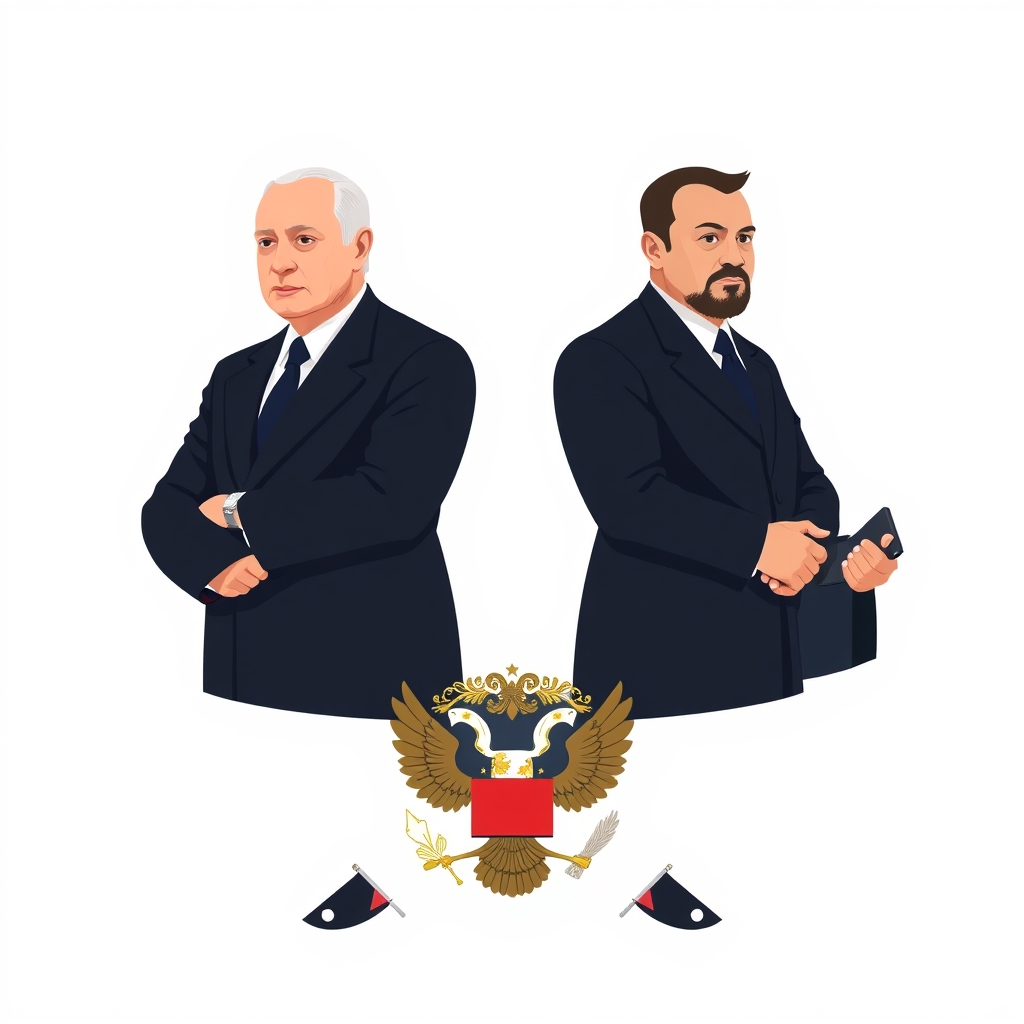
The US military judge and the prosecutors are central figures in the military commission proceedings against Khalid Sheikh Mohammed, the alleged mastermind of the 9/11 attacks, and four co-defendants.
The judge presides over the proceedings, while the prosecutors represent the government in seeking convictions.
Both roles are part of the military justice system, where judges and prosecutors are drawn from the Judge Advocate General's Corps (JAG), a government law organization that handles military legal matters.
The conflict arises from the judge's ruling that confessions obtained from Mohammed are inadmissible as evidence, due to concerns over the methods used to extract them, which included enhanced interrogation techniques.
The prosecutors, who rely on these confessions to build their case, are likely to challenge or seek to overturn this ruling, creating a direct clash between judicial oversight and prosecutorial strategy.
The stakes are high, as the ruling affects the ongoing proceedings against Mohammed and his co-defendants, potentially shaping the course of the trial and the admissibility of evidence obtained under controversial interrogation methods.
*AI-generated summary of publicly available data. This is not an official statement of any party.
*AI-generated summary of publicly available statements and reporting. This is not an official statement of this party.
Supporters of the US military judge maintain that the ruling upholds the enduring legal order, placing the rule of law above expedient verdicts, as a testament to American institutional integrity.
Supporters of the US military judge argue that preserving the integrity of legal procedure upholds American cultural values of justice over expedience, even for those accused of grave harms.
Supporters of the US military judge counter that cultural tradition must weigh due process, not merely outcomes, citing legal precedents where coerced statements undermine tribunal legitimacy.
Supporters of the US military judge argue the ruling upholds legal due process, as coerced confessions violate military commission rules and the law of war.
Supporters of the US military judge argue the ruling upholds legal precedent that coerced statements violate due process, regardless of the defendant's alleged crimes; they maintain the judge’s role is to apply the law impartially, not to serve prosecutorial convenience.
Supporters of US military judge counter that the ruling enforces the commission's own evidentiary rules, where reliability cannot be separated from the coercive context of interrogation, making comfort a legitimate legal factor.
Supporters of the US military judge argue that excluding the confessions is a calculated move to shield the proceedings from reversal, prioritizing legal durability over conviction speed.
Supporters of the US military judge argue the ruling is a pragmatic guardrail: admitting tainted confessions would hand defense counsel a durable appeal weapon, stalling the commission indefinitely.
Supporters of the US military judge counter that the ruling strips enemies of a propaganda win by denying them martyrdom through coerced confessions, and that procedural integrity preserves long-term leverage by keeping lawful detainee testimony admissible.
Supporters of US military judge argue that evidence tainted by coercion carries no moral authority, and that a fair trial for Khalid Sheikh Mohammed upholds the very rule of law the 9/11 attacks sought to destroy.
Supporters of the US military judge argue that no confession is just if it is born of cruelty, and that the court's integrity depends on rejecting evidence tainted by enhanced interrogation methods.
Supporters of the US military judge counter that moral accountability cannot rest on coerced statements, as torture taints the very evidence meant to honor victims. They argue that a fair, untainted record—not a forced confession—is the only ethical foundation for justice.
Supporters of the US military judge argue that divine law rejects evidence born of coercion, citing scripture that forbids bearing false witness through forced confession.
Supporters of the US military judge argue that divine law demands truth be obtained through righteous means, not coercion, citing scripture that condemns false witness and honors the dignity of every soul.
Supporters of the US military judge counter that divine justice is not thwarted by procedural fidelity, for scripture itself warns against judging by human emotion alone; the judge upholds that true accountability honors God by ensuring no verdict is tainted by tainted process.
*AI-generated summary of publicly available statements and reporting. This is not an official statement of this party.
Supporters of Prosecutors argue that honoring confessions, even under duress, upholds a cultural tradition of holding masterminds accountable, pointing to historical war tribunals where evidence secured in conflict was admitted to ensure justice for mass casualties.
Supporters of Prosecutors argue that excluding Mohammed’s confessions erases a cultural duty to honor 9/11 victims, whose memory demands accountability over procedural purity; they see the ruling as a break from historical wartime precedent, where security triumphed over legal fo.
Supporters of Prosecutors counter that the ruling enshrines a culture of legal delay, echoing historical precedents where institutional caution shielded misconduct from accountability, undermining public faith in swift justice.
Supporters of Prosecutors argue the ruling ignores lawful military commission procedure, where admissibility hinges on reliability, not interrogation comfort.
Supporters of Prosecutors argue the judge's ruling disregards the lawful military commission framework, where evidence admissibility is a procedural matter for the tribunal, not a subjective bar on national security necessity.
Supporters of Prosecutors counter that the judge’s ruling misapplies due process, as military commission rules permit evidence gathered under lawful wartime interrogation, provided no torture occurred.
Supporters of Prosecutors argue the ruling empowers enemies by rewarding resistance to interrogation, signaling that U.S. courts prize procedure over outcomes in a war where leverage defines survival.
Supporters of Prosecutors argue the judge’s ruling hands Mohammed a strategic victory, prioritizing legal purity over deterrence and national security.
Supporters of Prosecutors counter that the judge’s ruling trades a certain conviction for an uncertain appeal, leaving the guilty free to exploit procedural delay; they argue durability is worthless if the accused walks on a technicality the government could have preempted.
Supporters of Prosecutors argue that suppressing Mohammed’s confessions erodes moral accountability, as the evidence directly links the accused to mass murder and honoring victims demands a full factual record.
Supporters of Prosecutors argue that excluding Mohammed's confessions undermines moral accountability, as 9/11 victims' families deserve a verdict based on evidence, however tainted, to affirm the atrocity's wrongfulness.
Prosecutors counter that moral authority belongs to the victims, not the accused; a coerced confession’s taint is outweighed by the duty to deliver justice for 3,000 deaths, and procedural purity cannot sanctify a mass murderer’s trial.
Supporters of the Prosecutors argue that divine justice for the 9/11 victims demands accountability, and that the judge’s ruling, while procedurally sound, risks elevating legal technicalities above the sacred duty to punish confessed evil.
Supporters of Prosecutors argue that divine justice demands accountability for gravest sins, viewing the ruling as a procedural obstacle to God’s order, where confessions—however obtained—reveal truth that courts must honor.
Supporters of Prosecutors counter that scripture equally demands justice for victims, and that divine law permits lawful authority to compel truth for the common good.
AI-generated summary of publicly available statements and reporting. This is not an official statement of this party.
Supporters of the US military judge maintain that the ruling upholds the enduring legal order, placing the rule of law above expedient verdicts, as a testament to American institutional integrity.
Supporters of the US military judge argue that preserving the integrity of legal procedure upholds American cultural values of justice over expedience, even for those accused of grave harms.
Supporters of the US military judge counter that cultural tradition must weigh due process, not merely outcomes, citing legal precedents where coerced statements undermine tribunal legitimacy.
Supporters of the US military judge argue the ruling upholds legal due process, as coerced confessions violate military commission rules and the law of war.
Supporters of the US military judge argue the ruling upholds legal precedent that coerced statements violate due process, regardless of the defendant's alleged crimes; they maintain the judge’s role is to apply the law impartially, not to serve prosecutorial convenience.
Supporters of US military judge counter that the ruling enforces the commission's own evidentiary rules, where reliability cannot be separated from the coercive context of interrogation, making comfort a legitimate legal factor.
Supporters of the US military judge argue that excluding the confessions is a calculated move to shield the proceedings from reversal, prioritizing legal durability over conviction speed.
Supporters of the US military judge argue the ruling is a pragmatic guardrail: admitting tainted confessions would hand defense counsel a durable appeal weapon, stalling the commission indefinitely.
Supporters of the US military judge counter that the ruling strips enemies of a propaganda win by denying them martyrdom through coerced confessions, and that procedural integrity preserves long-term leverage by keeping lawful detainee testimony admissible.
Supporters of US military judge argue that evidence tainted by coercion carries no moral authority, and that a fair trial for Khalid Sheikh Mohammed upholds the very rule of law the 9/11 attacks sought to destroy.
Supporters of the US military judge argue that no confession is just if it is born of cruelty, and that the court's integrity depends on rejecting evidence tainted by enhanced interrogation methods.
Supporters of the US military judge counter that moral accountability cannot rest on coerced statements, as torture taints the very evidence meant to honor victims. They argue that a fair, untainted record—not a forced confession—is the only ethical foundation for justice.
Supporters of the US military judge argue that divine law rejects evidence born of coercion, citing scripture that forbids bearing false witness through forced confession.
Supporters of the US military judge argue that divine law demands truth be obtained through righteous means, not coercion, citing scripture that condemns false witness and honors the dignity of every soul.
Supporters of the US military judge counter that divine justice is not thwarted by procedural fidelity, for scripture itself warns against judging by human emotion alone; the judge upholds that true accountability honors God by ensuring no verdict is tainted by tainted process.
Supporters of Prosecutors argue that honoring confessions, even under duress, upholds a cultural tradition of holding masterminds accountable, pointing to historical war tribunals where evidence secured in conflict was admitted to ensure justice for mass casualties.
Supporters of Prosecutors argue that excluding Mohammed’s confessions erases a cultural duty to honor 9/11 victims, whose memory demands accountability over procedural purity; they see the ruling as a break from historical wartime precedent, where security triumphed over legal fo.
Supporters of Prosecutors counter that the ruling enshrines a culture of legal delay, echoing historical precedents where institutional caution shielded misconduct from accountability, undermining public faith in swift justice.
Supporters of Prosecutors argue the ruling ignores lawful military commission procedure, where admissibility hinges on reliability, not interrogation comfort.
Supporters of Prosecutors argue the judge's ruling disregards the lawful military commission framework, where evidence admissibility is a procedural matter for the tribunal, not a subjective bar on national security necessity.
Supporters of Prosecutors counter that the judge’s ruling misapplies due process, as military commission rules permit evidence gathered under lawful wartime interrogation, provided no torture occurred.
Supporters of Prosecutors argue the ruling empowers enemies by rewarding resistance to interrogation, signaling that U.S. courts prize procedure over outcomes in a war where leverage defines survival.
Supporters of Prosecutors argue the judge’s ruling hands Mohammed a strategic victory, prioritizing legal purity over deterrence and national security.
Supporters of Prosecutors counter that the judge’s ruling trades a certain conviction for an uncertain appeal, leaving the guilty free to exploit procedural delay; they argue durability is worthless if the accused walks on a technicality the government could have preempted.
Supporters of Prosecutors argue that suppressing Mohammed’s confessions erodes moral accountability, as the evidence directly links the accused to mass murder and honoring victims demands a full factual record.
Supporters of Prosecutors argue that excluding Mohammed's confessions undermines moral accountability, as 9/11 victims' families deserve a verdict based on evidence, however tainted, to affirm the atrocity's wrongfulness.
Prosecutors counter that moral authority belongs to the victims, not the accused; a coerced confession’s taint is outweighed by the duty to deliver justice for 3,000 deaths, and procedural purity cannot sanctify a mass murderer’s trial.
Supporters of the Prosecutors argue that divine justice for the 9/11 victims demands accountability, and that the judge’s ruling, while procedurally sound, risks elevating legal technicalities above the sacred duty to punish confessed evil.
Supporters of Prosecutors argue that divine justice demands accountability for gravest sins, viewing the ruling as a procedural obstacle to God’s order, where confessions—however obtained—reveal truth that courts must honor.
Supporters of Prosecutors counter that scripture equally demands justice for victims, and that divine law permits lawful authority to compel truth for the common good.
US military judge throws out confessions of alleged 9/11 mastermind Khalid Sheikh Mohammed.
A US military judge ruled that confessions obtained from Khalid Sheikh Mohammed are inadmissible as evidence, citing concerns over enhanced interrogation techniques used to extract them.