US Senate
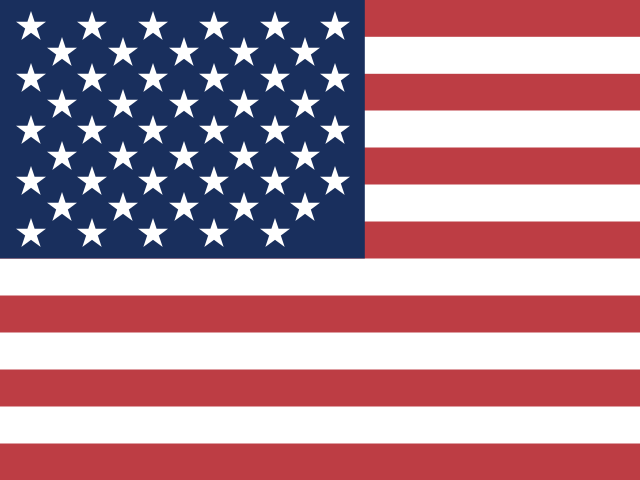
VS
India

The US Senate is the upper chamber of the United States Congress, part of a presidential system of government.
India is a federal parliamentary republic, whose upper house is the Rajya Sabha (Council of States).
Both countries have bicameral legislatures, but their upper houses differ in structure and powers: the US Senate gives equal representation to each state, while the Rajya Sabha's seats are allocated based on state population.
The US Senate also has greater authority over certain matters, such as money bills, compared to the Rajya Sabha.
The conflict between the US Senate and India arises from the US Senate's passage of a sanctions bill that could impose tariffs on countries like India for purchasing Russian oil.
India, a major consumer of Russian oil, faces potential economic repercussions from these sanctions, while the US aims to pressure Russia through such measures.
This creates tension between US foreign policy objectives and India's energy needs.
*AI-generated summary of publicly available data. This is not an official statement of any party.
*AI-generated summary of publicly available statements and reporting. This is not an official statement of this party.
Supporters of the US Senate argue that sanctions on Russian oil buyers like India reflect a shared cultural commitment to democratic solidarity, viewing energy purchases as moral choices that historically unite allies against autocracy.
Supporters of US Senate argue the sanctions honor a historical democratic alliance, framing India's Russian oil purchases as a break from shared postwar norms against funding adversaries.
Supporters of the US Senate counter that India's cultural continuity also includes a tradition of adapting to global norms, as seen in its own constitutional embrace of democratic governance.
Supporters of the US Senate argue that the sanctions bill legally upholds America's sovereign right to condition trade on strategic security interests, framing tariffs as lawful enforcement against nations materially aiding Russia's war economy.
Supporters of the US Senate argue the sanctions bill is a lawful exercise of congressional authority to deter Russian oil purchases, applying tariffs as a legal trade remedy under national-security statutes.
Supporters of the US Senate counter that the sanctions bill targets Russian energy revenues, not India's sovereignty, and falls under national-security exceptions to WTO rules, which permit such measures.
Supporters of the US Senate argue the sanctions bill is pure leverage, not moralizing: tariffs on India for Russian oil force New Delhi to weigh cheap energy against American market access.
Supporters of the US Senate argue the sanctions bill is pure leverage, not morality: Washington pressures India to cut Russian oil purchases because energy payments fund Moscow’s war machine, and tariffs are the sharpest tool to force New Delhi’s compliance.
Supporters of the US Senate counter that indirect profit is irrelevant; the bill targets strategic leverage, not moral purity, and Washington’s firms absorb costs to pressure New Delhi’s dependency on Moscow.
Supporters of the US Senate argue that sanctions on Russian oil align with a moral duty to uphold planetary stewardship, as energy choices must not finance ecological harm or conflict.
Supporters of the US Senate argue that imposing tariffs on Russian oil buyers like India is a moral duty to uphold planetary stewardship, as funding Moscow’s fossil exports undermines global climate and peace efforts.
Supporters of the US Senate counter that India’s energy security cannot justify accelerating global climate breakdown, as every nation shares a moral duty to protect planetary systems on which all citizens depend.
Supporters of the US Senate argue that divine law calls nations to stand against oppression, viewing sanctions on Russia as a moral duty that India, as a fellow sovereign, should honor over material gain.
Supporters of the US Senate argue that their sanctions reflect a moral duty to oppose aggression, citing scripture’s call to stand against injustice, not India’s energy needs.
Supporters of the US Senate counter that divine law honors covenant over isolation, and tariffs reflect faithful accountability to global stewardship. They argue that interdependence, not self-reliance, mirrors creation’s order, where trade uplifts all nations under providence.
*AI-generated summary of publicly available statements and reporting. This is not an official statement of this party.
Supporters of India argue that its sovereign energy choices reflect millennia of pragmatic statecraft, where cultural continuity prioritizes national survival over external dictates.
Supporters of India argue the sanctions bill disregards India's sovereign energy choices and ancient civilizational right to secure affordable resources for its people, viewing American pressure as cultural imposition.
Supporters of India counter that energy purchases are practical necessities, not moral declarations, and that India's millennia-old tradition of non-alignment prioritizes national survival over transient alliances.
Supporters of India argue the US sanctions bill violates WTO non-discrimination rules, since tariffs target India's lawful sovereign energy purchases rather than Russian entities.
Supporters of India argue the sanctions bill violates WTO non-discrimination rules, as tariffs on Indian oil purchases are punitive and lack legal basis under international trade law.
Supporters of India counter that the sanctions bill misapplies sovereign trade authority under WTO rules, where security exceptions require a clear, demonstrable threat—not broad economic coercion.
Supporters of India argue Washington's sanctions bill is pure leverage play, not principle, since US firms profit from Russian energy indirectly.
Supporters of India argue the Senate’s tariff threat is pure coercion, punishing a sovereign buyer for pragmatic energy deals while Washington’s own allies still trade with Moscow; New Delhi’s leverage lies in its non-aligned market power, and it will barter access to its consume.
Supporters of India counter that leverage cuts both ways: New Delhi’s cheap Russian oil funds its defense buildup, while Washington needs Indian buyers to offset China’s sway, making the tariff threat a bluff that New Delhi can outlast.
Supporters of India argue that sovereign nations hold the moral right to secure affordable energy for their citizens, and that punishing India's legitimate purchases of Russian oil unfairly prioritizes US geopolitical goals over India's duty to protect its own people's welfare.
Supporters of India argue that the sanctions bill unfairly penalizes a sovereign nation's right to secure affordable energy for its people, a moral duty that outweighs external pressure.
Supporters of India counter that planetary stewardship must weigh the moral duty of energy equity, as sanctions burden developing nations with higher costs while the US Senate’s own consumption remains unchecked.
Supporters of India argue that energy security is a sovereign duty, and sacred texts counsel self-reliance over external dictate. They maintain that tariffs would disrupt dharma of stewardship, harming millions.
Supporters of India argue that its energy choices reflect a sacred duty to protect its people's livelihood, rooted in dharma. They maintain that economic survival, not strategic alignment, guides the nation's path, and foreign pressure cannot override this moral obligation.
Supporters of India counter that divine law equally upholds a nation's sacred duty to protect its own people, and that coerced sanctions would sacrifice Indian livelihoods to foreign moralizing—true righteousness lies in principled neutrality, not imposed alignment.
AI-generated summary of publicly available statements and reporting. This is not an official statement of this party.
Supporters of the US Senate argue that sanctions on Russian oil buyers like India reflect a shared cultural commitment to democratic solidarity, viewing energy purchases as moral choices that historically unite allies against autocracy.
Supporters of US Senate argue the sanctions honor a historical democratic alliance, framing India's Russian oil purchases as a break from shared postwar norms against funding adversaries.
Supporters of the US Senate counter that India's cultural continuity also includes a tradition of adapting to global norms, as seen in its own constitutional embrace of democratic governance.
Supporters of the US Senate argue that the sanctions bill legally upholds America's sovereign right to condition trade on strategic security interests, framing tariffs as lawful enforcement against nations materially aiding Russia's war economy.
Supporters of the US Senate argue the sanctions bill is a lawful exercise of congressional authority to deter Russian oil purchases, applying tariffs as a legal trade remedy under national-security statutes.
Supporters of the US Senate counter that the sanctions bill targets Russian energy revenues, not India's sovereignty, and falls under national-security exceptions to WTO rules, which permit such measures.
Supporters of the US Senate argue the sanctions bill is pure leverage, not moralizing: tariffs on India for Russian oil force New Delhi to weigh cheap energy against American market access.
Supporters of the US Senate argue the sanctions bill is pure leverage, not morality: Washington pressures India to cut Russian oil purchases because energy payments fund Moscow’s war machine, and tariffs are the sharpest tool to force New Delhi’s compliance.
Supporters of the US Senate counter that indirect profit is irrelevant; the bill targets strategic leverage, not moral purity, and Washington’s firms absorb costs to pressure New Delhi’s dependency on Moscow.
Supporters of the US Senate argue that sanctions on Russian oil align with a moral duty to uphold planetary stewardship, as energy choices must not finance ecological harm or conflict.
Supporters of the US Senate argue that imposing tariffs on Russian oil buyers like India is a moral duty to uphold planetary stewardship, as funding Moscow’s fossil exports undermines global climate and peace efforts.
Supporters of the US Senate counter that India’s energy security cannot justify accelerating global climate breakdown, as every nation shares a moral duty to protect planetary systems on which all citizens depend.
Supporters of the US Senate argue that divine law calls nations to stand against oppression, viewing sanctions on Russia as a moral duty that India, as a fellow sovereign, should honor over material gain.
Supporters of the US Senate argue that their sanctions reflect a moral duty to oppose aggression, citing scripture’s call to stand against injustice, not India’s energy needs.
Supporters of the US Senate counter that divine law honors covenant over isolation, and tariffs reflect faithful accountability to global stewardship. They argue that interdependence, not self-reliance, mirrors creation’s order, where trade uplifts all nations under providence.
Supporters of India argue that its sovereign energy choices reflect millennia of pragmatic statecraft, where cultural continuity prioritizes national survival over external dictates.
Supporters of India argue the sanctions bill disregards India's sovereign energy choices and ancient civilizational right to secure affordable resources for its people, viewing American pressure as cultural imposition.
Supporters of India counter that energy purchases are practical necessities, not moral declarations, and that India's millennia-old tradition of non-alignment prioritizes national survival over transient alliances.
Supporters of India argue the US sanctions bill violates WTO non-discrimination rules, since tariffs target India's lawful sovereign energy purchases rather than Russian entities.
Supporters of India argue the sanctions bill violates WTO non-discrimination rules, as tariffs on Indian oil purchases are punitive and lack legal basis under international trade law.
Supporters of India counter that the sanctions bill misapplies sovereign trade authority under WTO rules, where security exceptions require a clear, demonstrable threat—not broad economic coercion.
Supporters of India argue Washington's sanctions bill is pure leverage play, not principle, since US firms profit from Russian energy indirectly.
Supporters of India argue the Senate’s tariff threat is pure coercion, punishing a sovereign buyer for pragmatic energy deals while Washington’s own allies still trade with Moscow; New Delhi’s leverage lies in its non-aligned market power, and it will barter access to its consume.
Supporters of India counter that leverage cuts both ways: New Delhi’s cheap Russian oil funds its defense buildup, while Washington needs Indian buyers to offset China’s sway, making the tariff threat a bluff that New Delhi can outlast.
Supporters of India argue that sovereign nations hold the moral right to secure affordable energy for their citizens, and that punishing India's legitimate purchases of Russian oil unfairly prioritizes US geopolitical goals over India's duty to protect its own people's welfare.
Supporters of India argue that the sanctions bill unfairly penalizes a sovereign nation's right to secure affordable energy for its people, a moral duty that outweighs external pressure.
Supporters of India counter that planetary stewardship must weigh the moral duty of energy equity, as sanctions burden developing nations with higher costs while the US Senate’s own consumption remains unchecked.
Supporters of India argue that energy security is a sovereign duty, and sacred texts counsel self-reliance over external dictate. They maintain that tariffs would disrupt dharma of stewardship, harming millions.
Supporters of India argue that its energy choices reflect a sacred duty to protect its people's livelihood, rooted in dharma. They maintain that economic survival, not strategic alignment, guides the nation's path, and foreign pressure cannot override this moral obligation.
Supporters of India counter that divine law equally upholds a nation's sacred duty to protect its own people, and that coerced sanctions would sacrifice Indian livelihoods to foreign moralizing—true righteousness lies in principled neutrality, not imposed alignment.
The US Senate passed a sanctions bill that could result in tariffs on India as a major consumer of Russian oil.