Iran
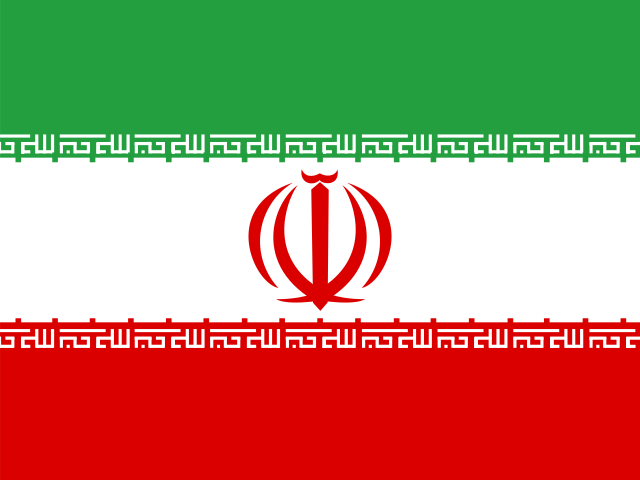
VS
US

The Alternative for Germany (AfD) is a far-right political party that is anti-immigration and has been labeled as xenophobic and extremist by German authorities.
In September 2026, the party achieved a historic victory in state elections in Saxony-Anhalt and has surged in national polls, becoming the biggest political party nationwide according to some surveys.
This electoral success has raised alarm across Europe and signals a growing divide in German politics.
The AfD's rise has created conflicting interests with other German political parties and European allies.
The AfD advocates for ending sanctions against Moscow and halting military aid for Ukraine, a position that clashes with the mainstream German political consensus and the BSW and Left Party, which also seek to stop military support for Ukraine.
This stance, along with the party's anti-immigration platform, has led to its labeling as extremist and sparked concerns about Germany's commitment to European unity and its stance against Russia.
The electoral shift comes amid broader geopolitical developments, including US-Iran strikes that pushed oil prices above $100, corruption scandals in Ukraine, and deepening ties between Russia and India.
These events collectively challenge the existing international order and have significant implications for European security and global stability.
*AI-generated summary of publicly available data. This is not an official statement of any party.
*AI-generated summary of publicly available statements and reporting. This is not an official statement of this party.
Supporters of Iran argue that past foreign interventions, like the 1953 coup, bred lasting distrust, so they see resistance to US pressure as a defense of national sovereignty and cultural identity.
Supporters of Iran argue that US strikes echo a long history of foreign intervention, and they cite past precedents as proof that outside powers, not Iran, repeatedly destabilize the region.
Supporters of Iran counter that cultures shaped by foreign intervention rarely see strikes as order-keeping; they recall a long pattern of outside powers redrawing their region, and argue sovereignty, not deterrence, preserves cultural continuity.
Supporters of Iran argue that US strikes lacked UN Security Council authorization, violating international law; they maintain that only self-defense under the UN Charter justifies such force.
Supporters of Iran argue that US strikes violate international law absent UN Security Council authorization, citing the UN Charter's limits on force.
Supporters of Iran counter that no UN Security Council authorization or imminent-attack evidence was shown, so the strikes lacked a lawful basis under the UN Charter.
Supporters of Iran argue the US strikes are a bid to control oil and reassert dominance; they maintain that resisting pressure, not capitulating, is the only leverage a sanctioned state retains.
Supporters of Iran argue that US strikes are a bid to control oil and weaken a rival, so Iran must retaliate through proxies and choke the Strait of Hormuz to raise the price of American aggression.
Supporters of Iran counter that Washington's own incentives undercut this: spiking oil lifts Russian and Chinese leverage while US voters punish pump prices, so adversaries read the strike as domestic weakness, not resolve.
Supporters of Iran argue that US strikes violate sovereignty and international law, and that Iran has the moral right to defend itself against foreign aggression.
Supporters of Iran argue that US strikes violate sovereignty, and they maintain that a nation defending its territory against foreign attack is acting morally, not aggressively.
Supporters of Iran counter that killing civilians to stop a bomb never becomes moral by citing oil prices, since a nation's right to defend itself and its people outweighs market costs.
Supporters of Iran argue that the strikes violate Islamic sovereignty and that defending Muslim lands against foreign attack is a religious duty, so they frame Iran's response as legitimate self-defense.
Supporters of Iran argue that the strikes threaten religious tradition and regional stability, and they maintain that Islamic sovereignty and inherited authority must be defended against outside intervention.
Supporters of Iran counter that the US invocation of just-war tradition rings hollow, since Shia religious teaching holds that the true defense of the innocent rests with those resisting foreign domination, not outside powers.
*AI-generated summary of publicly available statements and reporting. This is not an official statement of this party.
Supporters of the US argue that preserving established alliances and deterrence protects cultural continuity and global stability, pointing to the Iran strikes as necessary order-keeping.
Supporters of the US argue that upholding established alliances and the postwar order preserves cultural stability, and they point to deepening Russia-India ties and the AfD surge as evidence that weakening inherited institutions invites disorder.
Supporters of the US counter that the 1953 coup narrative overlooks Iran's own cultural traditions of pluralism, which the Islamic Republic suppresses, making US pressure a defense of those inherited freedoms, not an attack on sovereignty.
Supporters of the US counter that national identity is strongest when rooted in shared civic tradition, not ethnic purity, and warn that AfD-style politics echoes the same exclusionary impulses that twice plunged Europe into war.
Supporters of US counter that ballot-box rejection of establishment parties is a warning, not a mandate—cultural continuity depends on institutions that outlast any single election's anger.
Supporters of the US counter that rooting out graft cannot preserve cultural continuity when Western-backed anti-corruption bodies override local courts and customs, displacing inherited authority rather than restoring it.
Supporters of the US counter that civilizational partnerships built on resisting shared cultural rivals offer thin footing, since inherited institutions and legal traditions, not opposition alone, sustain lasting alliances.
Supporters of US counter that India's civilizational ties to Russia trace to Soviet-era patronage, not inherited tradition, so appeals to cultural continuity serve a recent alignment rather than enduring heritage.
Supporters of the US argue its strikes on Iran were lawful self-defense against imminent threats, and that international law permits proportional force to protect national security.
Supporters of the US argue its strikes on Iran were legally justified as self-defense, and they point to international law as the basis for that claim.
Supporters of the US counter that Article 51 self-defense claims can rest on anticipatory threats, so UN Security Council authorization is not the only lawful path.
US supporters counter that legal voter backlash claims require verified election data, not party surges alone, and that courts—not polling—settle such disputes.
Supporters of the US counter that legal ballot choices can still violate constitutional norms, since the rule of law binds voters and parties alike, not merely the counting of votes.
Supporters of US counter that anti-corruption compliance, as a legal precondition, is best verified through existing bilateral treaty mechanisms rather than new judicial probes, which they view as duplicative.
Supporters of the US counter that international sanctions and export-control laws bind third parties, so lawful sovereignty does not shield states facilitating prohibited transfers.
Supporters of the US counter that UN Charter sovereignty does not shield states from treaty obligations, and that India's deepening Russian ties may conflict with its commitments under international arms-control and sanctions regimes.
Supporters of US argue that striking Iran and letting oil spike demonstrates resolve, since adversaries respect power, not restraint, and allies in Berlin, Kyiv, and Delhi must weigh US leverage over rival ties.
Supporters of US argue the strikes on Iran demonstrate resolve, pushing oil above $100 to pressure Tehran while signaling to allies and rivals alike that Washington still sets the terms.
Supporters of the US counter that Iran's resistance is itself leverage—for Tehran's elites, not its people; they argue sanctions and strikes are calibrated to make that defiance costlier than compliance.
Supporters of the US counter that Washington's strikes on Iran serve US leverage and alliance cohesion, not proof Germany should retreat; they argue sovereignty-first posturing forfeits the intelligence and market access that actually shield German voters.
Supporters of US counter that Berlin's fiscal room, not voter anger, decides outcomes: Washington's security guarantee lets Germany underfund defense while scapegoating Brussels, so AfD gains shift little until US pressure forces tradeoffs.
Supporters of the US counter that donor patience is itself the lever: Washington tolerates graft so long as Kyiv stays a bulwark against Moscow, meaning purges serve optics, not survival.
Supporters of the US counter that Russia's own dependence on Indian oil buyers and Chinese goodwill gives Moscow little leverage, so its "pragmatic partnerships" reflect necessity, not influence.
Supporters of the US counter that India's non-alignment is leverage only while Washington tolerates it; they argue CAATSA sanctions and arms-transfer limits show the US can raise the cost of hedging whenever it chooses.
Supporters of the US argue that striking Iran was morally justified to prevent nuclear proliferation, pointing to oil above $100 as evidence of the stakes; they maintain that containing a threatening regime outweighs market costs.
Supporters of the US frame the Iran strikes as a moral necessity, arguing that Iran's nuclear program threatened regional stability and that force was justified only after diplomacy failed; they cite oil above $100 as a cost, not a cause.
Supporters of the US counter that sovereignty cannot shield a state that sponsors attacks on US forces, so self-defense under international law morally justifies the strikes.
Supporters of the US counter that moral legitimacy flows from institutions and alliances, not poll surges, citing Germany's postwar order as the foundation of its sovereignty and warning that parties like AfD undermine the very accountability voters seek.
Supporters of the US counter that sovereignty claims ring hollow when the AfD's own platform undermines the democratic accountability German voters say they want, since moral legitimacy requires consistent standards, not selective ones.
Supporters of the US counter that moral duty requires accountability first: they argue that backing a government without verified anti-corruption benchmarks risks enabling the very abuses that undermine the sovereignty Ukraine claims to defend.
Supporters of the US counter that a moral case against double standards rings hollow from a state waging its own war of conquest, and that India's ties rest on arms and oil, not principle.
Supporters of the US counter that a moral right to voluntary exchange cannot shield transactions that fund an invasion, arguing sovereignty does not excuse complicity in aggression.
Supporters of the US frame the Iran strikes as a just defense of order against a threatening regime, invoking just-war tradition that protecting the innocent and checking aggression can be a moral duty.
Supporters of US argue that confronting Iran is a just defense of order, citing scripture's call to restrain evil, and insist that rising oil prices and Germany's AfD surge are trials of faith.
Supporters of the US counter that Romans 13 ordains governing authorities as God's servants to bear the sword against evil, so Iran's appeal to religious duty cannot sanctify what they see as aggression.
Supporters of US religious freedom counter that faith coerced by state power is not faith at all; they argue the Gospel spreads through conversion, not cultural protection laws.
Supporters of US counter that scripture also commands care for the stranger and sojourner, so the AfD's appeal to divine law is selective; they argue God-given duty includes welcoming the foreigner, not only the homeland.
Supporters of the US counter that religious backing of war risks idolatry, since churches blessing any nation's fight may conflate patriotism with divine will rather than the gospel's call to peacemaking.
Supporters of the US counter that religious freedom is most secure under democratic, pluralistic governance, not multipolar power blocs, and they point to India's own constitutional secularism as the truer guarantor of faith communities.
Supporters of the US counter that no earthly sovereignty outranks divine law, citing scripture's call for justice and peace; a nation's moral duty, they hold, is measured against God's commandments, not strategic ties.
AI-generated summary of publicly available statements and reporting. This is not an official statement of this party.
Supporters of Iran argue that past foreign interventions, like the 1953 coup, bred lasting distrust, so they see resistance to US pressure as a defense of national sovereignty and cultural identity.
Supporters of Iran argue that US strikes echo a long history of foreign intervention, and they cite past precedents as proof that outside powers, not Iran, repeatedly destabilize the region.
Supporters of Iran counter that cultures shaped by foreign intervention rarely see strikes as order-keeping; they recall a long pattern of outside powers redrawing their region, and argue sovereignty, not deterrence, preserves cultural continuity.
Supporters of Iran argue that US strikes lacked UN Security Council authorization, violating international law; they maintain that only self-defense under the UN Charter justifies such force.
Supporters of Iran argue that US strikes violate international law absent UN Security Council authorization, citing the UN Charter's limits on force.
Supporters of Iran counter that no UN Security Council authorization or imminent-attack evidence was shown, so the strikes lacked a lawful basis under the UN Charter.
Supporters of Iran argue the US strikes are a bid to control oil and reassert dominance; they maintain that resisting pressure, not capitulating, is the only leverage a sanctioned state retains.
Supporters of Iran argue that US strikes are a bid to control oil and weaken a rival, so Iran must retaliate through proxies and choke the Strait of Hormuz to raise the price of American aggression.
Supporters of Iran counter that Washington's own incentives undercut this: spiking oil lifts Russian and Chinese leverage while US voters punish pump prices, so adversaries read the strike as domestic weakness, not resolve.
Supporters of Iran argue that US strikes violate sovereignty and international law, and that Iran has the moral right to defend itself against foreign aggression.
Supporters of Iran argue that US strikes violate sovereignty, and they maintain that a nation defending its territory against foreign attack is acting morally, not aggressively.
Supporters of Iran counter that killing civilians to stop a bomb never becomes moral by citing oil prices, since a nation's right to defend itself and its people outweighs market costs.
Supporters of Iran argue that the strikes violate Islamic sovereignty and that defending Muslim lands against foreign attack is a religious duty, so they frame Iran's response as legitimate self-defense.
Supporters of Iran argue that the strikes threaten religious tradition and regional stability, and they maintain that Islamic sovereignty and inherited authority must be defended against outside intervention.
Supporters of Iran counter that the US invocation of just-war tradition rings hollow, since Shia religious teaching holds that the true defense of the innocent rests with those resisting foreign domination, not outside powers.
Supporters of the US argue that preserving established alliances and deterrence protects cultural continuity and global stability, pointing to the Iran strikes as necessary order-keeping.
Supporters of the US argue that upholding established alliances and the postwar order preserves cultural stability, and they point to deepening Russia-India ties and the AfD surge as evidence that weakening inherited institutions invites disorder.
Supporters of the US counter that the 1953 coup narrative overlooks Iran's own cultural traditions of pluralism, which the Islamic Republic suppresses, making US pressure a defense of those inherited freedoms, not an attack on sovereignty.
Supporters of the US counter that national identity is strongest when rooted in shared civic tradition, not ethnic purity, and warn that AfD-style politics echoes the same exclusionary impulses that twice plunged Europe into war.
Supporters of US counter that ballot-box rejection of establishment parties is a warning, not a mandate—cultural continuity depends on institutions that outlast any single election's anger.
Supporters of the US counter that rooting out graft cannot preserve cultural continuity when Western-backed anti-corruption bodies override local courts and customs, displacing inherited authority rather than restoring it.
Supporters of the US counter that civilizational partnerships built on resisting shared cultural rivals offer thin footing, since inherited institutions and legal traditions, not opposition alone, sustain lasting alliances.
Supporters of US counter that India's civilizational ties to Russia trace to Soviet-era patronage, not inherited tradition, so appeals to cultural continuity serve a recent alignment rather than enduring heritage.
Supporters of the US argue its strikes on Iran were lawful self-defense against imminent threats, and that international law permits proportional force to protect national security.
Supporters of the US argue its strikes on Iran were legally justified as self-defense, and they point to international law as the basis for that claim.
Supporters of the US counter that Article 51 self-defense claims can rest on anticipatory threats, so UN Security Council authorization is not the only lawful path.
US supporters counter that legal voter backlash claims require verified election data, not party surges alone, and that courts—not polling—settle such disputes.
Supporters of the US counter that legal ballot choices can still violate constitutional norms, since the rule of law binds voters and parties alike, not merely the counting of votes.
Supporters of US counter that anti-corruption compliance, as a legal precondition, is best verified through existing bilateral treaty mechanisms rather than new judicial probes, which they view as duplicative.
Supporters of the US counter that international sanctions and export-control laws bind third parties, so lawful sovereignty does not shield states facilitating prohibited transfers.
Supporters of the US counter that UN Charter sovereignty does not shield states from treaty obligations, and that India's deepening Russian ties may conflict with its commitments under international arms-control and sanctions regimes.
Supporters of US argue that striking Iran and letting oil spike demonstrates resolve, since adversaries respect power, not restraint, and allies in Berlin, Kyiv, and Delhi must weigh US leverage over rival ties.
Supporters of US argue the strikes on Iran demonstrate resolve, pushing oil above $100 to pressure Tehran while signaling to allies and rivals alike that Washington still sets the terms.
Supporters of the US counter that Iran's resistance is itself leverage—for Tehran's elites, not its people; they argue sanctions and strikes are calibrated to make that defiance costlier than compliance.
Supporters of the US counter that Washington's strikes on Iran serve US leverage and alliance cohesion, not proof Germany should retreat; they argue sovereignty-first posturing forfeits the intelligence and market access that actually shield German voters.
Supporters of US counter that Berlin's fiscal room, not voter anger, decides outcomes: Washington's security guarantee lets Germany underfund defense while scapegoating Brussels, so AfD gains shift little until US pressure forces tradeoffs.
Supporters of the US counter that donor patience is itself the lever: Washington tolerates graft so long as Kyiv stays a bulwark against Moscow, meaning purges serve optics, not survival.
Supporters of the US counter that Russia's own dependence on Indian oil buyers and Chinese goodwill gives Moscow little leverage, so its "pragmatic partnerships" reflect necessity, not influence.
Supporters of the US counter that India's non-alignment is leverage only while Washington tolerates it; they argue CAATSA sanctions and arms-transfer limits show the US can raise the cost of hedging whenever it chooses.
Supporters of the US argue that striking Iran was morally justified to prevent nuclear proliferation, pointing to oil above $100 as evidence of the stakes; they maintain that containing a threatening regime outweighs market costs.
Supporters of the US frame the Iran strikes as a moral necessity, arguing that Iran's nuclear program threatened regional stability and that force was justified only after diplomacy failed; they cite oil above $100 as a cost, not a cause.
Supporters of the US counter that sovereignty cannot shield a state that sponsors attacks on US forces, so self-defense under international law morally justifies the strikes.
Supporters of the US counter that moral legitimacy flows from institutions and alliances, not poll surges, citing Germany's postwar order as the foundation of its sovereignty and warning that parties like AfD undermine the very accountability voters seek.
Supporters of the US counter that sovereignty claims ring hollow when the AfD's own platform undermines the democratic accountability German voters say they want, since moral legitimacy requires consistent standards, not selective ones.
Supporters of the US counter that moral duty requires accountability first: they argue that backing a government without verified anti-corruption benchmarks risks enabling the very abuses that undermine the sovereignty Ukraine claims to defend.
Supporters of the US counter that a moral case against double standards rings hollow from a state waging its own war of conquest, and that India's ties rest on arms and oil, not principle.
Supporters of the US counter that a moral right to voluntary exchange cannot shield transactions that fund an invasion, arguing sovereignty does not excuse complicity in aggression.
Supporters of the US frame the Iran strikes as a just defense of order against a threatening regime, invoking just-war tradition that protecting the innocent and checking aggression can be a moral duty.
Supporters of US argue that confronting Iran is a just defense of order, citing scripture's call to restrain evil, and insist that rising oil prices and Germany's AfD surge are trials of faith.
Supporters of the US counter that Romans 13 ordains governing authorities as God's servants to bear the sword against evil, so Iran's appeal to religious duty cannot sanctify what they see as aggression.
Supporters of US religious freedom counter that faith coerced by state power is not faith at all; they argue the Gospel spreads through conversion, not cultural protection laws.
Supporters of US counter that scripture also commands care for the stranger and sojourner, so the AfD's appeal to divine law is selective; they argue God-given duty includes welcoming the foreigner, not only the homeland.
Supporters of the US counter that religious backing of war risks idolatry, since churches blessing any nation's fight may conflate patriotism with divine will rather than the gospel's call to peacemaking.
Supporters of the US counter that religious freedom is most secure under democratic, pluralistic governance, not multipolar power blocs, and they point to India's own constitutional secularism as the truer guarantor of faith communities.
Supporters of the US counter that no earthly sovereignty outranks divine law, citing scripture's call for justice and peace; a nation's moral duty, they hold, is measured against God's commandments, not strategic ties.
The Alternative for Germany (AfD) party is speeding into state elections in Saxony-Anhalt with a sizeable lead in the polls.
The summer of 2026 has raised questions among politicians, diplomats, and academics about whether Germany might be about to reset its relations with Russia.