UK and France
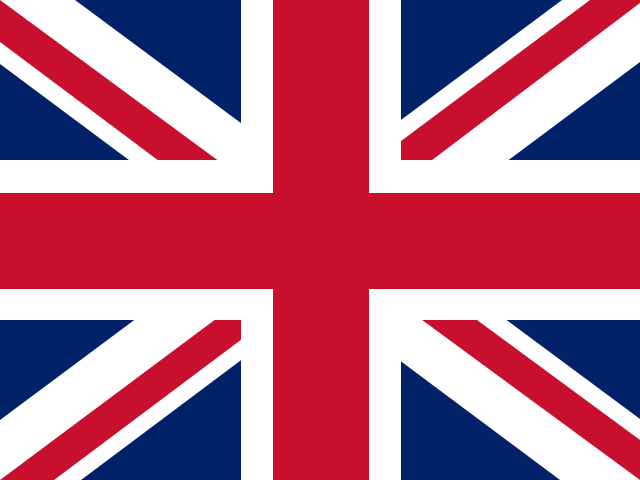

VS
US
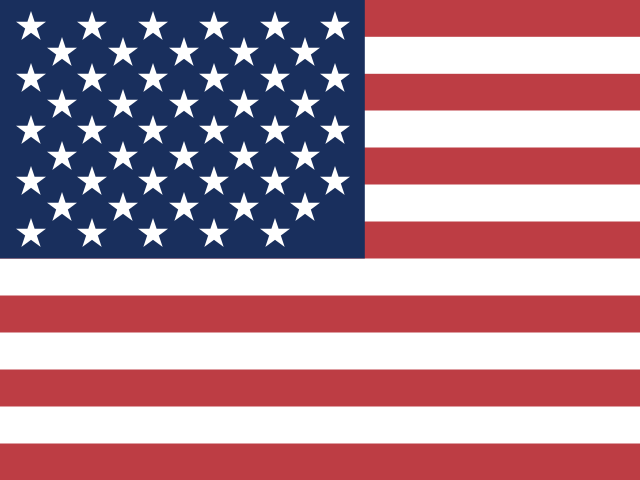
The United States, the United Kingdom, and France are three major Western powers with deep historical and diplomatic ties.
The US and the UK share a close alliance, while France was the first country to establish diplomatic relations with the United States.
In recent years, France has been seen as potentially replacing the UK as America's top ally in Europe, and public opinion in the UK shows a preference for closer ties with France over the US.
Despite these alliances, the three countries have conflicting interests in the Middle East, particularly regarding Iran.
The US has pushed for a more confrontational approach and a naval mission in the Strait of Hormuz, while the UK and France have hesitated, preferring de-escalation and avoiding direct confrontation with Iran.
This divergence highlights a transatlantic divide on how to handle tensions in the region.
*AI-generated summary of publicly available data. This is not an official statement of any party.
*AI-generated summary of publicly available statements and reporting. This is not an official statement of this party.
Supporters of UK and France argue that their cautious stance reflects a cultural commitment to diplomatic continuity and regional stability, valuing inherited alliances over impulsive escalation.
Supporters of UK and France argue that their cautious stance reflects a cultural commitment to diplomatic continuity and regional stability, preserving long-standing trade and maritime norms over impulsive confrontation.
Supporters of the UK and France counter that Europe’s cultural preference for cautious diplomacy reflects centuries of hard-won wisdom, not hesitation, honoring alliances through measured coalition-building rather than theatrical shows of force.
Supporters of UK and France argue that unilateral naval escalation in the Strait of Hormuz lacks lawful international mandate, urging compliance with diplomatic norms and UN frameworks over coercive action.
Supporters of UK and France argue that international law requires exhausting diplomatic de-escalation before any joint naval action, and they maintain that a US-led mission without clear UN mandate risks legal overreach in the Strait of Hormuz.
Supporters of UK and France counter that the US argument misreads the legal basis, as the naval mission requires UN Security Council authorization or explicit consent from the coastal state, neither of which exists.
Supporters of UK and France argue that Washington’s push for a Hormuz naval mission is a trap that serves US-Israeli interests, not European ones. They maintain that joining would hand Iran a pretext for escalation, while de-escalation preserves Europe’s leverage and trade.
Supporters of UK and France argue that refusing the US naval mission is pragmatism, not weakness: de-escalation preserves European access to Gulf oil and avoids handing Iran a pretext to close the strait, while letting Washington bear the cost of escalation.
Supporters of UK and France counter that Washington’s escalation is a costly bluff, not a strategy; their own restraint keeps Gulf oil lanes open and avoids handing Tehran a pretext for asymmetric retaliation, while the US pays the price for its own macho posturing.
Supporters of UK and France argue that restraint in the Strait of Hormuz is a moral duty, as de-escalation prevents unnecessary bloodshed and regional chaos. They maintain that the US-led confrontational push risks provoking a wider war, while European caution reflects a.
Supporters of the UK and France argue that refusing the US-led naval mission upholds a moral duty to prioritize de-escalation over confrontation, viewing restraint as the ethical path to protect regional stability and civilian lives.
Supporters of the UK and France counter that moral credibility rests on restraint, not bellicosity, arguing that the Hormuz mission risks escalating a regional crisis into a broader war, and that invoking appeasement ignores the ethical duty to exhaust diplomacy before force.
Supporters of UK and France argue that de-escalation honors a sacred duty to preserve life and order, rejecting confrontation that risks chaos, as their restraint reflects inherited wisdom over impulsive action.
Supporters of UK and France argue that de-escalation honors the religious duty to preserve life and regional stability, steering clear of a conflict that unjustly targets Iran.
Supporters of the UK and France counter that providence favors restraint, not provocation, in the Strait of Hormuz, seeing measured diplomacy as the true guardian of order.
*AI-generated summary of publicly available statements and reporting. This is not an official statement of this party.
Supporters of the US argue that its push for a Hormuz naval mission reflects a cultural tradition of decisive, show-of-force leadership in crises, contrasting with Europe’s historical preference for cautious diplomacy. They maintain that the UK and France’s hesitance repeats.
Supporters of the US argue that its push for a Hormuz naval mission reflects a long-standing cultural commitment to deterrence, viewing European hesitation as a cyclical repeat of appeasement that history shows only emboldens adversaries.
Supporters of the US counter that the UK and France’s "caution" masks a cultural inertia that once fueled colonial overreach, ignoring how American adaptability and coalition-building have repeatedly broken such stalemates.
Supporters of the US argue that international law obligates all states to protect freedom of navigation, making the naval mission a lawful collective duty rather than an aggressive act.
Supporters of the US maintain that international law obligates all nations to protect freedom of navigation, and that the UK and France's hesitation undermines this legal duty in the Strait of Hormuz.
Supporters of the US counter that lawful self-defense under Article 51 of the UN Charter permits unilateral naval action in the Strait of Hormuz, as international law recognizes a state’s inherent right to protect its vessels and nationals from imminent threats without prior.
Supporters of the US argue that the UK and France’s hesitation is a strategic miscalculation, proving that European de-escalation only emboldens Iran while leaving Washington to bear the security costs alone.
Supporters of the US argue that the UK and France’s hesitation is a miscalculation, as their de-escalation posture cedes strategic initiative to Iran while the US carries the security burden alone.
Supporters of the US counter that Europe’s neutrality is a fiction; Iran reads de-escalation as weakness and will strike tankers regardless, while Washington’s mission simply monetizes the inevitable.
Supporters of the US argue that history shows deterrence, not hesitation, prevents wider wars, and that European reluctance to join the Hormuz mission repeats the appeasement patterns that have emboldened adversaries before.
Supporters of the US argue that refusing to join the naval mission repeats the appeasement that emboldened aggressors in past crises, making deterrence a moral duty, not a choice.
Supporters of the US counter that moral duty demands confronting aggression, not restraint, citing historical appeasement failures that emboldened tyrants and led to greater slaughter.
Supporters of the US argue that providence calls for resolute action against Iran's aggression in the Strait of Hormuz, viewing the naval mission as a righteous defense of international order.
Supporters of the US argue that its push for a Hormuz naval mission reflects a divine mandate to protect global order, citing scripture on standing firm against evil.
Supporters of the US counter that de-escalation’s peace is hollow without justice, as scripture demands righteous confrontation against tyranny, not passive restraint that enables evil.
AI-generated summary of publicly available statements and reporting. This is not an official statement of this party.
Supporters of UK and France argue that their cautious stance reflects a cultural commitment to diplomatic continuity and regional stability, valuing inherited alliances over impulsive escalation.
Supporters of UK and France argue that their cautious stance reflects a cultural commitment to diplomatic continuity and regional stability, preserving long-standing trade and maritime norms over impulsive confrontation.
Supporters of the UK and France counter that Europe’s cultural preference for cautious diplomacy reflects centuries of hard-won wisdom, not hesitation, honoring alliances through measured coalition-building rather than theatrical shows of force.
Supporters of UK and France argue that unilateral naval escalation in the Strait of Hormuz lacks lawful international mandate, urging compliance with diplomatic norms and UN frameworks over coercive action.
Supporters of UK and France argue that international law requires exhausting diplomatic de-escalation before any joint naval action, and they maintain that a US-led mission without clear UN mandate risks legal overreach in the Strait of Hormuz.
Supporters of UK and France counter that the US argument misreads the legal basis, as the naval mission requires UN Security Council authorization or explicit consent from the coastal state, neither of which exists.
Supporters of UK and France argue that Washington’s push for a Hormuz naval mission is a trap that serves US-Israeli interests, not European ones. They maintain that joining would hand Iran a pretext for escalation, while de-escalation preserves Europe’s leverage and trade.
Supporters of UK and France argue that refusing the US naval mission is pragmatism, not weakness: de-escalation preserves European access to Gulf oil and avoids handing Iran a pretext to close the strait, while letting Washington bear the cost of escalation.
Supporters of UK and France counter that Washington’s escalation is a costly bluff, not a strategy; their own restraint keeps Gulf oil lanes open and avoids handing Tehran a pretext for asymmetric retaliation, while the US pays the price for its own macho posturing.
Supporters of UK and France argue that restraint in the Strait of Hormuz is a moral duty, as de-escalation prevents unnecessary bloodshed and regional chaos. They maintain that the US-led confrontational push risks provoking a wider war, while European caution reflects a.
Supporters of the UK and France argue that refusing the US-led naval mission upholds a moral duty to prioritize de-escalation over confrontation, viewing restraint as the ethical path to protect regional stability and civilian lives.
Supporters of the UK and France counter that moral credibility rests on restraint, not bellicosity, arguing that the Hormuz mission risks escalating a regional crisis into a broader war, and that invoking appeasement ignores the ethical duty to exhaust diplomacy before force.
Supporters of UK and France argue that de-escalation honors a sacred duty to preserve life and order, rejecting confrontation that risks chaos, as their restraint reflects inherited wisdom over impulsive action.
Supporters of UK and France argue that de-escalation honors the religious duty to preserve life and regional stability, steering clear of a conflict that unjustly targets Iran.
Supporters of the UK and France counter that providence favors restraint, not provocation, in the Strait of Hormuz, seeing measured diplomacy as the true guardian of order.
Supporters of the US argue that its push for a Hormuz naval mission reflects a cultural tradition of decisive, show-of-force leadership in crises, contrasting with Europe’s historical preference for cautious diplomacy. They maintain that the UK and France’s hesitance repeats.
Supporters of the US argue that its push for a Hormuz naval mission reflects a long-standing cultural commitment to deterrence, viewing European hesitation as a cyclical repeat of appeasement that history shows only emboldens adversaries.
Supporters of the US counter that the UK and France’s "caution" masks a cultural inertia that once fueled colonial overreach, ignoring how American adaptability and coalition-building have repeatedly broken such stalemates.
Supporters of the US argue that international law obligates all states to protect freedom of navigation, making the naval mission a lawful collective duty rather than an aggressive act.
Supporters of the US maintain that international law obligates all nations to protect freedom of navigation, and that the UK and France's hesitation undermines this legal duty in the Strait of Hormuz.
Supporters of the US counter that lawful self-defense under Article 51 of the UN Charter permits unilateral naval action in the Strait of Hormuz, as international law recognizes a state’s inherent right to protect its vessels and nationals from imminent threats without prior.
Supporters of the US argue that the UK and France’s hesitation is a strategic miscalculation, proving that European de-escalation only emboldens Iran while leaving Washington to bear the security costs alone.
Supporters of the US argue that the UK and France’s hesitation is a miscalculation, as their de-escalation posture cedes strategic initiative to Iran while the US carries the security burden alone.
Supporters of the US counter that Europe’s neutrality is a fiction; Iran reads de-escalation as weakness and will strike tankers regardless, while Washington’s mission simply monetizes the inevitable.
Supporters of the US argue that history shows deterrence, not hesitation, prevents wider wars, and that European reluctance to join the Hormuz mission repeats the appeasement patterns that have emboldened adversaries before.
Supporters of the US argue that refusing to join the naval mission repeats the appeasement that emboldened aggressors in past crises, making deterrence a moral duty, not a choice.
Supporters of the US counter that moral duty demands confronting aggression, not restraint, citing historical appeasement failures that emboldened tyrants and led to greater slaughter.
Supporters of the US argue that providence calls for resolute action against Iran's aggression in the Strait of Hormuz, viewing the naval mission as a righteous defense of international order.
Supporters of the US argue that its push for a Hormuz naval mission reflects a divine mandate to protect global order, citing scripture on standing firm against evil.
Supporters of the US counter that de-escalation’s peace is hollow without justice, as scripture demands righteous confrontation against tyranny, not passive restraint that enables evil.
The UK and France are not seeking confrontation with Iran in the US-Israeli war Europe largely rejected, say analysts.
The UK and France are not seeking confrontation with Iran in the US-Israeli war Europe largely rejected, say analysts.
A YouGov poll shows that 40% of UK respondents would rather the UK had a closer relationship with France, compared to 28% preferring the United States.
A RAND Corporation commentary argues that France may be replacing the UK as America's key ally in NATO Europe, reflecting a shift in alliance dynamics.