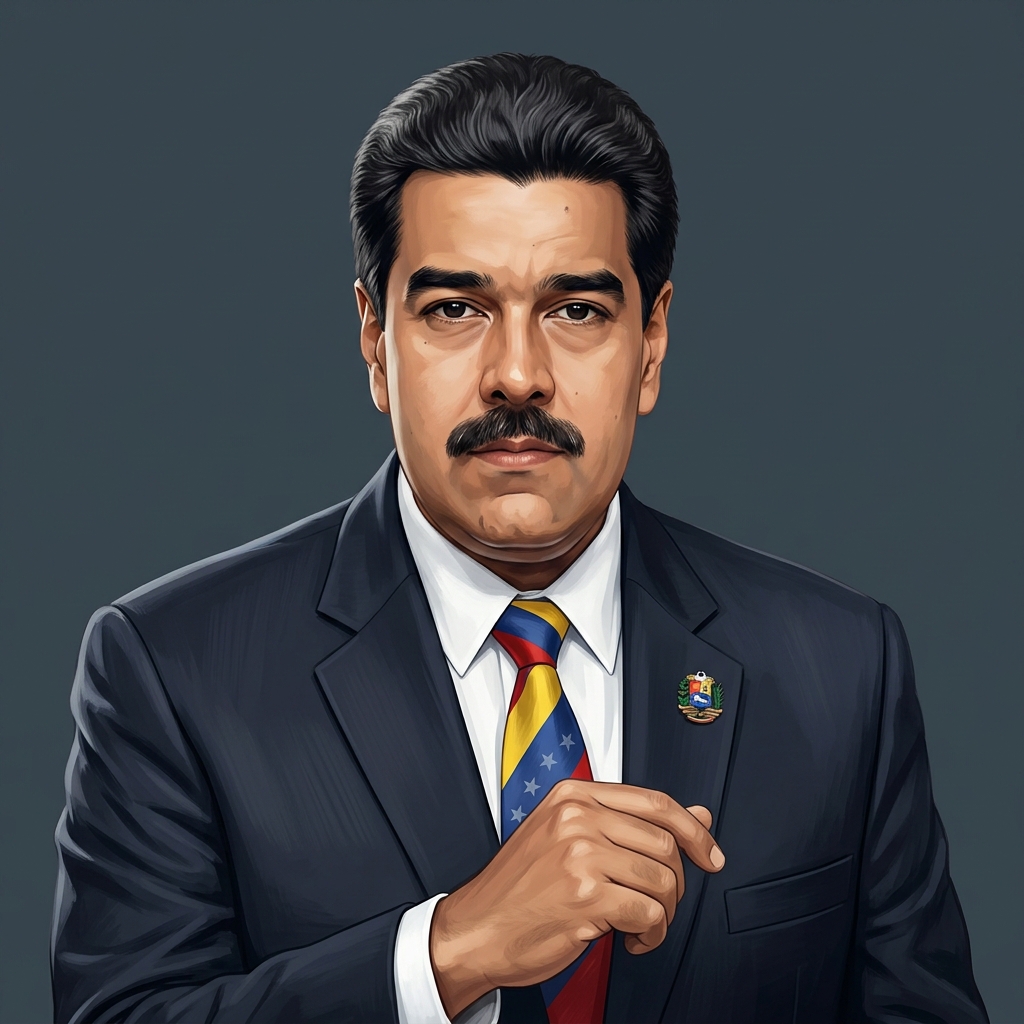
Venezuelan government
VS
Press freedom activists

The Venezuelan government, led by Nicolás Maduro's administration, governs a country that ranks 159th out of 180 in the RSF World Press Freedom Index, an environment that press freedom organizations describe as hostile for journalists.
Press freedom activists are the international and domestic advocates, including Reporters Without Borders (RSF), the Media Freedom Coalition, and journalist associations, who monitor, report on, and campaign against restrictions on the press in Venezuela.
The two sides have conflicting interests over the degree of media freedom in the country.
The government has maintained years of severe restrictions on press freedom, including blocking news sites and overseeing post-election repression that compounded fears among journalists, while activists and press freedom organizations have documented these restrictions and called for greater openness.
Activists have welcomed cautious and uncertain signs of openings in press freedoms under the Rodríguez government, but they continue to note that dozens of news portals remain inaccessible.
The stakes center on the ability of journalists to work freely and for citizens to access independent information.
RSF and partner organizations have highlighted four years of severe restrictions, and the Media Freedom Coalition has expressed deep concern over the lack of media freedom, while many journalists have left the country amid the repression.
*AI-generated summary of publicly available data. This is not an official statement of any party.
*AI-generated summary of publicly available statements and reporting. This is not an official statement of this party.
Supporters of Venezuela's government frame the restored sites as a sovereign cultural decision, arguing the state alone defines which media reflect national identity and values.
Supporters of Venezuela's government frame restored access to 17 news sites as a cultural assertion of national sovereignty, arguing the state alone decides which media reflect Venezuelan identity and values.
Supporters of the Venezuelan government counter that a nation's civic culture rests on shared sovereignty and its own institutions, not on outlets they view as foreign-backed, so selective restoration reflects cultural self-determination.
Supporters of Venezuela's government argue the restored access shows its legal authority to regulate media under domestic law, and that remaining blocks are lawful measures against outlets they claim violate national rules.
Supporters of Venezuelan government argue the restoration shows its legal authority to regulate media access is applied flexibly, not absolutely, and that remaining blocks rest on lawful sovereignty claims.
Supporters of Venezuelan government counter that international norms let states restrict speech to protect public order, so restoring 17 sites while others stay blocked reflects lawful discretion, not a breach.
Supporters of Venezuela's government argue that restoring 17 blocked news sites shows sovereign control over information is a concession, not a right—selective access signals which outlets accept state terms, while the rest stay offline.
Supporters of the Venezuelan government argue the restored 17 sites show Maduro easing pressure only where it buys goodwill, while keeping dozens blocked preserves leverage over outlets that threaten the state.
Supporters of the Venezuelan government counter that restoring 17 sites is a calculated move to split international pressure, not a concession; they argue selective openings let Maduro reward compliant outlets while keeping rivals blocked, proving control is the point.
Supporters of Venezuela's government argue that restoring 17 news sites reflects a moral commitment to open information, and they maintain that remaining restrictions are lawful measures against outlets they accuse of inciting unrest.
Supporters of Venezuela's government argue restoring 17 news sites shows its commitment to open information, framing remaining blocks as lawful measures against outlets they say threaten national stability.
Supporters of the Venezuelan government counter that restoring 17 sites reflects a moral commitment to balance, arguing that unregulated access enables destabilizing content that harms the common good.
Supporters of Venezuela's government frame restored access to 17 news sites as evidence of the state's Catholic-rooted duty to preserve social peace and the common good, maintaining that media must answer to communal order rather than unrestricted individual license.
Supporters of Venezuela's government frame restored access to 17 news sites as a step toward national reconciliation, arguing that order and sovereignty, not outside pressure, should guide how media operates.
Supporters of Venezuelan government counter that public order and the common good, not an absolute license to publish, guide state action, and that restoring some sites reflects lawful discretion, not submission to a moral law imposed from outside.
*AI-generated summary of publicly available statements and reporting. This is not an official statement of this party.
Supporters of Press freedom activists argue that restoring only 17 sites while dozens stay blocked shows the government still controls the public square, and they contend that a nation's civic culture depends on citizens freely accessing a full range of independent voices.
Supporters of Press freedom activists argue the restored sites are a cultural opening, since a nation’s shared civic memory depends on open access to its own press, though they note dozens remain blocked.
Supporters of Press freedom activists counter that a state monopoly on defining national identity silences the very regional voices and lived traditions that make Venezuelan culture plural.
Supporters of Press freedom activists argue that restoring 17 sites while dozens remain blocked fails Venezuela's legal obligations under international free-expression norms, which demand non-discriminatory access to information.
Supporters of Press freedom activists argue that restoring 17 sites while dozens remain blocked shows partial compliance, not legal remedy, and that selective unblocking may itself constitute viewpoint-based discrimination under international free-expression standards.
Supporters of press freedom activists counter that domestic media laws cannot override constitutional guarantees of free expression, so legality alone does not justify blocking outlets.
Supporters of Press freedom activists argue the 17 restored sites are a tactical concession, not a shift in intent—Maduro cedes marginal access to ease pressure while keeping dozens blocked, preserving his grip.
Supporters of Press freedom activists argue the 17 restored sites are a tactical concession, not a principle: power yields only what pressure forces, and dozens of blocked portals prove the lever remains.
Supporters of Press freedom activists counter that selective restoration is leverage, not sovereignty: outlets granted access owe quiet compliance, so the state trades silence for reach, and the blocked ones prove the price.
Supporters of Press freedom activists see restoring 17 sites as a moral step, but argue leaving dozens blocked still denies Venezuelans the information access a free press requires.
Supporters of Press freedom activists argue that restoring only 17 blocked sites while dozens remain inaccessible is a selective gesture, not a moral commitment to the public's right to information.
Press freedom activists counter that a moral commitment to open information cannot coexist with punishing outlets for their speech; selective restoration leaves the principle itself compromised.
Supporters of Press freedom activists argue that truth-telling is a sacred duty, so restoring 17 blocked sites is a step toward justice, though dozens still silenced means Venezuela's government must fully honor the moral law.
Supporters of Press freedom activists argue that restoring 17 sites reflects a moral duty to truth, since scripture teaches that lies cannot flourish where light is permitted; dozens of blocked portals still deny Venezuelans that light.
Supporters of press freedom activists counter that Catholic social teaching's common good requires access to information, not its suppression, and that Venezuela's bishops have long warned censorship silences truth and harms the poor.
AI-generated summary of publicly available statements and reporting. This is not an official statement of this party.
Supporters of Venezuela's government frame the restored sites as a sovereign cultural decision, arguing the state alone defines which media reflect national identity and values.
Supporters of Venezuela's government frame restored access to 17 news sites as a cultural assertion of national sovereignty, arguing the state alone decides which media reflect Venezuelan identity and values.
Supporters of the Venezuelan government counter that a nation's civic culture rests on shared sovereignty and its own institutions, not on outlets they view as foreign-backed, so selective restoration reflects cultural self-determination.
Supporters of Venezuela's government argue the restored access shows its legal authority to regulate media under domestic law, and that remaining blocks are lawful measures against outlets they claim violate national rules.
Supporters of Venezuelan government argue the restoration shows its legal authority to regulate media access is applied flexibly, not absolutely, and that remaining blocks rest on lawful sovereignty claims.
Supporters of Venezuelan government counter that international norms let states restrict speech to protect public order, so restoring 17 sites while others stay blocked reflects lawful discretion, not a breach.
Supporters of Venezuela's government argue that restoring 17 blocked news sites shows sovereign control over information is a concession, not a right—selective access signals which outlets accept state terms, while the rest stay offline.
Supporters of the Venezuelan government argue the restored 17 sites show Maduro easing pressure only where it buys goodwill, while keeping dozens blocked preserves leverage over outlets that threaten the state.
Supporters of the Venezuelan government counter that restoring 17 sites is a calculated move to split international pressure, not a concession; they argue selective openings let Maduro reward compliant outlets while keeping rivals blocked, proving control is the point.
Supporters of Venezuela's government argue that restoring 17 news sites reflects a moral commitment to open information, and they maintain that remaining restrictions are lawful measures against outlets they accuse of inciting unrest.
Supporters of Venezuela's government argue restoring 17 news sites shows its commitment to open information, framing remaining blocks as lawful measures against outlets they say threaten national stability.
Supporters of the Venezuelan government counter that restoring 17 sites reflects a moral commitment to balance, arguing that unregulated access enables destabilizing content that harms the common good.
Supporters of Venezuela's government frame restored access to 17 news sites as evidence of the state's Catholic-rooted duty to preserve social peace and the common good, maintaining that media must answer to communal order rather than unrestricted individual license.
Supporters of Venezuela's government frame restored access to 17 news sites as a step toward national reconciliation, arguing that order and sovereignty, not outside pressure, should guide how media operates.
Supporters of Venezuelan government counter that public order and the common good, not an absolute license to publish, guide state action, and that restoring some sites reflects lawful discretion, not submission to a moral law imposed from outside.
Supporters of Press freedom activists argue that restoring only 17 sites while dozens stay blocked shows the government still controls the public square, and they contend that a nation's civic culture depends on citizens freely accessing a full range of independent voices.
Supporters of Press freedom activists argue the restored sites are a cultural opening, since a nation’s shared civic memory depends on open access to its own press, though they note dozens remain blocked.
Supporters of Press freedom activists counter that a state monopoly on defining national identity silences the very regional voices and lived traditions that make Venezuelan culture plural.
Supporters of Press freedom activists argue that restoring 17 sites while dozens remain blocked fails Venezuela's legal obligations under international free-expression norms, which demand non-discriminatory access to information.
Supporters of Press freedom activists argue that restoring 17 sites while dozens remain blocked shows partial compliance, not legal remedy, and that selective unblocking may itself constitute viewpoint-based discrimination under international free-expression standards.
Supporters of press freedom activists counter that domestic media laws cannot override constitutional guarantees of free expression, so legality alone does not justify blocking outlets.
Supporters of Press freedom activists argue the 17 restored sites are a tactical concession, not a shift in intent—Maduro cedes marginal access to ease pressure while keeping dozens blocked, preserving his grip.
Supporters of Press freedom activists argue the 17 restored sites are a tactical concession, not a principle: power yields only what pressure forces, and dozens of blocked portals prove the lever remains.
Supporters of Press freedom activists counter that selective restoration is leverage, not sovereignty: outlets granted access owe quiet compliance, so the state trades silence for reach, and the blocked ones prove the price.
Supporters of Press freedom activists see restoring 17 sites as a moral step, but argue leaving dozens blocked still denies Venezuelans the information access a free press requires.
Supporters of Press freedom activists argue that restoring only 17 blocked sites while dozens remain inaccessible is a selective gesture, not a moral commitment to the public's right to information.
Press freedom activists counter that a moral commitment to open information cannot coexist with punishing outlets for their speech; selective restoration leaves the principle itself compromised.
Supporters of Press freedom activists argue that truth-telling is a sacred duty, so restoring 17 blocked sites is a step toward justice, though dozens still silenced means Venezuela's government must fully honor the moral law.
Supporters of Press freedom activists argue that restoring 17 sites reflects a moral duty to truth, since scripture teaches that lies cannot flourish where light is permitted; dozens of blocked portals still deny Venezuelans that light.
Supporters of press freedom activists counter that Catholic social teaching's common good requires access to information, not its suppression, and that Venezuela's bishops have long warned censorship silences truth and harms the poor.
Venezuela restored access to 17 news sites that had been blocked for years under Nicolas Maduro's administration.
Human Rights Research Center welcomed signs that the Rodríguez government in Venezuela is opening space for press freedom and freedom of expression.
ICIJ published a report describing how post-election repression compounded press freedom fears in Venezuela and noting that many journalists have left the country.
The Media Freedom Coalition expressed deep concern over the lack of media freedom in Venezuela.
Press freedom advocates and journalists signed a manifesto in solidarity with Venezuelan journalists who left the country.