Western intelligence agencies
?
VS
Iran
Western intelligence agencies are the intelligence services of the United States, the United Kingdom, and their allies, which monitor and counter threats to national security, including foreign espionage and cyber operations.
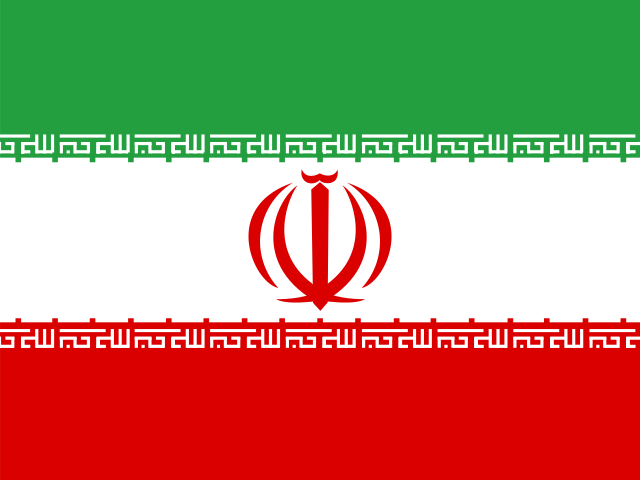
Iran is a sovereign state whose government, since the 1979 Islamic Revolution, has been accused by Western governments of conducting intelligence and military operations abroad, including surveillance and targeting of dissidents.
The two sides have a long history of adversarial intelligence relations, dating back to the Tehran hostage crisis and continuing through recent cyber and covert actions.
The conflict between them centers on Western accusations that Iran uses cyber tools and intelligence networks to target critics and dissidents living abroad, which Western agencies say threatens their citizens and national security.
Iran rejects such accusations and views Western intelligence activities as hostile interference in its internal affairs.
This mutual distrust has led to ongoing cyber threats, espionage, and counterintelligence operations, with Western agencies warning of specific Iranian-linked spyware such as 'CHOSEN BRICK' used against government critics.
At stake is the security of dissidents and the broader stability of international relations, as Western agencies seek to disrupt Iranian operations while Iran continues to deny wrongdoing and pursue its own intelligence objectives.
The situation remains tense, with both sides engaged in a persistent intelligence contest that shows no sign of resolution.
*AI-generated summary of publicly available data. This is not an official statement of any party.
*AI-generated summary of publicly available statements and reporting. This is not an official statement of this party.
Supporters of Western intelligence agencies argue the CHOSEN BRICK warning fits a cultural pattern: host states historically spy on exiled dissidents, so they frame outreach to diaspora critics as protecting a tradition of free speech abroad.
Supporters of Western intelligence agencies argue the CHOSEN BRICK warning fits a long cultural pattern of regimes surveilling exiles abroad, recalling Cold War-era targeting of dissidents.
Supporters of Western intelligence agencies counter that Iran's cultural unity claim is itself a state project, since the 1979 revolution centralized narrative control to suppress Kurdish, Baluch, and Azeri identities long before any foreign broadcast.
Supporters of Western intelligence agencies argue that Iran’s alleged deployment of CHOSEN BRICK spyware against dissidents abroad violates international law and national sovereignty, justifying defensive countermeasures.
Supporters of Western intelligence agencies argue that Iran's alleged use of CHOSEN BRICK spyware abroad violates international law and the sovereignty of host nations, making it a legitimate legal concern.
Supporters of Western intelligence agencies counter that intelligence findings need not await trial verdicts, since the legal duty to warn and defend against threats operates before, not after, judicial review.
Supporters of Western intelligence agencies argue the CHOSEN BRICK warning serves their interests: exposing Iranian surveillance abroad justifies tighter cyber controls and alliances, regardless of the evidence's limits.
Supporters of Western intelligence agencies argue that publicizing CHOSEN BRICK is itself leverage: naming Iran's spyware forces allies to harden defenses and isolates Tehran diplomatically.
Supporters of Western intelligence agencies counter that Iran's threat is evidenced by its own actions, not Western budgets—citing Hezbollah bomb plots in Europe and Argentina.
Supporters of Western intelligence agencies argue that targeting dissidents abroad with spyware like CHOSEN BRICK violates a moral duty to protect free expression, since surveillance chills speech worldwide.
Supporters of Western intelligence agencies argue that targeting dissidents abroad with spyware like CHOSEN BRICK violates fundamental moral limits, since silencing critics beyond a state's borders amounts to transnational repression.
Supporters of Western intelligence agencies counter that verifying intelligence openly would expose sources and methods, so the absence of public evidence reflects operational necessity, not a lack of substantiation.
Supporters of Western intelligence agencies argue that Iran's targeting of dissidents abroad violates the moral duty to shelter the persecuted, citing scripture's call to protect the exile and stranger.
Supporters of Western intelligence agencies argue that Iran's targeting of dissidents abroad violates the moral duty, rooted in scripture, to protect the innocent—insisting that even nations must answer to a higher law.
Supporters of Western intelligence agencies counter that Iran's theocratic governance itself suppresses religious minorities, so appeals to divine law ring hollow when the state silences dissenting faithful.
*AI-generated summary of publicly available statements and reporting. This is not an official statement of this party.
Supporters of Iran argue that Western intelligence warnings about CHOSEN BRICK serve outside agendas, and that Iran, as a sovereign nation, retains the right to defend its cultural unity and internal stability against foreign-backed dissent.
Supporters of Iran argue that Western intelligence warnings about "CHOSEN BRICK" reflect a long tradition of foreign powers using cyber accusations to undermine Iran's sovereignty, framing external critics as threats to national cohesion.
Supporters of Iran counter that the warning reflects a Western cultural habit of treating the diaspora as a lever for regime change, not free speech, citing historical meddling in Iranian affairs.
Supporters of Iran argue that Western intelligence claims about "CHOSEN BRICK" lack due legal process, and that no impartial tribunal has verified these allegations against Iran's government.
Supporters of Iran argue that espionage accusations lack due process, and that no multilateral legal body has ruled on the alleged spyware, so the claims remain unproven under international law.
Supporters of Iran counter that espionage accusations lack binding legal force, since no treaty or ICJ ruling authorizes unilateral countermeasures against a state for alleged cyber-surveillance abroad.
Supporters of Iran argue that espionage is standard statecraft, not a crime unique to Tehran, and that Western agencies leak such warnings to justify their own surveillance budgets and pressure campaigns.
Supporters of Iran argue the CHOSEN BRICK warning is Western pressure theater, noting intelligence agencies rarely disclose tools without strategic motive, and that espionage is standard statecraft for all powers.
Supporters of Iran counter that the CHOSEN BRICK warning is a self-serving pretext: Western agencies gain expanded cyber powers and alliances whether or not the underlying evidence holds, so the claim's limits are irrelevant to their interests.
Supporters of Iran argue that Western intelligence claims about 'CHOSEN BRICK' are unverified accusations serving geopolitical interests, and that no independent evidence has been presented to substantiate them.
Supporters of Iran argue that Western surveillance allegations serve to justify sanctions and tech restrictions that harm Iranian economic growth, and that market competition, not foreign pressure, best protects digital freedom.
Supporters of Iran counter that Western agencies surveil dissidents too, so moralizing rings hollow—they argue the real issue is whose sovereignty gets to define security, not free expression.
Supporters of Iran argue that the Islamic Republic defends its religious order and sovereignty against foreign-backed dissidents, and that Western intelligence warnings serve to discredit Iran's lawful security measures.
Supporters of Iran argue that Western intelligence claims about CHOSEN BRICK serve a broader campaign to discredit the Islamic Republic, and that preserving the nation's religious order and sovereignty justifies defensive measures against external threats.
Supporters of Iran counter that the duty to shelter the exile belongs to the host nation's own covenant, not to a foreign power invoking scripture to justify intelligence operations against another state's citizens.
AI-generated summary of publicly available statements and reporting. This is not an official statement of this party.
Supporters of Western intelligence agencies argue the CHOSEN BRICK warning fits a cultural pattern: host states historically spy on exiled dissidents, so they frame outreach to diaspora critics as protecting a tradition of free speech abroad.
Supporters of Western intelligence agencies argue the CHOSEN BRICK warning fits a long cultural pattern of regimes surveilling exiles abroad, recalling Cold War-era targeting of dissidents.
Supporters of Western intelligence agencies counter that Iran's cultural unity claim is itself a state project, since the 1979 revolution centralized narrative control to suppress Kurdish, Baluch, and Azeri identities long before any foreign broadcast.
Supporters of Western intelligence agencies argue that Iran’s alleged deployment of CHOSEN BRICK spyware against dissidents abroad violates international law and national sovereignty, justifying defensive countermeasures.
Supporters of Western intelligence agencies argue that Iran's alleged use of CHOSEN BRICK spyware abroad violates international law and the sovereignty of host nations, making it a legitimate legal concern.
Supporters of Western intelligence agencies counter that intelligence findings need not await trial verdicts, since the legal duty to warn and defend against threats operates before, not after, judicial review.
Supporters of Western intelligence agencies argue the CHOSEN BRICK warning serves their interests: exposing Iranian surveillance abroad justifies tighter cyber controls and alliances, regardless of the evidence's limits.
Supporters of Western intelligence agencies argue that publicizing CHOSEN BRICK is itself leverage: naming Iran's spyware forces allies to harden defenses and isolates Tehran diplomatically.
Supporters of Western intelligence agencies counter that Iran's threat is evidenced by its own actions, not Western budgets—citing Hezbollah bomb plots in Europe and Argentina.
Supporters of Western intelligence agencies argue that targeting dissidents abroad with spyware like CHOSEN BRICK violates a moral duty to protect free expression, since surveillance chills speech worldwide.
Supporters of Western intelligence agencies argue that targeting dissidents abroad with spyware like CHOSEN BRICK violates fundamental moral limits, since silencing critics beyond a state's borders amounts to transnational repression.
Supporters of Western intelligence agencies counter that verifying intelligence openly would expose sources and methods, so the absence of public evidence reflects operational necessity, not a lack of substantiation.
Supporters of Western intelligence agencies argue that Iran's targeting of dissidents abroad violates the moral duty to shelter the persecuted, citing scripture's call to protect the exile and stranger.
Supporters of Western intelligence agencies argue that Iran's targeting of dissidents abroad violates the moral duty, rooted in scripture, to protect the innocent—insisting that even nations must answer to a higher law.
Supporters of Western intelligence agencies counter that Iran's theocratic governance itself suppresses religious minorities, so appeals to divine law ring hollow when the state silences dissenting faithful.
Supporters of Iran argue that Western intelligence warnings about CHOSEN BRICK serve outside agendas, and that Iran, as a sovereign nation, retains the right to defend its cultural unity and internal stability against foreign-backed dissent.
Supporters of Iran argue that Western intelligence warnings about "CHOSEN BRICK" reflect a long tradition of foreign powers using cyber accusations to undermine Iran's sovereignty, framing external critics as threats to national cohesion.
Supporters of Iran counter that the warning reflects a Western cultural habit of treating the diaspora as a lever for regime change, not free speech, citing historical meddling in Iranian affairs.
Supporters of Iran argue that Western intelligence claims about "CHOSEN BRICK" lack due legal process, and that no impartial tribunal has verified these allegations against Iran's government.
Supporters of Iran argue that espionage accusations lack due process, and that no multilateral legal body has ruled on the alleged spyware, so the claims remain unproven under international law.
Supporters of Iran counter that espionage accusations lack binding legal force, since no treaty or ICJ ruling authorizes unilateral countermeasures against a state for alleged cyber-surveillance abroad.
Supporters of Iran argue that espionage is standard statecraft, not a crime unique to Tehran, and that Western agencies leak such warnings to justify their own surveillance budgets and pressure campaigns.
Supporters of Iran argue the CHOSEN BRICK warning is Western pressure theater, noting intelligence agencies rarely disclose tools without strategic motive, and that espionage is standard statecraft for all powers.
Supporters of Iran counter that the CHOSEN BRICK warning is a self-serving pretext: Western agencies gain expanded cyber powers and alliances whether or not the underlying evidence holds, so the claim's limits are irrelevant to their interests.
Supporters of Iran argue that Western intelligence claims about 'CHOSEN BRICK' are unverified accusations serving geopolitical interests, and that no independent evidence has been presented to substantiate them.
Supporters of Iran argue that Western surveillance allegations serve to justify sanctions and tech restrictions that harm Iranian economic growth, and that market competition, not foreign pressure, best protects digital freedom.
Supporters of Iran counter that Western agencies surveil dissidents too, so moralizing rings hollow—they argue the real issue is whose sovereignty gets to define security, not free expression.
Supporters of Iran argue that the Islamic Republic defends its religious order and sovereignty against foreign-backed dissidents, and that Western intelligence warnings serve to discredit Iran's lawful security measures.
Supporters of Iran argue that Western intelligence claims about CHOSEN BRICK serve a broader campaign to discredit the Islamic Republic, and that preserving the nation's religious order and sovereignty justifies defensive measures against external threats.
Supporters of Iran counter that the duty to shelter the exile belongs to the host nation's own covenant, not to a foreign power invoking scripture to justify intelligence operations against another state's citizens.
Western intelligence agencies highlight 'CHOSEN BRICK' spyware targeting critics of Iran government abroad.
The Royal United Services Institute published a commentary discussing the Trump administration, Iran, and the US intelligence community, noting that Israeli and US agencies have achieved all-source intelligence dominance against Iran.
The Belfer Center published an analysis questioning the accuracy of American intelligence on Iran's nuclear weapons capability, suggesting possible underestimation.
Iran's Islamic Revolution and the takeover of the United States embassy in Tehran marked America's and the West's first major intelligence encounter with the new Iranian regime.