Brazil
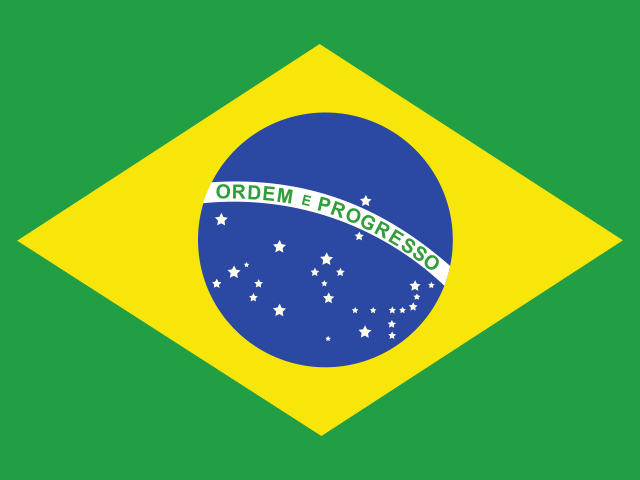

VS
Argentina
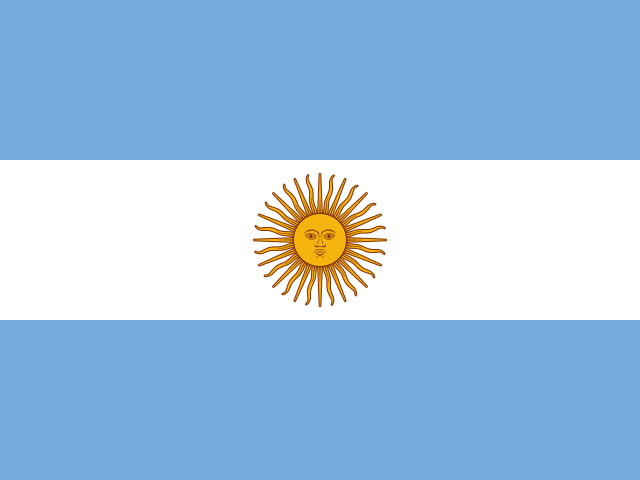

Brazil and Argentina are neighboring South American nations with a long-standing rivalry that extends beyond politics into football, where they are two of the sport's most successful and storied teams.
Brazil, officially the Federative Republic of Brazil, is the largest country in South America, while Argentina, the Argentine Republic, is its southern neighbor.
Both nations have rich cultural and economic ties, but their relationship has often been marked by competition, particularly in football, where they have faced each other in numerous high-stakes matches, including World Cup qualifiers and Copa América finals.
Their conflicting interests are evident in both the diplomatic and sporting arenas.
Diplomatically, tensions escalated when Argentine President Javier Milei made derogatory remarks about Brazilian President Luiz Inácio Lula da Silva, leading Brazil to downgrade diplomatic ties with Argentina.
In football, the rivalry is fierce, with each team striving for supremacy; for instance, Argentina celebrated a decisive 4-1 victory over Brazil in a 2026 World Cup qualifier in March 2025, while Brazil has also recorded historic wins, such as a 7-1 victory.
These competitive dynamics reflect a broader clash of national pride and regional influence.
At stake is the diplomatic relationship between two major regional powers, as well as the prestige of being the dominant football nation in South America.
Historically, Brazil has won more games against Argentina (46 wins versus 43), but Argentina has produced players noted for mental and tactical strength.
The current diplomatic strain, with Argentina stating it will not retaliate, leaves the relationship in a delicate state, while the football rivalry continues to captivate fans worldwide.
*AI-generated summary of publicly available data. This is not an official statement of any party.
*AI-generated summary of publicly available statements and reporting. This is not an official statement of this party.
Supporters of Brazil argue that Milei's insults break a cultural norm of presidential decorum long upheld in South American diplomacy, viewing the downgrade as a defense of mutual respect between sovereign leaders.
Supporters of Brazil argue that Milei’s personal insults broke a cultural norm of presidential respect, making downgraded ties a necessary defense of national dignity.
Supporters of Brazil counter that the rift reflects Argentina’s abandonment of shared regional norms, not a mere clash of styles, citing historical reciprocity in diplomacy as the bedrock of South American unity.
Supporters of Brazil argue that diplomatic downgrades are a lawful sovereign remedy, as no state is obligated to maintain formal ties with a leader who engages in personal attacks.
Supporters of Brazil argue the diplomatic downgrade is a lawful sovereign response under international norms, as states may recalibrate bilateral relations when foreign leaders make derogatory remarks. They maintain that Argentina's refusal to retaliate confirms Brazil's action.
Supporters of Brazil counter that legal discretion does not immunize states from reciprocal measures, citing the Vienna Convention on Diplomatic Relations, which permits each state to declare diplomats persona non grata without justification, making downgrades a lawful exercise.
Supporters of Brazil argue the downgrade signals that Milei’s provocations carry real political costs, forcing Argentina to weigh ideological insults against pragmatic ties.
Supporters of Brazil argue that Lula’s downgrade is pure realpolitik—a signal to Milei that insults carry institutional costs, not emotion. They maintain that Argentina’s refusal to retaliate reveals its weaker leverage, and Brazil’s move tightens regional dominance by forcing.
Supporters of Brazil counter that Argentina’s non-retaliation merely signals submission, inviting further pressure, as Brazil’s leverage grows precisely through escalating costs that force Argentina to yield concessions.
Supporters of Brazil argue that dignity in diplomacy outweighs political convenience, and that Milei's personal attacks on Lula crossed a moral line requiring a firm, proportionate response.
Supporters of Brazil argue that downgrading ties upholds basic moral decency, since Milei’s personal insults crossed a line that diplomacy must not tolerate.
Supporters of Brazil counter that Argentina’s restraint equates to moral passivity, abandoning victims of aggression to uphold a hollow stability. For them, justice demands accountability, not silence—retaliation is a duty to defend sovereignty and regional honor, not a personal.
Supporters of Brazil argue that traditional diplomatic respect, rooted in Christian fraternity between nations, demands reverence for fellow leaders; Milei’s attacks broke that sacred bond of fellowship.
Supporters of Brazil argue that diplomatic restraint reflects Christian brotherhood, where Lula’s response prioritizes forgiveness over vengeance, preserving regional harmony as a moral duty rooted in shared faith.
Supporters of Brazil counter that divine wisdom also demands justice and protection of the faithful, citing scripture where the righteous defend their land and people. They argue that restraint without accountability invites further evil, and that a government’s duty to uphold.
*AI-generated summary of publicly available statements and reporting. This is not an official statement of this party.
Supporters of Argentina argue the diplomatic rift stems from a cultural clash, where Milei’s blunt rhetoric rejects Lula’s ideological posturing, and they view the downgrade as Brazil’s overreaction to a matter of national pride.
Supporters of Argentina argue that Milei’s remarks reflect a cultural clash over free expression versus state reverence, and they see Brazil’s downgrade as an overreaction to words, not a threat to shared regional identity.
Supporters of Argentina counter that regional decorum has long masked condescension toward their nation, and Milei’s bluntness reclaims cultural authenticity over empty diplomatic ritual.
Supporters of Argentina argue that downgrading diplomatic ties over personal remarks lacks legal basis under international law, as sovereign states retain discretion in bilateral relations and verbal disputes do not constitute treaty violations.
Supporters of Argentina argue that non-retaliation reflects adherence to diplomatic protocol, as downgrading ties lacks legal basis under international norms absent a treaty violation.
Supporters of Argentina counter that sovereign discretion under international law is bounded by treaty obligations, noting that downgrading ties without prior consultation may breach the Mercosur Protocol's dispute-resolution mechanisms.
Supporters of Argentina argue that non-retaliation is a calculated power play, not weakness, as it denies Brazil the escalation it seeks while preserving Argentina’s leverage in future negotiations.
Supporters of Argentina argue Milei’s blunt talk exposes Lula’s fragile ego, and Brazil’s downgrade is a petty overreaction that hands Argentina the moral high ground while costing Brazil leverage.
Supporters of Argentina counter that Milei’s provocations are a calculated signal to domestic voters, not a diplomatic blunder; the downgrade was already priced in by markets, and Brazil’s reaction merely confirms the strategy’s effectiveness in shifting regional leverage.
Supporters of Argentina argue that refusing to retaliate reflects a moral commitment to de-escalation, prioritizing regional stability over personal affronts and upholding diplomatic restraint.
Supporters of Argentina argue that refusing to retaliate reflects a moral commitment to de-escalation, prioritizing regional stability over personal grievances between leaders.
Supporters of Argentina counter that moral duty demands truth-telling over performative outrage, and that calling out corruption is itself a dignified act, not a breach of it.
Supporters of Argentina argue that forgiveness and restraint reflect divine wisdom, as their government refuses retaliation despite provocation, citing scripture that calls for turning the other cheek and leaving judgment to a higher power.
Supporters of Argentina argue that forgiveness and restraint reflect divine wisdom, as their government declines retaliation, trusting that measured grace, not prideful escalation, honors moral law.
Supporters of Argentina counter that divine justice is not served by silence before moral corruption, citing scripture where prophets rebuke unrighteous rulers as a sacred duty.
AI-generated summary of publicly available statements and reporting. This is not an official statement of this party.
Supporters of Brazil argue that Milei's insults break a cultural norm of presidential decorum long upheld in South American diplomacy, viewing the downgrade as a defense of mutual respect between sovereign leaders.
Supporters of Brazil argue that Milei’s personal insults broke a cultural norm of presidential respect, making downgraded ties a necessary defense of national dignity.
Supporters of Brazil counter that the rift reflects Argentina’s abandonment of shared regional norms, not a mere clash of styles, citing historical reciprocity in diplomacy as the bedrock of South American unity.
Supporters of Brazil argue that diplomatic downgrades are a lawful sovereign remedy, as no state is obligated to maintain formal ties with a leader who engages in personal attacks.
Supporters of Brazil argue the diplomatic downgrade is a lawful sovereign response under international norms, as states may recalibrate bilateral relations when foreign leaders make derogatory remarks. They maintain that Argentina's refusal to retaliate confirms Brazil's action.
Supporters of Brazil counter that legal discretion does not immunize states from reciprocal measures, citing the Vienna Convention on Diplomatic Relations, which permits each state to declare diplomats persona non grata without justification, making downgrades a lawful exercise.
Supporters of Brazil argue the downgrade signals that Milei’s provocations carry real political costs, forcing Argentina to weigh ideological insults against pragmatic ties.
Supporters of Brazil argue that Lula’s downgrade is pure realpolitik—a signal to Milei that insults carry institutional costs, not emotion. They maintain that Argentina’s refusal to retaliate reveals its weaker leverage, and Brazil’s move tightens regional dominance by forcing.
Supporters of Brazil counter that Argentina’s non-retaliation merely signals submission, inviting further pressure, as Brazil’s leverage grows precisely through escalating costs that force Argentina to yield concessions.
Supporters of Brazil argue that dignity in diplomacy outweighs political convenience, and that Milei's personal attacks on Lula crossed a moral line requiring a firm, proportionate response.
Supporters of Brazil argue that downgrading ties upholds basic moral decency, since Milei’s personal insults crossed a line that diplomacy must not tolerate.
Supporters of Brazil counter that Argentina’s restraint equates to moral passivity, abandoning victims of aggression to uphold a hollow stability. For them, justice demands accountability, not silence—retaliation is a duty to defend sovereignty and regional honor, not a personal.
Supporters of Brazil argue that traditional diplomatic respect, rooted in Christian fraternity between nations, demands reverence for fellow leaders; Milei’s attacks broke that sacred bond of fellowship.
Supporters of Brazil argue that diplomatic restraint reflects Christian brotherhood, where Lula’s response prioritizes forgiveness over vengeance, preserving regional harmony as a moral duty rooted in shared faith.
Supporters of Brazil counter that divine wisdom also demands justice and protection of the faithful, citing scripture where the righteous defend their land and people. They argue that restraint without accountability invites further evil, and that a government’s duty to uphold.
Supporters of Argentina argue the diplomatic rift stems from a cultural clash, where Milei’s blunt rhetoric rejects Lula’s ideological posturing, and they view the downgrade as Brazil’s overreaction to a matter of national pride.
Supporters of Argentina argue that Milei’s remarks reflect a cultural clash over free expression versus state reverence, and they see Brazil’s downgrade as an overreaction to words, not a threat to shared regional identity.
Supporters of Argentina counter that regional decorum has long masked condescension toward their nation, and Milei’s bluntness reclaims cultural authenticity over empty diplomatic ritual.
Supporters of Argentina argue that downgrading diplomatic ties over personal remarks lacks legal basis under international law, as sovereign states retain discretion in bilateral relations and verbal disputes do not constitute treaty violations.
Supporters of Argentina argue that non-retaliation reflects adherence to diplomatic protocol, as downgrading ties lacks legal basis under international norms absent a treaty violation.
Supporters of Argentina counter that sovereign discretion under international law is bounded by treaty obligations, noting that downgrading ties without prior consultation may breach the Mercosur Protocol's dispute-resolution mechanisms.
Supporters of Argentina argue that non-retaliation is a calculated power play, not weakness, as it denies Brazil the escalation it seeks while preserving Argentina’s leverage in future negotiations.
Supporters of Argentina argue Milei’s blunt talk exposes Lula’s fragile ego, and Brazil’s downgrade is a petty overreaction that hands Argentina the moral high ground while costing Brazil leverage.
Supporters of Argentina counter that Milei’s provocations are a calculated signal to domestic voters, not a diplomatic blunder; the downgrade was already priced in by markets, and Brazil’s reaction merely confirms the strategy’s effectiveness in shifting regional leverage.
Supporters of Argentina argue that refusing to retaliate reflects a moral commitment to de-escalation, prioritizing regional stability over personal affronts and upholding diplomatic restraint.
Supporters of Argentina argue that refusing to retaliate reflects a moral commitment to de-escalation, prioritizing regional stability over personal grievances between leaders.
Supporters of Argentina counter that moral duty demands truth-telling over performative outrage, and that calling out corruption is itself a dignified act, not a breach of it.
Supporters of Argentina argue that forgiveness and restraint reflect divine wisdom, as their government refuses retaliation despite provocation, citing scripture that calls for turning the other cheek and leaving judgment to a higher power.
Supporters of Argentina argue that forgiveness and restraint reflect divine wisdom, as their government declines retaliation, trusting that measured grace, not prideful escalation, honors moral law.
Supporters of Argentina counter that divine justice is not served by silence before moral corruption, citing scripture where prophets rebuke unrighteous rulers as a sacred duty.
Brazil reduced diplomatic ties following Milei's attacks on Lula.
Argentina celebrated their 2026 World Cup berth with a decisive 4-1 victory over Brazil in a South American qualifier.
The earliest recorded match between Brazil and Argentina took place, marking the start of their long football rivalry.