Dominican Republic
VS
Haiti
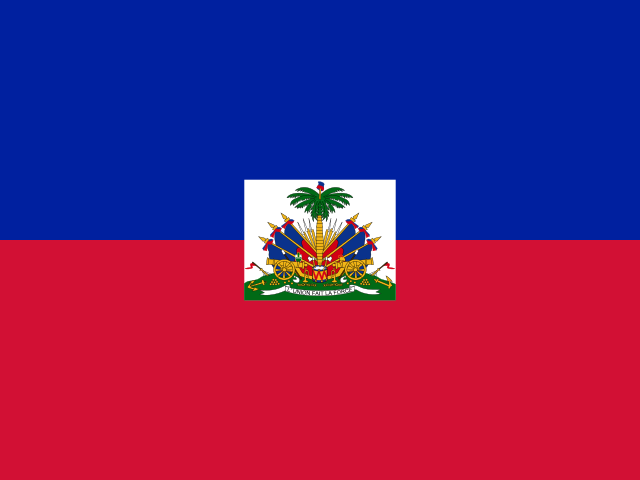
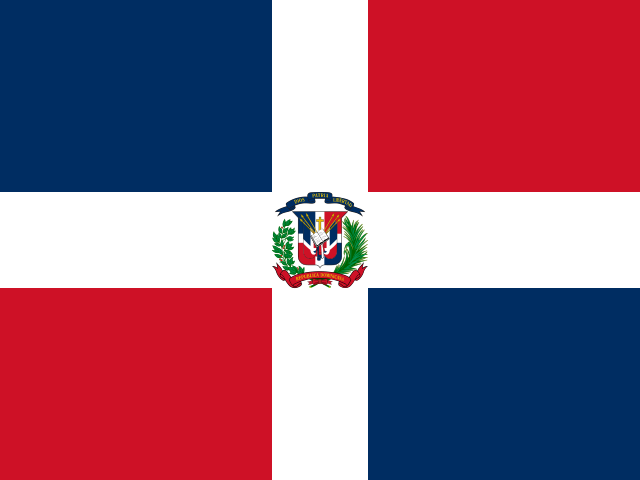
A football match between the Dominican Republic and Haiti in the CONCACAF Nations League was marred by fan clashes, with Haitian fans forcing their way into the stadium and damaging a gate.
In response, the Dominican Republic has banned Haiti from its stadiums.
*AI-generated summary of publicly available data. This is not an official statement of any party.
*AI-generated summary of publicly available statements and reporting. This is not an official statement of this party.
Supporters of the Dominican Republic argue the stadium ban protects national sovereignty and cultural identity, maintaining that unchecked Haitian fan incursions violate their homeland's borders and right to self-determination.
Supporters of the Dominican Republic frame the stadium ban as cultural self-protection, arguing that safeguarding national venues and matchday identity is a sovereign right after Haitian fans forced entry and damaged a gate in Santo Domingo.
Supporters of the Dominican Republic counter that a shared island does not mean shared sovereignty, and that protecting their own cultural and national identity at the stadium takes priority over bridge-building gestures.
Supporters of the Dominican Republic argue that, under international sporting law, host nations may restrict entry after a breach of stadium security, and they maintain the ban is a lawful, proportionate response to protect fans and property.
Supporters of the Dominican Republic argue the stadium ban is a lawful exercise of sovereign authority over domestic venues after Haitian fans forced entry and damaged a gate.
Supporters of Dominican Republic counter that the ban is a lawful security measure under stadium and immigration rules, not a judicial penalty, so due-process and proportionality principles do not apply to non-citizens at the border.
Supporters of the Dominican Republic argue the stadium ban is leverage, not spite: control the venue, control the terms, and force Haiti to negotiate security guarantees before any return.
Supporters of the Dominican Republic argue the ban is leverage: Haiti needs stadium access for fixtures, so Santo Domingo trades it for security guarantees, treating the gate breach as cause to set terms rather than seek redress.
Supporters of the Dominican Republic counter that sovereignty means the state alone decides who enters, and that framing border control as mere theater simply pressures a weaker state to surrender its own security calculus.
Supporters of the Dominican Republic argue that a nation has a moral duty to protect spectators and property, so barring Haiti from its stadiums is a justified response to the gate damage and forced entry.
Supporters of the Dominican Republic argue the ban is a moral duty to protect fans after Haitian supporters forced gates and damaged property, insisting safety and accountability must come before competition.
Supporters of Dominican Republic counter that moral responsibility extends beyond individuals, since a nation's team represents its people, and allowing unchecked fan conduct to go unpunished would condone the harm done.
Supporters of the Dominican Republic argue that sovereign nations may set boundaries for order and safety, invoking the moral duty of authorities to protect spectators as a matter of justice and stewardship.
Supporters of the Dominican Republic invoke the biblical principle of lawful authority to keep order, arguing that protecting worshippers and fans from harm is a moral duty Scripture assigns to governing powers.
Supporters of Dominican Republic counter that scripture also upholds justice and order, citing Romans 13 on governing authority; they argue mercy does not nullify lawful consequences for a breach at the gate.
*AI-generated summary of publicly available statements and reporting. This is not an official statement of this party.
Supporters of Haiti argue the stadium ban unfairly punishes a nation's football culture for the acts of a few, insisting that sport should build bridges between neighbors rather than harden borders.
Supporters of Haiti argue the stadium ban punishes a nation's fans for one gate incident, eroding a shared Caribbean football tradition; they see the rivalry as cultural kinship, not grounds for exclusion.
Supporters of Haiti counter that Dominican sovereignty claims ring hollow while the 1929 treaty and 1936 accords bind both nations, and that anti-Haitian campaigns, not fans, erode the island's shared cultural fabric.
Supporters of Haiti argue the blanket stadium ban is collective punishment, holding all Haitian fans liable for a few, and thus violates basic due-process and proportionality principles.
Supporters of Haiti argue the blanket stadium ban is legally disproportionate, punishing an entire federation and its fans for the acts of a few rather than the individuals responsible.
Supporters of Haiti counter that banning an entire team exceeds what FIFA disciplinary rules authorize, since sanctions must target the responsible federation, not fans or players who committed no breach.
Supporters of Haiti argue the ban is political theater, not security: the Dominican Republic gains leverage over a weaker neighbor while casting Haitian fans as the threat.
Supporters of Haiti argue the ban is a pretext: Dominican officials seized a crowd-control incident to bar a rival, and they maintain that security rhetoric now masks power, not safety.
Supporters of Haiti counter that leverage cuts both ways: denying the venue hands Haiti a grievance to internationalize, framing the Dominican Republic as the obstacle and forcing outsiders to pressure Santo Domingo instead.
Supporters of Haiti argue that banning an entire nation's team for the acts of some fans is a collective punishment that unfairly targets players and innocent supporters.
Supporters of Haiti argue that banning an entire nation's team for the actions of some fans is a collective punishment that violates fair play, holding innocent players and supporters accountable for conduct they did not commit.
Supporters of Haiti counter that a moral duty to protect property cannot justify collective punishment, since barring an entire nation punishes innocent fans for damage caused by a few.
Supporters of Haiti invoke the shared human dignity of fans, arguing that barring a nation's team from stadiums over a gate incident contradicts the forgiveness and mercy their faith demands.
Supporters of Haiti, invoking the faith shared across Hispaniola, argue the stadium ban punishes a whole nation for a few fans and that forgiveness and neighborly charity should guide the response.
Supporters of Haiti counter that faith commands hospitality to the stranger, so a Christian duty to shelter those fleeing disorder outweighs a border drawn for order and safety.
AI-generated summary of publicly available statements and reporting. This is not an official statement of this party.
Supporters of the Dominican Republic argue the stadium ban protects national sovereignty and cultural identity, maintaining that unchecked Haitian fan incursions violate their homeland's borders and right to self-determination.
Supporters of the Dominican Republic frame the stadium ban as cultural self-protection, arguing that safeguarding national venues and matchday identity is a sovereign right after Haitian fans forced entry and damaged a gate in Santo Domingo.
Supporters of the Dominican Republic counter that a shared island does not mean shared sovereignty, and that protecting their own cultural and national identity at the stadium takes priority over bridge-building gestures.
Supporters of the Dominican Republic argue that, under international sporting law, host nations may restrict entry after a breach of stadium security, and they maintain the ban is a lawful, proportionate response to protect fans and property.
Supporters of the Dominican Republic argue the stadium ban is a lawful exercise of sovereign authority over domestic venues after Haitian fans forced entry and damaged a gate.
Supporters of Dominican Republic counter that the ban is a lawful security measure under stadium and immigration rules, not a judicial penalty, so due-process and proportionality principles do not apply to non-citizens at the border.
Supporters of the Dominican Republic argue the stadium ban is leverage, not spite: control the venue, control the terms, and force Haiti to negotiate security guarantees before any return.
Supporters of the Dominican Republic argue the ban is leverage: Haiti needs stadium access for fixtures, so Santo Domingo trades it for security guarantees, treating the gate breach as cause to set terms rather than seek redress.
Supporters of the Dominican Republic counter that sovereignty means the state alone decides who enters, and that framing border control as mere theater simply pressures a weaker state to surrender its own security calculus.
Supporters of the Dominican Republic argue that a nation has a moral duty to protect spectators and property, so barring Haiti from its stadiums is a justified response to the gate damage and forced entry.
Supporters of the Dominican Republic argue the ban is a moral duty to protect fans after Haitian supporters forced gates and damaged property, insisting safety and accountability must come before competition.
Supporters of Dominican Republic counter that moral responsibility extends beyond individuals, since a nation's team represents its people, and allowing unchecked fan conduct to go unpunished would condone the harm done.
Supporters of the Dominican Republic argue that sovereign nations may set boundaries for order and safety, invoking the moral duty of authorities to protect spectators as a matter of justice and stewardship.
Supporters of the Dominican Republic invoke the biblical principle of lawful authority to keep order, arguing that protecting worshippers and fans from harm is a moral duty Scripture assigns to governing powers.
Supporters of Dominican Republic counter that scripture also upholds justice and order, citing Romans 13 on governing authority; they argue mercy does not nullify lawful consequences for a breach at the gate.
Supporters of Haiti argue the stadium ban unfairly punishes a nation's football culture for the acts of a few, insisting that sport should build bridges between neighbors rather than harden borders.
Supporters of Haiti argue the stadium ban punishes a nation's fans for one gate incident, eroding a shared Caribbean football tradition; they see the rivalry as cultural kinship, not grounds for exclusion.
Supporters of Haiti counter that Dominican sovereignty claims ring hollow while the 1929 treaty and 1936 accords bind both nations, and that anti-Haitian campaigns, not fans, erode the island's shared cultural fabric.
Supporters of Haiti argue the blanket stadium ban is collective punishment, holding all Haitian fans liable for a few, and thus violates basic due-process and proportionality principles.
Supporters of Haiti argue the blanket stadium ban is legally disproportionate, punishing an entire federation and its fans for the acts of a few rather than the individuals responsible.
Supporters of Haiti counter that banning an entire team exceeds what FIFA disciplinary rules authorize, since sanctions must target the responsible federation, not fans or players who committed no breach.
Supporters of Haiti argue the ban is political theater, not security: the Dominican Republic gains leverage over a weaker neighbor while casting Haitian fans as the threat.
Supporters of Haiti argue the ban is a pretext: Dominican officials seized a crowd-control incident to bar a rival, and they maintain that security rhetoric now masks power, not safety.
Supporters of Haiti counter that leverage cuts both ways: denying the venue hands Haiti a grievance to internationalize, framing the Dominican Republic as the obstacle and forcing outsiders to pressure Santo Domingo instead.
Supporters of Haiti argue that banning an entire nation's team for the acts of some fans is a collective punishment that unfairly targets players and innocent supporters.
Supporters of Haiti argue that banning an entire nation's team for the actions of some fans is a collective punishment that violates fair play, holding innocent players and supporters accountable for conduct they did not commit.
Supporters of Haiti counter that a moral duty to protect property cannot justify collective punishment, since barring an entire nation punishes innocent fans for damage caused by a few.
Supporters of Haiti invoke the shared human dignity of fans, arguing that barring a nation's team from stadiums over a gate incident contradicts the forgiveness and mercy their faith demands.
Supporters of Haiti, invoking the faith shared across Hispaniola, argue the stadium ban punishes a whole nation for a few fans and that forgiveness and neighborly charity should guide the response.
Supporters of Haiti counter that faith commands hospitality to the stranger, so a Christian duty to shelter those fleeing disorder outweighs a border drawn for order and safety.
Haitian fans forced their way through entrances and damaged a gate at the teams' CONCACAF Nations League match in Santo Domingo.
The Dominican Republic announced a ban on Haiti from its stadiums following the fan clash.