Israel
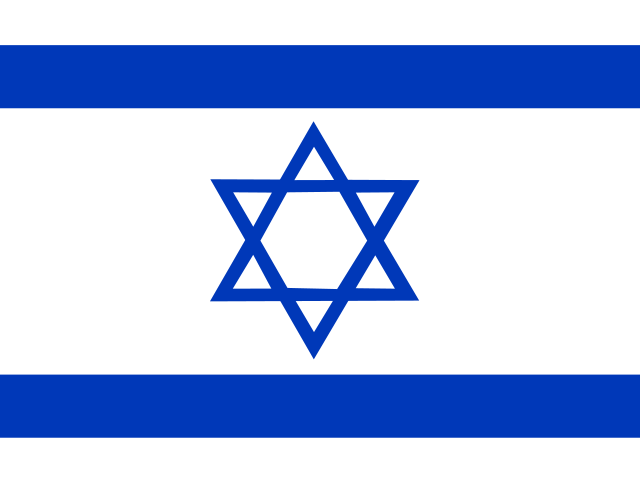
VS
Palestine
?
No actors in this side.
No actors in this side.
Israel is a sovereign state whose prime minister, Benjamin Netanyahu, has led the country through a prolonged conflict with Hamas, the Palestinian militant group that governs the Gaza Strip.
Palestine refers to the Palestinian national movement and the Palestinian Authority, which exercises limited self-rule in parts of the West Bank and seeks international recognition of Palestinian statehood.
Both parties are central actors in a decades-long dispute over territory, sovereignty, and security in the Middle East.
The conflict between Israel and Palestine is rooted in competing claims to the same land and mutual security concerns.
The current phase of the war began on October 7, 2023, when Hamas launched an assault on southern Israel that killed nearly 1,200 people and took about 250 civilians hostage, prompting a large-scale Israeli military campaign in Gaza.
Successive Israeli attacks on Gaza have demonstrated that Palestinian militant groups rebuild their military capabilities after major Israeli operations, while international bodies and governments remain divided over how to treat Israel and the Palestinians.
A ceasefire ending the war was welcomed by supporters of both Israel and Palestine in October 2025, though the underlying dispute over borders, settlements, and political rights remains unresolved.
Proposals for a lasting settlement have included using the 1967 armistice line as the border of a Palestinian state, with areas of high Jewish settlement concentration annexed to Israel.
*AI-generated summary of publicly available data. This is not an official statement of any party.
*AI-generated summary of publicly available statements and reporting. This is not an official statement of this party.
Supporters of Israel argue that the Prime Minister's UN appearance reflects a cultural tradition of national leaders engaging international bodies directly, even amid legal disputes, rather than avoiding scrutiny.
Supporters of Israel argue the UN podium honors a member state's right to speak, not a verdict on its leader, and note that Israel's 1948 founding followed UN partition—so they frame attendance as continuity, not defiance.
Supporters of Israel counter that the UN's welcome reflects a long diplomatic tradition of engaging member states' leaders, not a judgment on Palestinian statehood, which they note has never been recognized as a sovereign state in the same forum.
Supporters of Israel argue that the ICC warrant lacks jurisdiction, since Israel is not a party to the Rome Statute, and that a UN member's right to address the General Assembly stands independent of any court's claims.
Supporters of Israel argue that the ICC warrant lacks jurisdiction because Israel is not a party to the Rome Statute, so the Prime Minister's UN appearance is lawful and consistent with sovereign immunity under international law.
Supporters of Israel counter that the ICC warrant is legally disputed, as Israel isn't a party to the Rome Statute and the court lacks jurisdiction, so hosting a leader isn't unequal law but rejection of overreach.
Supporters of Israel argue the UN stage proves power, not principle: a sitting premier with an ICC warrant still commands the hall, while Palestine's cause wins rhetoric but not leverage.
Supporters of Israel argue the in-person UN address proves power, not law, governs: a state with enough leverage can ignore an ICC warrant, while Palestine's cause stays symbolic.
Supporters of Israel counter that the UN's invitation reflects states pursuing their own interests, not proof of lawlessness—hosting a leader serves diplomacy, and selective enforcement is the norm every nation exploits.
Supporters of Israel argue that a nation defending itself against terrorism deserves to be heard at the UN, and that the ICC warrant reflects politicized courts over legitimate self-defense.
Supporters of Israel argue that a nation defending itself against terrorism deserves a UN platform, and that the ICC warrant reflects politicized courts over legitimate security needs.
Supporters of Israel counter that moral standing at the UN is earned by democratic accountability, not by parity of treatment, and that Israel's leader answers to voters while Palestinian leadership does not.
Supporters of Israel argue the Prime Minister's UN appearance affirms Israel's covenant claim to the land and its right to self-defense under divine law, which they hold above the ICC's authority.
Supporters of Israel argue that Israel's return to its ancestral homeland is fulfillment of biblical covenant, so its leader's UN appearance affirms divine right over international warrants.
Supporters of Israel counter that the UN's handling of the Prime Minister reflects a sovereign state's standing, not religious bias, since Israel's claim to the land rests on the biblical covenant and is not subject to ICC jurisdiction.
*AI-generated summary of publicly available statements and reporting. This is not an official statement of this party.
Supporters of Palestine argue the UN's welcome for Israel's Prime Minister, despite an ICC warrant, shows Palestinian identity and statehood are treated as lesser under international law.
Supporters of Palestine argue the UN's willingness to host Israel's PM—despite an ICC warrant—while Palestine remains sidelined reflects a cultural double standard that denies Palestinians equal standing and dignity.
Supporters of Palestine counter that this framing ignores the cultural erasure of Palestinian national identity, arguing that international recognition of Israel's leader legitimizes a narrative built on displacement rather than sovereignty.
Supporters of Palestine argue the UN's willingness to host Israel's Prime Minister, despite an ICC arrest warrant, proves international law is applied unequally while Palestine faces exclusion.
Supporters of Palestine argue the UN’s legal order is applied unevenly, since Israel’s Prime Minister addressed the General Assembly despite an ICC arrest warrant while Palestine remains excluded from full state membership.
Supporters of Palestine counter that the ICC's jurisdiction was triggered by the State of Palestine's own accession to the Rome Statute, so Israel's non-membership does not bar the court's reach.
Supporters of Palestine argue the UN's willingness to host Israel's PM despite an ICC warrant exposes how great-power protection, not law, governs international treatment.
Supporters of Palestine argue the UN's willingness to host Israel's PM despite an ICC warrant proves international law bends to power, not principle—so they see pressure campaigns, not legal forums, as their only real lever.
Supporters of Palestine counter that the ICC warrant itself signals leverage, not weakness: international law constrains Israel's leaders while Palestine's recognition gains ground, proving principle can corner power.
Supporters of Palestine argue that a global order applying rules unevenly — letting Israel's Prime Minister speak at the UN despite an ICC arrest warrant while Palestine is denied equal standing — is morally indefensible.
Supporters of Palestine argue that Israel's Prime Minister speaking at the UN despite an ICC arrest warrant shows a moral double standard, where international law binds Palestine but not Israel.
Supporters of Palestine counter that no legal process can sanctify a death toll exceeding 40,000, arguing that moral legitimacy at the UN requires accountability for civilian suffering, not just security claims.
Supporters of Palestine argue the UN's welcome of Israel's Prime Minister, despite an ICC warrant, shows a religious double standard, since Palestine's representatives face restrictions; they see this as denying Palestinians equal standing.
Supporters of Palestine argue that Israel's UN reception despite an ICC warrant exposes a double standard, and that religious custodianship of Jerusalem's holy sites must be respected under international law.
Supporters of Palestine counter that the Abrahamic covenant is superseded in Islamic theology, since the Quran names Ishmael's line as heirs, and that divine law cannot override the ICC's temporal jurisdiction over war crimes.
AI-generated summary of publicly available statements and reporting. This is not an official statement of this party.
Supporters of Israel argue that the Prime Minister's UN appearance reflects a cultural tradition of national leaders engaging international bodies directly, even amid legal disputes, rather than avoiding scrutiny.
Supporters of Israel argue the UN podium honors a member state's right to speak, not a verdict on its leader, and note that Israel's 1948 founding followed UN partition—so they frame attendance as continuity, not defiance.
Supporters of Israel counter that the UN's welcome reflects a long diplomatic tradition of engaging member states' leaders, not a judgment on Palestinian statehood, which they note has never been recognized as a sovereign state in the same forum.
Supporters of Israel argue that the ICC warrant lacks jurisdiction, since Israel is not a party to the Rome Statute, and that a UN member's right to address the General Assembly stands independent of any court's claims.
Supporters of Israel argue that the ICC warrant lacks jurisdiction because Israel is not a party to the Rome Statute, so the Prime Minister's UN appearance is lawful and consistent with sovereign immunity under international law.
Supporters of Israel counter that the ICC warrant is legally disputed, as Israel isn't a party to the Rome Statute and the court lacks jurisdiction, so hosting a leader isn't unequal law but rejection of overreach.
Supporters of Israel argue the UN stage proves power, not principle: a sitting premier with an ICC warrant still commands the hall, while Palestine's cause wins rhetoric but not leverage.
Supporters of Israel argue the in-person UN address proves power, not law, governs: a state with enough leverage can ignore an ICC warrant, while Palestine's cause stays symbolic.
Supporters of Israel counter that the UN's invitation reflects states pursuing their own interests, not proof of lawlessness—hosting a leader serves diplomacy, and selective enforcement is the norm every nation exploits.
Supporters of Israel argue that a nation defending itself against terrorism deserves to be heard at the UN, and that the ICC warrant reflects politicized courts over legitimate self-defense.
Supporters of Israel argue that a nation defending itself against terrorism deserves a UN platform, and that the ICC warrant reflects politicized courts over legitimate security needs.
Supporters of Israel counter that moral standing at the UN is earned by democratic accountability, not by parity of treatment, and that Israel's leader answers to voters while Palestinian leadership does not.
Supporters of Israel argue the Prime Minister's UN appearance affirms Israel's covenant claim to the land and its right to self-defense under divine law, which they hold above the ICC's authority.
Supporters of Israel argue that Israel's return to its ancestral homeland is fulfillment of biblical covenant, so its leader's UN appearance affirms divine right over international warrants.
Supporters of Israel counter that the UN's handling of the Prime Minister reflects a sovereign state's standing, not religious bias, since Israel's claim to the land rests on the biblical covenant and is not subject to ICC jurisdiction.
Supporters of Palestine argue the UN's welcome for Israel's Prime Minister, despite an ICC warrant, shows Palestinian identity and statehood are treated as lesser under international law.
Supporters of Palestine argue the UN's willingness to host Israel's PM—despite an ICC warrant—while Palestine remains sidelined reflects a cultural double standard that denies Palestinians equal standing and dignity.
Supporters of Palestine counter that this framing ignores the cultural erasure of Palestinian national identity, arguing that international recognition of Israel's leader legitimizes a narrative built on displacement rather than sovereignty.
Supporters of Palestine argue the UN's willingness to host Israel's Prime Minister, despite an ICC arrest warrant, proves international law is applied unequally while Palestine faces exclusion.
Supporters of Palestine argue the UN’s legal order is applied unevenly, since Israel’s Prime Minister addressed the General Assembly despite an ICC arrest warrant while Palestine remains excluded from full state membership.
Supporters of Palestine counter that the ICC's jurisdiction was triggered by the State of Palestine's own accession to the Rome Statute, so Israel's non-membership does not bar the court's reach.
Supporters of Palestine argue the UN's willingness to host Israel's PM despite an ICC warrant exposes how great-power protection, not law, governs international treatment.
Supporters of Palestine argue the UN's willingness to host Israel's PM despite an ICC warrant proves international law bends to power, not principle—so they see pressure campaigns, not legal forums, as their only real lever.
Supporters of Palestine counter that the ICC warrant itself signals leverage, not weakness: international law constrains Israel's leaders while Palestine's recognition gains ground, proving principle can corner power.
Supporters of Palestine argue that a global order applying rules unevenly — letting Israel's Prime Minister speak at the UN despite an ICC arrest warrant while Palestine is denied equal standing — is morally indefensible.
Supporters of Palestine argue that Israel's Prime Minister speaking at the UN despite an ICC arrest warrant shows a moral double standard, where international law binds Palestine but not Israel.
Supporters of Palestine counter that no legal process can sanctify a death toll exceeding 40,000, arguing that moral legitimacy at the UN requires accountability for civilian suffering, not just security claims.
Supporters of Palestine argue the UN's welcome of Israel's Prime Minister, despite an ICC warrant, shows a religious double standard, since Palestine's representatives face restrictions; they see this as denying Palestinians equal standing.
Supporters of Palestine argue that Israel's UN reception despite an ICC warrant exposes a double standard, and that religious custodianship of Jerusalem's holy sites must be respected under international law.
Supporters of Palestine counter that the Abrahamic covenant is superseded in Islamic theology, since the Quran names Ishmael's line as heirs, and that divine law cannot override the ICC's temporal jurisdiction over war crimes.
Israel’s Prime Minister addressed the UN General Assembly in person, despite having an ICC arrest warrant.
Supporters of both Israel and Palestine welcomed the end of the war following a ceasefire agreement.
Hamas launched an attack on southern Israel that killed nearly 1,200 people and took about 250 civilians hostage, marking the start of the current war.
Israeli prime minister Benjamin Netanyahu announced a crackdown on Palestinian political leaders in Israel, blaming them for unrest.