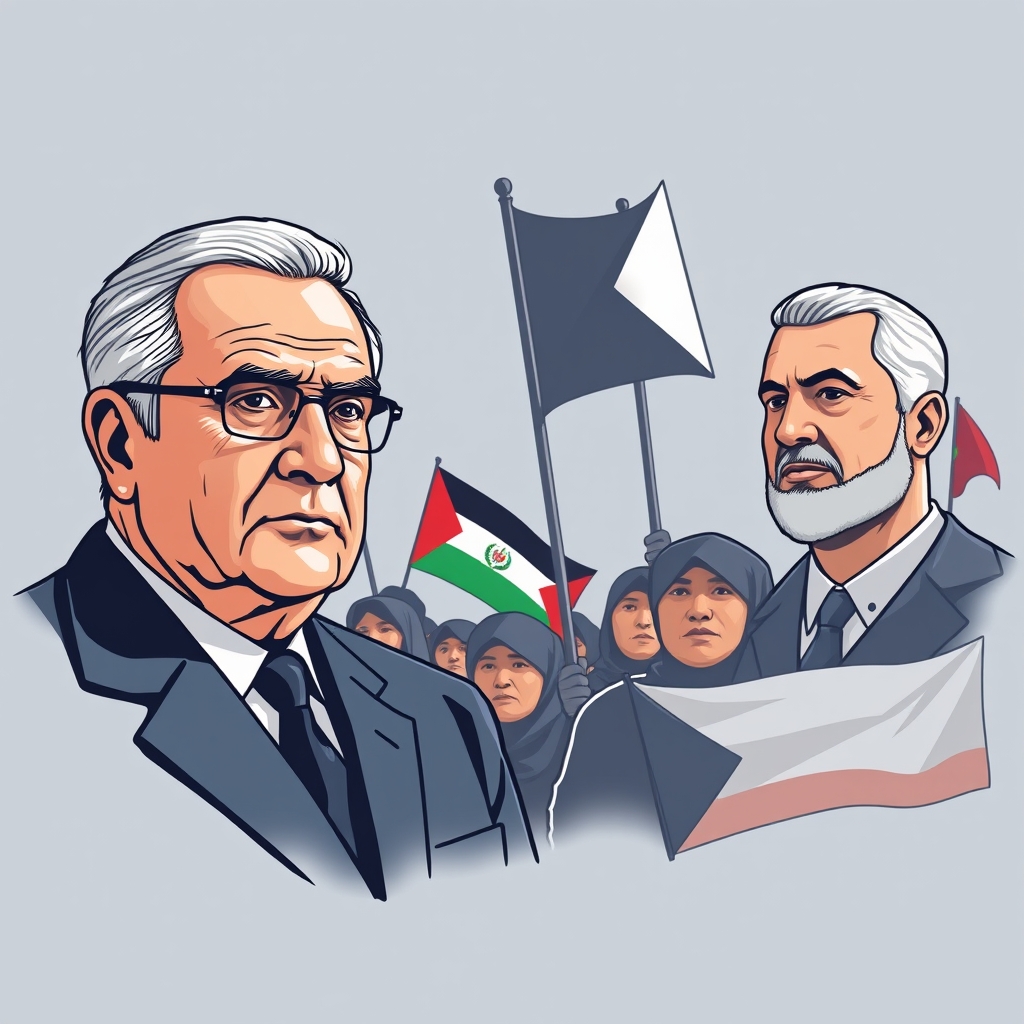
Pro-Palestinian protesters
VS
Law enforcement
Pro-Palestinian protesters are demonstrators who oppose the policies of Israeli Prime Minister Benjamin Netanyahu and gathered outside United Nations headquarters during his speech.
Law enforcement refers to the organized government personnel responsible for enforcing laws, protecting lives and property, and maintaining public order, including through arrests when laws are violated.
The two sides came into conflict because the protesters sought to express opposition to Netanyahu's policies through a demonstration outside the UN, while law enforcement was tasked with maintaining order and enforcing laws at the event.
The confrontation resulted in dozens of arrests, reflecting the recurring tension between demonstrators asserting their right to protest and authorities carrying out their duty to regulate public gatherings.
*AI-generated summary of publicly available data. This is not an official statement of any party.
*AI-generated summary of publicly available statements and reporting. This is not an official statement of this party.
Supporters of the Pro-Palestinian protesters argue that mass arrests outside the UN echo a long history of dissent being policed rather than heard, and they maintain that protest itself is a protected cultural tradition.
Supporters of Pro-Palestinian protesters argue that mass arrests outside the UN echo a long historical pattern of states criminalizing anti-war dissent, citing past movements where civil disobedience was later vindicated.
Supporters of Pro-Palestinian protesters counter that this "inherited norm" was never neutral—it has historically shielded state violence while criminalizing dissent, so honoring it now feels like complicity, not respect.
Supporters of Pro-Palestinian protesters argue the arrests raise legal questions about whether peaceful assembly near the UN was lawfully restricted, and they maintain that protest rights must be protected absent clear evidence of violence.
Supporters of the Pro-Palestinian protesters argue that arresting demonstrators outside the UN raises legal questions about whether peaceful assembly near a venue where Netanyahu spoke was criminalized, and they maintain that the right to protest must be protected.
Supporters of Pro-Palestinian protesters counter that arrests targeting peaceful demonstrators outside the UN raise legal questions under First Amendment protections, since assembly and speech remain lawful absent specific evidence of violence.
Supporters of Pro-Palestinian protesters argue the arrests were a calculated show of authority: by jailing dozens at Netanyahu's UN stage, authorities signal that visible dissent costs more than silence, regardless of the message.
Supporters of the protesters argue the arrests were a calculated show of force: by timing crackdowns to Netanyahu's UN appearance, authorities signal that visible dissent costs more than it persuades.
Supporters of Pro-Palestinian protesters counter that visible enforcement manufactures the escalation it claims to deter, and that arresting demonstrators hands organizers the sympathy and recruitment that quiet dispersal would deny them.
Supporters of the Pro-Palestinian protesters argue that history judges those who criminalize peaceful dissent harshly, and that arresting demonstrators outside a UN speech echoes past suppression of moral witness.
Supporters of the pro-Palestinian protesters argue that arrests outside the UN recall a long history of protest movements whose moral claims were later vindicated, so silencing them now risks repeating past injustices.
Supporters of Pro-Palestinian protesters counter that history judges enforcers by what they defended, not by their orderliness, and that suppressing voices outside the UN echoes past moral failures later condemned.
Supporters of Pro-Palestinian protesters invoke scripture's call to seek justice and defend the oppressed, arguing their witness outside the UN is a moral duty that law enforcement should not silence.
Supporters of Pro-Palestinian protesters invoke scripture's call to seek justice and defend the oppressed, arguing their witness outside the UN is a moral duty that law enforcement should not silence through arrest.
Supporters of Pro-Palestinian protesters counter that scripture's call to obey governing powers does not sanctify every state, citing Exodus's midwives and the apostles' refusal to cease preaching as proof that divine law outranks unjust human commands.
*AI-generated summary of publicly available statements and reporting. This is not an official statement of this party.
Supporters of law enforcement argue that protecting a visiting head of state's UN address reflects a culture of respect for diplomatic order, and that arrests were a measured means of preserving that inherited norm.
Supporters of law enforcement argue that maintaining public order near the UN reflects society's inherited commitment to civic peace, where lawful assembly is protected but disruption of a head of state's address crosses a cultural line.
Supporters of law enforcement counter that orderly civic life depends on shared rules, not the sanctioning of disruption, and that protecting public order is itself an inherited cultural tradition.
Supporters of law enforcement argue that arrests outside the UN were a lawful, necessary step to protect order, safety, and the rights of others during Netanyahu's speech.
Supporters of law enforcement argue that arrests outside the UN were legally justified to maintain order and protect a diplomatic event, citing the state's lawful authority to enforce permit and security rules equally.
Supporters of Law enforcement counter that courts, not officers, resolve whether assembly restrictions were lawful, and that probable-cause arrests are valid absent violence.
Supporters of law enforcement argue the UN perimeter arrests project state authority: order defines whose speech proceeds, and visible enforcement deters escalation, making protesters' anger itself the lever justifying control.
Supporters of law enforcement argue that visible arrests project state authority, signaling that disruptive protest near the UN carries real costs and deterring escalation.
Supporters of law enforcement counter that selective enforcement is itself the message: the state jails those who break permit and safety rules to show that order, not ideology, decides who faces consequences.
Supporters of law enforcement argue that arresting protesters outside the UN upholds the moral duty to protect public safety and free movement, maintaining that orderly enforcement, not disruption, is what lets democratic institutions function.
Supporters of law enforcement argue that arrests outside the UN were a moral necessity: protest leaders chose disruption over lawful assembly, and upholding neutral rules protects everyone's right to speak safely.
Supporters of Law enforcement counter that moral witness does not exempt anyone from neutral laws; they argue that enforcing time, place, and manner rules protects the same free speech for all, and that selective non-enforcement would itself be an injustice.
Supporters of law enforcement argue that preserving order outside the UN reflects a religious duty to honor lawful authority, citing scripture's call to respect governing powers as ordained for peace.
Supporters of law enforcement argue that preserving order around the UN is a religious duty, since scripture commands respect for lawful authority; they maintain that arrests upheld peace during Netanyahu's speech.
Supporters of Law enforcement counter that scripture also charges authorities to keep public order and punish wrongdoing, so they see their duty to protect the UN’s security as itself a moral obligation, not a silencing of faith.
AI-generated summary of publicly available statements and reporting. This is not an official statement of this party.
Supporters of the Pro-Palestinian protesters argue that mass arrests outside the UN echo a long history of dissent being policed rather than heard, and they maintain that protest itself is a protected cultural tradition.
Supporters of Pro-Palestinian protesters argue that mass arrests outside the UN echo a long historical pattern of states criminalizing anti-war dissent, citing past movements where civil disobedience was later vindicated.
Supporters of Pro-Palestinian protesters counter that this "inherited norm" was never neutral—it has historically shielded state violence while criminalizing dissent, so honoring it now feels like complicity, not respect.
Supporters of Pro-Palestinian protesters argue the arrests raise legal questions about whether peaceful assembly near the UN was lawfully restricted, and they maintain that protest rights must be protected absent clear evidence of violence.
Supporters of the Pro-Palestinian protesters argue that arresting demonstrators outside the UN raises legal questions about whether peaceful assembly near a venue where Netanyahu spoke was criminalized, and they maintain that the right to protest must be protected.
Supporters of Pro-Palestinian protesters counter that arrests targeting peaceful demonstrators outside the UN raise legal questions under First Amendment protections, since assembly and speech remain lawful absent specific evidence of violence.
Supporters of Pro-Palestinian protesters argue the arrests were a calculated show of authority: by jailing dozens at Netanyahu's UN stage, authorities signal that visible dissent costs more than silence, regardless of the message.
Supporters of the protesters argue the arrests were a calculated show of force: by timing crackdowns to Netanyahu's UN appearance, authorities signal that visible dissent costs more than it persuades.
Supporters of Pro-Palestinian protesters counter that visible enforcement manufactures the escalation it claims to deter, and that arresting demonstrators hands organizers the sympathy and recruitment that quiet dispersal would deny them.
Supporters of the Pro-Palestinian protesters argue that history judges those who criminalize peaceful dissent harshly, and that arresting demonstrators outside a UN speech echoes past suppression of moral witness.
Supporters of the pro-Palestinian protesters argue that arrests outside the UN recall a long history of protest movements whose moral claims were later vindicated, so silencing them now risks repeating past injustices.
Supporters of Pro-Palestinian protesters counter that history judges enforcers by what they defended, not by their orderliness, and that suppressing voices outside the UN echoes past moral failures later condemned.
Supporters of Pro-Palestinian protesters invoke scripture's call to seek justice and defend the oppressed, arguing their witness outside the UN is a moral duty that law enforcement should not silence.
Supporters of Pro-Palestinian protesters invoke scripture's call to seek justice and defend the oppressed, arguing their witness outside the UN is a moral duty that law enforcement should not silence through arrest.
Supporters of Pro-Palestinian protesters counter that scripture's call to obey governing powers does not sanctify every state, citing Exodus's midwives and the apostles' refusal to cease preaching as proof that divine law outranks unjust human commands.
Supporters of law enforcement argue that protecting a visiting head of state's UN address reflects a culture of respect for diplomatic order, and that arrests were a measured means of preserving that inherited norm.
Supporters of law enforcement argue that maintaining public order near the UN reflects society's inherited commitment to civic peace, where lawful assembly is protected but disruption of a head of state's address crosses a cultural line.
Supporters of law enforcement counter that orderly civic life depends on shared rules, not the sanctioning of disruption, and that protecting public order is itself an inherited cultural tradition.
Supporters of law enforcement argue that arrests outside the UN were a lawful, necessary step to protect order, safety, and the rights of others during Netanyahu's speech.
Supporters of law enforcement argue that arrests outside the UN were legally justified to maintain order and protect a diplomatic event, citing the state's lawful authority to enforce permit and security rules equally.
Supporters of Law enforcement counter that courts, not officers, resolve whether assembly restrictions were lawful, and that probable-cause arrests are valid absent violence.
Supporters of law enforcement argue the UN perimeter arrests project state authority: order defines whose speech proceeds, and visible enforcement deters escalation, making protesters' anger itself the lever justifying control.
Supporters of law enforcement argue that visible arrests project state authority, signaling that disruptive protest near the UN carries real costs and deterring escalation.
Supporters of law enforcement counter that selective enforcement is itself the message: the state jails those who break permit and safety rules to show that order, not ideology, decides who faces consequences.
Supporters of law enforcement argue that arresting protesters outside the UN upholds the moral duty to protect public safety and free movement, maintaining that orderly enforcement, not disruption, is what lets democratic institutions function.
Supporters of law enforcement argue that arrests outside the UN were a moral necessity: protest leaders chose disruption over lawful assembly, and upholding neutral rules protects everyone's right to speak safely.
Supporters of Law enforcement counter that moral witness does not exempt anyone from neutral laws; they argue that enforcing time, place, and manner rules protects the same free speech for all, and that selective non-enforcement would itself be an injustice.
Supporters of law enforcement argue that preserving order outside the UN reflects a religious duty to honor lawful authority, citing scripture's call to respect governing powers as ordained for peace.
Supporters of law enforcement argue that preserving order around the UN is a religious duty, since scripture commands respect for lawful authority; they maintain that arrests upheld peace during Netanyahu's speech.
Supporters of Law enforcement counter that scripture also charges authorities to keep public order and punish wrongdoing, so they see their duty to protect the UN’s security as itself a moral obligation, not a silencing of faith.
Dozens of pro-Palestinian protesters were arrested near UN headquarters during Israeli Prime Minister Benjamin Netanyahu's speech.