Algeria
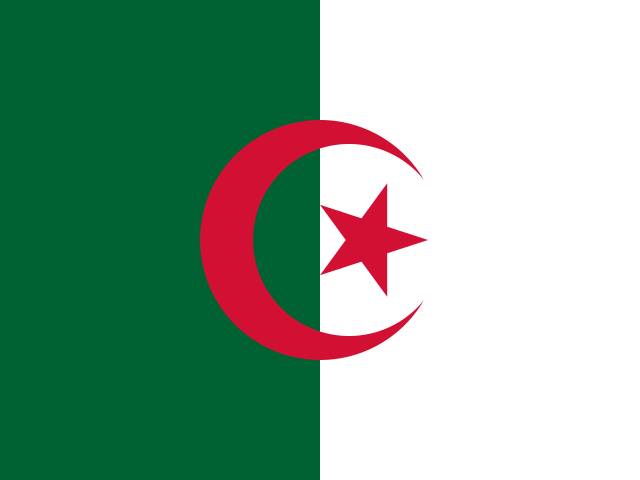
VS
Morocco
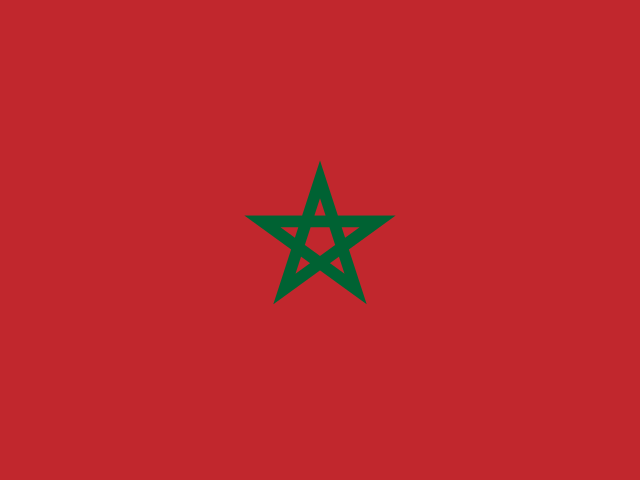
Morocco and Algeria are neighboring countries in North Africa with a long history of rivalry, including a significant dispute over the Western Sahara territory.
Their relations have been tense for decades, with Algeria supporting the Polisario Front's push for independence in Western Sahara, while Morocco claims the territory as its own.
The rivalry has also extended into sports, particularly football, where the two nations have competed against each other in numerous matches since their first meeting in 1965.
The conflict between Morocco and Algeria is rooted in the Western Sahara dispute, but it has also been fueled by other issues.
In August 2021, Algeria severed diplomatic ties with Morocco, accusing it of supporting the Movement for the Self-Determination of Kabylia, a separatist group in Algeria.
This breakdown in relations has affected regional cooperation and has been reflected in the sporting arena, where matches between the two countries carry significant political weight.
The rivalry has recently played out in women's football, with Morocco defeating Algeria 1-0 in a Women's Africa Cup of Nations match in 2026.
This victory helped Morocco advance in the tournament, highlighting how the sporting rivalry continues to be a venue for national pride and competition between the two nations.
*AI-generated summary of publicly available data. This is not an official statement of any party.
*AI-generated summary of publicly available statements and reporting. This is not an official statement of this party.
Supporters of Algeria argue that Western Sahara's cultural and historical ties to Sahrawi identity must be preserved against Moroccan expansion, rooted in longstanding regional traditions and inherited communal bonds.
Supporters of Algeria argue that the Western Sahara dispute is inseparable from the region’s cultural identity, viewing Morocco’s expansion as a threat to the established social fabric and sovereignty of local communities.
Supporters of Algeria counter that Western Sahara’s cultural identity is distinct from Morocco’s, shaped by Sahrawi tribal traditions and a history of autonomy, not shared sovereignty, challenging the notion that colonial-era maps define cultural legitimacy.
Supporters of Algeria argue that international law recognizes the Sahrawi people’s right to self-determination, and they cite UN rulings affirming this principle over Morocco’s territorial claims.
Supporters of Algeria argue that international law, including UN resolutions, affirms Western Sahara's right to self-determination, which Algeria champions.
Supporters of Algeria counter that legal sovereignty requires self-determination, not historical claims, and note the International Court of Justice’s 1975 advisory opinion, which found no territorial ties between Morocco and Western Sahara, dismissing the legality of Morocco’s.
Supporters of Algeria argue the rivalry is a calculated leverage game: Western Sahara lets Algiers check Morocco’s regional ambitions and ties to Israel, using the dispute to keep Rabat off-balance.
Supporters of Algeria argue that Morocco’s persistence on Western Sahara is a power play to dominate the Maghreb, and they see the rivalry as a calculated bid to distract from domestic crises, not a principled stand.
Supporters of Algeria counter that Rabat’s diplomatic wins are hollow, driven by financial inducements and fear, not genuine legitimacy, while Algeria’s steadfastness exposes Morocco’s dependence on foreign patronage to obscure a fragile internal economy.
Supporters of Algeria argue that the moral imperative to uphold Western Sahara's right to self-determination justifies their opposition to Morocco's claim, viewing the rivalry as a principled stand against occupation.
Supporters of Algeria argue that self-determination for the Sahrawi people is a moral imperative, viewing the Western Sahara dispute as a fundamental question of decolonization and human rights that outweighs regional stability.
Supporters of Algeria counter that historical sovereignty cannot justify denying Sahrawis their own self-determination, and that development under occupation fails to address the moral harm of suppressing a people’s right to choose their future.
Supporters of Algeria argue that divine justice favors the self-determination of the Sahrawi people, citing faith as a mandate to uphold the oppressed against Morocco's claim.
Supporters of Algeria argue that divine justice favors the self-determination of the Sahrawi people, viewing their struggle as a moral duty rooted in scripture’s call to protect the oppressed.
Supporters of Algeria counter that divine law honors self-determination, and that no sacred trust justifies denying the Sahrawi people their own voice in faith and governance.
*AI-generated summary of publicly available statements and reporting. This is not an official statement of this party.
Supporters of Morocco argue that their nation’s cultural and historical ties to Western Sahara, rooted in centuries of shared sovereignty, validate its claim, contrasting with Algeria’s artificial post-colonial borders.
Supporters of Morocco argue that their nation’s claim to Western Sahara is rooted in centuries of cultural and historical ties, viewing the territory as an inseparable part of the Moroccan kingdom, a heritage they maintain predates modern colonial borders.
Supporters of Morocco counter that Western Sahara's cultural fabric is inseparable from Moroccan sovereignty, citing centuries of shared religious, tribal, and trade networks that predate colonial divisions. They argue that Sahrawi identity, as historically practiced, was never.
Supporters of Morocco argue that its claim to Western Sahara rests on legal sovereignty, citing historical ties and international recognition of its autonomy proposal as lawful under UN frameworks.
Supporters of Morocco argue that the Western Sahara dispute must be resolved under international law, pointing to Morocco’s sovereignty claims as legally grounded in historical and jurisdictional frameworks.
Supporters of Morocco counter that UN resolutions on Western Sahara prioritize territorial integrity, and the 1975 International Court of Justice opinion found no ties of sovereignty between the territory and Mauritania or Algeria, leaving Morocco’s historical claims legally.
Supporters of Morocco argue that Algeria weaponizes the Western Sahara dispute to mask its own domestic failures, and that Rabat’s diplomatic wins prove the stronger hand in this rivalry.
Supporters of Morocco argue that Algeria’s backing of the Polisario Front is a strategic shield for its own internal instability, not a principled stance. They note that Morocco’s offer of autonomy is a pragmatic gambit, while Algeria’s rivalry is a costly distraction from its.
Supporters of Morocco counter that Algeria’s leverage is self-defeating, as Rabat’s growing military and diplomatic ties—especially with Israel and the Gulf—turn that pressure into a net strategic gain. They argue Algiers’ hostility only hardens Morocco’s resolve and deepens its.
Supporters of Morocco argue that its claim to Western Sahara rests on a moral duty to restore historical sovereignty, not mere expansion, and that economic development there lifts local living standards.
Supporters of Morocco argue that its claim to Western Sahara rests on historic sovereignty and a moral duty to ensure regional stability through economic integration, not force.
Supporters of Morocco counter that self-determination must be weighed against the region's historical and cultural ties to the Moroccan crown, arguing that moral claims ignore the autonomy proposal's proven benefits for local governance and stability.
Supporters of Morocco argue that the nation’s claim to Western Sahara is rooted in centuries of religious and cultural continuity, preserving a sacred trust that Algeria’s secular rivalry disregards.
Supporters of Morocco appeal to the shared Islamic heritage of the Maghreb, arguing that Algeria's hostility undermines the ummah's unity and distracts from preserving sacred traditions in the region.
Supporters of Morocco counter that divine justice upholds the sacred bonds of sovereignty and territorial integrity, as inherited from ancestral kings and recognized by faith, not by transient political claims.
AI-generated summary of publicly available statements and reporting. This is not an official statement of this party.
Supporters of Algeria argue that Western Sahara's cultural and historical ties to Sahrawi identity must be preserved against Moroccan expansion, rooted in longstanding regional traditions and inherited communal bonds.
Supporters of Algeria argue that the Western Sahara dispute is inseparable from the region’s cultural identity, viewing Morocco’s expansion as a threat to the established social fabric and sovereignty of local communities.
Supporters of Algeria counter that Western Sahara’s cultural identity is distinct from Morocco’s, shaped by Sahrawi tribal traditions and a history of autonomy, not shared sovereignty, challenging the notion that colonial-era maps define cultural legitimacy.
Supporters of Algeria argue that international law recognizes the Sahrawi people’s right to self-determination, and they cite UN rulings affirming this principle over Morocco’s territorial claims.
Supporters of Algeria argue that international law, including UN resolutions, affirms Western Sahara's right to self-determination, which Algeria champions.
Supporters of Algeria counter that legal sovereignty requires self-determination, not historical claims, and note the International Court of Justice’s 1975 advisory opinion, which found no territorial ties between Morocco and Western Sahara, dismissing the legality of Morocco’s.
Supporters of Algeria argue the rivalry is a calculated leverage game: Western Sahara lets Algiers check Morocco’s regional ambitions and ties to Israel, using the dispute to keep Rabat off-balance.
Supporters of Algeria argue that Morocco’s persistence on Western Sahara is a power play to dominate the Maghreb, and they see the rivalry as a calculated bid to distract from domestic crises, not a principled stand.
Supporters of Algeria counter that Rabat’s diplomatic wins are hollow, driven by financial inducements and fear, not genuine legitimacy, while Algeria’s steadfastness exposes Morocco’s dependence on foreign patronage to obscure a fragile internal economy.
Supporters of Algeria argue that the moral imperative to uphold Western Sahara's right to self-determination justifies their opposition to Morocco's claim, viewing the rivalry as a principled stand against occupation.
Supporters of Algeria argue that self-determination for the Sahrawi people is a moral imperative, viewing the Western Sahara dispute as a fundamental question of decolonization and human rights that outweighs regional stability.
Supporters of Algeria counter that historical sovereignty cannot justify denying Sahrawis their own self-determination, and that development under occupation fails to address the moral harm of suppressing a people’s right to choose their future.
Supporters of Algeria argue that divine justice favors the self-determination of the Sahrawi people, citing faith as a mandate to uphold the oppressed against Morocco's claim.
Supporters of Algeria argue that divine justice favors the self-determination of the Sahrawi people, viewing their struggle as a moral duty rooted in scripture’s call to protect the oppressed.
Supporters of Algeria counter that divine law honors self-determination, and that no sacred trust justifies denying the Sahrawi people their own voice in faith and governance.
Supporters of Morocco argue that their nation’s cultural and historical ties to Western Sahara, rooted in centuries of shared sovereignty, validate its claim, contrasting with Algeria’s artificial post-colonial borders.
Supporters of Morocco argue that their nation’s claim to Western Sahara is rooted in centuries of cultural and historical ties, viewing the territory as an inseparable part of the Moroccan kingdom, a heritage they maintain predates modern colonial borders.
Supporters of Morocco counter that Western Sahara's cultural fabric is inseparable from Moroccan sovereignty, citing centuries of shared religious, tribal, and trade networks that predate colonial divisions. They argue that Sahrawi identity, as historically practiced, was never.
Supporters of Morocco argue that its claim to Western Sahara rests on legal sovereignty, citing historical ties and international recognition of its autonomy proposal as lawful under UN frameworks.
Supporters of Morocco argue that the Western Sahara dispute must be resolved under international law, pointing to Morocco’s sovereignty claims as legally grounded in historical and jurisdictional frameworks.
Supporters of Morocco counter that UN resolutions on Western Sahara prioritize territorial integrity, and the 1975 International Court of Justice opinion found no ties of sovereignty between the territory and Mauritania or Algeria, leaving Morocco’s historical claims legally.
Supporters of Morocco argue that Algeria weaponizes the Western Sahara dispute to mask its own domestic failures, and that Rabat’s diplomatic wins prove the stronger hand in this rivalry.
Supporters of Morocco argue that Algeria’s backing of the Polisario Front is a strategic shield for its own internal instability, not a principled stance. They note that Morocco’s offer of autonomy is a pragmatic gambit, while Algeria’s rivalry is a costly distraction from its.
Supporters of Morocco counter that Algeria’s leverage is self-defeating, as Rabat’s growing military and diplomatic ties—especially with Israel and the Gulf—turn that pressure into a net strategic gain. They argue Algiers’ hostility only hardens Morocco’s resolve and deepens its.
Supporters of Morocco argue that its claim to Western Sahara rests on a moral duty to restore historical sovereignty, not mere expansion, and that economic development there lifts local living standards.
Supporters of Morocco argue that its claim to Western Sahara rests on historic sovereignty and a moral duty to ensure regional stability through economic integration, not force.
Supporters of Morocco counter that self-determination must be weighed against the region's historical and cultural ties to the Moroccan crown, arguing that moral claims ignore the autonomy proposal's proven benefits for local governance and stability.
Supporters of Morocco argue that the nation’s claim to Western Sahara is rooted in centuries of religious and cultural continuity, preserving a sacred trust that Algeria’s secular rivalry disregards.
Supporters of Morocco appeal to the shared Islamic heritage of the Maghreb, arguing that Algeria's hostility undermines the ummah's unity and distracts from preserving sacred traditions in the region.
Supporters of Morocco counter that divine justice upholds the sacred bonds of sovereignty and territorial integrity, as inherited from ancestral kings and recognized by faith, not by transient political claims.
Morocco and Algeria have been at odds for decades, chiefly over the territory of Western Sahara. But their rivalry now extends far beyond the territory.
A Women's Africa Cup of Nations match between Morocco and Algeria was postponed until further notice.
Morocco defeated Algeria 1-0 in a Women's Africa Cup of Nations match, moving to the top of their group.
Morocco and Algeria drew 2-2 in a 2021 FIFA Arab Cup match, their most recent men's football encounter.
Algeria cut diplomatic relations with Morocco, accusing it of supporting the Movement for the Self-Determination of Kabylia.
Algeria and Morocco played their first football match, a friendly that ended in a 0-0 draw.
