Netanyahu
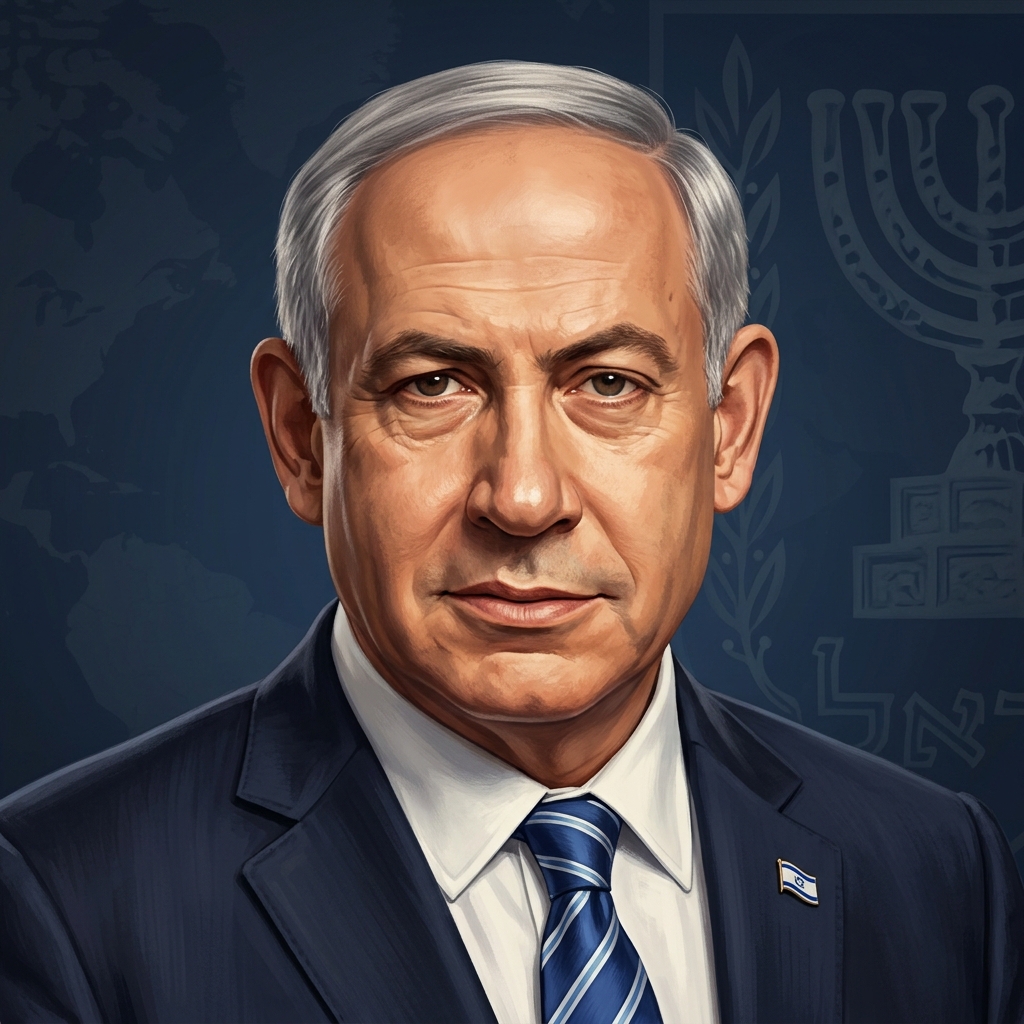
VS
Critics of Israel
?
No actors in this side.
No actors in this side.
Israeli PM Benjamin Netanyahu heads to the UN General Assembly as international criticism of Israel intensifies, with his own political future and Israel's election in focus.
The article frames the trip as a high-stakes moment for Netanyahu's domestic standing and Israel's international position.
*AI-generated summary of publicly available data. This is not an official statement of any party.
*AI-generated summary of publicly available statements and reporting. This is not an official statement of this party.
Supporters of Netanyahu argue that at the UN he defends Israel's cultural continuity and sovereign place among nations, and they maintain that steadiness abroad, not concession, preserves the nation's inherited order at a moment of pressure.
Supporters of Netanyahu argue that the UN stage is where Israel's cultural survival and historical claim to its ancestral homeland must be defended, framing his address as continuity with a national tradition of standing firm before hostile opinion.
Supporters of Netanyahu counter that invoking Jewish historical memory at the UN reflects a genuine cultural inheritance of survival, not deflection—a continuity Israeli leaders have carried since 1948.
Supporters of Netanyahu argue that as Israel's democratically elected leader, he holds a legal mandate to represent the state at the UN and defend its sovereignty against external pressure.
Supporters of Netanyahu argue that Israel's UN address is a lawful exercise of sovereign self-defense and that international criticism cannot override a state's legal right to protect its citizens.
Supporters of Netanyahu counter that the ICC warrant conflicts with the court's own complementarity principle, since Israel's independent judiciary can try alleged offenses, so the legal basis is contested.
Supporters of Netanyahu argue the UN stage is leverage: by framing Israel's security as a Western interest, he pressures allies and shores up domestic coalition power.
Supporters of Netanyahu argue the UN stage is leverage: by framing Israel's security case before a hostile chamber, he shores up domestic hardliners and reframes international criticism as pressure to be resisted, not heeded.
Supporters of Netanyahu counter that defiance at the UN is leverage itself: the coalition holds because voters reward a leader who refuses to bend abroad, making isolation a cost rivals must bear, not a concession.
Supporters of Netanyahu argue that at the UN he speaks for a nation facing existential threats, and that outside criticism ignores Israel's security needs and democratic mandate.
Supporters of Netanyahu argue that at the UN he defends Israel's moral right to self-defense against criticism they see as unfairly singling out the Jewish state.
Supporters of Netanyahu counter that singling out Israel at the UN while ignoring documented atrocities elsewhere reveals a moral double standard, not a commitment to universal human rights.
Supporters of Netanyahu argue Israel's claim to the land rests on the biblical covenant, so nations at the UN lack moral standing to judge the Jewish state's security.
Supporters of Netanyahu argue that at the UN, Israel speaks as a nation bound by covenant and divine promise, and they maintain that defending the Jewish state fulfills scriptural duty.
Supporters of Netanyahu counter that prophetic tradition also affirms national self-defense and covenant, arguing accountability applies to those who threaten Israel, not to its leaders.
*AI-generated summary of publicly available statements and reporting. This is not an official statement of this party.
Supporters of Critics of Israel argue Netanyahu's UN trip continues a long pattern of Israeli leaders using the world stage to deflect scrutiny, invoking historical memory of displacement while their own state's conduct faces growing global rebuke.
Supporters of Critics of Israel argue Netanyahu's UN trip follows a familiar historical script: leaders under domestic siege using the world stage to rally support abroad, as past premiers did, rather than face accountability at home.
Critics counter that invoking "inherited order" abroad sidesteps the cultural shift at home, where critics say occupation itself erodes the democratic and Jewish character they claim to defend.
Supporters of Critics of Israel argue Netanyahu’s pushback against international scrutiny at the UN lacks legal grounding, citing ongoing ICJ proceedings and ICC arrest warrant as evidence that accountability claims outweigh his diplomatic defense.
Supporters of Critics of Israel argue that international law, including UN resolutions and ICJ proceedings, binds Israel’s conduct and that Netanyahu’s UN appearance should be judged against those legal obligations, not domestic politics.
Critics counter that an elected mandate does not immunize a leader from domestic legal accountability; they note Israel's attorney general has opened proceedings touching the prime minister, so representing the state while under legal scrutiny undercuts the claim of unqualified a.
Supporters of Critics of Israel argue Netanyahu’s UN trip is theater for his election: defiance abroad buys coalition survival at home, so they read Israel’s isolation as leverage, not principle.
Critics of Israel argue Netanyahu’s UN trip is a survival play: a defiant foreign stage to rally his base, since international isolation costs him little while domestic power is the prize.
Critics of Israel counter that Netanyahu's UN leverage is hollow: allies' interests diverge, and theatrics mask dependency, not power.
Supporters of Critics of Israel argue that Netanyahu’s UN appearance tests whether global institutions will hold Israel accountable under international law, insisting that universal human rights apply equally to all nations.
Supporters of Critics of Israel argue that Netanyahu's UN appearance exposes a moral test for global governance: they contend that international law and human rights must apply equally to all states, and that accountability cannot be waived for political convenience.
Critics of Israel counter that a democratic mandate cannot justify a moral double standard: universal rights apply to Palestinians too, so security claims do not excuse civilian suffering or settlement expansion.
Critics of Israel argue that Netanyahu’s UN address exposes a religious duty to uphold justice and mercy, and they maintain that prophetic tradition calls nations to accountability rather than unrestrained power.
Supporters of Critics of Israel argue Netanyahu's UN appearance exposes a religious legitimacy crisis, contending that a state claiming sacred covenant while facing global condemnation over its conduct undermines the moral authority inherited tradition demands.
Critics of Israel counter that the biblical covenant is a religious claim, not a legal title, and that no scripture can exempt a modern state from international law or UN scrutiny.
AI-generated summary of publicly available statements and reporting. This is not an official statement of this party.
Supporters of Netanyahu argue that at the UN he defends Israel's cultural continuity and sovereign place among nations, and they maintain that steadiness abroad, not concession, preserves the nation's inherited order at a moment of pressure.
Supporters of Netanyahu argue that the UN stage is where Israel's cultural survival and historical claim to its ancestral homeland must be defended, framing his address as continuity with a national tradition of standing firm before hostile opinion.
Supporters of Netanyahu counter that invoking Jewish historical memory at the UN reflects a genuine cultural inheritance of survival, not deflection—a continuity Israeli leaders have carried since 1948.
Supporters of Netanyahu argue that as Israel's democratically elected leader, he holds a legal mandate to represent the state at the UN and defend its sovereignty against external pressure.
Supporters of Netanyahu argue that Israel's UN address is a lawful exercise of sovereign self-defense and that international criticism cannot override a state's legal right to protect its citizens.
Supporters of Netanyahu counter that the ICC warrant conflicts with the court's own complementarity principle, since Israel's independent judiciary can try alleged offenses, so the legal basis is contested.
Supporters of Netanyahu argue the UN stage is leverage: by framing Israel's security as a Western interest, he pressures allies and shores up domestic coalition power.
Supporters of Netanyahu argue the UN stage is leverage: by framing Israel's security case before a hostile chamber, he shores up domestic hardliners and reframes international criticism as pressure to be resisted, not heeded.
Supporters of Netanyahu counter that defiance at the UN is leverage itself: the coalition holds because voters reward a leader who refuses to bend abroad, making isolation a cost rivals must bear, not a concession.
Supporters of Netanyahu argue that at the UN he speaks for a nation facing existential threats, and that outside criticism ignores Israel's security needs and democratic mandate.
Supporters of Netanyahu argue that at the UN he defends Israel's moral right to self-defense against criticism they see as unfairly singling out the Jewish state.
Supporters of Netanyahu counter that singling out Israel at the UN while ignoring documented atrocities elsewhere reveals a moral double standard, not a commitment to universal human rights.
Supporters of Netanyahu argue Israel's claim to the land rests on the biblical covenant, so nations at the UN lack moral standing to judge the Jewish state's security.
Supporters of Netanyahu argue that at the UN, Israel speaks as a nation bound by covenant and divine promise, and they maintain that defending the Jewish state fulfills scriptural duty.
Supporters of Netanyahu counter that prophetic tradition also affirms national self-defense and covenant, arguing accountability applies to those who threaten Israel, not to its leaders.
Supporters of Critics of Israel argue Netanyahu's UN trip continues a long pattern of Israeli leaders using the world stage to deflect scrutiny, invoking historical memory of displacement while their own state's conduct faces growing global rebuke.
Supporters of Critics of Israel argue Netanyahu's UN trip follows a familiar historical script: leaders under domestic siege using the world stage to rally support abroad, as past premiers did, rather than face accountability at home.
Critics counter that invoking "inherited order" abroad sidesteps the cultural shift at home, where critics say occupation itself erodes the democratic and Jewish character they claim to defend.
Supporters of Critics of Israel argue Netanyahu’s pushback against international scrutiny at the UN lacks legal grounding, citing ongoing ICJ proceedings and ICC arrest warrant as evidence that accountability claims outweigh his diplomatic defense.
Supporters of Critics of Israel argue that international law, including UN resolutions and ICJ proceedings, binds Israel’s conduct and that Netanyahu’s UN appearance should be judged against those legal obligations, not domestic politics.
Critics counter that an elected mandate does not immunize a leader from domestic legal accountability; they note Israel's attorney general has opened proceedings touching the prime minister, so representing the state while under legal scrutiny undercuts the claim of unqualified a.
Supporters of Critics of Israel argue Netanyahu’s UN trip is theater for his election: defiance abroad buys coalition survival at home, so they read Israel’s isolation as leverage, not principle.
Critics of Israel argue Netanyahu’s UN trip is a survival play: a defiant foreign stage to rally his base, since international isolation costs him little while domestic power is the prize.
Critics of Israel counter that Netanyahu's UN leverage is hollow: allies' interests diverge, and theatrics mask dependency, not power.
Supporters of Critics of Israel argue that Netanyahu’s UN appearance tests whether global institutions will hold Israel accountable under international law, insisting that universal human rights apply equally to all nations.
Supporters of Critics of Israel argue that Netanyahu's UN appearance exposes a moral test for global governance: they contend that international law and human rights must apply equally to all states, and that accountability cannot be waived for political convenience.
Critics of Israel counter that a democratic mandate cannot justify a moral double standard: universal rights apply to Palestinians too, so security claims do not excuse civilian suffering or settlement expansion.
Critics of Israel argue that Netanyahu’s UN address exposes a religious duty to uphold justice and mercy, and they maintain that prophetic tradition calls nations to accountability rather than unrestrained power.
Supporters of Critics of Israel argue Netanyahu's UN appearance exposes a religious legitimacy crisis, contending that a state claiming sacred covenant while facing global condemnation over its conduct undermines the moral authority inherited tradition demands.
Critics of Israel counter that the biblical covenant is a religious claim, not a legal title, and that no scripture can exempt a modern state from international law or UN scrutiny.
Israeli PM Netanyahu takes the UN stage amid intensifying criticism of Israel and with his political future in focus.
No impact analysis has been generated for this conflict yet.