Pact proponents

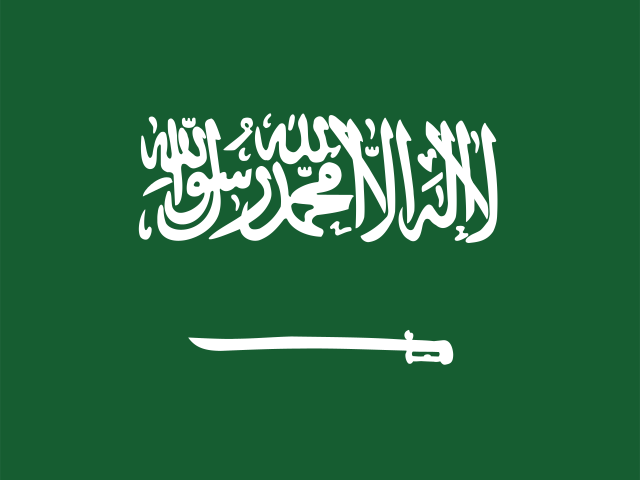
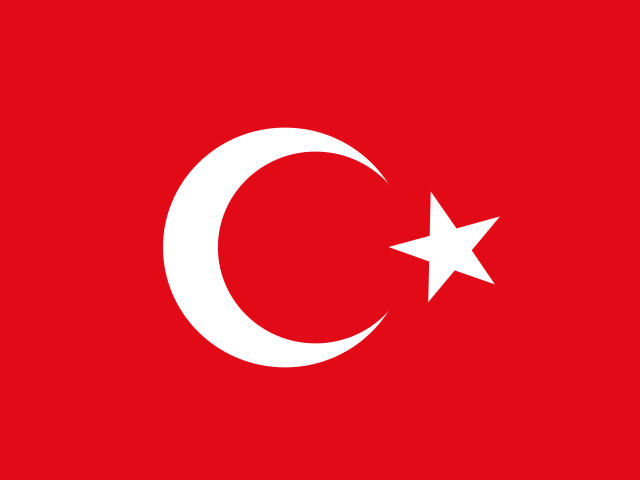
VS
Pact skeptics

Pact proponents and Pact skeptics are the two sides in a debate over the potential of the Mecca Joint Defence Pact, an alliance uniting Pakistan, Saudi Arabia, and Turkiye.
These countries are situated between Iran and Israel, and the pact aims to establish a new regional order.
Proponents believe the alliance can effectively create this order, while skeptics question its utility and impact.
The disagreement centers on whether the pact can achieve its stated goals.
Proponents argue that the alliance provides a framework for cooperation and stability in a volatile region.
Skeptics, however, express doubts about the pact's effectiveness, pointing to broader challenges such as climate change mitigation and the rise of authoritarianism that may undermine such initiatives.
The debate reflects differing views on the feasibility and consequences of the pact's ambitions.
*AI-generated summary of publicly available data. This is not an official statement of any party.
*AI-generated summary of publicly available statements and reporting. This is not an official statement of this party.
Supporters of Pact proponents argue that the Mecca Joint Defence Pact revives a historical pattern of Muslim-led mediation between rival empires, viewing it as a cultural bridge rooted in shared Islamic heritage. They maintain this alliance offers a precedent for collective.
Supporters of Pact proponents argue the Mecca pact revives the historical ummah solidarity, uniting Sunni-majority states as a cultural counterweight to Persian and Israeli influence, framing it as a natural successor to past Islamic alliances.
Supporters of Pact proponents counter that shared Islamic heritage and interlinked histories, from Ottoman caliphate ties to Saudi custodianship, forge deeper cultural bonds than skeptics acknowledge.
Supporters of Pact proponents argue the pact's mutual-defence clause legally binds signatories to collective action, establishing enforceable deterrence under international law.
Supporters of Pact proponents argue the Mecca Joint Defence Pact’s mutual defence clause offers a lawful deterrent under international law, deterring unilateral aggression and reinforcing regional stability.
Advocates for Pact proponents counter that the pact’s clauses operate as binding treaty obligations under customary international law, given the signatories’ explicit mutual-defense language and ratification procedures, which create legal duties enforceable through state.
Supporters of Pact proponents argue the Mecca pact is pure realpolitik: Pakistan, Saudi Arabia, and Turkiye each gain leverage against Iran and Israel by pooling deterrence, making the alliance a pragmatic hedge, not a moral crusade.
Supporters of Pact proponents argue the Mecca pact is a pragmatic shield: by binding Pakistan, Saudi Arabia, and Turkiye, it turns geographic buffer states into a collective bargaining bloc, forcing Iran and Israel to respect their leverage rather than exploit their divides.
Pact proponents counter that rival incentives are precisely why the pact works: mutual fear of Iran and India binds each state’s self-interest to the alliance, making paper commitments a cheap hedge against real threats. They argue skeptics mistake divergent ambitions for.
Supporters of Pact proponents argue that the pact's moral duty is environmental stewardship, as unifying these nations curbs resource conflicts and fosters joint ecological security.
Supporters of Pact proponents argue that the alliance is a moral duty to shield regional ecosystems from conflict-driven degradation, framing collective defence as stewardship of shared lands and water.
Supporters of Pact proponents counter that moral accountability thrives through collective stewardship, not isolated judgment, and that the pact’s civilian protections embody a shared ethical duty to safeguard the planet’s vulnerable, which divine law alone cannot enforce.
Supporters of Pact proponents argue the alliance reflects divine-ordained unity among Muslim nations, sanctified by Mecca, as a stabilizing counterweight to regional discord.
Supporters of Pact proponents argue that the alliance, rooted in shared Islamic heritage, upholds a divinely guided order that transcends statecraft, offering stability through faith-based unity.
Supporters of Pact proponents counter that scripture also commands nations to build earthly safeguards, citing the covenant between Abraham and Abimelech as a divinely sanctioned pact. They argue that providence works through human instruments, making alliances a form of.
*AI-generated summary of publicly available statements and reporting. This is not an official statement of this party.
Supporters of Pact skeptics argue that the alliance’s cultural cohesion is overstated, as Pakistan, Saudi Arabia, and Turkiye hold divergent religious and historical traditions that resist a unified regional order.
Skeptics argue the Mecca Pact overlooks each nation’s distinct religious and cultural traditions, making unity fragile where sectarian and historical divides persist.
Supporters of Pact skeptics counter that invoking shared Islamic heritage risks flattening distinct national cultures into a single bloc, and that historical mediation patterns do not translate to modern state sovereignty.
Supporters of Pact skeptics argue that the Mecca Joint Defence Pact lacks a binding legal enforcement mechanism, leaving its collective-security clauses as political declarations that fail to impose enforceable obligations on Pakistan, Saudi Arabia, or Turkiye under.
Supporters of Pact skeptics argue that the pact lacks binding legal enforcement mechanisms, leaving member states with no enforceable obligation to act, which undermines its credibility as a regional order.
Supporters of Pact skeptics counter that the mutual-defence clause lacks binding legal force, as treaty language often permits discretionary interpretation and withdrawal, leaving enforcement unverifiable under international law.
Pact skeptics argue the Mecca Joint Defence Pact is a paper shield, not a new order, because Pakistan, Saudi Arabia, and Turkiye each pursue rival incentives that override collective action.
Pact skeptics argue that the Mecca Pact is a defensive reaction to threats, not a blueprint for order, since each member’s strategic interests—Pakistan’s India focus, Turkiye’s NATO ties—remain divergent. They maintain that without shared command and mutual trust, Iran and.
Pact skeptics counter that pooling deterrence merely advertises collective weakness, inviting coordinated preemption from Iran and Israel. Each signatory’s leverage depends on credible unilateral threat, not shared paper pledges, which history shows dissolve under first crisis.
Supporters of Pact skeptics argue that no alliance of states can substitute for moral accountability before divine law, pointing to the pact's silence on justice for civilians as evidence that political pacts without ethical foundations fail.
Supporters of Pact skeptics argue that a military bloc formed on shifting political convenience, not shared faith, risks moral compromise and deeper regional division.
Supporters of Pact skeptics counter that environmental stewardship cannot override the pact’s moral hazard of concentrating power, as joint ecological security risks masking national accountability and enabling collective inaction on sacred duties.
Supporters of Pact skeptics argue that no earthly alliance can secure lasting order, for scripture teaches that divine providence, not military pacts, governs the fate of nations.
Supporters of Pact skeptics argue that no earthly alliance can forge lasting order, for scripture teaches that true peace flows only from divine will, not military pacts.
Supporters of Pact skeptics counter that divine ordination cannot sanctify an alliance built on coercion, citing scripture warning against covenants that oppress the faithful, and they argue true unity must arise from shared justice, not geopolitical convenience.
AI-generated summary of publicly available statements and reporting. This is not an official statement of this party.
Supporters of Pact proponents argue that the Mecca Joint Defence Pact revives a historical pattern of Muslim-led mediation between rival empires, viewing it as a cultural bridge rooted in shared Islamic heritage. They maintain this alliance offers a precedent for collective.
Supporters of Pact proponents argue the Mecca pact revives the historical ummah solidarity, uniting Sunni-majority states as a cultural counterweight to Persian and Israeli influence, framing it as a natural successor to past Islamic alliances.
Supporters of Pact proponents counter that shared Islamic heritage and interlinked histories, from Ottoman caliphate ties to Saudi custodianship, forge deeper cultural bonds than skeptics acknowledge.
Supporters of Pact proponents argue the pact's mutual-defence clause legally binds signatories to collective action, establishing enforceable deterrence under international law.
Supporters of Pact proponents argue the Mecca Joint Defence Pact’s mutual defence clause offers a lawful deterrent under international law, deterring unilateral aggression and reinforcing regional stability.
Advocates for Pact proponents counter that the pact’s clauses operate as binding treaty obligations under customary international law, given the signatories’ explicit mutual-defense language and ratification procedures, which create legal duties enforceable through state.
Supporters of Pact proponents argue the Mecca pact is pure realpolitik: Pakistan, Saudi Arabia, and Turkiye each gain leverage against Iran and Israel by pooling deterrence, making the alliance a pragmatic hedge, not a moral crusade.
Supporters of Pact proponents argue the Mecca pact is a pragmatic shield: by binding Pakistan, Saudi Arabia, and Turkiye, it turns geographic buffer states into a collective bargaining bloc, forcing Iran and Israel to respect their leverage rather than exploit their divides.
Pact proponents counter that rival incentives are precisely why the pact works: mutual fear of Iran and India binds each state’s self-interest to the alliance, making paper commitments a cheap hedge against real threats. They argue skeptics mistake divergent ambitions for.
Supporters of Pact proponents argue that the pact's moral duty is environmental stewardship, as unifying these nations curbs resource conflicts and fosters joint ecological security.
Supporters of Pact proponents argue that the alliance is a moral duty to shield regional ecosystems from conflict-driven degradation, framing collective defence as stewardship of shared lands and water.
Supporters of Pact proponents counter that moral accountability thrives through collective stewardship, not isolated judgment, and that the pact’s civilian protections embody a shared ethical duty to safeguard the planet’s vulnerable, which divine law alone cannot enforce.
Supporters of Pact proponents argue the alliance reflects divine-ordained unity among Muslim nations, sanctified by Mecca, as a stabilizing counterweight to regional discord.
Supporters of Pact proponents argue that the alliance, rooted in shared Islamic heritage, upholds a divinely guided order that transcends statecraft, offering stability through faith-based unity.
Supporters of Pact proponents counter that scripture also commands nations to build earthly safeguards, citing the covenant between Abraham and Abimelech as a divinely sanctioned pact. They argue that providence works through human instruments, making alliances a form of.
Supporters of Pact skeptics argue that the alliance’s cultural cohesion is overstated, as Pakistan, Saudi Arabia, and Turkiye hold divergent religious and historical traditions that resist a unified regional order.
Skeptics argue the Mecca Pact overlooks each nation’s distinct religious and cultural traditions, making unity fragile where sectarian and historical divides persist.
Supporters of Pact skeptics counter that invoking shared Islamic heritage risks flattening distinct national cultures into a single bloc, and that historical mediation patterns do not translate to modern state sovereignty.
Supporters of Pact skeptics argue that the Mecca Joint Defence Pact lacks a binding legal enforcement mechanism, leaving its collective-security clauses as political declarations that fail to impose enforceable obligations on Pakistan, Saudi Arabia, or Turkiye under.
Supporters of Pact skeptics argue that the pact lacks binding legal enforcement mechanisms, leaving member states with no enforceable obligation to act, which undermines its credibility as a regional order.
Supporters of Pact skeptics counter that the mutual-defence clause lacks binding legal force, as treaty language often permits discretionary interpretation and withdrawal, leaving enforcement unverifiable under international law.
Pact skeptics argue the Mecca Joint Defence Pact is a paper shield, not a new order, because Pakistan, Saudi Arabia, and Turkiye each pursue rival incentives that override collective action.
Pact skeptics argue that the Mecca Pact is a defensive reaction to threats, not a blueprint for order, since each member’s strategic interests—Pakistan’s India focus, Turkiye’s NATO ties—remain divergent. They maintain that without shared command and mutual trust, Iran and.
Pact skeptics counter that pooling deterrence merely advertises collective weakness, inviting coordinated preemption from Iran and Israel. Each signatory’s leverage depends on credible unilateral threat, not shared paper pledges, which history shows dissolve under first crisis.
Supporters of Pact skeptics argue that no alliance of states can substitute for moral accountability before divine law, pointing to the pact's silence on justice for civilians as evidence that political pacts without ethical foundations fail.
Supporters of Pact skeptics argue that a military bloc formed on shifting political convenience, not shared faith, risks moral compromise and deeper regional division.
Supporters of Pact skeptics counter that environmental stewardship cannot override the pact’s moral hazard of concentrating power, as joint ecological security risks masking national accountability and enabling collective inaction on sacred duties.
Supporters of Pact skeptics argue that no earthly alliance can secure lasting order, for scripture teaches that divine providence, not military pacts, governs the fate of nations.
Supporters of Pact skeptics argue that no earthly alliance can forge lasting order, for scripture teaches that true peace flows only from divine will, not military pacts.
Supporters of Pact skeptics counter that divine ordination cannot sanctify an alliance built on coercion, citing scripture warning against covenants that oppress the faithful, and they argue true unity must arise from shared justice, not geopolitical convenience.
The Mecca Joint Defence Pact brings together countries that sit between Iran and Israel, but will it be effective?
A research article notes widespread skepticism about the utility of the Pact for the Future, particularly regarding climate change mitigation measures and other challenges.
A Stimson article discusses the Pact for the People, noting the creation of ImPACT Coalitions to advance reform, while also highlighting growing authoritarianism as a challenge.
At an annual NYCHA hearing, tenant advocates expressed skepticism about the difference between the PACT and Trust programs, reflecting broader concerns about such initiatives.