Palestinians in the West Bank
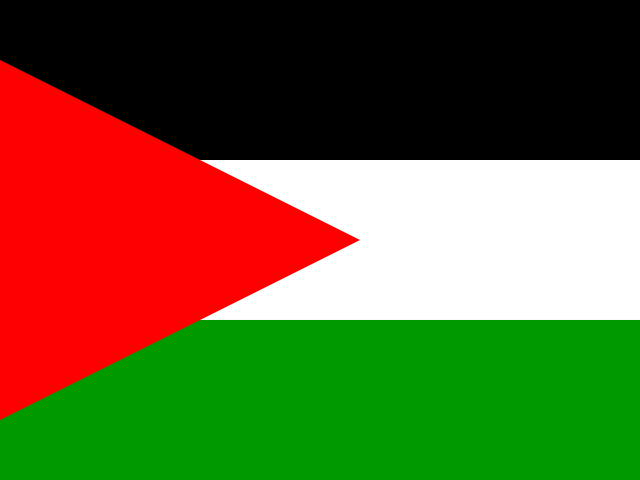
VS
World leaders

Palestinians in the occupied West Bank are questioning where a future Palestinian state would be located, given ongoing Israeli settlement expansion and occupation.
The article highlights the uncertainty and frustration among Palestinians regarding the feasibility of a two-state solution.
*AI-generated summary of publicly available data. This is not an official statement of any party.
*AI-generated summary of publicly available statements and reporting. This is not an official statement of this party.
Supporters of Palestinians in the West Bank argue that expanding settlements erase the land and cultural continuity a future state would need, leaving them asking world leaders where that state could physically exist.
Supporters of Palestinians in the West Bank argue that expanding settlements erase the land base a future state would need, so they question what territory world leaders actually envision for it.
Supporters of Palestinians in the West Bank counter that their cultural inheritance—olive groves, villages, and ancestral memory—predates the two-state framework, so statehood cannot be reduced to borders drawn in negotiations.
Supporters of Palestinians in the West Bank argue that international law, including UN resolutions deeming settlements illegal, is being rendered meaningless as expansion forecloses any viable state.
Supporters of Palestinians in the West Bank argue that under international law, Israeli settlements there are illegal, so any viable state's borders must reflect that legal reality rather than settlement expansion.
Supporters of Palestinians in the West Bank counter that international law, notably the Fourth Geneva Convention and UN resolutions, protects their territorial rights, so they challenge the claim that settlement expansion is merely unlawful—it is a breach of binding legal obligat.
Supporters of Palestinians in the West Bank argue that world leaders keep endorsing a two-state solution while Israeli settlements keep consuming the land, so they see endless negotiations as a tactic that costs them territory.
Supporters of Palestinians in the West Bank argue that settlement expansion makes the two-state map unviable, so world leaders demanding statehood while Israel keeps building are offering rhetoric, not territory.
Supporters of Palestinians in the West Bank counter that vague borders are not leverage but a vacuum Israel fills with settlements, making deferred concessions permanent facts on the ground.
Supporters of Palestinians in the West Bank argue that settlement expansion makes a viable state morally impossible, so world leaders cannot keep promising statehood while the land reserved for it disappears.
Supporters of Palestinians in the West Bank argue that world leaders cannot keep promising a two-state solution while Israeli settlements expand on the very land that state would need.
Supporters of Palestinians in the West Bank counter that a two-state solution premised on continued settlement expansion asks them to accept a moral bargain where their own dispossession becomes the precondition for their freedom.
Supporters of Palestinians in the West Bank argue that the land's sacred, inherited character grounds their claim to statehood, and they ask world leaders where a state can stand when settlement expansion leaves so little of that heritage intact.
Supporters of Palestinians in the West Bank argue that stewardship of ancestral land is a sacred trust, and that settlement expansion threatens the religious and cultural continuity their communities have inherited across generations.
Supporters of Palestinians in the West Bank counter that scripture also commands justice and mercy for the stranger and the sojourner, so they argue the covenant claim cannot override the moral duty owed to those living on the land.
*AI-generated summary of publicly available statements and reporting. This is not an official statement of this party.
Supporters of world leaders argue that statehood is a cultural inheritance tied to territory, so they urge preserving the two-state framework as the only recognized path, pointing to past negotiations as precedent that borders can still be drawn.
Supporters of world leaders argue that statehood's cultural legitimacy rests on negotiated borders, pointing to past peace frameworks as proof that recognition, not territory alone, defines a nation.
Supporters of World leaders counter that the land's cultural continuity has never depended on fixed borders alone, citing diasporic and religious ties that survived millennia of dispersal.
Supporters of world leaders argue that under international law, settlement expansion is unlawful and undermines the territorial basis for a two-state solution, so they press Israel to halt it.
Supporters of world leaders argue that under international law, settlement expansion in the occupied West Bank is unlawful, and they maintain that a negotiated two-state solution remains the only lawful path to a Palestinian state.
Supporters of World leaders counter that the UN Security Council has never authorized enforcement measures against settlements, so these resolutions remain non-binding recommendations rather than operative legal obligations.
Supporters of world leaders argue that statehood is a bargaining chip, not a right, so vague borders keep leverage intact while the cost of any concession stays deferred.
Supporters of world leaders argue that statehood talk is leverage, not a map—final borders get settled at the table, so quiet settlement facts are bargaining chips, not obstacles.
Supporters of world leaders counter that talk of a two-state solution is leverage, not surrender; holding the negotiation open preserves international cover and keeps aid flowing, while abandoning it hands Israel the land outright.
Supporters of world leaders argue that a viable Palestinian state remains the only moral path to justice, and they maintain that settlement expansion undermines the very land a two-state solution requires.
Supporters of world leaders argue that statehood talks must continue despite settlement expansion, maintaining that only negotiated borders can deliver a viable Palestinian state and preserve the two-state framework.
Supporters of World leaders counter that statehood's moral foundation rests on mutual recognition and security guarantees, so halting settlement alone cannot deliver justice without addressing violence and sovereignty.
Supporters of world leaders argue that scripture affirms Israel's covenant to the land, so they maintain a Palestinian state cannot be imposed against that divine claim.
Supporters of world leaders argue that scripture's promise of land to Abraham's descendants grounds Israel's claim, so a Palestinian state's borders must be negotiated, not assumed.
Supporters of World leaders counter that scripture ties the land's covenant to Israel, citing Genesis, so the sacred claim invoked does not by itself establish Palestinian statehood.
AI-generated summary of publicly available statements and reporting. This is not an official statement of this party.
Supporters of Palestinians in the West Bank argue that expanding settlements erase the land and cultural continuity a future state would need, leaving them asking world leaders where that state could physically exist.
Supporters of Palestinians in the West Bank argue that expanding settlements erase the land base a future state would need, so they question what territory world leaders actually envision for it.
Supporters of Palestinians in the West Bank counter that their cultural inheritance—olive groves, villages, and ancestral memory—predates the two-state framework, so statehood cannot be reduced to borders drawn in negotiations.
Supporters of Palestinians in the West Bank argue that international law, including UN resolutions deeming settlements illegal, is being rendered meaningless as expansion forecloses any viable state.
Supporters of Palestinians in the West Bank argue that under international law, Israeli settlements there are illegal, so any viable state's borders must reflect that legal reality rather than settlement expansion.
Supporters of Palestinians in the West Bank counter that international law, notably the Fourth Geneva Convention and UN resolutions, protects their territorial rights, so they challenge the claim that settlement expansion is merely unlawful—it is a breach of binding legal obligat.
Supporters of Palestinians in the West Bank argue that world leaders keep endorsing a two-state solution while Israeli settlements keep consuming the land, so they see endless negotiations as a tactic that costs them territory.
Supporters of Palestinians in the West Bank argue that settlement expansion makes the two-state map unviable, so world leaders demanding statehood while Israel keeps building are offering rhetoric, not territory.
Supporters of Palestinians in the West Bank counter that vague borders are not leverage but a vacuum Israel fills with settlements, making deferred concessions permanent facts on the ground.
Supporters of Palestinians in the West Bank argue that settlement expansion makes a viable state morally impossible, so world leaders cannot keep promising statehood while the land reserved for it disappears.
Supporters of Palestinians in the West Bank argue that world leaders cannot keep promising a two-state solution while Israeli settlements expand on the very land that state would need.
Supporters of Palestinians in the West Bank counter that a two-state solution premised on continued settlement expansion asks them to accept a moral bargain where their own dispossession becomes the precondition for their freedom.
Supporters of Palestinians in the West Bank argue that the land's sacred, inherited character grounds their claim to statehood, and they ask world leaders where a state can stand when settlement expansion leaves so little of that heritage intact.
Supporters of Palestinians in the West Bank argue that stewardship of ancestral land is a sacred trust, and that settlement expansion threatens the religious and cultural continuity their communities have inherited across generations.
Supporters of Palestinians in the West Bank counter that scripture also commands justice and mercy for the stranger and the sojourner, so they argue the covenant claim cannot override the moral duty owed to those living on the land.
Supporters of world leaders argue that statehood is a cultural inheritance tied to territory, so they urge preserving the two-state framework as the only recognized path, pointing to past negotiations as precedent that borders can still be drawn.
Supporters of world leaders argue that statehood's cultural legitimacy rests on negotiated borders, pointing to past peace frameworks as proof that recognition, not territory alone, defines a nation.
Supporters of World leaders counter that the land's cultural continuity has never depended on fixed borders alone, citing diasporic and religious ties that survived millennia of dispersal.
Supporters of world leaders argue that under international law, settlement expansion is unlawful and undermines the territorial basis for a two-state solution, so they press Israel to halt it.
Supporters of world leaders argue that under international law, settlement expansion in the occupied West Bank is unlawful, and they maintain that a negotiated two-state solution remains the only lawful path to a Palestinian state.
Supporters of World leaders counter that the UN Security Council has never authorized enforcement measures against settlements, so these resolutions remain non-binding recommendations rather than operative legal obligations.
Supporters of world leaders argue that statehood is a bargaining chip, not a right, so vague borders keep leverage intact while the cost of any concession stays deferred.
Supporters of world leaders argue that statehood talk is leverage, not a map—final borders get settled at the table, so quiet settlement facts are bargaining chips, not obstacles.
Supporters of world leaders counter that talk of a two-state solution is leverage, not surrender; holding the negotiation open preserves international cover and keeps aid flowing, while abandoning it hands Israel the land outright.
Supporters of world leaders argue that a viable Palestinian state remains the only moral path to justice, and they maintain that settlement expansion undermines the very land a two-state solution requires.
Supporters of world leaders argue that statehood talks must continue despite settlement expansion, maintaining that only negotiated borders can deliver a viable Palestinian state and preserve the two-state framework.
Supporters of World leaders counter that statehood's moral foundation rests on mutual recognition and security guarantees, so halting settlement alone cannot deliver justice without addressing violence and sovereignty.
Supporters of world leaders argue that scripture affirms Israel's covenant to the land, so they maintain a Palestinian state cannot be imposed against that divine claim.
Supporters of world leaders argue that scripture's promise of land to Abraham's descendants grounds Israel's claim, so a Palestinian state's borders must be negotiated, not assumed.
Supporters of World leaders counter that scripture ties the land's covenant to Israel, citing Genesis, so the sacred claim invoked does not by itself establish Palestinian statehood.
Palestinians in the occupied West Bank are left asking world leaders: where exactly is our state meant to go?