Russia and China
VS
United States and allies

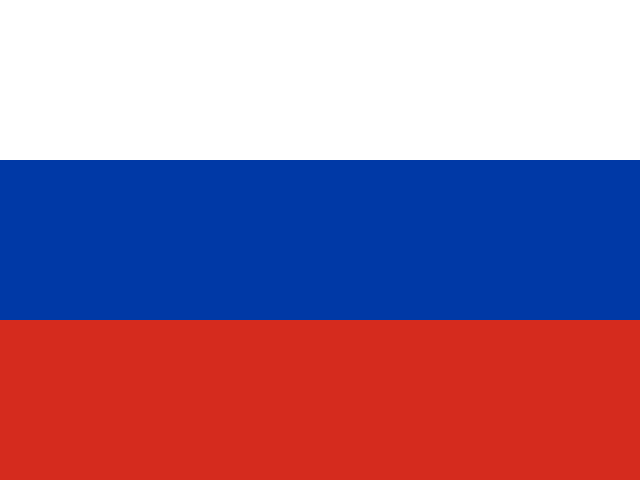
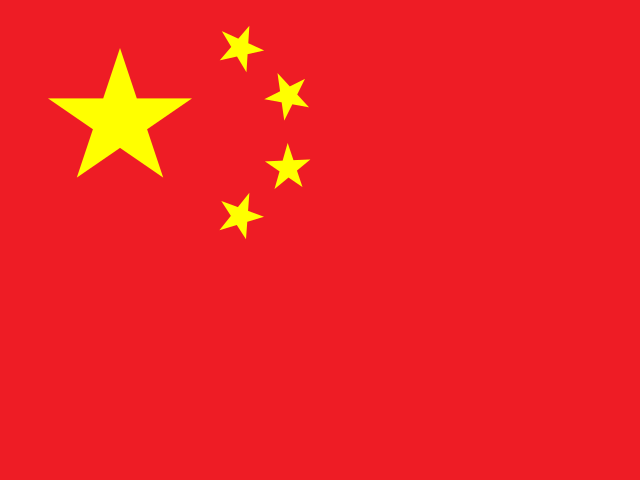
Russia and China are two major powers that often align in opposition to the United States and its allies on international security matters.
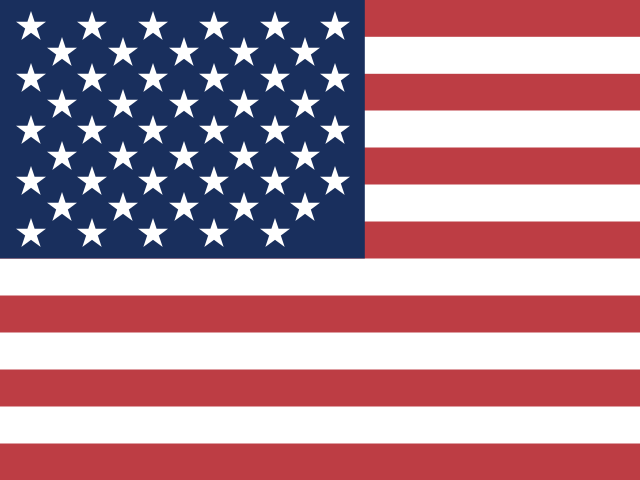
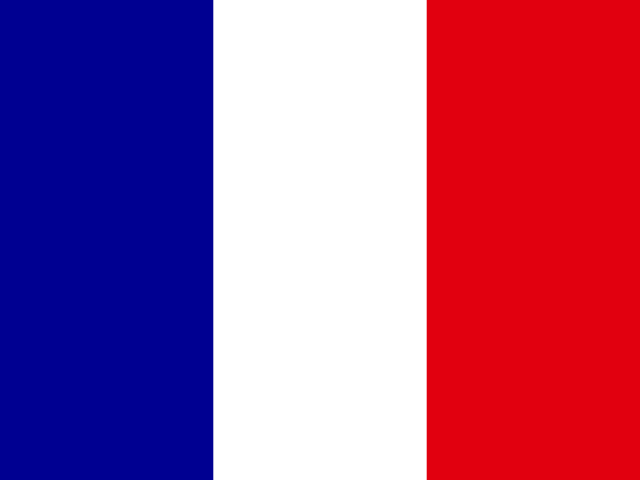
The United States and its allies are a coalition of countries that frequently coordinate their foreign policies, particularly regarding sanctions and nonproliferation.
Both sides hold veto power or significant influence in the United Nations Security Council, shaping global responses to issues like Iran's nuclear program.
The conflict arises from differing approaches to monitoring and enforcing sanctions on Iran.
Russia and China vetoed a UN Security Council resolution to extend the mandate of the panel monitoring Iran sanctions, while the United States and its allies supported the extension.
This disagreement reflects broader tensions over the role of international oversight and the balance of power within the Security Council.
The veto ended the Security Council's watchdog panel on Iran sanctions, highlighting the difficulty of maintaining unified international action when major powers have conflicting interests.
The incident underscores the challenges of multilateral diplomacy and the potential consequences for global security regimes.
*AI-generated summary of publicly available data. This is not an official statement of any party.
*AI-generated summary of publicly available statements and reporting. This is not an official statement of this party.
Supporters of Russia and China argue the veto asserts sovereign states' right to shape their own security ties free of Western-led monitoring, framing the panel as a cultural imposition of one bloc's norms on others.
Supporters of Russia and China argue the veto defends national sovereignty, insisting that outside powers should not impose cultural and legal norms on other nations through UN watchdogs.
Supporters of Russia and China counter that the panel embodied a Western cultural preference for monitoring other nations' affairs, and that sovereignty-minded states reject this accountability norm as foreign to their own traditions.
Supporters of Russia and China argue the veto was lawful: UN Charter Article 33 favors dialogue over sanctions monitoring, and they maintain the panel's mandate exceeded the Council's legal authority regarding Iran.
Supporters of Russia and China argue that vetoing the Iran sanctions panel was a lawful exercise of their UN Charter prerogative, since the Security Council's monitoring mandate lacked their consent.
Supporters of Russia and China counter that Article 27 of the UN Charter makes the veto a lawful procedural right, so a monitoring mandate cannot override the Council's own voting rules.
Supporters of Russia and China argue the veto ends a Western surveillance tool, shifting leverage over Iran sanctions back to the Security Council where Moscow and Beijing hold power.
Supporters of Russia and China argue the veto blocks a Western tool for policing Iran under the guise of oversight, preserving their leverage and denying Washington a unilateral edge.
Supporters of Russia and China counter that killing the watchdog was leverage, not chaos: forcing Washington to negotiate without a UN fig leaf proves the Council's paralysis cuts both ways.
Supporters of Russia and China argue that the Security Council's Iran sanctions monitoring panel lacked moral legitimacy after the US withdrew from the nuclear deal, so they vetoed its renewal to protect ordinary Iranians from punitive oversight.
Supporters of Russia and China argue that shielding Iran from sanctions monitoring serves peace, yet they place geopolitical alignment above the moral duty to protect global security and nonproliferation.
Supporters of Russia and China counter that the moral duty lies with those who refuse to join a treaty that offers Iran relief from sanctions in exchange for verified limits, since abandoning diplomacy for pressure risks war.
Supporters of Russia and China argue that backing Iran is a defense of religious sovereignty, holding that the veto protects a nation's God-given right to worship and govern free from outside judgment.
Supporters of Russia and China argue that sovereignty is a God-given trust, so no earthly council may impose its will on nations, and they invoke scripture's warning against unjust authority.
Supporters of Russia and China counter that the veto upholds the UN Charter's sovereignty principle, which they see as a moral restraint against coercive intervention.
*AI-generated summary of publicly available statements and reporting. This is not an official statement of this party.
Supporters of the United States and allies argue that the UN sanctions watchdog panel on Iran reflected a longstanding institutional norm of accountability, and that letting it lapse erodes the precedent of collective oversight.
Supporters of the United States and allies argue that the sanctions panel embodied decades of established UN precedent and inherited diplomatic order, and that discarding such institutions erodes the stability that cultural continuity depends upon.
Supporters of the United States and allies counter that sovereignty claims ring hollow when Russia and China themselves built the very UN structures now being invoked, and that regional bodies across Africa and Latin America have long sought such monitoring.
Supporters of the United States and allies argue Russia and China's veto undermines the Security Council's legal authority to enforce compliance, since the panel's monitoring mandate was a lawful mechanism for verifying sanctions implementation.
Supporters of the United States and allies argue that Russia and China's veto undermines binding Security Council obligations, since monitoring is a legal mechanism to verify Iran's compliance and a veto cannot lawfully suspend those duties.
Supporters of the United States and allies counter that Article 33 addresses dispute settlement, not Council authority to monitor sanctions compliance, and that the panel's mandate fell within powers the Council already delegated.
Supporters of the United States and allies argue Russia and China killed the Iran sanctions watchdog to shield a partner, weaken Western leverage, and prove they can paralyze the Security Council at will.
Supporters of the United States and allies argue that Russia and China's veto traded enforcement for leverage, blinding the Security Council's Iran watchdog to protect their own interests.
Supporters of the United States and allies counter that snapback restores leverage Moscow and Beijing had already lost, since the veto cannot block a mechanism the prior resolution hardwired in.
Supporters of the United States and allies argue that shielding Iran's nuclear program from oversight betrays a moral duty to protect global security, and that Russia and China chose partnership over accountability.
Supporters of the United States and allies argue that letting the Iran sanctions watchdog lapse abandons a moral duty to hold violators accountable, warning that past precedent shows unchecked regimes press further.
Supporters of the United States and allies counter that a veto protecting Iranians rings hollow, since the panel monitored banned arms transfers, not food or medicine, and shielding a government from oversight harms the very people invoked.
Supporters of the United States and allies argue the veto weakens accountability for Iran's nuclear program, which they view as a religious and moral threat to regional stability and the security of allied faith communities.
Supporters of the United States and allies argue that letting the Iran sanctions watchdog lapse weakens a deterrent order they see as rooted in the shared religious principle of restraining aggression.
Supporters of the United States and allies counter that religious freedom cannot shield a state from accountability, since faith traditions themselves affirm that justice and the protection of the innocent transcend national borders.
AI-generated summary of publicly available statements and reporting. This is not an official statement of this party.
Supporters of Russia and China argue the veto asserts sovereign states' right to shape their own security ties free of Western-led monitoring, framing the panel as a cultural imposition of one bloc's norms on others.
Supporters of Russia and China argue the veto defends national sovereignty, insisting that outside powers should not impose cultural and legal norms on other nations through UN watchdogs.
Supporters of Russia and China counter that the panel embodied a Western cultural preference for monitoring other nations' affairs, and that sovereignty-minded states reject this accountability norm as foreign to their own traditions.
Supporters of Russia and China argue the veto was lawful: UN Charter Article 33 favors dialogue over sanctions monitoring, and they maintain the panel's mandate exceeded the Council's legal authority regarding Iran.
Supporters of Russia and China argue that vetoing the Iran sanctions panel was a lawful exercise of their UN Charter prerogative, since the Security Council's monitoring mandate lacked their consent.
Supporters of Russia and China counter that Article 27 of the UN Charter makes the veto a lawful procedural right, so a monitoring mandate cannot override the Council's own voting rules.
Supporters of Russia and China argue the veto ends a Western surveillance tool, shifting leverage over Iran sanctions back to the Security Council where Moscow and Beijing hold power.
Supporters of Russia and China argue the veto blocks a Western tool for policing Iran under the guise of oversight, preserving their leverage and denying Washington a unilateral edge.
Supporters of Russia and China counter that killing the watchdog was leverage, not chaos: forcing Washington to negotiate without a UN fig leaf proves the Council's paralysis cuts both ways.
Supporters of Russia and China argue that the Security Council's Iran sanctions monitoring panel lacked moral legitimacy after the US withdrew from the nuclear deal, so they vetoed its renewal to protect ordinary Iranians from punitive oversight.
Supporters of Russia and China argue that shielding Iran from sanctions monitoring serves peace, yet they place geopolitical alignment above the moral duty to protect global security and nonproliferation.
Supporters of Russia and China counter that the moral duty lies with those who refuse to join a treaty that offers Iran relief from sanctions in exchange for verified limits, since abandoning diplomacy for pressure risks war.
Supporters of Russia and China argue that backing Iran is a defense of religious sovereignty, holding that the veto protects a nation's God-given right to worship and govern free from outside judgment.
Supporters of Russia and China argue that sovereignty is a God-given trust, so no earthly council may impose its will on nations, and they invoke scripture's warning against unjust authority.
Supporters of Russia and China counter that the veto upholds the UN Charter's sovereignty principle, which they see as a moral restraint against coercive intervention.
Supporters of the United States and allies argue that the UN sanctions watchdog panel on Iran reflected a longstanding institutional norm of accountability, and that letting it lapse erodes the precedent of collective oversight.
Supporters of the United States and allies argue that the sanctions panel embodied decades of established UN precedent and inherited diplomatic order, and that discarding such institutions erodes the stability that cultural continuity depends upon.
Supporters of the United States and allies counter that sovereignty claims ring hollow when Russia and China themselves built the very UN structures now being invoked, and that regional bodies across Africa and Latin America have long sought such monitoring.
Supporters of the United States and allies argue Russia and China's veto undermines the Security Council's legal authority to enforce compliance, since the panel's monitoring mandate was a lawful mechanism for verifying sanctions implementation.
Supporters of the United States and allies argue that Russia and China's veto undermines binding Security Council obligations, since monitoring is a legal mechanism to verify Iran's compliance and a veto cannot lawfully suspend those duties.
Supporters of the United States and allies counter that Article 33 addresses dispute settlement, not Council authority to monitor sanctions compliance, and that the panel's mandate fell within powers the Council already delegated.
Supporters of the United States and allies argue Russia and China killed the Iran sanctions watchdog to shield a partner, weaken Western leverage, and prove they can paralyze the Security Council at will.
Supporters of the United States and allies argue that Russia and China's veto traded enforcement for leverage, blinding the Security Council's Iran watchdog to protect their own interests.
Supporters of the United States and allies counter that snapback restores leverage Moscow and Beijing had already lost, since the veto cannot block a mechanism the prior resolution hardwired in.
Supporters of the United States and allies argue that shielding Iran's nuclear program from oversight betrays a moral duty to protect global security, and that Russia and China chose partnership over accountability.
Supporters of the United States and allies argue that letting the Iran sanctions watchdog lapse abandons a moral duty to hold violators accountable, warning that past precedent shows unchecked regimes press further.
Supporters of the United States and allies counter that a veto protecting Iranians rings hollow, since the panel monitored banned arms transfers, not food or medicine, and shielding a government from oversight harms the very people invoked.
Supporters of the United States and allies argue the veto weakens accountability for Iran's nuclear program, which they view as a religious and moral threat to regional stability and the security of allied faith communities.
Supporters of the United States and allies argue that letting the Iran sanctions watchdog lapse weakens a deterrent order they see as rooted in the shared religious principle of restraining aggression.
Supporters of the United States and allies counter that religious freedom cannot shield a state from accountability, since faith traditions themselves affirm that justice and the protection of the innocent transcend national borders.
Russia and China vetoed a UN Security Council resolution to extend the mandate of the panel monitoring Iran sanctions, ending the watchdog panel.