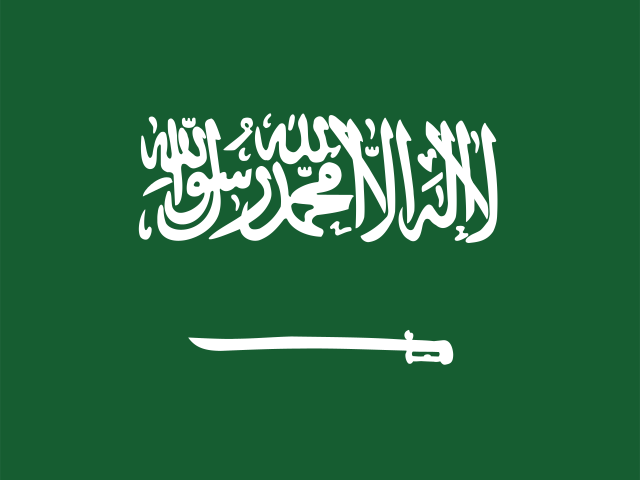
Saudi Arabia
VS
United States
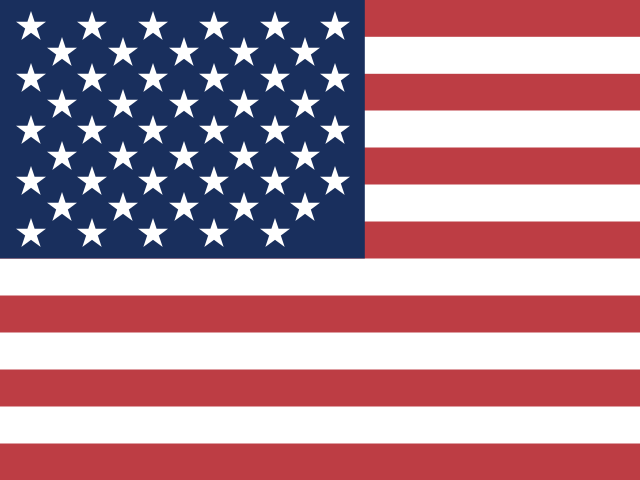
Saudi Arabia is a Middle Eastern kingdom and a longstanding U.S. partner; the United States is its Western ally.
Bilateral relations between Saudi Arabia and the United States began in 1933 when full diplomatic relations were established.
The two countries have conflicting interests over U.S. support for Saudi Arabia's fight against Yemen's Houthis.
The United States is apparently in no rush to help its Middle Eastern ally, suggesting a gap between Saudi Arabia's expectations of U.S. support and the actual U.S. response.
*AI-generated summary of publicly available data. This is not an official statement of any party.
*AI-generated summary of publicly available statements and reporting. This is not an official statement of this party.
Supporters of Saudi Arabia argue that long-standing alliances carry cultural obligations, and that abandoning a partner mid-conflict erodes the trust and honor on which regional stability depends.
Supporters of Saudi Arabia argue that longstanding alliance traditions obligate the US to defend its partners, and that abandoning Riyadh mid-conflict undermines the trust and stability inherited alliances depend on.
Supporters of Saudi Arabia counter that Yemen sits within the Arabian Peninsula's own cultural sphere, where regional stability and sovereign ties have long been maintained through local alliances, not distant values.
Supporters of Saudi Arabia argue that a security alliance carries legal obligations, and they point to the US's tepid response against the Houthis as evidence that Riyadh's expectations of its partner were unmet.
Supporters of Saudi Arabia argue that its sovereignty entitles it to expect allied assistance against the Houthis, and that the US delay undermines the legal basis of their mutual defense commitments.
Supporters of Saudi Arabia counter that the 1951 Mutual Defense Assistance Agreement and subsequent security pacts establish binding obligations, and that congressional authorization has already been expressed through prior arms sales and executive agreements.
Supporters of Saudi Arabia argue that US inaction on the Houthis proves alliances serve American interests, not Saudi ones, so Riyadh should hedge by deepening ties with rival powers.
Supporters of Saudi Arabia argue that US inaction in Yemen reveals the cost of relying on a distant patron whose interests shift; alliances, in their view, are transactional, so Riyadh must hedge and secure its own leverage.
Supporters of Saudi Arabia counter that US restraint is less principle than calculation: Washington keeps Riyadh dependent on American arms and intelligence while avoiding blame, letting the kingdom absorb the costs of a war the US helped escalate.
Supporters of Saudi Arabia argue that a longtime ally's expectation of support carries a moral weight, and that leaving it to face the Houthis alone signals that US commitments to partners cannot be trusted.
Supporters of Saudi Arabia argue that an alliance carries a moral duty of reciprocity, so America’s reluctance to aid the fight against the Houthis betrays the loyalty Saudi Arabia showed Washington.
Supporters of Saudi Arabia counter that sovereignty entails shared moral duty, not withdrawal: they argue America’s alliance commitments and scripture’s call to defend the oppressed oblige it to stand with partners rather than leave regional security to chance.
Supporters of Saudi Arabia argue that defending the Two Holy Mosques and the Hajj pilgrimage routes against Houthi attacks is a religious duty, and they maintain that abandoning this ally undermines the shared obligation to protect sacred sites.
Supporters of Saudi Arabia argue that defending the Two Holy Mosques and the Hajj pilgrimage against Houthi attacks is a religious duty, so they maintain that the US, as a longstanding ally, should not leave that sacred burden to Riyadh alone.
Supporters of Saudi Arabia counter that the Kingdom hosts Mecca and Medina and protects the faith's holiest sites, so religious duty favors backing a state whose stability safeguards worship for millions.
*AI-generated summary of publicly available statements and reporting. This is not an official statement of this party.
Supporters of the United States argue that backing Saudi Arabia’s war in Yemen conflicts with American cultural values, which prioritize restraint and skepticism toward entangling foreign conflicts.
Supporters of the United States argue that cultural distance from Saudi Arabia's Yemen campaign explains Washington's reluctance, maintaining that America's own national identity and priorities, not Riyadh's expectations, should set its course.
Supporters of the United States counter that cultural identity is not a blank check for endless obligation: a nation's first cultural duty is to its own citizens and their values, not to a partner whose practices diverge from them.
Supporters of the United States argue that no treaty obligates US forces to join Saudi Arabia's Yemen campaign, so restraint is lawful; they maintain that military aid requires congressional authorization and sovereign consent, not an ally's expectations.
Supporters of the United States argue that no treaty obligates it to join Saudi Arabia’s war in Yemen, so military support remains a voluntary choice, not a legal duty.
Supporters of United States counter that no treaty obligates American forces to fight the Houthis; absent Senate-ratified mutual-defense terms, Riyadh's expectations rest on politics, not law.
Supporters of the United States argue that staying out of Saudi Arabia's war with the Houthis is deliberate: Washington preserves leverage, avoids another costly quagmire, and lets Riyadh bear its own burden.
Supporters of the United States argue that staying out of Saudi Arabia's Houthi fight is deliberate: restraint preserves US leverage, avoids another costly war, and forces Riyadh to bear its own burden.
Supporters of the United States counter that hedging with rival powers costs Riyadh more than it gains, since Washington can restrict arms sales and intelligence sharing, leaving Saudi security interests weaker, not stronger.
Supporters of the United States argue that America’s moral duty is not endless intervention, but restraint: they maintain that letting regional powers like Saudi Arabia defend themselves reflects sovereignty and avoids endless war.
Supporters of the United States argue that restraint is the moral course, since backing Saudi Arabia's Yemen campaign risks complicity in a war that has produced a massive humanitarian toll.
Supporters of the United States counter that trust is earned through lawful conduct, and backing a partner's war regardless of civilian harm makes America complicit in wrongdoing rather than honorable.
Supporters of the United States argue that backing Saudi Arabia's war in Yemen risks complicity in suffering, and that faith demands prudence and restraint before aiding any campaign.
Supporters of the United States argue that prudence in aiding Saudi Arabia reflects a moral duty to avoid enabling harm, weighing whether military backing in Yemen aligns with justice and the sanctity of life.
Supporters of the United States counter that protecting pilgrims is a duty, yet they argue that arming the Houthis' victims is not the only path—diplomacy and defense sales can uphold the Hajj without endorsing every Saudi action.
AI-generated summary of publicly available statements and reporting. This is not an official statement of this party.
Supporters of Saudi Arabia argue that long-standing alliances carry cultural obligations, and that abandoning a partner mid-conflict erodes the trust and honor on which regional stability depends.
Supporters of Saudi Arabia argue that longstanding alliance traditions obligate the US to defend its partners, and that abandoning Riyadh mid-conflict undermines the trust and stability inherited alliances depend on.
Supporters of Saudi Arabia counter that Yemen sits within the Arabian Peninsula's own cultural sphere, where regional stability and sovereign ties have long been maintained through local alliances, not distant values.
Supporters of Saudi Arabia argue that a security alliance carries legal obligations, and they point to the US's tepid response against the Houthis as evidence that Riyadh's expectations of its partner were unmet.
Supporters of Saudi Arabia argue that its sovereignty entitles it to expect allied assistance against the Houthis, and that the US delay undermines the legal basis of their mutual defense commitments.
Supporters of Saudi Arabia counter that the 1951 Mutual Defense Assistance Agreement and subsequent security pacts establish binding obligations, and that congressional authorization has already been expressed through prior arms sales and executive agreements.
Supporters of Saudi Arabia argue that US inaction on the Houthis proves alliances serve American interests, not Saudi ones, so Riyadh should hedge by deepening ties with rival powers.
Supporters of Saudi Arabia argue that US inaction in Yemen reveals the cost of relying on a distant patron whose interests shift; alliances, in their view, are transactional, so Riyadh must hedge and secure its own leverage.
Supporters of Saudi Arabia counter that US restraint is less principle than calculation: Washington keeps Riyadh dependent on American arms and intelligence while avoiding blame, letting the kingdom absorb the costs of a war the US helped escalate.
Supporters of Saudi Arabia argue that a longtime ally's expectation of support carries a moral weight, and that leaving it to face the Houthis alone signals that US commitments to partners cannot be trusted.
Supporters of Saudi Arabia argue that an alliance carries a moral duty of reciprocity, so America’s reluctance to aid the fight against the Houthis betrays the loyalty Saudi Arabia showed Washington.
Supporters of Saudi Arabia counter that sovereignty entails shared moral duty, not withdrawal: they argue America’s alliance commitments and scripture’s call to defend the oppressed oblige it to stand with partners rather than leave regional security to chance.
Supporters of Saudi Arabia argue that defending the Two Holy Mosques and the Hajj pilgrimage routes against Houthi attacks is a religious duty, and they maintain that abandoning this ally undermines the shared obligation to protect sacred sites.
Supporters of Saudi Arabia argue that defending the Two Holy Mosques and the Hajj pilgrimage against Houthi attacks is a religious duty, so they maintain that the US, as a longstanding ally, should not leave that sacred burden to Riyadh alone.
Supporters of Saudi Arabia counter that the Kingdom hosts Mecca and Medina and protects the faith's holiest sites, so religious duty favors backing a state whose stability safeguards worship for millions.
Supporters of the United States argue that backing Saudi Arabia’s war in Yemen conflicts with American cultural values, which prioritize restraint and skepticism toward entangling foreign conflicts.
Supporters of the United States argue that cultural distance from Saudi Arabia's Yemen campaign explains Washington's reluctance, maintaining that America's own national identity and priorities, not Riyadh's expectations, should set its course.
Supporters of the United States counter that cultural identity is not a blank check for endless obligation: a nation's first cultural duty is to its own citizens and their values, not to a partner whose practices diverge from them.
Supporters of the United States argue that no treaty obligates US forces to join Saudi Arabia's Yemen campaign, so restraint is lawful; they maintain that military aid requires congressional authorization and sovereign consent, not an ally's expectations.
Supporters of the United States argue that no treaty obligates it to join Saudi Arabia’s war in Yemen, so military support remains a voluntary choice, not a legal duty.
Supporters of United States counter that no treaty obligates American forces to fight the Houthis; absent Senate-ratified mutual-defense terms, Riyadh's expectations rest on politics, not law.
Supporters of the United States argue that staying out of Saudi Arabia's war with the Houthis is deliberate: Washington preserves leverage, avoids another costly quagmire, and lets Riyadh bear its own burden.
Supporters of the United States argue that staying out of Saudi Arabia's Houthi fight is deliberate: restraint preserves US leverage, avoids another costly war, and forces Riyadh to bear its own burden.
Supporters of the United States counter that hedging with rival powers costs Riyadh more than it gains, since Washington can restrict arms sales and intelligence sharing, leaving Saudi security interests weaker, not stronger.
Supporters of the United States argue that America’s moral duty is not endless intervention, but restraint: they maintain that letting regional powers like Saudi Arabia defend themselves reflects sovereignty and avoids endless war.
Supporters of the United States argue that restraint is the moral course, since backing Saudi Arabia's Yemen campaign risks complicity in a war that has produced a massive humanitarian toll.
Supporters of the United States counter that trust is earned through lawful conduct, and backing a partner's war regardless of civilian harm makes America complicit in wrongdoing rather than honorable.
Supporters of the United States argue that backing Saudi Arabia's war in Yemen risks complicity in suffering, and that faith demands prudence and restraint before aiding any campaign.
Supporters of the United States argue that prudence in aiding Saudi Arabia reflects a moral duty to avoid enabling harm, weighing whether military backing in Yemen aligns with justice and the sanctity of life.
Supporters of the United States counter that protecting pilgrims is a duty, yet they argue that arming the Houthis' victims is not the only path—diplomacy and defense sales can uphold the Hajj without endorsing every Saudi action.
The US is apparently in no rush to help its Middle Eastern ally, Saudi Arabia, fight Yemen’s Houthis, RT’s Steve Sweeney reports Read Full Article at RT.com
Bilateral relations between Saudi Arabia and the United States began in 1933 when full diplomatic relations were established.