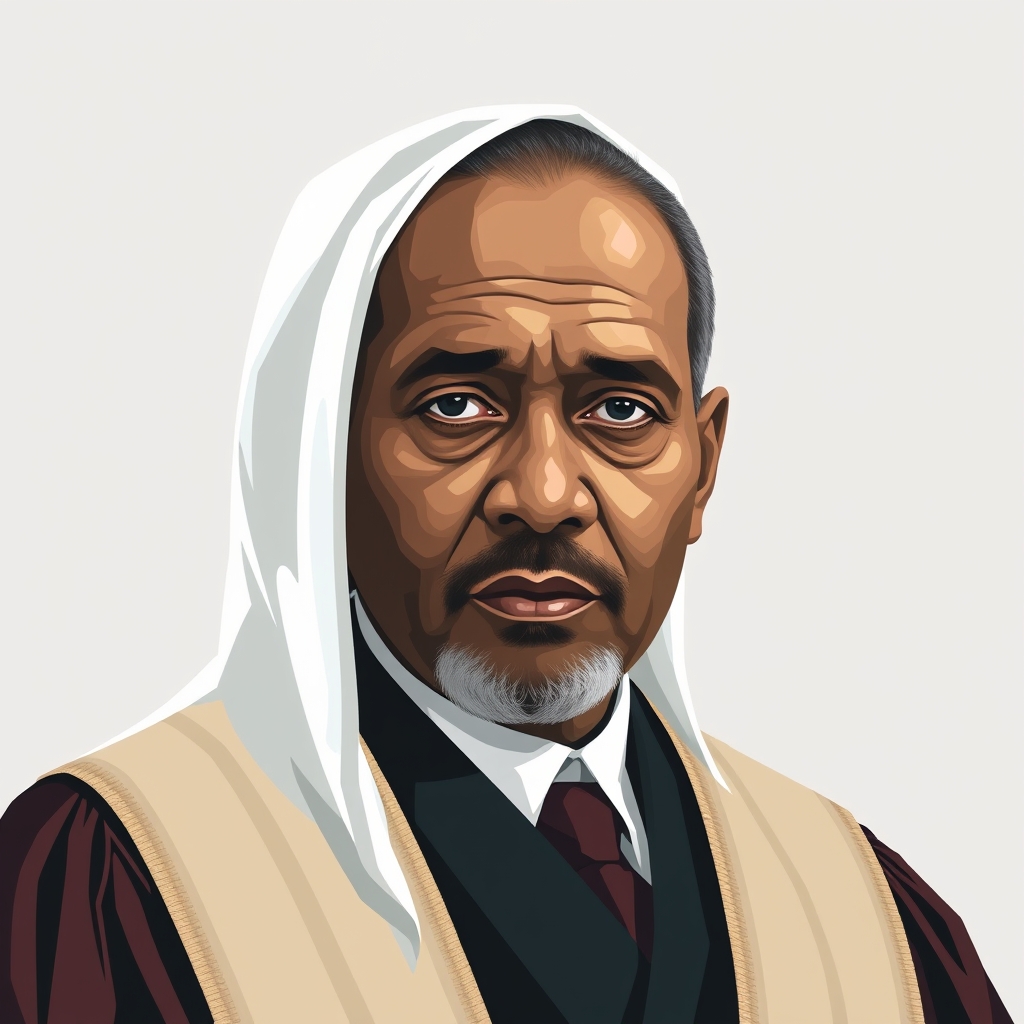
Somalia's former Chief Justice
VS
Somali security forces

Somalia's former Chief Justice alleges that more than 300 security forces militarily occupied the Supreme Court.
The dispute centers on whether the security presence constitutes an illegitimate seizure of the judiciary.
*AI-generated summary of publicly available data. This is not an official statement of any party.
*AI-generated summary of publicly available statements and reporting. This is not an official statement of this party.
Supporters of Somalia's former Chief Justice argue the armed occupation of the Supreme Court violates the cultural principle that an independent judiciary is the guardian of Somali sovereignty and national identity.
Supporters of Somalia's former Chief Justice frame the occupation as a cultural assault on the judiciary's independence, arguing that courts must remain a protected national institution free from military presence.
Supporters of Somalia's former Chief Justice counter that clan-based legal order is itself contested, arguing that equating inherited custom with national stability erases other cultural and legal traditions Somalis hold.
Supporters of Somalia's former Chief Justice argue that deploying over 300 security forces into the Supreme Court constitutes an unlawful seizure of the judiciary, violating judicial independence.
Supporters of Somalia's former Chief Justice argue that the reported deployment of over 300 security forces into the Supreme Court constitutes an unlawful seizure of judicial premises, violating the constitutional separation of powers.
Supporters of Somalia's former Chief Justice counter that no executive authority permits armed forces to displace a sitting court, and that the absence of a prior ruling cannot itself validate the deployment.
Supporters of Somalia's former Chief Justice argue that deploying 300+ forces to the Supreme Court is a raw power play—courts only stay independent when no armed faction can encircle them.
Supporters of Somalia's former Chief Justice argue the 300-strong deployment is a raw power play to capture the judiciary, and that whoever controls the court's doors controls its rulings.
Supporters of Somalia's former Chief Justice counter that holding a courthouse without the judge's legitimacy hands rivals a hollow prize—they argue the former Chief Justice retains the constitutional authority that bullets cannot confer, making the seizure a liability.
Supporters of Somalia's former Chief Justice argue that deploying 300+ security forces to occupy the Supreme Court is a moral affront to judicial independence and the rule of law.
Supporters of Somalia's former Chief Justice argue that a judiciary ringed by 300 armed security forces cannot be impartial, and they frame the occupation as a moral betrayal of judicial independence.
Supporters of Somalia's former Chief Justice counter that armed security at the Supreme Court imposes fear on the bench, and that coercion of judges is itself an assault on judicial independence, not a moral duty to protect it.
Supporters of Somalia's former Chief Justice argue that an armed occupation of the Supreme Court violates the sanctity of justice, which Islamic doctrine holds as a sacred trust, and they cite the more than 300 forces deployed as evidence of an illegitimate seizure.
Supporters of Somalia's former Chief Justice invoke the principle that justice must be free from coercion, arguing that a judiciary under military occupation cannot render impartial judgment.
Supporters of Somalia's former Chief Justice counter that Islamic law forbids fitna committed in the name of preventing it, arguing that a judiciary secured by force, not consent, cannot render the qadi's judgment legitimate.
*AI-generated summary of publicly available statements and reporting. This is not an official statement of this party.
Supporters of Somali security forces argue the court deployment upholds the country's inherited legal order and clan-based stability, contending that respecting judicial institutions means protecting them from disruption rather than abandoning them.
Supporters of Somali security forces argue the deployment protects a national institution central to the country's legal traditions, maintaining that guarding the Supreme Court upholds constitutional order rather than undermining it.
Supporters of Somali security forces counter that Somali customary governance (xeer) has always fused security and communal authority, so protecting the court is itself an inherited duty, not a foreign assault on judicial culture.
Supporters of Somali security forces argue the Supreme Court deployment was a lawful, proportionate measure to protect judicial institutions, not an occupation, and that security operations fall under executive authority absent a court ruling finding otherwise.
Supporters of Somali security forces argue the court deployment was a lawful security measure, not an occupation, and that protecting judicial institutions falls within the forces' legal mandate absent evidence of an unconstitutional seizure.
Supporters of Somali security forces counter that the deployment was a lawful protective measure authorized under security protocols, not a seizure, and that judicial independence is not breached by forces securing a courthouse against identified threats.
Supporters of Somali security forces argue that controlling the Supreme Court building is a pragmatic move to secure state authority, and they maintain that whoever holds the courthouse sets the terms of judicial power.
Supporters of Somali security forces argue the court deployment protects state authority, framing judicial independence as secondary to regime survival; control of institutions, not legal principle, determines who governs.
Supporters of Somali security forces counter that the justices' own legitimacy rested on armed enforcement, since a court ruling without coercive backing is unenforceable, so control of the courthouse is the prize both sides actually contest.
Supporters of Somali security forces argue that protecting judicial institutions from internal threats is a moral duty, and they maintain that a security presence at the Supreme Court safeguards the judiciary rather than seizing it.
Supporters of Somali security forces argue that protecting judicial institutions from internal threats is a moral duty, maintaining that security deployments safeguard the court's integrity rather than undermine it.
Supporters of Somali security forces counter that protecting court institutions and the public from threats is itself a moral duty, arguing that security presence safeguards the judiciary rather than undermining it.
Supporters of Somali security forces argue that protecting state institutions, including the Supreme Court, is a religious duty to preserve order and guard against fitna, and they maintain that the force acted to secure the judiciary rather than seize it.
Supporters of Somali security forces maintain that protecting the Supreme Court upholds the religious duty of preserving justice and public order, arguing that safeguarding state institutions serves the common good.
Supporters of Somali security forces counter that protecting the courts from militant attack is itself a religious duty, since preserving life and public order takes precedence under Islamic doctrine over claims of institutional sanctity.
AI-generated summary of publicly available statements and reporting. This is not an official statement of this party.
Supporters of Somalia's former Chief Justice argue the armed occupation of the Supreme Court violates the cultural principle that an independent judiciary is the guardian of Somali sovereignty and national identity.
Supporters of Somalia's former Chief Justice frame the occupation as a cultural assault on the judiciary's independence, arguing that courts must remain a protected national institution free from military presence.
Supporters of Somalia's former Chief Justice counter that clan-based legal order is itself contested, arguing that equating inherited custom with national stability erases other cultural and legal traditions Somalis hold.
Supporters of Somalia's former Chief Justice argue that deploying over 300 security forces into the Supreme Court constitutes an unlawful seizure of the judiciary, violating judicial independence.
Supporters of Somalia's former Chief Justice argue that the reported deployment of over 300 security forces into the Supreme Court constitutes an unlawful seizure of judicial premises, violating the constitutional separation of powers.
Supporters of Somalia's former Chief Justice counter that no executive authority permits armed forces to displace a sitting court, and that the absence of a prior ruling cannot itself validate the deployment.
Supporters of Somalia's former Chief Justice argue that deploying 300+ forces to the Supreme Court is a raw power play—courts only stay independent when no armed faction can encircle them.
Supporters of Somalia's former Chief Justice argue the 300-strong deployment is a raw power play to capture the judiciary, and that whoever controls the court's doors controls its rulings.
Supporters of Somalia's former Chief Justice counter that holding a courthouse without the judge's legitimacy hands rivals a hollow prize—they argue the former Chief Justice retains the constitutional authority that bullets cannot confer, making the seizure a liability.
Supporters of Somalia's former Chief Justice argue that deploying 300+ security forces to occupy the Supreme Court is a moral affront to judicial independence and the rule of law.
Supporters of Somalia's former Chief Justice argue that a judiciary ringed by 300 armed security forces cannot be impartial, and they frame the occupation as a moral betrayal of judicial independence.
Supporters of Somalia's former Chief Justice counter that armed security at the Supreme Court imposes fear on the bench, and that coercion of judges is itself an assault on judicial independence, not a moral duty to protect it.
Supporters of Somalia's former Chief Justice argue that an armed occupation of the Supreme Court violates the sanctity of justice, which Islamic doctrine holds as a sacred trust, and they cite the more than 300 forces deployed as evidence of an illegitimate seizure.
Supporters of Somalia's former Chief Justice invoke the principle that justice must be free from coercion, arguing that a judiciary under military occupation cannot render impartial judgment.
Supporters of Somalia's former Chief Justice counter that Islamic law forbids fitna committed in the name of preventing it, arguing that a judiciary secured by force, not consent, cannot render the qadi's judgment legitimate.
Supporters of Somali security forces argue the court deployment upholds the country's inherited legal order and clan-based stability, contending that respecting judicial institutions means protecting them from disruption rather than abandoning them.
Supporters of Somali security forces argue the deployment protects a national institution central to the country's legal traditions, maintaining that guarding the Supreme Court upholds constitutional order rather than undermining it.
Supporters of Somali security forces counter that Somali customary governance (xeer) has always fused security and communal authority, so protecting the court is itself an inherited duty, not a foreign assault on judicial culture.
Supporters of Somali security forces argue the Supreme Court deployment was a lawful, proportionate measure to protect judicial institutions, not an occupation, and that security operations fall under executive authority absent a court ruling finding otherwise.
Supporters of Somali security forces argue the court deployment was a lawful security measure, not an occupation, and that protecting judicial institutions falls within the forces' legal mandate absent evidence of an unconstitutional seizure.
Supporters of Somali security forces counter that the deployment was a lawful protective measure authorized under security protocols, not a seizure, and that judicial independence is not breached by forces securing a courthouse against identified threats.
Supporters of Somali security forces argue that controlling the Supreme Court building is a pragmatic move to secure state authority, and they maintain that whoever holds the courthouse sets the terms of judicial power.
Supporters of Somali security forces argue the court deployment protects state authority, framing judicial independence as secondary to regime survival; control of institutions, not legal principle, determines who governs.
Supporters of Somali security forces counter that the justices' own legitimacy rested on armed enforcement, since a court ruling without coercive backing is unenforceable, so control of the courthouse is the prize both sides actually contest.
Supporters of Somali security forces argue that protecting judicial institutions from internal threats is a moral duty, and they maintain that a security presence at the Supreme Court safeguards the judiciary rather than seizing it.
Supporters of Somali security forces argue that protecting judicial institutions from internal threats is a moral duty, maintaining that security deployments safeguard the court's integrity rather than undermine it.
Supporters of Somali security forces counter that protecting court institutions and the public from threats is itself a moral duty, arguing that security presence safeguards the judiciary rather than undermining it.
Supporters of Somali security forces argue that protecting state institutions, including the Supreme Court, is a religious duty to preserve order and guard against fitna, and they maintain that the force acted to secure the judiciary rather than seize it.
Supporters of Somali security forces maintain that protecting the Supreme Court upholds the religious duty of preserving justice and public order, arguing that safeguarding state institutions serves the common good.
Supporters of Somali security forces counter that protecting the courts from militant attack is itself a religious duty, since preserving life and public order takes precedence under Islamic doctrine over claims of institutional sanctity.
More than 300 security forces militarily occupied Somalia's Supreme Court, according to the former Chief Justice.