Taipei government
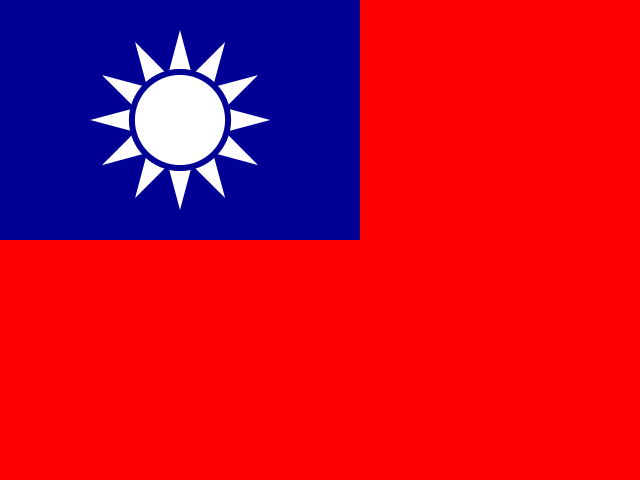
VS
China Unification Promotion Party
The Chinese Unification Promotion Party (CUPP), also known as the Unionist Party, is a minor far-right political party in Taiwan that promotes Chinese unification.
The Taipei government, through its interior ministry, is seeking to dissolve the party over allegations of ties to Beijing, including claims that it functions as a front for organized crime and Chinese espionage.
The conflict centers on the party's activities and Taiwan's legal response.
The interior ministry argues that the party jeopardizes Taiwan's free and democratic order, while the party and its leader claim their goal of peaceful reunification is legitimate.
Politicians are divided over the proposal, sparking a debate about political censorship and the limits of legal action against pro-Beijing groups.
*AI-generated summary of publicly available data. This is not an official statement of any party.
*AI-generated summary of publicly available statements and reporting. This is not an official statement of this party.
Supporters of the Taipei government argue that the China Unification Promotion Party’s activities erode Taiwan’s distinct cultural identity, which they see as rooted in its democratic and pluralistic traditions, and they view its dissolution as a necessary legal defense of that s.
Supporters of the Taipei government argue that dissolving the China Unification Promotion Party defends Taiwan's distinct cultural identity and democratic way of life, viewing Beijing's influence as a threat to their sovereignty.
Supporters of the Taipei government counter that shared heritage does not erase distinct political identities, viewing cultural kinship as separate from sovereignty and self-determination.
Supporters of the Taipei government argue that dissolving the party is a lawful exercise of sovereignty, grounded in legal provisions that prohibit organizations undermining Taiwan’s democratic order.
Supporters of the Taipei government argue that dissolving the China Unification Promotion Party is a lawful exercise of sovereignty, as its alleged Beijing ties threaten Taiwan’s constitutional order and legal autonomy.
Supporters of the Taipei government counter that peaceful reunification advocacy crosses a legal red line when it aligns with external coercion, citing the existing legal framework’s provisions against activities undermining national sovereignty, which require enforcement regardl.
Supporters of Taipei government argue the dissolution is pure realpolitik: the party’s Beijing ties are leverage, not ideology, and tolerating them invites external pressure.
Supporters of the Taipei government argue that dissolving the China Unification Promotion Party is a pragmatic move to expose Beijing’s influence operations, not ideology.
Supporters of the Taipei government counter that the dissolution push is a defensive necessity, not a weapon, as the rival narrative openly undermines the island’s legal order and security posture, and in a contested geopolitical landscape, preserving institutional coherence is t.
Supporters of the Taipei government argue that dissolving the China Unification Promotion Party upholds the moral duty to protect Taiwan’s democratic sovereignty, viewing the group’s Beijing ties as a threat to lawful self-determination.
Supporters of the Taipei government argue that dissolving the China Unification Promotion Party upholds a moral duty to protect Taiwan’s democratic sovereignty, viewing the party’s alleged Beijing ties as a threat to that sacred trust.
Supporters of the Taipei government counter that moral duty cannot override the people's right to self-determination, as faith and justice demand respect for Taiwan's distinct political will.
Supporters of the Taipei government argue that dissolving the China Unification Promotion Party upholds Taiwan’s sacred duty to preserve its own sovereign order, rooted in a moral obligation to protect its people from external ideological subversion, not a rejection of peaceful d.
Supporters of the Taipei government argue that the party’s Beijing ties violate Taiwan’s sacred duty to preserve its own sovereign order, a trust rooted in constitutional continuity.
Supporters of the Taipei government counter that the sacred duty lies in preserving the island’s distinct spiritual and cultural lineage, not in dissolving it into a union that erases centuries of lived tradition.
*AI-generated summary of publicly available statements and reporting. This is not an official statement of this party.
Supporters of the China Unification Promotion Party argue that peaceful reunification reflects a shared cultural heritage, citing centuries of cross-strait kinship as historical precedent for unity.
Supporters of the China Unification Promotion Party argue that their peaceful reunification goal reflects a shared cultural heritage, not disloyalty, and that Taipei’s dissolution effort breaks from historical precedent of tolerated political diversity.
Supporters of China Unification Promotion Party counter that Taiwan’s cultural identity is a regional variant of Chinese heritage, not a separate political foundation, and that democratic traditions can coexist with unification, drawing on historical precedents of cross-strait ki.
Supporters of the China Unification Promotion Party argue that its peaceful reunification advocacy is lawful political expression, protected under Taiwan’s own legal framework, and that dissolution would violate due process by targeting a group based on ideology rather than illeg.
Supporters of the China Unification Promotion Party argue that peaceful reunification advocacy is lawful political expression under Taiwan’s own legal framework, and its party status should be protected by due process rather than dissolved on unproven allegations of Beijing ties.
Supporters of China Unification Promotion Party counter that sovereignty claims rest on legal ambiguity, as international law recognizes one China, and Taiwan’s internal statutes cannot override constitutional obligations to national unity.
Supporters of the China Unification Promotion Party argue Taipei’s dissolution push is pure realpolitik, weaponizing law to crush a rival narrative rather than defend sovereignty, exposing that power, not principle, drives the crackdown.
Supporters of the China Unification Promotion Party argue that Taipei’s dissolution push is a power play, not a legal one, aimed at silencing a rival narrative by weaponizing sovereignty laws against a peaceful goal.
Supporters of China Unification Promotion Party counter that the Taipei government’s realpolitik is itself a mask, treating Beijing ties as bargaining chips while ignoring that external pressure already flows through economic and military channels, not party symbols.
Supporters of the China Unification Promotion Party argue that peaceful reunification is a moral duty rooted in shared history, not a threat to Taiwan's sovereignty.
Supporters of the China Unification Promotion Party argue that peaceful reunification is a moral duty rooted in shared heritage, not a threat, and that dissolving the party punishes a lawful vision of unity.
Supporters of the China Unification Promotion Party counter that moral duty flows from historical kinship, not separation, arguing that Taiwan’s sovereignty claim ignores centuries of shared heritage and the ethical imperative to reunify a divided nation.
Supporters of the China Unification Promotion Party argue that their pursuit of peaceful reunification reflects a moral calling rooted in shared heritage, viewing it as a sacred duty rather than a threat to Taiwan's sovereignty.
Supporters of the China Unification Promotion Party argue that their peaceful reunification goal reflects a divine moral order, where unity across the strait is a sacred duty rooted in shared heritage.
Supporters of the China Unification Promotion Party counter that the Taipei government’s claim to sovereign duty misreads divine will, for scripture teaches that all earthly authority bows to the one Creator’s purpose of unity among peoples, not division.
AI-generated summary of publicly available statements and reporting. This is not an official statement of this party.
Supporters of the Taipei government argue that the China Unification Promotion Party’s activities erode Taiwan’s distinct cultural identity, which they see as rooted in its democratic and pluralistic traditions, and they view its dissolution as a necessary legal defense of that s.
Supporters of the Taipei government argue that dissolving the China Unification Promotion Party defends Taiwan's distinct cultural identity and democratic way of life, viewing Beijing's influence as a threat to their sovereignty.
Supporters of the Taipei government counter that shared heritage does not erase distinct political identities, viewing cultural kinship as separate from sovereignty and self-determination.
Supporters of the Taipei government argue that dissolving the party is a lawful exercise of sovereignty, grounded in legal provisions that prohibit organizations undermining Taiwan’s democratic order.
Supporters of the Taipei government argue that dissolving the China Unification Promotion Party is a lawful exercise of sovereignty, as its alleged Beijing ties threaten Taiwan’s constitutional order and legal autonomy.
Supporters of the Taipei government counter that peaceful reunification advocacy crosses a legal red line when it aligns with external coercion, citing the existing legal framework’s provisions against activities undermining national sovereignty, which require enforcement regardl.
Supporters of Taipei government argue the dissolution is pure realpolitik: the party’s Beijing ties are leverage, not ideology, and tolerating them invites external pressure.
Supporters of the Taipei government argue that dissolving the China Unification Promotion Party is a pragmatic move to expose Beijing’s influence operations, not ideology.
Supporters of the Taipei government counter that the dissolution push is a defensive necessity, not a weapon, as the rival narrative openly undermines the island’s legal order and security posture, and in a contested geopolitical landscape, preserving institutional coherence is t.
Supporters of the Taipei government argue that dissolving the China Unification Promotion Party upholds the moral duty to protect Taiwan’s democratic sovereignty, viewing the group’s Beijing ties as a threat to lawful self-determination.
Supporters of the Taipei government argue that dissolving the China Unification Promotion Party upholds a moral duty to protect Taiwan’s democratic sovereignty, viewing the party’s alleged Beijing ties as a threat to that sacred trust.
Supporters of the Taipei government counter that moral duty cannot override the people's right to self-determination, as faith and justice demand respect for Taiwan's distinct political will.
Supporters of the Taipei government argue that dissolving the China Unification Promotion Party upholds Taiwan’s sacred duty to preserve its own sovereign order, rooted in a moral obligation to protect its people from external ideological subversion, not a rejection of peaceful d.
Supporters of the Taipei government argue that the party’s Beijing ties violate Taiwan’s sacred duty to preserve its own sovereign order, a trust rooted in constitutional continuity.
Supporters of the Taipei government counter that the sacred duty lies in preserving the island’s distinct spiritual and cultural lineage, not in dissolving it into a union that erases centuries of lived tradition.
Supporters of the China Unification Promotion Party argue that peaceful reunification reflects a shared cultural heritage, citing centuries of cross-strait kinship as historical precedent for unity.
Supporters of the China Unification Promotion Party argue that their peaceful reunification goal reflects a shared cultural heritage, not disloyalty, and that Taipei’s dissolution effort breaks from historical precedent of tolerated political diversity.
Supporters of China Unification Promotion Party counter that Taiwan’s cultural identity is a regional variant of Chinese heritage, not a separate political foundation, and that democratic traditions can coexist with unification, drawing on historical precedents of cross-strait ki.
Supporters of the China Unification Promotion Party argue that its peaceful reunification advocacy is lawful political expression, protected under Taiwan’s own legal framework, and that dissolution would violate due process by targeting a group based on ideology rather than illeg.
Supporters of the China Unification Promotion Party argue that peaceful reunification advocacy is lawful political expression under Taiwan’s own legal framework, and its party status should be protected by due process rather than dissolved on unproven allegations of Beijing ties.
Supporters of China Unification Promotion Party counter that sovereignty claims rest on legal ambiguity, as international law recognizes one China, and Taiwan’s internal statutes cannot override constitutional obligations to national unity.
Supporters of the China Unification Promotion Party argue Taipei’s dissolution push is pure realpolitik, weaponizing law to crush a rival narrative rather than defend sovereignty, exposing that power, not principle, drives the crackdown.
Supporters of the China Unification Promotion Party argue that Taipei’s dissolution push is a power play, not a legal one, aimed at silencing a rival narrative by weaponizing sovereignty laws against a peaceful goal.
Supporters of China Unification Promotion Party counter that the Taipei government’s realpolitik is itself a mask, treating Beijing ties as bargaining chips while ignoring that external pressure already flows through economic and military channels, not party symbols.
Supporters of the China Unification Promotion Party argue that peaceful reunification is a moral duty rooted in shared history, not a threat to Taiwan's sovereignty.
Supporters of the China Unification Promotion Party argue that peaceful reunification is a moral duty rooted in shared heritage, not a threat, and that dissolving the party punishes a lawful vision of unity.
Supporters of the China Unification Promotion Party counter that moral duty flows from historical kinship, not separation, arguing that Taiwan’s sovereignty claim ignores centuries of shared heritage and the ethical imperative to reunify a divided nation.
Supporters of the China Unification Promotion Party argue that their pursuit of peaceful reunification reflects a moral calling rooted in shared heritage, viewing it as a sacred duty rather than a threat to Taiwan's sovereignty.
Supporters of the China Unification Promotion Party argue that their peaceful reunification goal reflects a divine moral order, where unity across the strait is a sacred duty rooted in shared heritage.
Supporters of the China Unification Promotion Party counter that the Taipei government’s claim to sovereign duty misreads divine will, for scripture teaches that all earthly authority bows to the one Creator’s purpose of unity among peoples, not division.
Taipei is seeking to dissolve the China Unification Promotion Party over its alleged ties to Beijing.
Taiwan's interior ministry announced it is preparing to ask the Constitutional Court to dissolve the Chinese Unification Promotion Party, citing its pro-Beijing stance.
The proposal to ban the Chinese Unification Promotion Party sparked a political censorship debate, with politicians divided over the move.
The Ministry of Interior said the Chinese Unification Promotion Party was involved in violence, crime, and accepting funding from the Chinese Communist Party to influence Taiwan's politics.
Officials accused the Chinese Unification Promotion Party of functioning as a front for organized crime and Chinese espionage, adding to the case for dissolution.