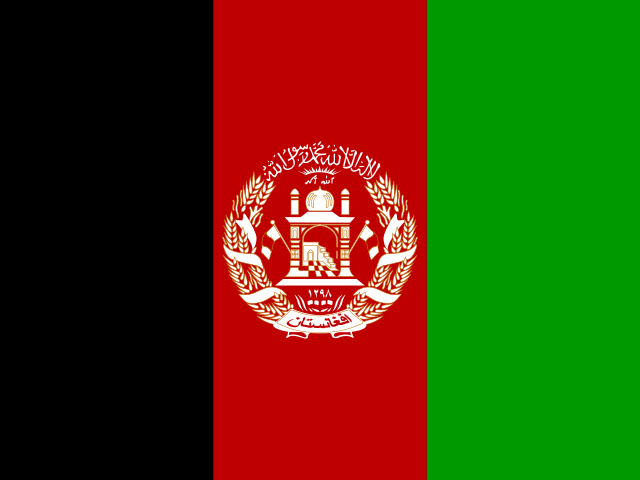
Taliban
VS
UNESCO

The Taliban is the de facto ruling authority in Afghanistan, having taken power in August 2021.
UNESCO is the United Nations Educational, Scientific and Cultural Organization, which promotes international cooperation in education, science, and culture.
Since the Taliban's takeover, UNESCO has documented and condemned the group's restrictions on women's and girls' access to education.
The conflict centers on the Taliban's policies that bar girls from secondary education and women from universities, which UNESCO argues violate fundamental rights and erase decades of educational progress.
UNESCO has reported that 1.4 million girls have been denied secondary education since the Taliban took power, and it has called for the immediate revocation of the ban on women in higher education.
The organization also highlights the broader impact on Afghan society, including the loss of women's dreams and the undermining of cultural heritage protections.
*AI-generated summary of publicly available data. This is not an official statement of any party.
*AI-generated summary of publicly available statements and reporting. This is not an official statement of this party.
Supporters of Taliban argue that their education policy reflects Afghan cultural and religious values, not a rejection of learning itself. They maintain that international standards, like UNESCO's, ignore local traditions and historical precedent in shaping societal roles.
Supporters of Taliban argue their education policy preserves Afghan cultural values and religious norms, viewing UNESCO's demands as foreign imposition that disregards local tradition and historical precedent.
Supporters of the Taliban counter that Afghan heritage is inseparable from Islamic law, which they argue has guided the region for centuries, not secular schooling. They view the ban as upholding, not breaking, a faith-based tradition.
Supporters of Taliban argue that Afghanistan's legal framework, rooted in Islamic jurisprudence, grants the state authority to regulate education as a matter of national sovereignty.
Supporters of Taliban argue that Afghanistan’s Islamic legal framework grants the state authority to define education policy, making UNESCO’s demands an external imposition on national sovereignty.
Supporters of Taliban counter that Afghanistan’s treaty obligations are superseded by domestic sharia law, which they argue is the supreme legal authority, rendering the Convention’s provisions inapplicable to national education policy.
Supporters of Taliban argue that restricting girls' secondary schooling is a pragmatic lever to preserve tribal authority and deter foreign cultural penetration, viewing UNESCO's projections as Western pressure that ignores local power realities.
Supporters of Taliban argue that restricting girls' secondary schooling is a calculated price for internal stability, prioritizing rural tribal consent over UNESCO's moral metrics; they see foreign pressure as leverage, not a reason to change course.
Supporters of Taliban counter that the ban is less a calculated lever than a costly concession to rural clerics whose loyalty the regime cannot afford to lose, and that UNESCO’s reading overstates rational design where survival dictates compromise.
Supporters of Taliban argue that preserving cultural and religious values justifies restricting girls' secondary education, framing it as a moral duty to protect societal order.
Supporters of the Taliban argue that their education policy upholds moral and cultural values, prioritizing societal harmony over international standards, which they view as external impositions.
Supporters of the Taliban counter that their restrictions uphold a divine moral order, where modesty and faith guard women's sacred honor, not Western notions of equal worth.
Supporters of Taliban argue that their education policy follows divine law, which they believe prioritizes faith and modesty over secular schooling for girls.
Supporters of Taliban argue that divine law mandates gender separation in education, viewing Western schooling models as a threat to faith and modesty. They cite scripture to justify restrictions, insisting true knowledge comes through religious instruction.
Supporters of Taliban counter that true Islamic knowledge is inseparable from divine guidance, and that Western-style schooling risks corrupting faith; they argue that girls' education must align with Sharia, not UNESCO's secular standards.
*AI-generated summary of publicly available statements and reporting. This is not an official statement of this party.
Supporters of UNESCO argue that Afghan cultural heritage itself is rooted in learning, and they see the girls' education ban as a break from that tradition, not a preservation of it.
Supporters of UNESCO argue that Afghanistan’s educational traditions, once inclusive, are being severed by the Taliban, undermining cultural continuity and social stability.
Supporters of UNESCO counter that cultural identity must not be conflated with the denial of universal rights, arguing that Afghanistan's own heritage—including its rich tradition of female scholars—contradicts the Taliban's selective reading of history.
Supporters of UNESCO argue that Taliban edicts barring Afghan girls from secondary classrooms violate binding human-rights treaties, including the Convention on the Rights of the Child, to which Afghanistan is a party.
Supporters of UNESCO argue that the Taliban’s education ban violates Afghanistan’s binding legal commitments to international human rights treaties, including the right to education for all, and that this policy constitutes a clear breach of international law.
Supporters of UNESCO counter that Afghanistan’s sovereignty does not override binding international human rights law, which guarantees equal access to education for all, including women and girls, as a fundamental legal obligation.
Supporters of UNESCO argue that the Taliban’s education ban is a strategic lever for legitimacy, not piety; denying girls schooling consolidates rural control and bargaining power.
Supporters of UNESCO argue that the Taliban’s policy is pure power play, using girls’ education as a bargaining chip for recognition and aid, not religious principle.
Supporters of UNESCO counter that the Taliban’s "pragmatism" is a fragile bargain: tribal authority built on excluding half the population invites chronic instability, foreign aid withdrawal, and internal dissent, making the lever a long-term strategic liability, not a shield.
Supporters of UNESCO argue that denying 2.4 million Afghan girls education violates a sacred moral duty to nurture human dignity and equal worth before God.
Supporters of UNESCO argue that denying 2.4 million Afghan girls secondary education violates a divine duty to seek knowledge, a moral principle enshrined in scripture and human dignity, making the Taliban’s policy a grave injustice.
Supporters of UNESCO counter that true moral duty is the equal dignity of every child before God, and that barring girls from learning contradicts the shared sacred texts that command seeking knowledge for all.
Supporters of UNESCO argue that educating girls honors the religious duty to seek knowledge, which Islam itself upholds, and they call on the Taliban to restore access as a moral obligation.
Supporters of UNESCO argue that Islamic tradition values learning for all believers, citing the faith's historical legacy of female scholarship as grounds for restoring Afghan girls' schooling.
Supporters of UNESCO counter that divine law, as interpreted across Islamic history, has long embraced girls’ education, citing the Prophet’s own encouragement of learning for all.
AI-generated summary of publicly available statements and reporting. This is not an official statement of this party.
Supporters of Taliban argue that their education policy reflects Afghan cultural and religious values, not a rejection of learning itself. They maintain that international standards, like UNESCO's, ignore local traditions and historical precedent in shaping societal roles.
Supporters of Taliban argue their education policy preserves Afghan cultural values and religious norms, viewing UNESCO's demands as foreign imposition that disregards local tradition and historical precedent.
Supporters of the Taliban counter that Afghan heritage is inseparable from Islamic law, which they argue has guided the region for centuries, not secular schooling. They view the ban as upholding, not breaking, a faith-based tradition.
Supporters of Taliban argue that Afghanistan's legal framework, rooted in Islamic jurisprudence, grants the state authority to regulate education as a matter of national sovereignty.
Supporters of Taliban argue that Afghanistan’s Islamic legal framework grants the state authority to define education policy, making UNESCO’s demands an external imposition on national sovereignty.
Supporters of Taliban counter that Afghanistan’s treaty obligations are superseded by domestic sharia law, which they argue is the supreme legal authority, rendering the Convention’s provisions inapplicable to national education policy.
Supporters of Taliban argue that restricting girls' secondary schooling is a pragmatic lever to preserve tribal authority and deter foreign cultural penetration, viewing UNESCO's projections as Western pressure that ignores local power realities.
Supporters of Taliban argue that restricting girls' secondary schooling is a calculated price for internal stability, prioritizing rural tribal consent over UNESCO's moral metrics; they see foreign pressure as leverage, not a reason to change course.
Supporters of Taliban counter that the ban is less a calculated lever than a costly concession to rural clerics whose loyalty the regime cannot afford to lose, and that UNESCO’s reading overstates rational design where survival dictates compromise.
Supporters of Taliban argue that preserving cultural and religious values justifies restricting girls' secondary education, framing it as a moral duty to protect societal order.
Supporters of the Taliban argue that their education policy upholds moral and cultural values, prioritizing societal harmony over international standards, which they view as external impositions.
Supporters of the Taliban counter that their restrictions uphold a divine moral order, where modesty and faith guard women's sacred honor, not Western notions of equal worth.
Supporters of Taliban argue that their education policy follows divine law, which they believe prioritizes faith and modesty over secular schooling for girls.
Supporters of Taliban argue that divine law mandates gender separation in education, viewing Western schooling models as a threat to faith and modesty. They cite scripture to justify restrictions, insisting true knowledge comes through religious instruction.
Supporters of Taliban counter that true Islamic knowledge is inseparable from divine guidance, and that Western-style schooling risks corrupting faith; they argue that girls' education must align with Sharia, not UNESCO's secular standards.
Supporters of UNESCO argue that Afghan cultural heritage itself is rooted in learning, and they see the girls' education ban as a break from that tradition, not a preservation of it.
Supporters of UNESCO argue that Afghanistan’s educational traditions, once inclusive, are being severed by the Taliban, undermining cultural continuity and social stability.
Supporters of UNESCO counter that cultural identity must not be conflated with the denial of universal rights, arguing that Afghanistan's own heritage—including its rich tradition of female scholars—contradicts the Taliban's selective reading of history.
Supporters of UNESCO argue that Taliban edicts barring Afghan girls from secondary classrooms violate binding human-rights treaties, including the Convention on the Rights of the Child, to which Afghanistan is a party.
Supporters of UNESCO argue that the Taliban’s education ban violates Afghanistan’s binding legal commitments to international human rights treaties, including the right to education for all, and that this policy constitutes a clear breach of international law.
Supporters of UNESCO counter that Afghanistan’s sovereignty does not override binding international human rights law, which guarantees equal access to education for all, including women and girls, as a fundamental legal obligation.
Supporters of UNESCO argue that the Taliban’s education ban is a strategic lever for legitimacy, not piety; denying girls schooling consolidates rural control and bargaining power.
Supporters of UNESCO argue that the Taliban’s policy is pure power play, using girls’ education as a bargaining chip for recognition and aid, not religious principle.
Supporters of UNESCO counter that the Taliban’s "pragmatism" is a fragile bargain: tribal authority built on excluding half the population invites chronic instability, foreign aid withdrawal, and internal dissent, making the lever a long-term strategic liability, not a shield.
Supporters of UNESCO argue that denying 2.4 million Afghan girls education violates a sacred moral duty to nurture human dignity and equal worth before God.
Supporters of UNESCO argue that denying 2.4 million Afghan girls secondary education violates a divine duty to seek knowledge, a moral principle enshrined in scripture and human dignity, making the Taliban’s policy a grave injustice.
Supporters of UNESCO counter that true moral duty is the equal dignity of every child before God, and that barring girls from learning contradicts the shared sacred texts that command seeking knowledge for all.
Supporters of UNESCO argue that educating girls honors the religious duty to seek knowledge, which Islam itself upholds, and they call on the Taliban to restore access as a moral obligation.
Supporters of UNESCO argue that Islamic tradition values learning for all believers, citing the faith's historical legacy of female scholarship as grounds for restoring Afghan girls' schooling.
Supporters of UNESCO counter that divine law, as interpreted across Islamic history, has long embraced girls’ education, citing the Prophet’s own encouragement of learning for all.
UNESCO reports 2.4 million Afghan girls denied further education, projecting 4 million by 2030 unless policy changes.
UNESCO reported that three years of Taliban rule has barred 1.4 million girls from accessing secondary education, wiping out 'two decades of progress' in education in Afghanistan.
UNESCO tweeted that the dreams and hopes of girls and women in Afghanistan have been ripped away, and their fundamental rights are being denied, highlighting the emotional and societal toll of the Taliban's policies.
UNESCO issued a statement strongly condemning the Taliban's decision to ban women from attending universities, calling for its immediate revocation. The ban came fifteen months after the Taliban excluded girls from secondary education.
The Taliban regained control of Afghanistan, leading to restrictions on girls' education.