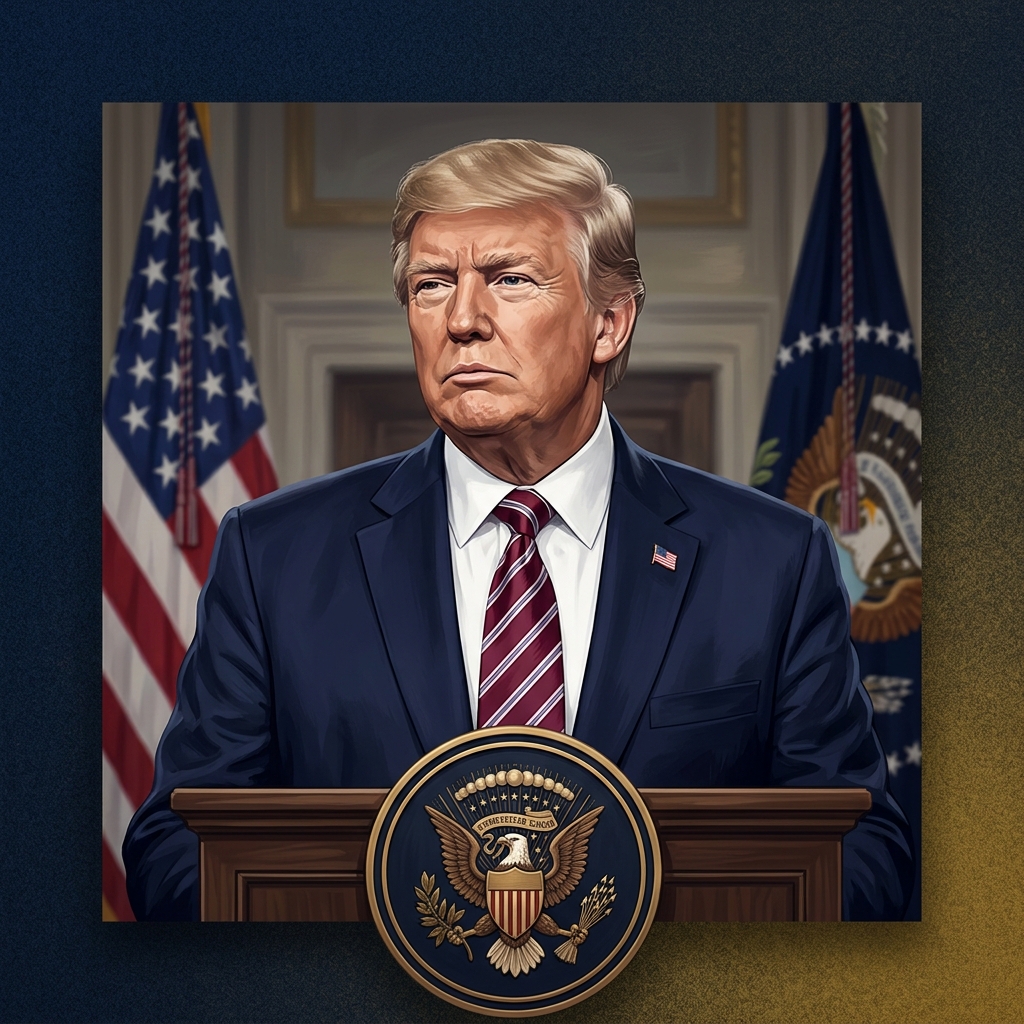
Trump administration

VS
Hamas

The Trump administration, led by President Donald Trump, has taken a prominent role in the Israel-Hamas conflict, proposing plans for Gaza's future.
The administration has suggested that the United States "take over" and "own" the Gaza Strip, and it has opposed Palestinian statehood, equating it to "rewarding Hamas." Hamas, a Palestinian militant group that governs Gaza, has been engaged in conflict with Israel, and the Trump administration has sought to broker a ceasefire and a broader peace plan.
The core disagreement centers on Hamas's disarmament.
The Trump administration, along with Israeli Prime Minister Benjamin Netanyahu, insists that Hamas must disarm as a condition for any lasting peace, while Hamas seeks to maintain its political and military presence in Gaza.
This has led to a failed ceasefire and ongoing tensions, with the administration's approach drawing mixed reactions from the American public and criticism from experts who question the feasibility of the disarmament plan.
*AI-generated summary of publicly available data. This is not an official statement of any party.
*AI-generated summary of publicly available statements and reporting. This is not an official statement of this party.
Supporters of the Trump administration argue that Hamas’s refusal to disarm repeats a historical cycle of failed governance, where militant rule in Gaza has consistently prioritized armed resistance over civilian welfare, and they see Kushner’s proposal as a culturally pragmatic.
Supporters of Trump administration argue that Kushner's meeting mirrors past peace efforts, like Egypt's 1979 treaty, where disarmament preceded stability, and they see Hamas's refusal as repeating history's cycle of resistance to order.
Supporters of the Trump administration counter that Hamas’s armed identity is a modern political construct, not a timeless cultural anchor, and that Palestinian heritage—rooted in agriculture, craft, and faith—predates and outlasts any militia.
Supporters of the Trump administration argue that requiring Hamas to disarm is a lawful condition for any negotiated settlement, as no legitimate governing authority can retain armed control outside state legal frameworks.
Supporters of the Trump administration argue that Hamas's disarmament is a legal prerequisite for any legitimate governance role in Gaza, citing international norms against armed non-state actors controlling territory.
Supporters of the Trump administration counter that international law prioritizes state sovereignty and security, and Hamas’s refusal to recognize Israel’s existence voids any claim to treaty-based protections.
Supporters of the Trump administration argue the disarmament offer is a calculated trap: Hamas keeps its political power only by surrendering its military leverage, or it faces isolation as regional patrons see it as the obstacle to Gaza's reconstruction.
Supporters of the Trump administration argue that Hamas’s refusal to disarm proves the envoy’s leverage is working, forcing a stark choice between survival and irrelevance.
Supporters of Trump administration counter that Hamas’s leverage is only as durable as its military viability, which Israeli strikes have already eroded; disarmament now buys survival and a seat at the table, whereas clinging to arms invites total elimination.
Supporters of Trump administration argue that demanding Hamas disarmament is a moral imperative, as it prioritizes civilian life over militant rule in Gaza.
Supporters of the Trump administration argue that demanding Hamas disarm is a moral imperative, prioritizing the preservation of innocent life in Gaza over any group’s political ambitions.
Supporters of the Trump administration counter that Hamas’s armed struggle, framed as sacred self-defense, has instead inflicted catastrophic harm on Palestinian civilians, making disarmament a moral imperative to protect innocent life and enable a just, negotiated peace.
Supporters of the Trump administration argue that Hamas’s refusal to disarm defies the divine mandate for order, as scripture teaches that governing authority must uphold peace and justice.
Supporters of the Trump administration argue that Hamas’s refusal to disarm defies divine order, as governing authority is a sacred trust that mandates the protection of innocent life over militant ambition.
Supporters of the Trump administration counter that scripture also commands obedience to governing authorities, and that Hamas’s violent resistance corrupts sacred duty into bloodshed, rejecting divine order.
*AI-generated summary of publicly available statements and reporting. This is not an official statement of this party.
Supporters of Hamas argue that disarmament would strip Gaza of its cultural identity of resistance, viewing the militia as an integral defender of Palestinian heritage and national honor.
Supporters of Hamas argue that disarmament would erase Palestinian cultural resistance, viewing armed struggle as inseparable from their national identity and right to self-determination.
Supporters of Hamas counter that disarmament would erase Palestinian cultural resistance, viewing armed struggle as integral to national identity, not a governance failure—Kushner’s plan, in their view, imposes foreign values that ignore Gaza’s collective memory of displacement a.
Supporters of Hamas argue that disarmament without a binding legal framework for Palestinian self-determination violates the group's rights under international law, citing the illegality of unilateral demands absent a negotiated settlement.
Supporters of Hamas argue that disarmament without a binding legal framework for Palestinian statehood and security guarantees is unlawful, as it strips Gaza's elected government of its sovereign right to self-defense under international law.
Supporters of Hamas counter that under international law, occupied peoples retain the right to resist occupation, and disarmament demands by an occupying power lack legal basis absent a binding UN resolution.
Supporters of Hamas see disarmament as political suicide, arguing that giving up arms strips their leverage in any power-sharing deal.
Supporters of Hamas argue that disarmament would forfeit their sole leverage against Israel, trading survival for a U.S. promise; they see the plan as a trap to neuter resistance and hand Gaza to rivals on Washington's terms.
Supporters of Hamas counter that the disarmament offer is a bluff, not a trap: regional patrons fund resistance to preserve leverage, and surrendering arms would invite internal rivals to fill the void, making Hamas weaker while Israel’s military dominance remains untouched.
Supporters of Hamas argue that disarmament would betray their moral duty to resist occupation, viewing their armed struggle as sacred self-defense rather than a negotiable political concession.
Supporters of Hamas argue that disarmament would betray their duty to protect Palestinians, as their resistance is morally justified under divine law.
Supporters of Hamas counter that demanding disarmament before addressing occupation and blockade ignores the moral duty to resist oppression, as self-defense is sacred when civilians face siege.
Supporters of Hamas argue that disarmament defies divine mandate, citing scripture that frames resistance as sacred duty, not a negotiable political concession.
Supporters of Hamas argue that disarmament demands violate divine mandate, citing scripture that frames resistance as sacred duty against oppression in Gaza.
Supporters of Hamas counter that divine law commands resistance against oppressive rule, citing scripture’s call to defend the oppressed, and argue that disarmament under occupation would betray this sacred duty.
AI-generated summary of publicly available statements and reporting. This is not an official statement of this party.
Supporters of the Trump administration argue that Hamas’s refusal to disarm repeats a historical cycle of failed governance, where militant rule in Gaza has consistently prioritized armed resistance over civilian welfare, and they see Kushner’s proposal as a culturally pragmatic.
Supporters of Trump administration argue that Kushner's meeting mirrors past peace efforts, like Egypt's 1979 treaty, where disarmament preceded stability, and they see Hamas's refusal as repeating history's cycle of resistance to order.
Supporters of the Trump administration counter that Hamas’s armed identity is a modern political construct, not a timeless cultural anchor, and that Palestinian heritage—rooted in agriculture, craft, and faith—predates and outlasts any militia.
Supporters of the Trump administration argue that requiring Hamas to disarm is a lawful condition for any negotiated settlement, as no legitimate governing authority can retain armed control outside state legal frameworks.
Supporters of the Trump administration argue that Hamas's disarmament is a legal prerequisite for any legitimate governance role in Gaza, citing international norms against armed non-state actors controlling territory.
Supporters of the Trump administration counter that international law prioritizes state sovereignty and security, and Hamas’s refusal to recognize Israel’s existence voids any claim to treaty-based protections.
Supporters of the Trump administration argue the disarmament offer is a calculated trap: Hamas keeps its political power only by surrendering its military leverage, or it faces isolation as regional patrons see it as the obstacle to Gaza's reconstruction.
Supporters of the Trump administration argue that Hamas’s refusal to disarm proves the envoy’s leverage is working, forcing a stark choice between survival and irrelevance.
Supporters of Trump administration counter that Hamas’s leverage is only as durable as its military viability, which Israeli strikes have already eroded; disarmament now buys survival and a seat at the table, whereas clinging to arms invites total elimination.
Supporters of Trump administration argue that demanding Hamas disarmament is a moral imperative, as it prioritizes civilian life over militant rule in Gaza.
Supporters of the Trump administration argue that demanding Hamas disarm is a moral imperative, prioritizing the preservation of innocent life in Gaza over any group’s political ambitions.
Supporters of the Trump administration counter that Hamas’s armed struggle, framed as sacred self-defense, has instead inflicted catastrophic harm on Palestinian civilians, making disarmament a moral imperative to protect innocent life and enable a just, negotiated peace.
Supporters of the Trump administration argue that Hamas’s refusal to disarm defies the divine mandate for order, as scripture teaches that governing authority must uphold peace and justice.
Supporters of the Trump administration argue that Hamas’s refusal to disarm defies divine order, as governing authority is a sacred trust that mandates the protection of innocent life over militant ambition.
Supporters of the Trump administration counter that scripture also commands obedience to governing authorities, and that Hamas’s violent resistance corrupts sacred duty into bloodshed, rejecting divine order.
Supporters of Hamas argue that disarmament would strip Gaza of its cultural identity of resistance, viewing the militia as an integral defender of Palestinian heritage and national honor.
Supporters of Hamas argue that disarmament would erase Palestinian cultural resistance, viewing armed struggle as inseparable from their national identity and right to self-determination.
Supporters of Hamas counter that disarmament would erase Palestinian cultural resistance, viewing armed struggle as integral to national identity, not a governance failure—Kushner’s plan, in their view, imposes foreign values that ignore Gaza’s collective memory of displacement a.
Supporters of Hamas argue that disarmament without a binding legal framework for Palestinian self-determination violates the group's rights under international law, citing the illegality of unilateral demands absent a negotiated settlement.
Supporters of Hamas argue that disarmament without a binding legal framework for Palestinian statehood and security guarantees is unlawful, as it strips Gaza's elected government of its sovereign right to self-defense under international law.
Supporters of Hamas counter that under international law, occupied peoples retain the right to resist occupation, and disarmament demands by an occupying power lack legal basis absent a binding UN resolution.
Supporters of Hamas see disarmament as political suicide, arguing that giving up arms strips their leverage in any power-sharing deal.
Supporters of Hamas argue that disarmament would forfeit their sole leverage against Israel, trading survival for a U.S. promise; they see the plan as a trap to neuter resistance and hand Gaza to rivals on Washington's terms.
Supporters of Hamas counter that the disarmament offer is a bluff, not a trap: regional patrons fund resistance to preserve leverage, and surrendering arms would invite internal rivals to fill the void, making Hamas weaker while Israel’s military dominance remains untouched.
Supporters of Hamas argue that disarmament would betray their moral duty to resist occupation, viewing their armed struggle as sacred self-defense rather than a negotiable political concession.
Supporters of Hamas argue that disarmament would betray their duty to protect Palestinians, as their resistance is morally justified under divine law.
Supporters of Hamas counter that demanding disarmament before addressing occupation and blockade ignores the moral duty to resist oppression, as self-defense is sacred when civilians face siege.
Supporters of Hamas argue that disarmament defies divine mandate, citing scripture that frames resistance as sacred duty, not a negotiable political concession.
Supporters of Hamas argue that disarmament demands violate divine mandate, citing scripture that frames resistance as sacred duty against oppression in Gaza.
Supporters of Hamas counter that divine law commands resistance against oppressive rule, citing scripture’s call to defend the oppressed, and argue that disarmament under occupation would betray this sacred duty.
Washington’s response to the Houthi advance exposes the limits of the US security umbrella in the Gulf.
Trump envoy Jared Kushner says the US will not allow Gaza to be rebuilt until the enclave is demilitarized and Hamas gives up its weapons Read Full Article at RT.com
Rare meeting between U.S. negotiator Jared Kushner and Hamas chief to push for progress on the Gaza ceasefire.
President Trump announced that Hamas and all other armed groups in Gaza had agreed to disarm, but experts flagged problems with the plan.
A Pew Research poll found that more Americans disapprove (42%) than approve (30%) of the Trump administration's response to the Israel-Hamas conflict.
The Trump administration continued to oppose Palestinian statehood, equating it to "rewarding Hamas" at a time of conflict.
Trump envoy Jared Kushner met with Hamas leaders in Egypt to discuss the Gaza plan, pushing for disarmament to end Hamas's role in running Gaza.
President Trump proposed that the United States "take over" and "own" the Gaza Strip, suggesting long-term control after the conflict.
Jared Kushner met with Israeli Prime Minister Benjamin Netanyahu to discuss the Trump Gaza plan.
Jared Kushner held a rare meeting with Hamas leaders in Egypt.
A ceasefire between Israel and Hamas was signed on January 15, 2025, but the Trump administration failed to enforce its terms, wasting the best opportunity for peace.