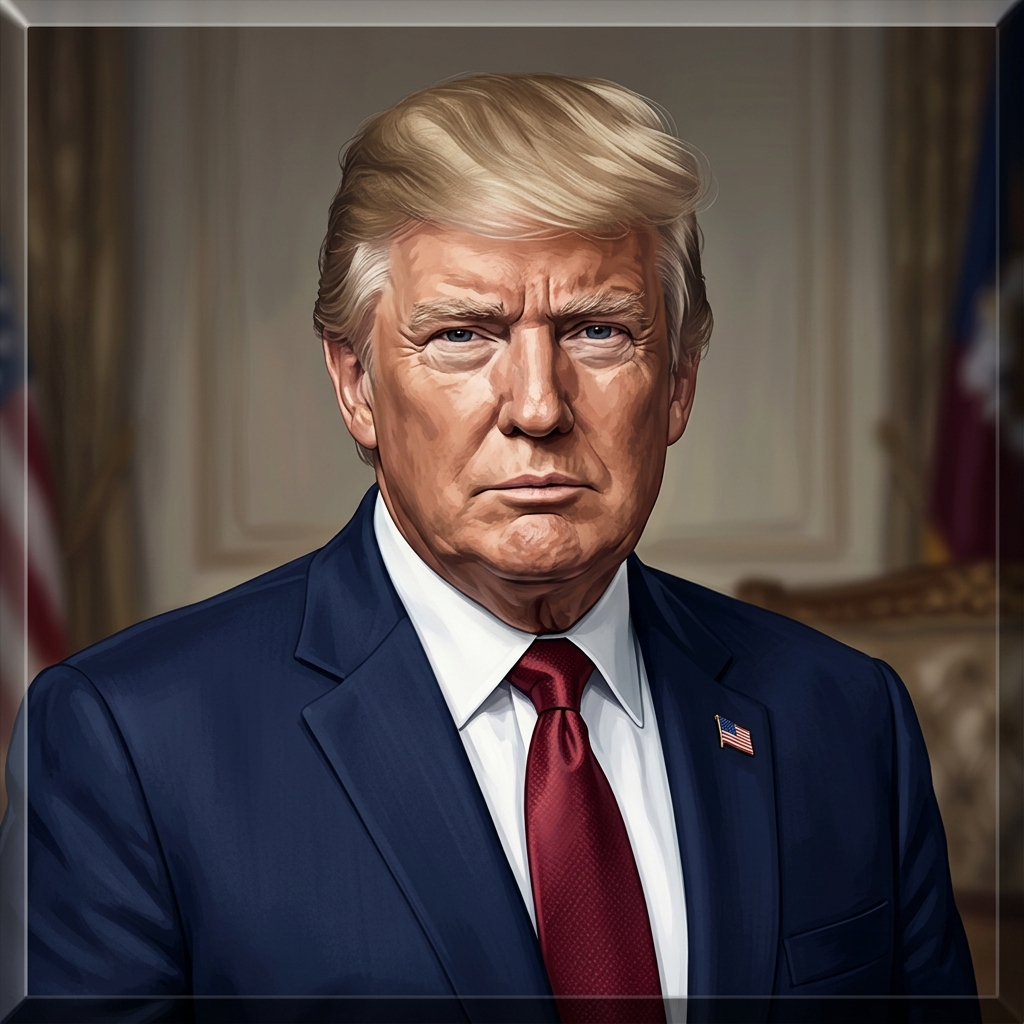
Trump administration
VS
Critics of the Iran war
?
No actors in this side.
No actors in this side.
The Trump administration refers to the presidential administration of Donald J.
Trump, who won a landslide election victory in 2024 and returned to the White House to build upon his previous successes.
Trump previously served as the 45th President of the United States from 2017 to 2021, with Mike Pence as Vice President.
His first administration was marked by significant foreign policy actions, including moving the U.S.
Embassy in Israel from Tel Aviv to Jerusalem and brokering normalization agreements between Israel and several Arab nations.
Critics of the Iran war oppose the Trump administration's policies and actions related to Iran, particularly any military conflict or escalation.
The administration has sought to reframe the narrative around the Iran war ahead of the 2026 midterm elections, aiming to shape public perception and political discourse.
This has created a clash of interests, as critics challenge the administration's framing and question the war's impact on Trump's legacy and political standing.
The stakes involve how the Iran war will be remembered and how it will influence the 2026 midterm elections, with the administration seeking to present its actions favorably while critics push back.
The outcome of this narrative battle could affect Trump's political future and the broader public debate over U.S. foreign policy.
*AI-generated summary of publicly available data. This is not an official statement of any party.
*AI-generated summary of publicly available statements and reporting. This is not an official statement of this party.
Supporters of the Trump administration argue that the Iran war upholds a cultural legacy of American resolve, framing the midterms as a defense of national honor against foreign disorder.
Supporters of the Trump administration argue that the Iran war is a defense of Western cultural continuity, framing it as a stand against ideological forces that threaten inherited social order and stability.
Supporters of the Trump administration counter that such wars, when framed as defending American values and homeland security, historically reinforce cultural unity rather than fracture it.
Supporters of the Trump administration argue that the President’s legal authority to order military action against Iran rests on the Commander-in-Chief Clause, which the courts have long upheld as permitting defensive strikes without prior congressional approval.
Supporters of Trump administration argue that war powers rest with the president as commander-in-chief, legally authorizing the Iran action without prior congressional consent. They maintain the midterm reframing is a lawful exercise of executive authority, not a political.
Supporters of the Trump administration counter that the War Powers Resolution does not bar defensive action, and the 2001 Authorization for Use of Military Force provides a legal basis for strikes against Iranian-backed forces threatening U.S. personnel in the region.
Supporters of Trump administration argue the Iran war is a political asset, not a liability, for the 2026 midterms. They maintain that framing it as a decisive stand against adversaries consolidates the base and forces Democrats into a defensive posture, turning a volatile.
Supporters of the Trump administration argue that reframing the Iran war is pure political survival, not history. They note the November 2026 midterms are the real battlefield, where perception outweighs facts. For them, controlling the war narrative is leverage to retain power,.
Supporters of the Trump administration counter that the midterms are the true theater, and the Iran posture is a calculated lever to command the domestic aisle, not a mask for weakness.
Supporters of the Trump administration argue that history will judge the Iran conflict by its moral aim—protecting American lives—not by midterm politics, citing past wartime presidents as precedent that steadfastness, not polling, defines a legacy.
Supporters of Trump administration argue that history will judge the administration's Iran policy by its outcome, not its timing, framing the midterm reframing as a necessary moral duty to protect national security.
Supporters of the Trump administration counter that moral clarity demands prioritizing American security over abstract humanitarian costs, citing historical precedent where decisive action prevented larger regional conflagrations.
Supporters of the Trump administration argue that the Iran war is a righteous test of national faith, framing the midterms as a divine mandate to persevere in defending order against perceived chaos.
Supporters of Trump administration argue that divine providence guides President Trump's leadership, framing the Iran war as a righteous test of American resolve that scripture calls believers to endure with steadfast faith.
Supporters of the Trump administration counter that divine order also mandates protection of the innocent, and that measured force against tyranny upholds, not defies, sacred duty to preserve life.
*AI-generated summary of publicly available statements and reporting. This is not an official statement of this party.
Supporters of Critics of the Iran war argue that the conflict erodes American cultural cohesion, as families and communities are divided over a distant war that lacks clear national purpose.
Supporters of Critics of the Iran war argue that Trump’s reframing of the conflict erases the cultural trauma inflicted on Iranian and American communities, sacrificing shared human dignity for electoral gain.
Critics of the Iran war counter that invoking American resolve masks a cultural cost, as endless conflict erodes the nation’s civic values and moral standing. They argue that framing midterms as honor-bound warfare distorts patriotism into a tool for division, prioritizing.
Supporters of Critics of the Iran war argue that the administration's reframing lacks legal basis, as Congress never authorized military action against Iran, making the conflict unconstitutional under the War Powers Resolution.
Supporters of Critics of the Iran war argue that the Trump administration's reframing of the war ahead of the 2026 midterms raises legal questions about executive war powers, urging Congress to reassert its constitutional authority over military authorization.
Supporters of Critics of the Iran war counter that the Commander-in-Chief Clause is not a blank check, citing the War Powers Resolution and prior Supreme Court precedent requiring congressional authorization for offensive actions. They argue that a preventive strike lacks the.
Supporters of Critics of the Iran war argue Trump's reframing is raw political survival, not strategy; they see the midterms as his real battlefield, where war rhetoric masks eroding domestic power.
Supporters of the Iran war critics argue Trump’s midterm reframing is pure survival politics, weaponizing patriotic narratives to shield his legacy from electoral backlash. They note the timing—election season, not strategy—exposes a leader prioritizing political calculus over.
Critics of the Iran war counter that the base’s loyalty is worthless without swing voters, and a war’s unpredictable costs—casualties, oil prices, draft rumors—will turn 2026 into a referendum on Trump’s gamble, not a rally. They argue the administration mistakes short-term fear.
Supporters of Critics of the Iran war argue that Trump’s reframing of the conflict for the 2026 midterms is morally hollow, treating lives as a political asset rather than a humanitarian cost.
Supporters of Critics of the Iran war argue that judging the conflict by election results alone is morally hollow, since human costs cannot be offset by political gains.
Critics of the Iran war counter that moral aims cannot sanitize preventable civilian casualties, arguing that protecting American lives does not justify a conflict whose costs fall heaviest on Iranian families.
Supporters of Critics of the Iran war argue that the conflict defies divine order, as scripture warns against reckless aggression and the destruction of human life.
Supporters of Critics of the Iran war argue that the conflict defies divine order, as Trump's campaign reframing treats war as a political tool rather than a moral cause, undermining America's covenant under God.
Critics of the Iran war counter that no earthly conflict can claim divine mandate, as scripture warns against wars of ambition disguised as faith; they argue the midterms are a call to repent, not to persist in a self-inflicted trial.
AI-generated summary of publicly available statements and reporting. This is not an official statement of this party.
Supporters of the Trump administration argue that the Iran war upholds a cultural legacy of American resolve, framing the midterms as a defense of national honor against foreign disorder.
Supporters of the Trump administration argue that the Iran war is a defense of Western cultural continuity, framing it as a stand against ideological forces that threaten inherited social order and stability.
Supporters of the Trump administration counter that such wars, when framed as defending American values and homeland security, historically reinforce cultural unity rather than fracture it.
Supporters of the Trump administration argue that the President’s legal authority to order military action against Iran rests on the Commander-in-Chief Clause, which the courts have long upheld as permitting defensive strikes without prior congressional approval.
Supporters of Trump administration argue that war powers rest with the president as commander-in-chief, legally authorizing the Iran action without prior congressional consent. They maintain the midterm reframing is a lawful exercise of executive authority, not a political.
Supporters of the Trump administration counter that the War Powers Resolution does not bar defensive action, and the 2001 Authorization for Use of Military Force provides a legal basis for strikes against Iranian-backed forces threatening U.S. personnel in the region.
Supporters of Trump administration argue the Iran war is a political asset, not a liability, for the 2026 midterms. They maintain that framing it as a decisive stand against adversaries consolidates the base and forces Democrats into a defensive posture, turning a volatile.
Supporters of the Trump administration argue that reframing the Iran war is pure political survival, not history. They note the November 2026 midterms are the real battlefield, where perception outweighs facts. For them, controlling the war narrative is leverage to retain power,.
Supporters of the Trump administration counter that the midterms are the true theater, and the Iran posture is a calculated lever to command the domestic aisle, not a mask for weakness.
Supporters of the Trump administration argue that history will judge the Iran conflict by its moral aim—protecting American lives—not by midterm politics, citing past wartime presidents as precedent that steadfastness, not polling, defines a legacy.
Supporters of Trump administration argue that history will judge the administration's Iran policy by its outcome, not its timing, framing the midterm reframing as a necessary moral duty to protect national security.
Supporters of the Trump administration counter that moral clarity demands prioritizing American security over abstract humanitarian costs, citing historical precedent where decisive action prevented larger regional conflagrations.
Supporters of the Trump administration argue that the Iran war is a righteous test of national faith, framing the midterms as a divine mandate to persevere in defending order against perceived chaos.
Supporters of Trump administration argue that divine providence guides President Trump's leadership, framing the Iran war as a righteous test of American resolve that scripture calls believers to endure with steadfast faith.
Supporters of the Trump administration counter that divine order also mandates protection of the innocent, and that measured force against tyranny upholds, not defies, sacred duty to preserve life.
Supporters of Critics of the Iran war argue that the conflict erodes American cultural cohesion, as families and communities are divided over a distant war that lacks clear national purpose.
Supporters of Critics of the Iran war argue that Trump’s reframing of the conflict erases the cultural trauma inflicted on Iranian and American communities, sacrificing shared human dignity for electoral gain.
Critics of the Iran war counter that invoking American resolve masks a cultural cost, as endless conflict erodes the nation’s civic values and moral standing. They argue that framing midterms as honor-bound warfare distorts patriotism into a tool for division, prioritizing.
Supporters of Critics of the Iran war argue that the administration's reframing lacks legal basis, as Congress never authorized military action against Iran, making the conflict unconstitutional under the War Powers Resolution.
Supporters of Critics of the Iran war argue that the Trump administration's reframing of the war ahead of the 2026 midterms raises legal questions about executive war powers, urging Congress to reassert its constitutional authority over military authorization.
Supporters of Critics of the Iran war counter that the Commander-in-Chief Clause is not a blank check, citing the War Powers Resolution and prior Supreme Court precedent requiring congressional authorization for offensive actions. They argue that a preventive strike lacks the.
Supporters of Critics of the Iran war argue Trump's reframing is raw political survival, not strategy; they see the midterms as his real battlefield, where war rhetoric masks eroding domestic power.
Supporters of the Iran war critics argue Trump’s midterm reframing is pure survival politics, weaponizing patriotic narratives to shield his legacy from electoral backlash. They note the timing—election season, not strategy—exposes a leader prioritizing political calculus over.
Critics of the Iran war counter that the base’s loyalty is worthless without swing voters, and a war’s unpredictable costs—casualties, oil prices, draft rumors—will turn 2026 into a referendum on Trump’s gamble, not a rally. They argue the administration mistakes short-term fear.
Supporters of Critics of the Iran war argue that Trump’s reframing of the conflict for the 2026 midterms is morally hollow, treating lives as a political asset rather than a humanitarian cost.
Supporters of Critics of the Iran war argue that judging the conflict by election results alone is morally hollow, since human costs cannot be offset by political gains.
Critics of the Iran war counter that moral aims cannot sanitize preventable civilian casualties, arguing that protecting American lives does not justify a conflict whose costs fall heaviest on Iranian families.
Supporters of Critics of the Iran war argue that the conflict defies divine order, as scripture warns against reckless aggression and the destruction of human life.
Supporters of Critics of the Iran war argue that the conflict defies divine order, as Trump's campaign reframing treats war as a political tool rather than a moral cause, undermining America's covenant under God.
Critics of the Iran war counter that no earthly conflict can claim divine mandate, as scripture warns against wars of ambition disguised as faith; they argue the midterms are a call to repent, not to persist in a self-inflicted trial.
Midterm elections in November 2026, which Trump is reportedly reframing the Iran war ahead of.
President-elect Trump announced he would nominate former U.S. Sen. Kelly Loeffler (R-Ga.) as administrator of the Small Business Administration.
Donald Trump won a landslide election victory in 2024, returning to the White House for a second term.